
Where Are Hankook Tires Made?
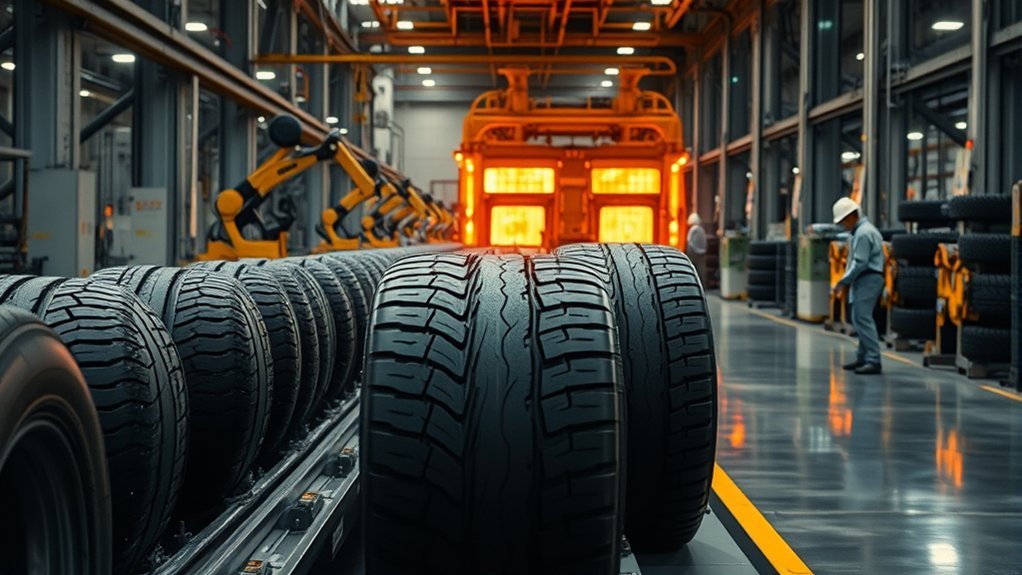
Hankook tires are made in a global network of factories, including plants in South Korea, China, Hungary, Indonesia, and the United States. If you’re looking for premium passenger, SUV, or performance tires, many are produced in Korea, especially in Daejeon and Geumsan. U.S. output is centered in Tennessee, while European production is mainly in Hungary. Exact origins can vary by model and size, and knowing the plant can help you understand more.
Key Takeaways
- Hankook tires are made in multiple countries, including South Korea, China, Hungary, Indonesia, and the United States.
- Many premium passenger, SUV, and performance tires are produced in Korea, especially at plants in Daejeon and Geumsan.
- U.S. production is centered in Tennessee to serve the North American market more efficiently.
- European production mainly occurs in Hungary, supporting regional demand and faster distribution.
- Tire origin can vary by model and size, so checking the sidewall manufacturing code is the best way to confirm origin.
[Products Worth Considering]

This professional wheel and tire cleaning brush kit helps you scrub rims, hubs, spokes, and tires with scratch-free, ultra-fine bristles. The brushes can bend 360 degrees for deep reach into crevices, bolts, and intricate wheel details, while the kit supports both wet washing with cleaners and dry dust removal. Easy to rinse, quick to air-dry, and designed for convenient maintenance with hanging holes.

These 4 prank tire valve stem caps glow in the dark to catch attention and create a fun reaction, making an ideal gag gift for friends or coworkers. Simply place them over existing valve stems for a quick, lossless installation without removing the original caps. Beyond the prank, the caps help block water, dust, and sand while supporting reliable tire protection.
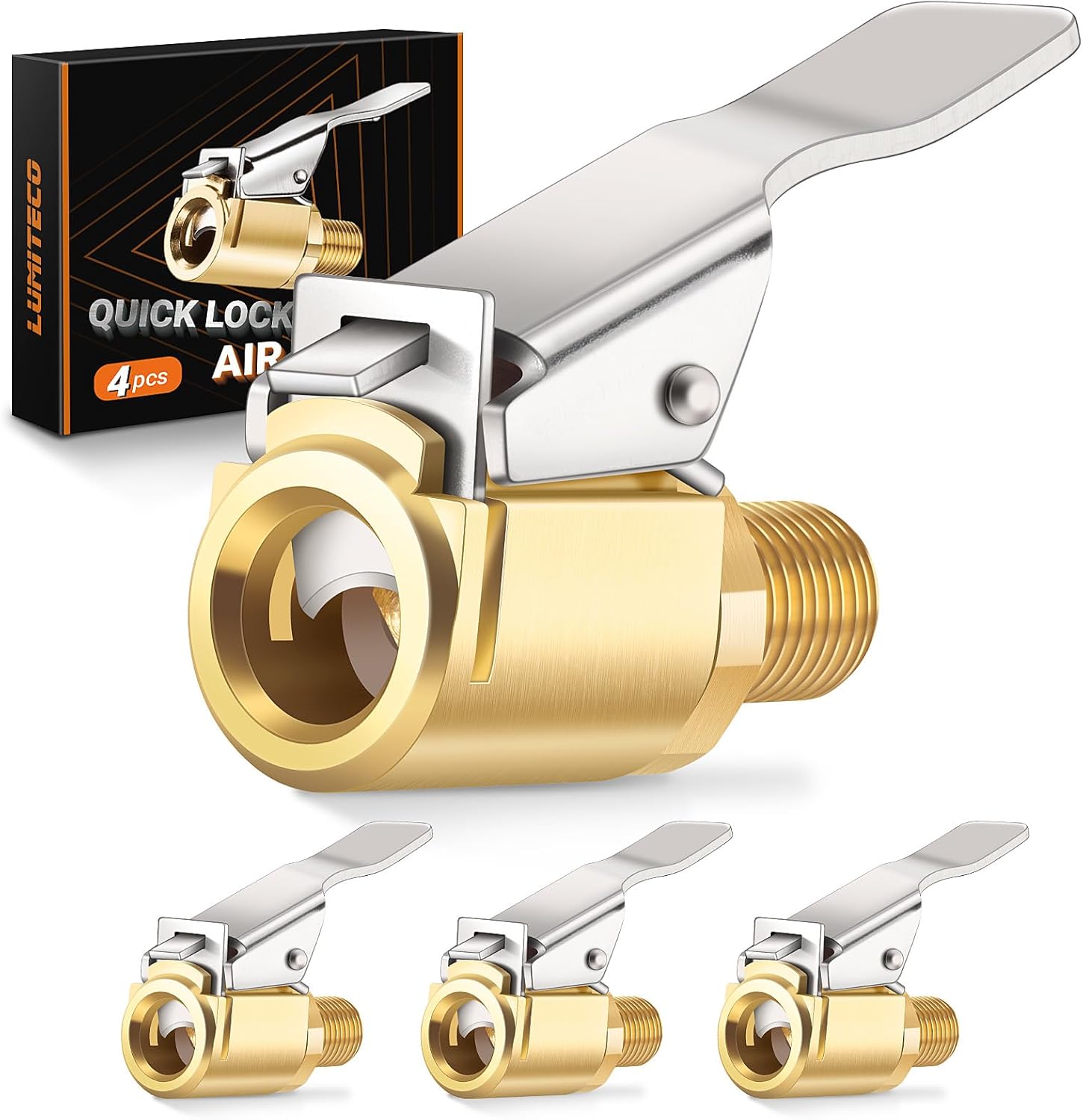
This brass air chuck adapter converts a screw-on inflator connection into a lock-on quick connect for hands-free, no-leak tire inflation. Clip the chuck onto Schrader valve stems and lock it in place to simplify inflating car, bike, and motorcycle tires. Built for durability with a corrosion-resistant brass body and strong quick operation.
Where Are Hankook Tires Made?
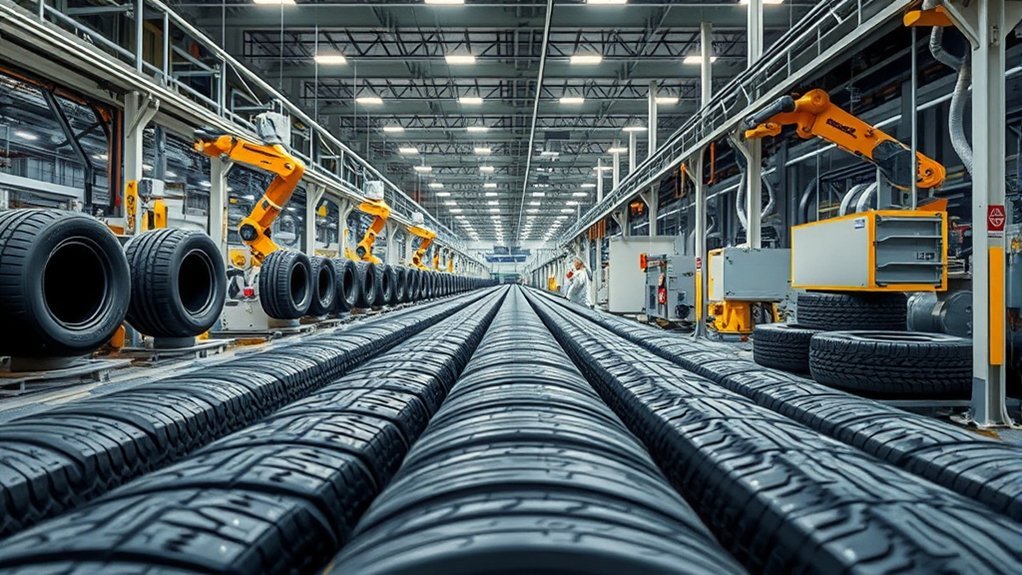
Hankook tires are made in several countries, with major manufacturing plants in South Korea, China, Hungary, Indonesia, and the United States. When you ask where Hankook tires are made, you should first note that the company built its reputation through Hankook history rooted in Korean manufacturing and global growth.
You’ll find that production supports many vehicle types, from passenger cars to trucks, while each plant follows the same quality standards. Tire innovation drives this network, because Hankook designs products to meet different road conditions, regulations, and performance needs across markets.
You can expect the brand to balance local production with consistent engineering, so buyers receive tires that reflect both regional demand and international development. This approach lets Hankook supply original equipment and replacement tires efficiently.
Where Are Hankook’s Factories Located?
You’ll find Hankook’s factories across a global manufacturing network that supports production close to major markets.
Key locations include sites in South Korea, China, Hungary, Indonesia, and the United States, with each plant serving different regional demand.
This spread helps Hankook balance supply, efficiency, and distribution worldwide.
Global Manufacturing Network
Hankook operates a wide global manufacturing network, with factories spread across Asia, Europe, and North America to support regional demand and reduce shipping distances. You can see how this structure strengthens the supply chain and improves manufacturing efficiency by aligning output with market trends.
The company also uses centralized quality standards while adapting product diversity to regional specifications, so you get tires suited to different climates, vehicles, and road conditions. Its network reflects technological advancements that help maintain consistency across sites.
Because production is distributed, Hankook can respond faster to demand changes and limit logistics bottlenecks. You’ll also notice that labor practices and environmental impact matter in modern operations, since global tire makers must balance productivity, compliance, and sustainability across multiple countries.
Key Factory Locations
Across its network, Hankook’s key factories are located in South Korea, China, Hungary, Indonesia, and the United States, giving the company a broad manufacturing footprint near major auto markets. You’ll find each site supports different product lines and regional demand, helping improve production efficiency and shorten delivery times.
| Country | Role |
|---|---|
| South Korea | Core R&D and premium output |
| China | High-volume regional supply |
| Hungary | European market access |
| Indonesia | ASEAN distribution |
| United States | North American support |
You can see how this spread lets Hankook match capacity with local needs while applying consistent tire technology across plants. It also helps reduce shipping costs, respond faster to orders, and balance production when demand shifts.
Which Hankook Tires Are Made in Korea?
In Korea, Hankook primarily manufactures many of its premium passenger, SUV, and performance tire lines, especially models produced at its major domestic plants in Daejeon and Geumsan.
When you check Hankook manufacturing labels, you’ll often see Korean craftsmanship reflected in these higher-end products, which typically emphasize ride comfort, handling, and durability.
You’re most likely to find Korean-made versions of:
- Ventus performance tires for sporty driving
- Dynapro SUV and crossover tires
- Kinergy touring tires in selected sizes
You should verify the exact country of origin on the sidewall or product listing, because Hankook may build the same tire family in more than one country.
If you want a tire with clear Korean origin, focus on premium lines and match the specific size before buying. That way, you can confirm you’re getting the version manufactured in Korea rather than a similar model made elsewhere.
Where Are Hankook Tires Made in the U.S. and Europe?
In the U.S. and Europe, Hankook makes a range of tires at modern plants designed to serve regional demand, with major production centered in Tennessee for the American market and in countries such as Hungary and other European manufacturing hubs for the European market. You can view this as two linked manufacturing networks. U.S. manufacturing supports local supply, while European production helps shorten delivery routes and align output with regional distribution.
| Region | Main manufacturing focus |
|---|---|
| U.S. | Tennessee passenger, light truck, and other road tires |
| Europe | Hungary and nearby hubs serving regional demand |
You’ll find these facilities use automated lines, quality controls, and efficient logistics to move tires to dealers and distributors. This structure helps Hankook maintain consistent output while meeting demand across two major markets.
Do Hankook Tires Vary by Country?
Yes, Hankook tires can vary by country, but the differences usually come from market-specific sizing, labeling, and tread tuning rather than a completely different product line.
Hankook tires can vary by country, mostly in sizing, labeling, and tread tuning rather than the core product line.
When you shop in different regions, you may notice regional differences in sidewall markings, load ratings, or speed symbols that match local regulations. You can also see changes in tread patterns that support local weather, road surfaces, and driving habits, which can affect tire performance.
- Sizing: You may find a size sold in one country that isn’t offered in another.
- Labeling: You’ll often see different language, certification marks, or efficiency labels.
- Tread tuning: You can get slightly different handling, noise, and wet-grip characteristics.
These variations help Hankook fit each market’s needs while keeping the core tire family familiar.
If you compare models across countries, focus on the exact spec sheet, not just the model name.
[Products Worth Considering]

This 4-pack kit converts Presta bike valves to standard Schrader valves so you can inflate with any regular pump or air compressor. The solid brass adapters include an O-ring for a tight, leak-proof seal and provide a simple screw-on setup. Compatible with road bikes, mountain bikes, e-bikes, and e-scooters, it’s designed for convenient, everyday carry readiness.

Replace worn or missing TPMS sensors with a pre-programmed 4-pack designed for compatible GM vehicles. These 315MHz sensors provide real-time tire pressure monitoring and alert you if pressure is too high, too low, or if a rapid air leak occurs. Most installations are ready with minimal relearn effort after mounting, helping improve safety and driving confidence.

Replace worn or malfunctioning GM TPMS sensors with this 433MHz pre-programmed sensor set designed for compatibility with many Chevrolet, Buick, GMC, and Cadillac models. It includes guidance for proper OBDII relearning/pairing after installation and supports reliable long-term operation with a high-performance CR2032 battery. Quality tested for durability and performance to help restore accurate tire pressure monitoring.
Does Country of Origin Affect Hankook Quality?
Country of origin can influence some aspects of Hankook tire quality, but it doesn’t automatically mean one factory makes better tires than another. You should expect Hankook to apply the same core engineering, testing, and quality control across locations, because the brand works to keep manufacturing standards consistent.
Still, local plants may use different equipment, labor pools, or supply chains, and those factors can affect your quality perception. In practice, the biggest differences usually come from the specific tire model, not the country alone.
A tire designed for performance, touring, or winter use must meet the same product targets regardless of where it’s built. You’ll get the most reliable comparison by looking at the tire’s specifications, tread design, and intended use.
Country of origin can matter as a signal, but it shouldn’t be your only measure of quality.
How Can You Check Where Your Hankook Tires Were Made?
You can check where your Hankook tires were made by reading the tire sidewall, where the DOT code usually appears along with the plant identification code.
Look for the full tire identification details, then focus on the last group of manufacturing codes, which often points to the factory location.
- Find the DOT marking on one sidewall.
- Note the plant code and date characters.
- Compare the code with Hankook or DOT reference lists.
You can also check the tire’s paperwork or invoice, since those documents sometimes list the origin.
If the sidewall is worn or hard to read, clean it gently and use strong light to inspect the letters and numbers.
When you decode the manufacturing codes, you’ll know whether the tire came from a specific Hankook plant.
This method gives you a direct way to verify tire identification without guessing.
Why Does Hankook’s Global Manufacturing Matter?
Hankook’s global manufacturing network matters because it lets you buy tires from a wide production reach that supports different markets worldwide.
You can also benefit from regional supply advantages, since local or nearby plants often improve availability and shorten delivery times.
At the same time, Hankook can maintain quality across markets by applying consistent standards at multiple manufacturing sites.
Global Production Reach
Because Hankook manufactures tires across several regions, its global production network matters for more than just volume: it helps the company balance supply, reduce shipping delays, and serve different markets more efficiently.
You benefit from that reach because it supports a steadier supply chain and better manufacturing efficiency. It also lets Hankook adjust output when demand shifts, instead of relying on a single plant.
- Multiple factories can share production loads.
- Localized output can cut long transit times.
- Broader capacity can help match tire types to market needs.
For you, that means fewer gaps in availability and a more consistent buying experience.
It’s a practical advantage: Hankook can keep products moving without tying everything to one location, which strengthens overall resilience and responsiveness.
Regional Supply Advantages
That worldwide manufacturing footprint does more than spread production across plants; it gives Hankook a practical supply advantage in different regions.
You benefit because the company can match supply chain capacity to nearby market demands, which shortens delivery times and supports production efficiency.
Regional benefits also come from using local resources and adapting output to cost considerations in each country.
When shipping distances shrink, logistical advantages improve, and you’re less exposed to delays at ports or in transit.
This structure can also help Hankook respond to trade regulations by sourcing and distributing through multiple locations.
In practice, that means the brand can position inventory closer to customers, maintain steadier availability, and manage regional demand with less friction across major markets.
Quality Across Markets
A global manufacturing network matters for quality because it lets Hankook apply the same engineering standards across multiple plants while still adjusting production to local conditions. You benefit when tires meet consistent benchmarks, whether they’re built in Korea, Europe, or the Americas.
Hankook can match tread compounds, sizes, and performance targets to market preferences without weakening control over durability, handling, or safety.
- Plants follow shared manufacturing standards.
- Regional lines reflect climate and road conditions.
- Quality checks compare output across sites.
This structure also helps Hankook balance supply, reduce delays, and respond quickly to demand changes. For you, that means the brand can deliver similar performance across markets while tailoring products to what drivers actually need.
Frequently Asked Questions
How Old Is Hankook Tire?
You’re asking how old Hankook Tire is: it started in 1941, so it’s 84 years old in 2025. Hankook history shows steady growth, and its tire manufacturing now reaches global markets.
Is Hankook a Korean Company?
Yes, Hankook is a Korean company; if corporate passports were a thing, you’d stamp Seoul first. You’ll find Korean manufacturing roots there, while its tire technology now serves drivers worldwide with practical, proven engineering.
What Does “Made In” Mean on Hankook Tires?
“Made in” on Hankook tires tells you where you’re manufacturing process ended and the tire met quality standards. It doesn’t always mean every component came from there, but that final production location matters most.
Does Hankook Make Tires for Electric Vehicles?
Yes, Hankook does make tires for electric vehicles, and you can find options engineered for electric vehicle performance. Like a quiet chariot, they use tire technology advancements to improve range, grip, and low rolling resistance.
Are Hankook Tires Sold Worldwide?
Yes, you’ll find Hankook tires sold worldwide through global distribution networks, so tire availability is broad across North America, Europe, Asia, and other markets, though specific models and sizes can vary by region.
Conclusion
Hankook makes tires in several countries, including South Korea, the U.S., and parts of Europe, so you can’t assume every set comes from the same place. When you check the sidewall, you get the facts straight, not just the brand name. Country of origin may differ, but Hankook’s global network helps it keep production steady across markets. In the end, the road ahead is clearer when you know what’s rolling under you.
[Products Worth Considering]
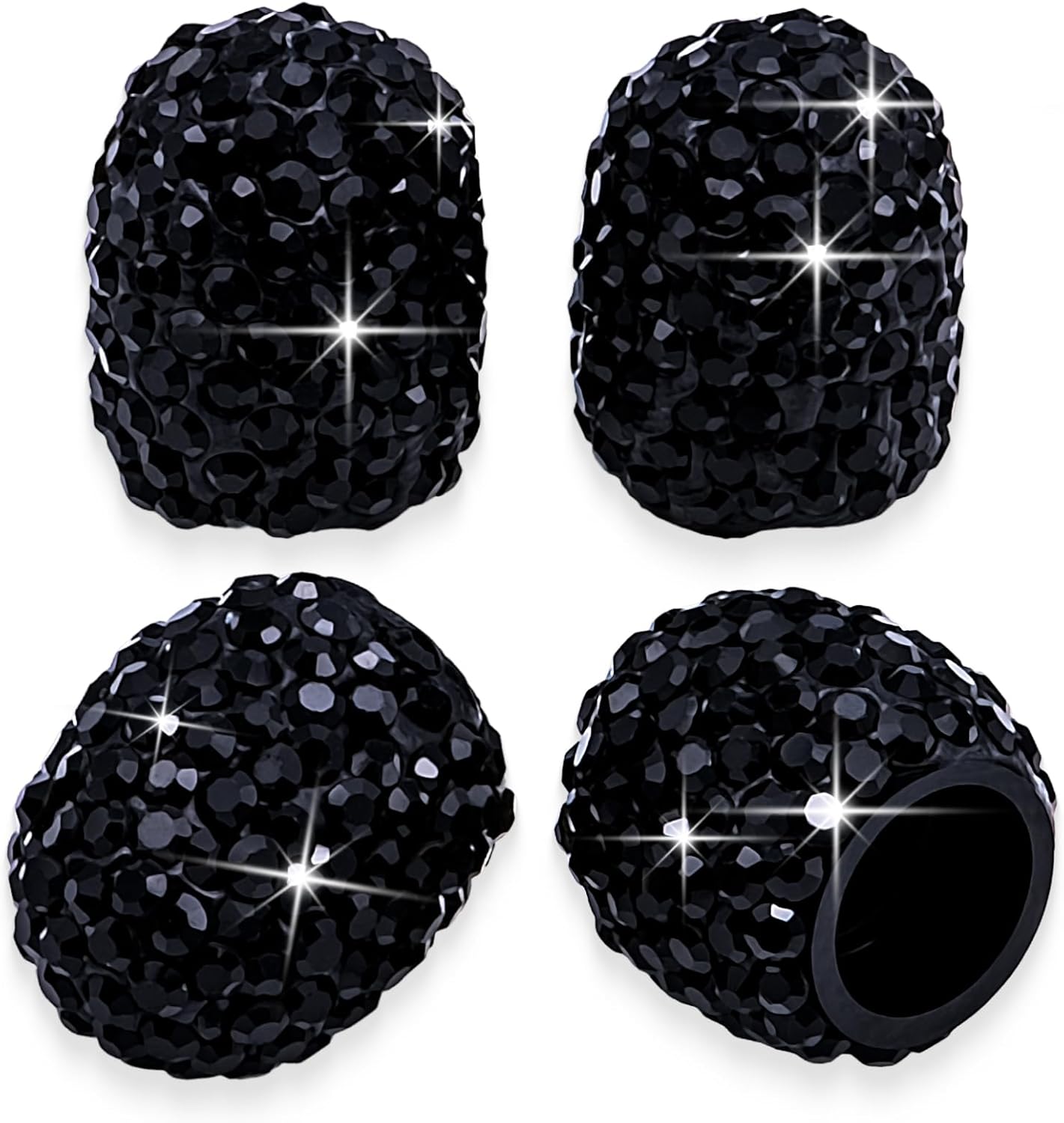
Add a sparkling, diamond-look upgrade to your vehicle with these bling rhinestone tire valve caps. They help protect valve stems from dirt, grime, and dust while offering a smooth, comfortable touch. Suitable for cars, SUVs, trucks, motorcycles, and bicycles, they’re quick to install by hand for an easy custom style.

Upgrade your wheels with zinc alloy valve stem caps featuring a plated, corrosion-resistant finish and a secure rubber O-ring seal. These caps help protect the valve stem from moisture, snow, and debris while supporting stable tire pressure and safer driving. Designed for easy installation, they replace worn caps and add a distinctive look to your vehicle.

These universal tire valve stem caps help protect valve cores from dust, debris, and moisture while helping maintain stable tire pressure. The corrosion-resistant metal construction and sealed design provide reliable protection in road grime, mud, and winter conditions. Twist-on installation makes them quick to fit on cars, SUVs, trucks, and motorcycles.

Related Articles
Who Makes Kumho Tires? Brand and Factory Guide
From South Korea to global factories, find out who really makes Kumho tires—and why their production story may surprise you.
Read More
Are Michelin Tires Worth the Price?
Do Michelin tires justify their premium price, or are you paying for a badge; discover what really drives their value and decide for yourself.
Read More
Where Are Continental Tires Made?
Originating from a global network of advanced factories, Continental tires are made in surprising places—find out which plant could be behind yours.
Read More