
Beanewone Bike Tire Repair Kit Review: Portable Bicycle Tube Patch Kit with Glue and Levers
Disclosure: As an Amazon Associate, we earn from qualifying purchases. If you click a link on this page and make a purchase, we may receive a small commission at no extra cost to you.
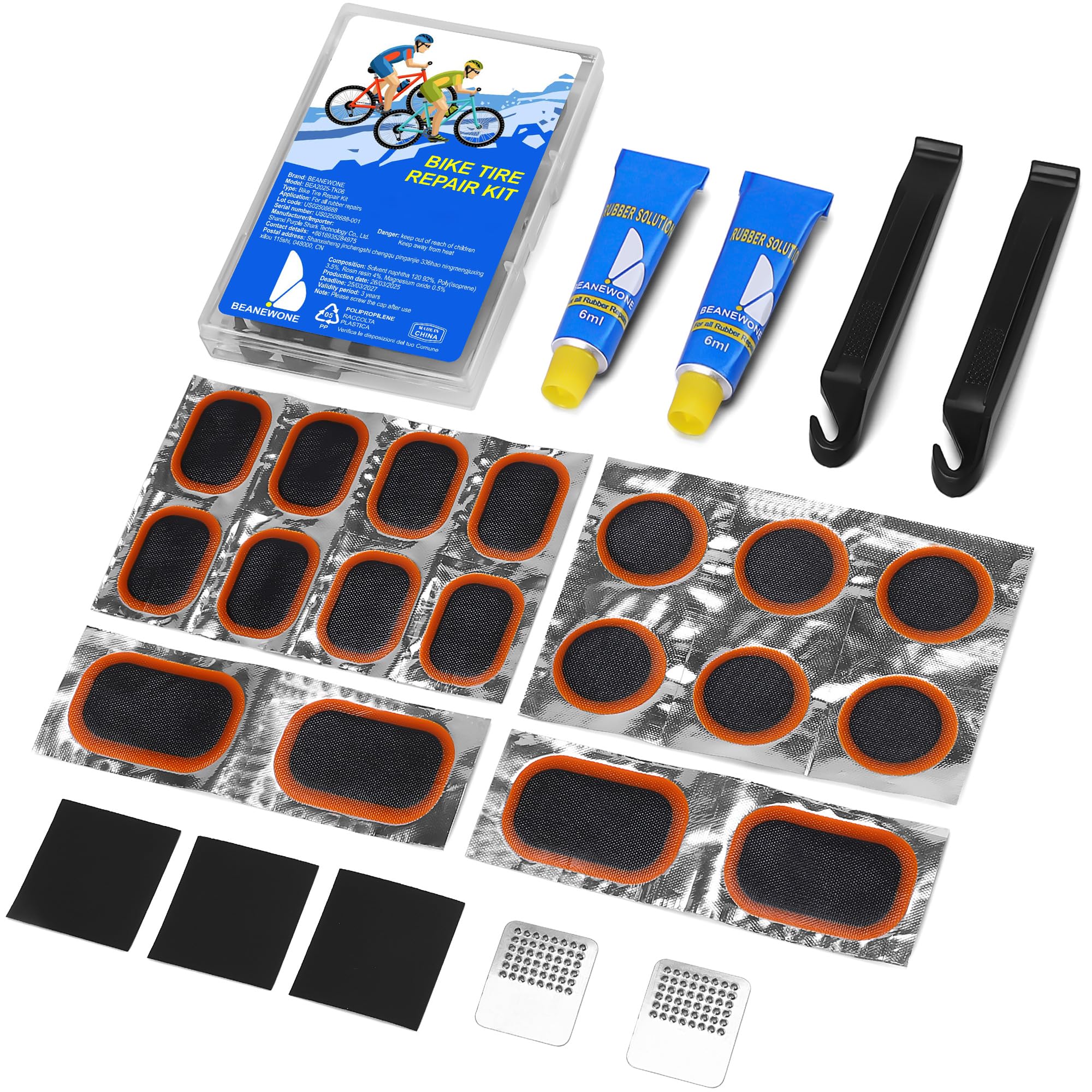
A flat tire can turn a routine ride into a long walk, especially when you carry a pump but no way to seal the puncture. The Beanewone Bike Tire Repair Kit gives you 18 patches in three sizes, two tire levers, two tubes of rubber repair solution, and surface-preparation tools in a compact case. It is a useful backup for riders with inner tubes, but it is not designed for tubeless plugs, torn tire casings, damaged valves, or large cuts. This review explains what is included, how to use it correctly, and when a spare tube is still the safer choice.
Quick Verdict
Rating: 8.2/10, Recommended with caveats
Best For: Cyclists and e-bike riders who use inner tubes and want a compact, glue-based puncture kit.
Bottom Line: The Beanewone kit covers the full basic patching process and gives you enough patches for repeated repairs. Its main tradeoffs are the cure time required by the rubber solution and the risk that opened glue tubes may dry out in storage.
Key Specifications
| Specification | Detail |
|---|---|
| Brand | Beanewone |
| Model | BEA2025-TK06 |
| Product type | Glue-based inner-tube puncture repair kit |
| Patch quantity | 18 patches in three sizes |
| Included tools | Two tire levers and metal surface-preparation tools |
| Adhesive | Two small tubes of rubber repair solution |
| Case dimensions | Approximately 13 × 9 × 2 cm |
| Listed weight | Approximately 3 oz (85 g) |
| Compatibility | Repairable inner tubes on bicycles, many e-bikes, motorcycles, wheelchairs, and compatible inflatables |
| Best use | Small punctures in removable rubber inner tubes |
| Not intended for | Tubeless tire plugs, damaged valves, split seams, large tears, or structural tire damage |


What Is the Beanewone Bike Tire Repair Kit?
The Beanewone BEA2025-TK06 is a traditional patch kit for tires that use removable inner tubes. Instead of using peel-and-stick patches, you roughen the tube, apply a thin layer of rubber solution, let it become tacky, and press a correctly sized patch over the puncture. That process takes longer than a glueless patch, but careful preparation can produce a durable repair.
The kit is designed as a compact emergency and maintenance set rather than a complete bicycle workshop. It helps you remove a tire bead, prepare the tube surface, and seal common punctures. You still need a pump or inflator, and you may need a wrench or other bike-specific tool if your wheel does not use a quick-release or through-axle system.
Who Should Buy It?
Best For
- Road, commuter, mountain bike, and e-bike riders whose tires use inner tubes
- Riders who want several patch sizes and spare adhesive in one small case
- Home users who prefer a glue-based repair over a quick glueless patch
Skip If
- Your bike uses a tubeless setup and needs plugs, sealant, or an internal tire boot
- You want the fastest possible repair with no adhesive or cure time
- The tube has a torn valve, split seam, or damage too large for a patch
Before You Buy: This kit repairs punctured inner tubes. It does not include a pump, spare tube, tire boot, tubeless plug, or tools for every wheel-removal system. Check your tire setup and wheel hardware before relying on it as your only roadside solution.
What People Say
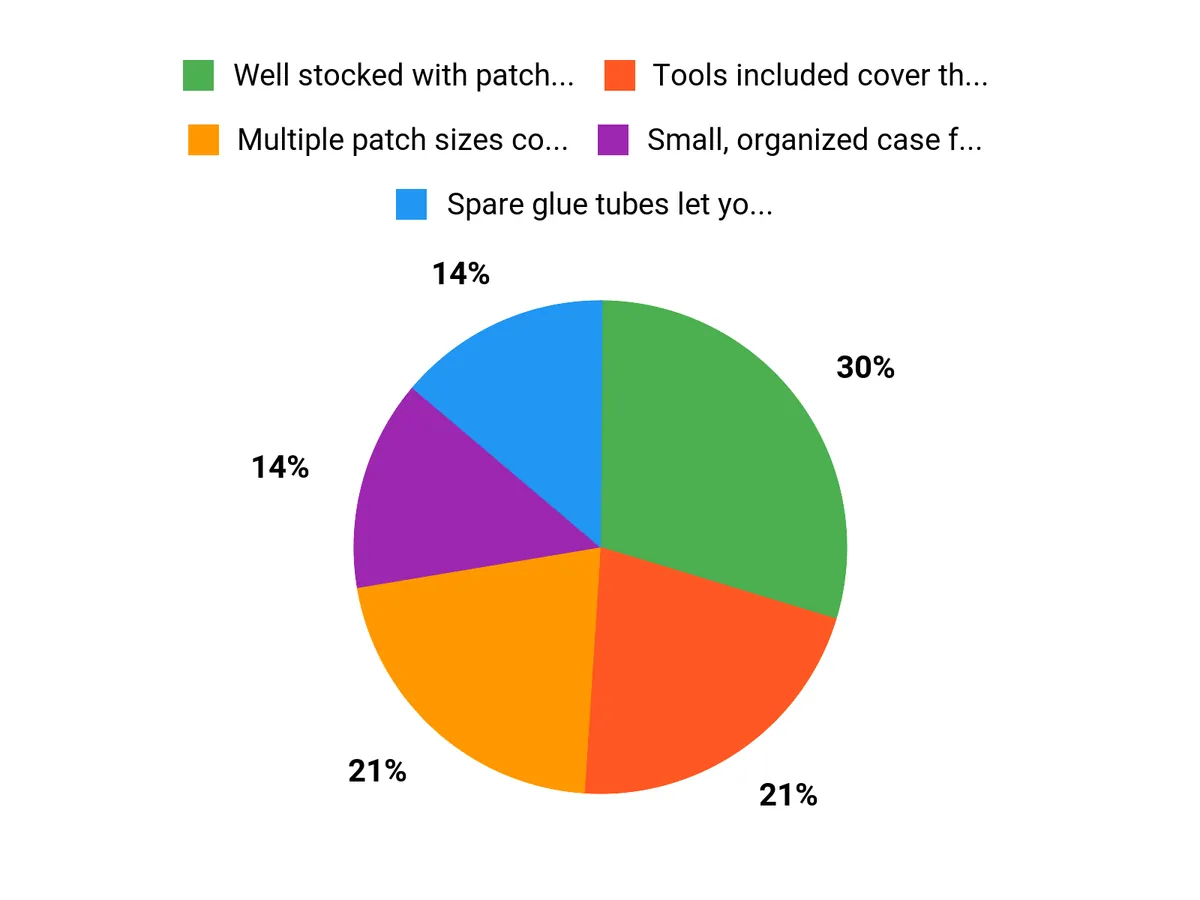
Feedback summarized with the original article is generally positive about the number of patches, the compact case, and the strength of a properly prepared repair. The most useful caution is also consistent: the small glue tubes need tight caps and sensible storage because adhesive can dry after opening. Treat customer comments as practical guidance rather than proof that every puncture or tube material will respond the same way.
Overall Sentiment: Positive

Pros and Cons
Pros
- Includes 18 patches in three sizes for small and medium punctures
- Two glue tubes provide a backup if one is used up or dries out
- Two tire levers and metal rasps cover the main patching steps
- Compact 3 oz case fits many saddlebags, panniers, and backpacks
- Works with repairable inner tubes across several bike and mobility uses
Cons
- Opened rubber solution may dry before the next repair
- Glue-based patches require clean preparation and waiting time
- The lightweight plastic case is not designed for heavy crushing
Patch Selection and Adhesive Performance
The 18-patch assortment gives you three sizes, which is more practical than a one-size kit when punctures vary. Choose a patch that extends well beyond the roughened area around the hole without folding over a tube seam. A patch that is barely larger than the puncture leaves less bonded surface, while an oversized patch can be harder to place smoothly on a narrow tube.
The rubber solution is the part that demands patience. Apply only a thin, even coat and wait until it becomes tacky according to the included instructions. Press the patch from the center outward so trapped air and wrinkles do not create a leak path. Avoid reinflating immediately if the directions call for more setting time.
Tire Levers, Rasps, and Case Quality
Two tire levers let you work around the bead in small steps instead of forcing one lever to do all the work. Their plastic construction helps reduce the chance of scratching a rim, but any lever can pinch a tube or damage a tight bead when used aggressively. Use your hands to refit as much of the tire as possible, then use a lever only when necessary.
The metal rasps prepare the rubber by removing surface shine and creating a texture the repair solution can bond to. Roughen an area slightly larger than the selected patch, then remove dust before applying adhesive. The lightweight case keeps the small parts together, though it should sit in a protected pocket rather than loose under heavy tools.
Portability and Compatibility
At about 13 × 9 × 2 cm and roughly 3 oz, the case is small enough for many seat bags and day packs. That size makes it easy to carry on commutes, weekend rides, camping trips, and longer tours. It is also useful in a garage drawer as a shared repair kit for family bikes and compatible inflatables.
Compatibility depends on the presence of a repairable inner tube, not only the vehicle name. Many bicycles, e-bikes, motorcycles, wheelchairs, and inflatable products use tubes, but some use tubeless tires, foam inserts, sealed bladders, or materials that require a different adhesive. Confirm the construction before applying a patch.
[Products Worth Considering]

This 4-pack kit converts Presta bike valves to standard Schrader valves so you can inflate with any regular pump or air compressor. The solid brass adapters include an O-ring for a tight, leak-proof seal and provide a simple screw-on setup. Compatible with road bikes, mountain bikes, e-bikes, and e-scooters, it’s designed for convenient, everyday carry readiness.

Replace worn wheelchair rear tires with a universal 24x1 no-flat polyurethane foam option designed to mount tightly on 24-inch rims without the tire falling off. Installation is made easier with included tools and multiple methods, including using a pry bar or softening the tire in hot water to reduce resistance. The package includes two tires plus tie ropes for convenient fitting and handling.
How It Performs in Real Use
For a Roadside Bicycle Puncture
For a thorn, staple, or small pinch puncture, the kit gives you the core items needed after the wheel and tube are removed. The main delay comes from locating the leak and allowing the rubber solution to set. Carrying a small pump and a way to mark the hole makes the process faster and reduces the chance of losing the puncture location.
For E-Bike Inner Tubes
The patches can work on many e-bike inner tubes, but heavier wheels and hub-motor wiring can make wheel removal more complicated than on a standard bike. Check your owner’s manual before disconnecting a motor cable or removing axle hardware. On a difficult rear wheel, a spare tube and suitable tools may still require more time than a simple roadside stop allows.
For Touring and Commuting
The low weight and compact case suit riders who want repair redundancy without filling a large tool roll. A patched tube can save your spare tube for a second flat, which is useful on long rides. Before a major trip, inspect the glue tubes and replace any that feel hard, empty, or poorly sealed.
For Inflatables and Mobility Equipment
The kit may help with compatible rubber inner tubes in wheelchairs and some inflatable products. First confirm that the item uses a patchable tube and that the supplied solution is suitable for its material. Do not use a repaired safety-critical tube when the product instructions require replacement or professional service.
How to Use It Correctly
- Remove and inspect the tube. Check the tire for glass, thorns, wire, or sharp rim damage before installing the repaired tube.
- Find and mark the leak. Inflate the tube lightly and listen or feel for escaping air. Water can help reveal bubbles when it is available and safe to use.
- Clean and roughen the area. Dry the tube fully, then rasp a zone slightly larger than the patch.
- Apply the repair solution. Use a thin layer and follow the included directions for tack and cure time.
- Press the patch firmly. Center it over the hole and work outward to reduce wrinkles and trapped air.
- Test before reinstalling. Add a small amount of air, confirm the seal, then refit the tube without twisting or pinching it.
Pro Tip: After opening a glue tube, wipe the nozzle, tighten the cap immediately, and keep the kit away from high heat. Check the adhesive before each longer ride instead of discovering a dried tube after a puncture.
Compatibility and Safety
Inspect both the tube and tire before deciding to patch. Replace the tube when the valve stem is torn, the seam has split, the rubber is badly aged, or the hole is too large for the patch to sit flat. A patch also cannot repair a cut tire casing that allows the tube to bulge through, so carry a tire boot or use an approved temporary barrier only as directed by the tire or repair-product manufacturer.
Rubber repair solution can contain volatile solvents. Follow the label, work in a ventilated area, keep it away from heat and flame, avoid eye or prolonged skin contact, and store it where children cannot reach it. Let the solution cure as directed before inflating the tube.
Is It Worth the Price?
The Beanewone kit offers strong value for riders who want a stocked, reusable patch set rather than a few emergency stickers. Eighteen patches, two glue tubes, and the basic removal and preparation tools give you enough supplies for several common punctures, provided the adhesive remains usable.
Its value drops if you ride tubeless, need a complete multi-tool, or prefer a no-wait repair. It is best treated as one part of a roadside system that also includes inflation, wheel-removal tools, and at least one spare tube for damage that cannot be patched.
How It Compares to Alternatives
A traditional Rema Tip Top kit is worth comparing when you want a well-known glued patch system in a smaller, simpler package. The Park Tool Super Patch kit is more convenient when you value peel-and-stick speed, though glueless patches may be less forgiving at higher pressures or when the tube surface is not prepared well.
The Beanewone kit makes the most sense when patch quantity, multiple sizes, included tire levers, and two adhesive tubes matter more than owning the smallest possible kit. Riders who regularly repair bikes at home may prefer a larger workshop kit with higher-grade levers, extra vulcanizing fluid, chalk, and tire boots.
Why Riders Choose It
Riders choose the Beanewone kit because it combines the main puncture-repair steps in one portable case. The three patch sizes make it easier to match the repair to the hole, while two glue tubes give you a backup that many basic kits omit. Its strongest use is as a compact inner-tube kit for riders who understand that careful surface preparation matters more than rushing the patch.
Frequently Asked Questions
What can the Beanewone repair kit fix?
It is designed for small punctures in removable rubber inner tubes. It is not a tubeless plug kit and cannot reliably repair torn valves, split seams, large cuts, or damaged tire casings.
Does the kit work with e-bike tires?
It can patch many e-bike inner tubes when the tube material is compatible with the supplied repair solution. Wheel removal may be more involved on hub-motor bikes, so check the bike manual and carry the correct axle tools.
Can it repair a tubeless bicycle tire?
No, this is primarily an inner-tube patch kit. Tubeless punctures usually require sealant, a plug tool, or an internal tire patch made for the tire casing.
How long should the glue dry before applying the patch?
Follow the included instructions because cure time can vary with temperature, humidity, and the amount applied. In general, a thin layer should become tacky rather than remain wet before the patch is pressed into place.
How do you keep the glue from drying out?
Clean the nozzle, tighten the cap immediately after use, and store the case in a cool, dry place away from direct sun. Inspect both tubes before long rides because even sealed adhesive can lose usability over time.
Do you still need to carry a spare tube?
Yes. A spare tube handles failures that patches cannot fix, including torn valves, long splits, and badly damaged rubber. Carrying both gives you a fast replacement and a way to repair the punctured tube later.
What common patching mistake causes leaks?
The most common errors are leaving the tube wet or dusty, using too much solution, applying the patch before the surface becomes tacky, and trapping wrinkles. Failing to remove the object from the tire can also puncture the repaired tube again.
The Bottom Line
The Beanewone Bike Tire Repair Kit is a practical choice for cyclists and e-bike riders who use inner tubes and want a compact supply of glue-based patches. Buy it for the 18-patch assortment, included levers, and portable case, but skip it if you need tubeless repairs, instant glueless patches, or a solution for major tube and tire damage.
Ready to Buy?
Check the latest product details and confirm that the kit matches your tire setup before you decide.

Related Articles

ALL-TOP 4 Tire Inflation and Deflation System Review: 200-Inch Wheelbase Air Up Down Kit
If you spend time off road, towing, or running long-wheelbase rigs, you know how much of a hassle airing tires up and down can…
Read More
Cimesen 150 PSI Tire Inflator Review: Cordless Portable Air Compressor for Cars and Bikes
You want a small, dependable way to keep tires and sports gear properly inflated without running to a gas station or lugging a bulky…
Read More
Ryobi RVI18-0 18V ONE+ Volume Inflator Review: Cordless High-Volume Air Pump
You want a quick, portable way to inflate air mattresses, pool toys and other large-volume inflatables without wrestling a manual pump or dragging out…
Read More