
GODESON 88702 Tire Tread Depth Gauge Review
Disclosure: As an Amazon Associate, we earn from qualifying purchases. If you click a link on this page and make a purchase, we may receive a small commission at no extra cost to you.
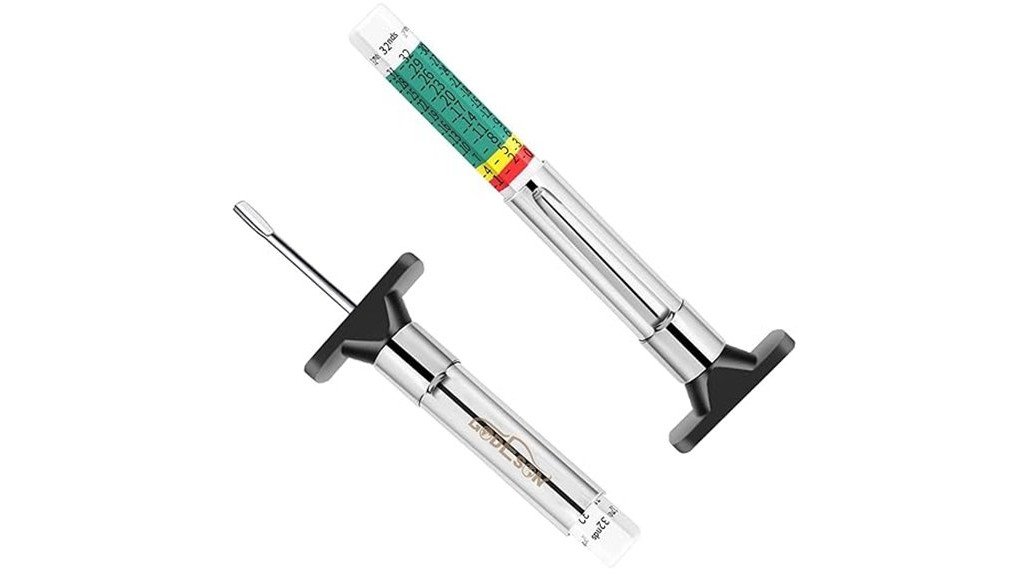
Uneven or worn tire tread can reduce traction, but guessing with a coin does not show you how the wear differs across the tire. The GODESON 88702 tire tread depth gauge gives you a direct reading in 1/32-inch increments and uses red, yellow, and green bands as a quick visual reference. Its two-piece pack is useful if you want one gauge in the garage and another in a vehicle. The tradeoff is that this is a small manual gauge with no digital display, metric readout, or built-in light.
Quick Verdict
Rating: 8.5/10
Best For: Drivers who want a compact, low-cost manual tool for monthly tread checks and comparing wear across multiple tires.
Bottom Line: The GODESON 88702 is simple, portable, and easier to interpret than a plain metal gauge because of its color bands. It is less convenient in dim light and is not a substitute for checking tire condition, vehicle guidance, and local tread-depth rules.
| Specification | Detail |
|---|---|
| Brand | GODESON |
| Model | 88702 |
| Product type | Manual sliding tire tread depth gauge |
| Measurement range | 0 to 1 inch |
| Graduations | 1/32 inch |
| Color zones | Red: 0 to 3/32 inch; yellow: 3/32 to 6/32 inch; green: 6/32 to 32/32 inch |
| Construction | Chrome-plated metal barrel, plastic sliding bar, metal probe, and pocket clip |
| Package quantity | 2 gauges |
| Compatibility | Accessible tread grooves on passenger cars, trucks, SUVs, motorcycles, trailers, and RV tires |
| Power | No batteries required |
What Is the GODESON 88702?
The GODESON 88702 is a compact mechanical gauge made for measuring the depth of a tire’s main tread grooves. You place its flat barrel across the tread blocks, press the probe into a groove, and read the number where the sliding bar meets the top of the barrel.
The gauge covers 0 to 1 inch in 1/32-inch steps. That range works for normal passenger-vehicle checks and many truck, motorcycle, trailer, and RV tires, provided the base can sit flat on the tread. The color-coded bar is the main selling point because it lets you spot low, caution, and higher-tread ranges without translating every reading from memory.
[Products Worth Considering]

The SAFELIFE dial tire tread depth gauge measures tread depth in 1/32 inch increments with clear, easy-to-read 2-inch dial face. Color zones using a traffic light system help you quickly judge whether tread is low, marginal, or ample for safer driving. Built with a durable zinc cast body and a metal detect probe for precise, comfortable use across cars, motorcycles, trucks, and buses.

Accurately measure tire tread depth with a calibrated gauge marked from 0 to 1 inch in 1/32 inch increments. The color-coded bar helps you quickly identify tread condition ranges, supporting safe driving for trucks, motorcycles, automobiles, and passenger vehicles.

Monitor tire tread wear with a smart, color-coded depth gauge that shows clear condition ranges at a glance. The bar is range marked for fast, easy readings, helping you maintain safer traction and performance. Each gauge is portable with a pocket clip, and the set includes 20 units for daily use and sharing.
Key Takeaways
- The gauge measures tread from 0 to 1 inch in 1/32-inch increments.
- Red, yellow, and green bands provide a fast visual reference, but they do not replace local rules or tire-maker guidance.
- The pack includes two gauges, so you can keep one in a toolbox and one in a vehicle.
- A pocket clip and battery-free design make it easy to store and use without setup.
- The small printed scale can be harder to read in low light than a digital or dial gauge.
Who Should Buy It?
Best For
- Drivers who want a clearer alternative to the penny test.
- Households with two vehicles or a garage-and-glovebox storage plan.
- Owners who want to compare inner, center, and outer tread wear during monthly checks.
Skip If
- You need a digital display, backlight, or metric-only readings.
- You want a large dial that is easier to read with limited vision or hand control.
- You need documented laboratory-grade accuracy for professional inspection work.
How the Color-Coded Tread Scale Works
The sliding bar uses three color ranges. Red covers 0 to 3/32 inch, yellow covers 3/32 to 6/32 inch, and green covers 6/32 to 32/32 inch. These colors make the gauge faster to scan than a plain numbered rod, especially when you are checking four tires at several points each.
The bands are a reference system, not a universal pass-or-fail rule. Tire requirements vary by location, vehicle, tire type, and driving conditions. The National Highway Traffic Safety Administration states that tires should be replaced at 2/32 inch and recommends checking tread at least monthly, but wet-weather or winter performance may become a concern before a tire reaches that minimum. Review your tire maker’s guidance and local inspection rules as well.
Before You Buy: Do not treat the green band as proof that a tire is safe in every condition. Tread depth is only one part of tire inspection, and cuts, bulges, cracking, age, uneven wear, or repeated pressure loss can still require professional attention.
Materials and Build
The 88702 uses a chrome-plated metal barrel, a plastic sliding bar, a metal probe, and a pocket clip. That mixed construction keeps the tool light while giving the measuring end a firm base. It is more substantial than an all-plastic novelty gauge, but it is still a small budget tool rather than a sealed professional instrument.
The sliding action should move freely without feeling loose. Dirt, grit, or a bent probe can affect how the bar returns and how consistently the base sits on the tread. Store the gauge where it will not be crushed by heavier tools, and wipe the probe after checking muddy or salted tires.
Fit and Compatibility
The gauge is suitable for common tire types on cars, SUVs, light trucks, motorcycles, trailers, and RVs as long as the tread groove is wide enough for the probe and the barrel can rest flat. It does not attach to the valve stem and does not measure tire pressure.
Motorcycle and heavily patterned off-road tires may require extra care because curved profiles, staggered blocks, and deep voids can make the base harder to level. On dual-wheel trucks or tightly enclosed wheels, access may also be limited. In those cases, turn the wheel when safe or have a tire professional inspect areas you cannot reach without crawling under an unsupported vehicle.
How It Performs in Real Use
[Products Worth Considering]

Measure tire tread depth quickly and accurately with this LUMITECO dial gauge that reads in 1/32" increments up to 14/32". The color-coded green/yellow/red zones make it easy to judge tire wear and know when replacement is needed. A rugged, compact design with a protective pouch helps keep the gauge ready for use on cars, trucks, motorcycles, and more.

Measure tyre tread depth precisely with a digital gauge that reads in both MM and inches, helping you monitor safe driving conditions. The large LCD screen is easy to operate, and the compact tool fits for cars, trucks, and motorcycles. It provides high accuracy with a 0-25.4mm range and includes a 1-year warranty for added peace of mind.

This tire repair kit provides fast emergency puncture repair without removing the tire from the rim, helping you get back on the road quickly. Its screw plug system is designed for punctures in both tread and sidewall and includes a complete patch plug tool set with essential accessories. A portable storage bag makes it easy to carry for cars, trucks, SUVs, motorcycles, and heavy-duty applications.
For Monthly Tire Checks
The color bands speed up a routine inspection because you can see which readings deserve attention before writing down every number. The two-pack also makes it easier to keep a gauge where you will use it instead of searching for one each month.
Before a Road Trip
Checking several grooves across all four tires can reveal a low spot that a quick visual check misses. The gauge is especially useful before a long drive because you can compare the lowest reading on each tire and arrange service before loading the vehicle.
For Checking Uneven Wear
Measure the inner shoulder, center, and outer shoulder at more than one point around the tire. A noticeable difference can point to an inflation, rotation, suspension, or alignment issue, although the gauge cannot diagnose the cause.
For Used-Vehicle or Spare-Tire Checks
The compact tool can help you record tread depth when looking at a used vehicle or checking a spare. It cannot confirm tire age, internal damage, repairs, or roadworthiness, so treat the reading as one data point rather than a complete inspection.
How to Use It Correctly
- Park on a level surface, set the parking brake, and make sure the vehicle cannot move.
- Push the measuring probe fully into the barrel so the gauge starts at its lowest position.
- Place the barrel flat across two tread blocks, not on top of a raised treadwear indicator.
- Press the probe straight down into the main groove until it touches the bottom.
- Lift the gauge away without moving the sliding bar, then read the mark at the top edge of the barrel.
- Repeat the check at the inner, center, and outer portions of the tread and at several points around the tire.
- Record the lowest repeatable reading and compare it with vehicle, tire, and local safety guidance.
Pro Tip: Take two readings at each location. If they differ, reset the probe, make sure the barrel is flat, and measure again. Consistent technique matters more than pressing hard.
Compatibility and Safety
Use the gauge only while the vehicle is parked securely. Never place yourself beneath a vehicle supported only by a jack, and do not reach between dual wheels or moving parts. If a tread area is difficult to access, reposition the vehicle safely or ask a tire shop to check it.
Tread depth does not show every tire problem. Inspect for embedded objects, exposed cords, sidewall damage, bulges, cracks, and uneven wear. Also check pressure with a separate tire-pressure gauge. For more tire-maintenance guidance, see the NHTSA TireWise safety guidance.
Pros and Cons
Pros
- Measures from 0 to 1 inch in practical 1/32-inch increments.
- Color bands make low readings easier to spot quickly.
- Two gauges provide useful storage flexibility.
- No batteries, charging, pairing, or startup steps.
- Pocket clip and compact body fit small tool kits and gloveboxes.
Cons
- Small scale markings can be difficult to read in poor light.
- No verified metric scale, digital display, or backlight.
- Results depend on holding the base flat and measuring the correct groove.
Is It Worth the Price?
The GODESON 88702 sits in the budget-tool category and offers strong value for the price when you want two basic gauges instead of one more complex instrument. The color bands, 1/32-inch scale, and pocket clips cover the needs of most drivers performing routine checks at home.
It is a smart buy for everyday use if portability and simple operation matter more than a large display. It is not the best fit if you prefer metric readings, want easier nighttime visibility, or need a gauge designed for documented professional inspections.
How It Compares to Alternatives
The Slime 20177 offers a similar compact sliding design, color scale, and 1/32-inch to 1-inch range, with the added benefit of a listed millimeter scale. A Victor 10725-V gauge is another option if you specifically want both millimeters and 1/32-inch markings.
The GODESON 88702 makes the most sense when the two-piece package is more useful to you than metric markings. A larger dial or digital gauge may be easier to read, but it will usually take more storage space and may cost more.
Frequently Asked Questions
Does the GODESON 88702 come as a two-pack?
Yes. The reviewed listing includes two manual tread depth gauges. You can keep one in a vehicle and the other in a garage or share the pack between two vehicles.
What do the red, yellow, and green bands mean?
The product scale marks red from 0 to 3/32 inch, yellow from 3/32 to 6/32 inch, and green from 6/32 to 32/32 inch. Use the colors as a quick reference, then compare the actual number with your tire maker’s guidance and local requirements.
Does it require batteries or calibration?
No batteries are required because the gauge uses a mechanical sliding probe. There is no user calibration menu, but you should keep the probe clean, check that it returns freely, and replace the tool if it becomes bent or damaged.
Can it measure motorcycle, trailer, or RV tires?
Yes, when the probe can enter the main tread groove and the barrel can sit flat across the tread blocks. Curved motorcycle profiles, aggressive off-road patterns, and tightly enclosed wheels may require extra care or professional access.
What is the gauge made from?
The listing describes a chrome-plated metal barrel, plastic sliding bar, metal probe, and pocket clip. That combination keeps the tool light while giving the measuring base and probe a firmer structure.
Is the reading easy to see in low light?
The color bands help, but the gauge has no illuminated display. Use a flashlight or inspect the reading in better light rather than guessing at a small mark.
Does this gauge replace a professional tire inspection?
No. It measures tread depth only and cannot assess internal damage, tire age, sidewall condition, alignment, or repair quality. Seek professional help if you find uneven wear, damage, vibration, repeated air loss, or a reading near the replacement range.
The Bottom Line
The GODESON 88702 is a practical choice for drivers who want an inexpensive, battery-free way to measure tread in 1/32-inch increments and compare wear across a tire. Buy it for the clear color bands, two-piece pack, and pocket-friendly size; skip it if you need metric readings, a bright display, or a professional inspection instrument.
[Products Worth Considering]

Milton S-921 pencil tire pressure gauge helps you maintain optimal tire pressure for passenger cars with accurate readings in PSI and kPa. It features a built-in deflator valve for convenient pressure adjustments, plus a single chuck head and nylon indicator bar for easy use on the go. Built from durable plated brass and designed for reliable performance, it’s a practical road trip and cold-weather maintenance tool.

ETENWOLF’s calibrated tire pressure gauge delivers accurate readings for cars, trucks, motorcycles, bikes, SUVs, RVs, and ATVs across a 0–75 PSI range. The large glow dial improves visibility in low light, while the 360° swivel chuck makes it easy to check valve pressure from any angle. It’s designed to stay accurate even in extreme hot or cold weather.

ETENWOLF’s calibrated digital tire pressure gauges deliver accurate readings across a wide pressure range, from below 12 PSI to above 140 PSI. The built-in thermal compensation helps maintain performance in extreme cold and hot conditions, while the LED light improves visibility for quick checks. Includes replaceable AAA batteries for long-lasting use and convenience for everyday tire monitoring.

Related Articles
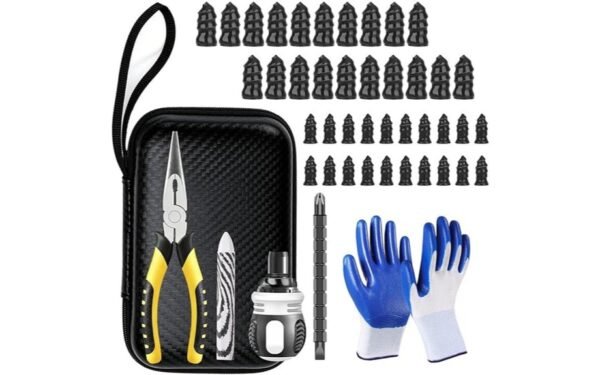
Tire Screw Plug Repair Kit Review
Compact tire screw plug repair kit review reveals fast roadside fixes, but which punctures are truly safe enough to trust?
Read More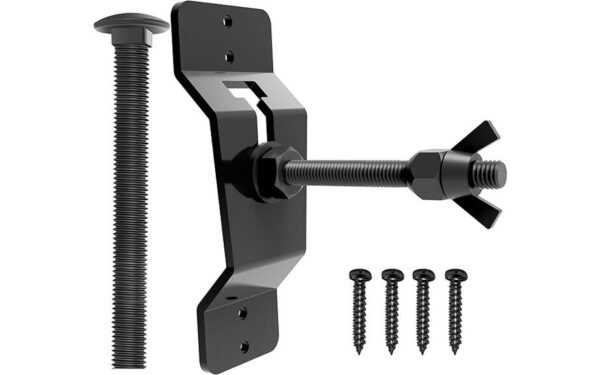
Wall Mount Spare Tire Carrier Mount Review
I review the wall mount spare tire carrier’s fit, strength, and stability—see what could make or break your trailer setup.
Read More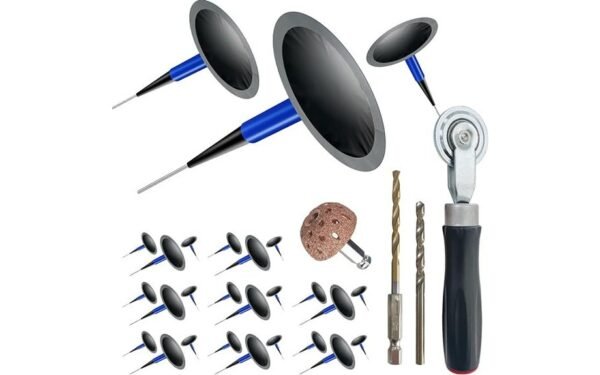
Socpuro Tire Repair Patch Tool Kit Review
Great for quick DIY puncture fixes, the Socpuro Tire Repair Patch Tool Kit has limits and surprises you’ll want to know before buying.
Read More