
TP-M13W Combination Repair Unit Kit Review
Disclosure: As an Amazon Associate, we earn from qualifying purchases. If you click a link on this page and make a purchase, we may receive a small commission at no extra cost to you.
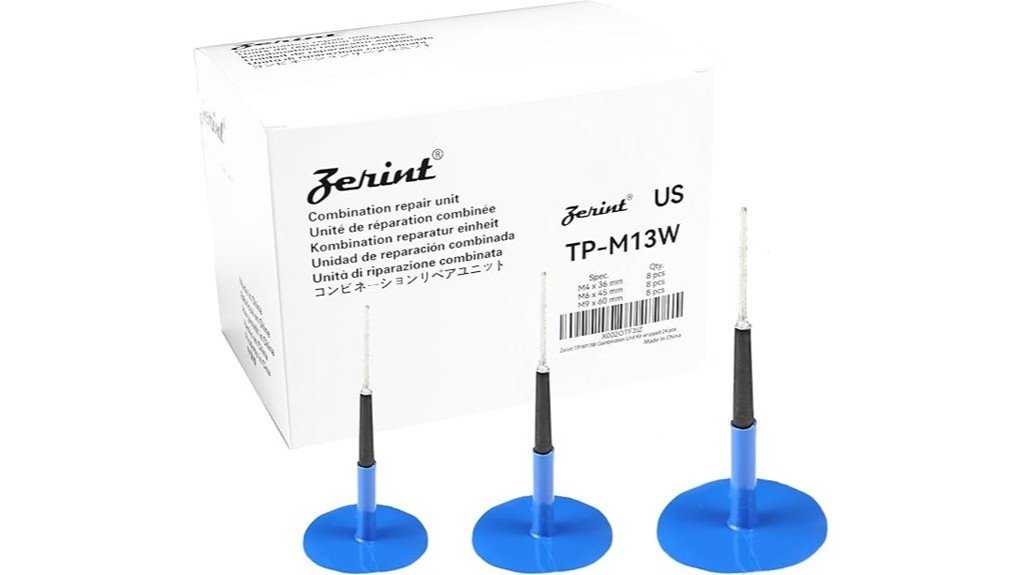
A punctured tire needs more than a quick external plug when you want a proper internal repair. The ZERINT TP-M13W Combination Repair Unit Kit gives you 24 one-piece patch-and-stem units in three sizes, but it does not turn every puncture into a safe repair. This review explains what is included, how the sizing works, which buyers get the most value, and why tire removal and professional inspection still matter. Its main strength is the mixed-size selection, while its main limitation is that the listing does not include the tools, cement, or training needed for installation.
Quick Verdict
Rating: 8/10, recommended with caveats
Best For: Tire shops, trained technicians, and experienced users who already have tire dismounting and repair tools
Bottom Line: The TP-M13W is a useful mixed-size stock kit with 24 combination repair units for radial and bias-ply tires. It is not a complete roadside repair kit, and each tire must be inspected to confirm that the damage is repairable.
Key Specifications
| Specification | Detail |
|---|---|
| Brand | ZERINT |
| Model | TP-M13W |
| Product type | Combination tire repair patch-and-stem units |
| Total quantity | 24 units, 8 of each size |
| Small size | 1/6-inch stem with 1 3/8-inch patch, approximately 4 x 35 mm |
| Medium size | 1/4-inch stem with 1 3/4-inch patch, approximately 6 x 45 mm |
| Large size | 3/8-inch stem with 2 3/8-inch patch, approximately 9 x 60 mm |
| Materials | Gray vulcanizing gum, blue poly backing, and gum-wrapped stems |
| Vulcanization | Designed for chemical or heat vulcanization |
| Tire construction | Radial and bias ply |
| Item weight | 9.1 ounces |
| Package dimensions | 6.02 x 4.41 x 4.33 inches |
| Tools included | The listing identifies the 24 repair units only; installation tools and cement are not listed as included |
| Best use | Internal repair of an eligible tread-area puncture after the tire is removed and inspected |
[Products Worth Considering]

This tire repair patch tool kit helps you quickly seal small punctures using upgraded mushroom plugs and a built-in roller system that presses for even penetration. The tungsten buffing wheel and HSS twist drill bits prepare the damaged surface for stronger adhesion, while the crown-angle friendly plugs are designed to keep water and debris out. Ideal for puncture repairs on many vehicle types, from cars and trucks to bikes and scooters.

This VEVOR tire bead breaker uses a slide-hammer impact and wedge tip to separate tire beads from rims quickly and efficiently without damaging hub surfaces. The long handle and sturdy steel construction help reduce user strain while providing reliable, portable tire changing for cars, trucks, and more. Ideal for home mechanics and repair shops handling multiple vehicle tire sizes.

Wykodra tire plugs provide quick vulcanizing repairs for tubeless tires, helping you seal punctures and get back on the road. The industrial-strength rubber creates a long-lasting, leak-resistant bond and is designed for emergency fixes without removing the tire. Choose between two standard plug sizes with color-matched options for small to larger damage across many vehicles and off-road uses.
What Is the ZERINT TP-M13W?
The ZERINT TP-M13W is a box of one-piece combination repair units. Each unit joins a wrapped stem to a round patch, allowing the stem to fill the prepared injury channel while the patch seals the tire’s inner liner around it. This design addresses both paths that can cause trouble after a puncture: air loss through the hole and moisture entering the tire structure.
The box contains eight small, eight medium, and eight large units. That mixed assortment is more useful for a repair bench than a single-size box when you service different tire constructions and puncture conditions. The listing states that the units work with radial and bias-ply tires and are designed for chemical or heat vulcanization.
Before You Buy: A larger repair unit does not make a larger puncture safe to repair. Many passenger-tire makers limit repairable tread punctures to 1/4 inch, and sidewall or shoulder damage is generally not repairable. Follow the tire manufacturer’s limits and have the tire inspected off the wheel.
Key Takeaways
- You get 24 combination units, with eight pieces in each of three stem-and-patch sizes.
- The one-piece design fills the injury channel and covers the inner liner in one repair unit.
- The listing supports radial and bias-ply tire construction.
- Gray vulcanizing gum, blue poly backing, and wrapped stems support chemical or heat vulcanization.
- This is a consumables kit, not a complete installation kit or a roadside plug set.
- Safe use depends on tire removal, internal inspection, correct sizing, and the tire maker’s repair rules.
Who Should Buy It?
Best For
- Tire shops that want three commonly used combination-unit sizes in one box
- Trained technicians who already own a tire changer, inspection tools, buffer, roller, cement, and leak-test equipment
- Experienced repairers who service both radial and bias-ply tires and need mixed inventory
Skip If
- You need a roadside repair that can be installed with the tire still on the wheel
- You do not have the tools or training required for an internal tire repair
- The puncture is in the shoulder or sidewall, the tire was driven flat, or the tire maker does not permit repair
Patch and Stem Sizes Explained
The kit pairs each stem with a patch sized to cover the prepared inner-liner area. The small unit uses a 1/6-inch stem and a 1 3/8-inch patch. The medium unit uses a 1/4-inch stem and a 1 3/4-inch patch. The large unit uses a 3/8-inch stem and a 2 3/8-inch patch.
Choose a unit only after the tire has been removed, the damage has been inspected from inside, and the injury channel has been measured and prepared under the repair-material instructions. Using a stem that is too small can leave the channel poorly filled. Using one that is too large can remove extra tire material or tempt you to repair damage that should lead to replacement.
Pro Tip: Sort the three sizes into labeled bins before opening multiple units. The patch diameters are easy to distinguish, but labeling helps prevent a hurried size choice at the repair bench.
Compatibility and Safety
The product listing states that the TP-M13W can be used with radial and bias-ply tires. That describes tire construction, not a universal approval for every passenger, light-truck, motorcycle, trailer, or specialty tire. You still need to check the tire manufacturer’s service policy, the location and angle of the puncture, remaining tread depth, prior repairs, and any damage caused by running underinflated.
NHTSA tire safety guidance says a proper puncture repair uses both a plug for the hole and a patch on the inside, requires the tire to be removed from the rim for inspection, and does not support repairing sidewall punctures. The TP-M13W’s combination design matches the plug-and-patch concept, but the product cannot determine whether the tire itself remains safe to repair.
- Use only in a repairable tread area allowed by the tire manufacturer.
- Do not use the kit to repair sidewall, shoulder, bead, or structural damage.
- Do not assume a tire driven while flat or severely underinflated is repairable.
- Do not treat the 3/8-inch stem as approval to repair a 3/8-inch puncture in a passenger tire.
- Have speed-rated, run-flat, commercial, and specialty tires assessed under their specific manufacturer rules.
How the Patch-and-Stem Design Works
A puncture creates an opening through the tread and a damaged area at the inner liner. The TP-M13W addresses both with one connected component. The wrapped stem passes through the prepared injury channel, while the patch lies flat against the prepared inner liner.
The gray vulcanizing gum forms the bonding layer. The blue poly backing protects that surface before installation, and the stem is wrapped with additional vulcanizing gum. The listing allows chemical or heat vulcanization, so the exact process depends on your repair system, cement, curing method, and the instructions supplied with the repair materials.
This construction is more complete than an external string or plug-only repair because it covers the liner and fills the hole. It also requires more equipment and care. The tire must come off the wheel, the inside must be inspected, and the finished repair must be checked for sealing and proper installation.
What Correct Installation Requires
The TP-M13W listing does not identify a tire repair tool set, vulcanizing cement, cleaner, buffer, reamer, roller, or tire-changing equipment as included. Plan on supplying the full repair system separately. A trained technician will also need a safe way to deflate, dismount, inspect, service, remount, inflate, and leak-test the tire.
At a high level, the process includes confirming that the tire is repairable, preparing the injury channel and inner liner, applying the specified vulcanizing materials, pulling the stem through the tire, stitching or rolling the patch from the center outward, trimming the stem, and checking the finished assembly. Follow the repair-unit instructions, tire-maker guidance, and shop safety procedures rather than treating this overview as a substitute for professional training.
[Products Worth Considering]
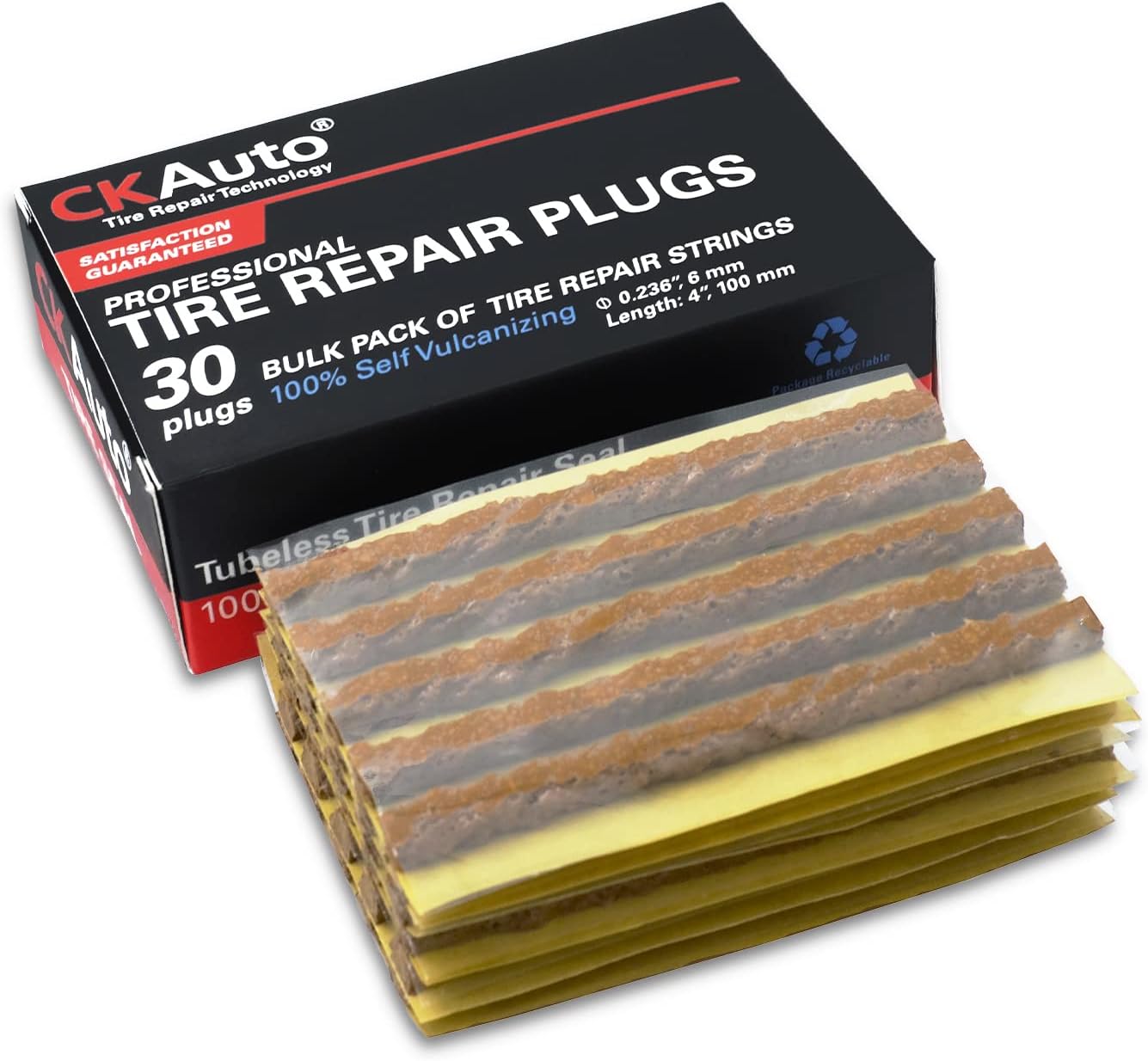
CKAuto tire repair strings provide a fast, reliable way to seal punctures in tubeless off-road tires without removing the tire from the rim. The rubber repair plugs are designed for quick roadside fixes and work across many vehicle types including cars, bikes, ATVs/UTVs, wheelbarrows, and mowers.
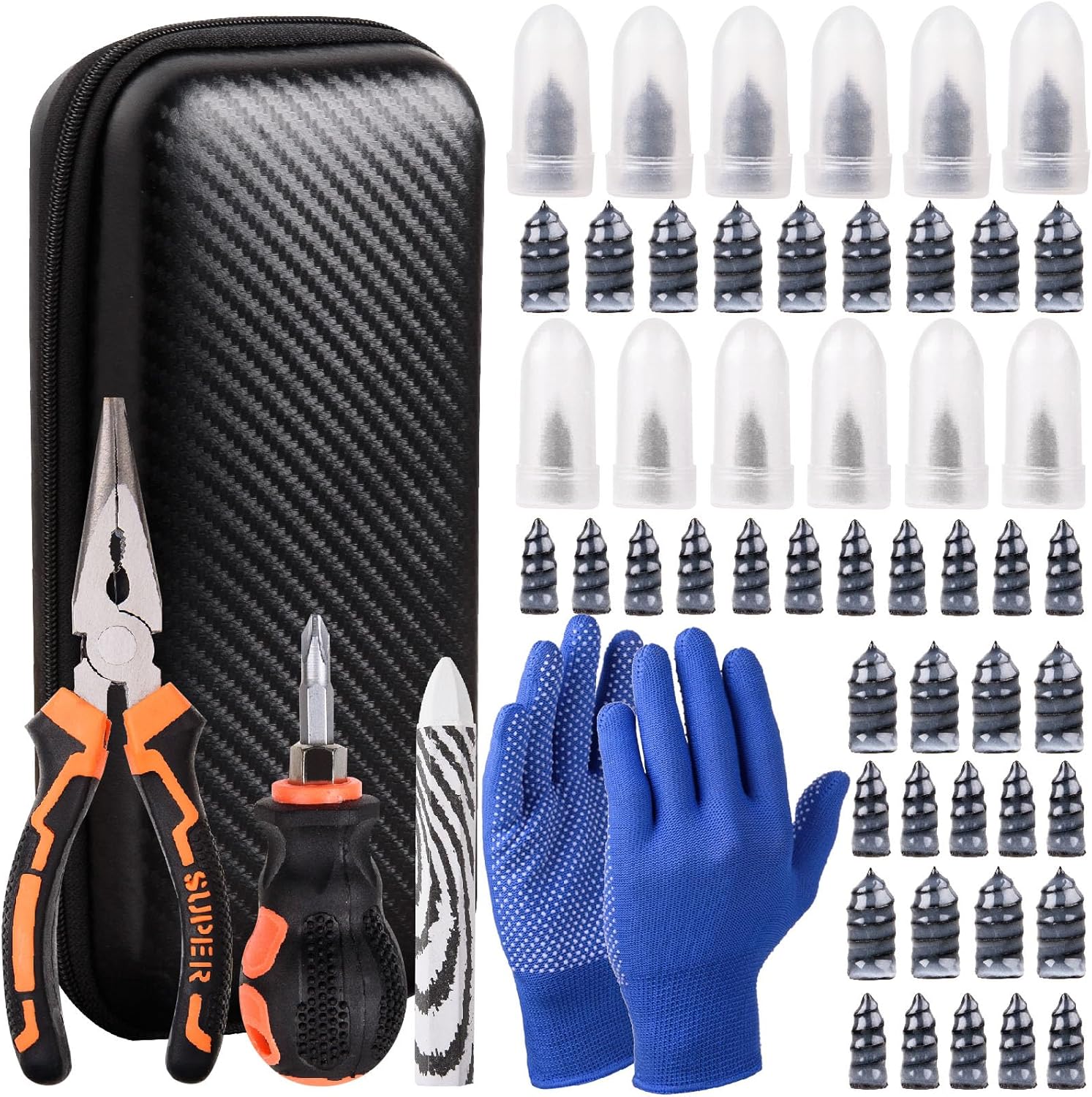
This tire sidewall puncture repair kit fixes flats fast without removing the tire, helping you get back on the road in minutes. It includes self-tapping repair nails, essential tools, gloves, and a portable storage bag for convenient roadside use. Designed for tubeless tires, it helps create a tight, leak-resistant seal for cars, motorcycles, trucks, SUVs, and ATVs.
Materials and Build Quality
The main durability feature is the bonded one-piece format. Because the stem and patch are connected, the unit fills the puncture path and seals the inner liner without relying on two unrelated repair pieces. The gray vulcanizing gum is present on both the patch and stem, while the blue poly backing helps protect the bonding surface before use.
Durability still depends on preparation and storage. Dirt, moisture, oils, poor buffing, expired cement, trapped air, or an incorrect unit size can weaken a repair. Keep unused units in their original packaging in a cool, dry area away from direct sunlight and heat. The listing does not state a shelf-life period, so check the package and seller information before using older stock.
How It Performs in Real Use
For a Tire Shop Repair Bench
The mixed assortment is the kit’s strongest practical advantage. A shop can keep eight units in each size without buying three full single-size boxes. That helps when repair volume is modest or when you service a wider range of tires.
For a Small Tread Puncture
The 1/6-inch stem and 1 3/8-inch patch give you the smallest option in the box. It can reduce unnecessary preparation compared with reaching for a larger unit, but the technician must still measure the injury and follow the repair system’s sizing rules.
For Passenger or Light-Truck Service
The radial and bias-ply compatibility broadens the kit’s use, yet vehicle type alone does not settle repairability. Passenger and light-truck tire makers commonly restrict repairs by puncture size and location, and some speed-rated or run-flat designs have extra limits. The tire’s own policy takes priority over the size available in the box.
For a Roadside Flat
This is not the convenient choice. The repair unit must be installed from inside the tire after dismounting and inspection. For roadside trouble, use the vehicle’s approved spare or mobility procedure, then have the damaged tire inspected by a qualified tire professional.
Pros and Cons
Pros
- Includes 24 units across three stem-and-patch sizes
- One-piece design fills the injury channel and covers the inner liner
- Listed for radial and bias-ply tire construction
- Supports chemical or heat vulcanization
- Compact package is easy to organize on a repair bench
Cons
- Installation tools and cement are not listed as included
- Requires tire removal, internal inspection, and trained installation
- The large 3/8-inch unit may not be suitable for common passenger-tire repair limits
Is It Worth the Price?
The TP-M13W offers the most value when you already have professional repair tools and want a mixed box of consumables. You are paying for three unit sizes, eight of each, rather than a full tool bundle. That can be a smart buy for a small shop or experienced repairer who does not use one size often enough to justify several separate boxes.
It is less attractive for a first-time buyer because the repair units are only one part of the job. You may still need tire-changing equipment, injury-preparation tools, vulcanizing products, a stitching roller, inflation equipment, and leak-testing supplies. A complete kit or professional tire service may cost less than assembling a safe system from scratch.
How It Compares to Alternatives
ZERINT also sells a complete tool-set version with the same three repair-unit sizes, which may suit buyers who lack the supporting tools. The ZERINT TP-103D is a 24-piece single-size box with 1/4-inch stems and 1 3/4-inch patches, making it more efficient for a shop that mainly uses that size.
The TP-M13W makes the most sense when mixed inventory matters more than included tools. An external plug kit is faster for temporary roadside use, but it does not replace tire removal, internal inspection, and a proper plug-and-patch repair when the tire is eligible.
Frequently Asked Questions
Does the TP-M13W include installation tools or cement?
The listing identifies 24 combination repair units, with eight pieces in each size. It does not list a tire changer, buffer, reamer, roller, vulcanizing cement, cleaner, or other installation tools as included.
Can the TP-M13W be used on tubeless tires?
Combination patch-and-stem units are installed from inside an eligible tire, which makes them relevant to many tubeless tire repairs. The tire must still be removed, inspected, and approved for repair under its manufacturer’s rules.
Is it suitable for a roadside emergency repair?
No. The TP-M13W requires access to the tire’s inner liner, so the tire must be dismounted from the wheel. Use the vehicle manufacturer’s approved spare or mobility procedure, then arrange a professional inspection.
How do you choose the correct stem and patch size?
Choose the unit after the puncture has been inspected and the injury channel has been measured and prepared. Follow the repair-material sizing chart and do not enlarge damage simply to fit a larger stem.
Can the 3/8-inch unit repair a 3/8-inch passenger-tire puncture?
Do not assume that it can. Many passenger-tire makers limit repairable tread punctures to 1/4 inch, and the tire maker’s limit controls the decision. The large unit may be intended for other approved applications, not for overriding passenger-tire repair rules.
How many repairs can one box complete?
The box contains 24 one-piece units, so it can support up to 24 separate repairs when one unit is used per repair. You only get eight units in each size, and every tire must qualify for repair before a unit is installed.
How should unused repair units be stored?
Keep them in their original packaging in a cool, dry area away from sunlight, heat, oils, and moisture. The listing does not state a shelf life, so check the package or seller guidance before using old stock.
Does radial and bias-ply compatibility mean universal fit?
No. It means the repair units are listed for both tire constructions. Repairability still depends on the tire type, damage location, puncture size, tread condition, prior repairs, and the tire manufacturer’s policy.
The Bottom Line
The ZERINT TP-M13W is a well-organized 24-piece option for trained repairers who want three combination-unit sizes for radial and bias-ply tires. Buy it for the mixed sizing and one-piece patch-and-stem design, but skip it if you need a roadside solution, lack professional tools, or are trying to repair damage outside the tire maker’s approved limits.
Ready to Buy?
Check the latest price and confirm the package details before you decide.

Related Articles
Tire Screw Plug Repair Kit Review
Compact tire screw plug repair kit review reveals fast roadside fixes, but which punctures are truly safe enough to trust?
Read More
Wall Mount Spare Tire Carrier Mount Review
I review the wall mount spare tire carrier’s fit, strength, and stability—see what could make or break your trailer setup.
Read More
Socpuro Tire Repair Patch Tool Kit Review
Great for quick DIY puncture fixes, the Socpuro Tire Repair Patch Tool Kit has limits and surprises you’ll want to know before buying.
Read More