
Tymate TM8 Tire Pressure Monitoring System Review
Disclosure: As an Amazon Associate, we earn from qualifying purchases. If you click a link on this page and make a purchase, we may receive a small commission at no extra cost to you.
Tymate TM8 TPMS Review
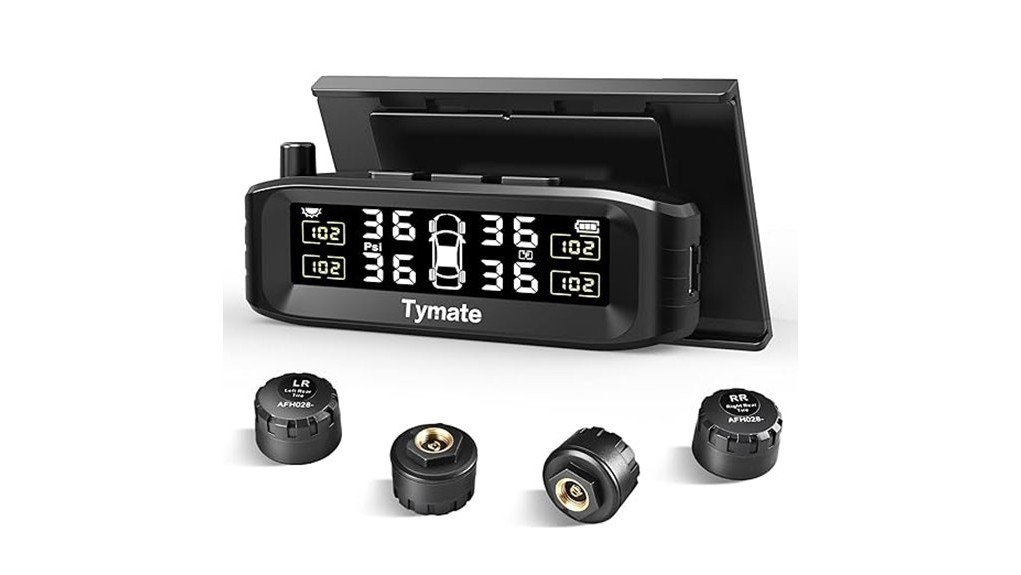
A tire warning light tells you something is wrong, but it often leaves you guessing which tire needs attention. The Tymate TM8 TPMS gives you live pressure and temperature readings for four tires on a windshield-mounted color LCD. This review helps you decide if the TM8 is the right fit for daily driving, road trips, pickups, and smaller RVs. It is a practical add-on for drivers who want more tire data, but it is not made for long RVs, trailers, or setups that need more than four sensors.
Quick Verdict
Rating: 8/10
Best For: Drivers of sedans, SUVs, pickups, MPVs, and smaller RVs who want a simple four-sensor tire pressure monitoring system with solar charging and live tire data.
Bottom Line: The Tymate TM8 is a strong value for the price because it combines live pressure tracking, temperature alerts, solar support, and a clear windshield display. The tradeoff is that it supports only four sensors, uses Tymate TS3 replacements only, and is recommended for vehicles under 20 feet.
| Specification | Detail |
|---|---|
| Brand | Tymate |
| Model | TM8 |
| ASIN | B0DF2LJ4R2 |
| Product Type | Aftermarket tire pressure monitoring system |
| Design | Windshield-mounted color LCD monitor with four external valve-stem sensors |
| Sensor Count | 4 external tire sensors |
| Pressure Range | 0-87 PSI |
| Accuracy Note | Listing bullets state up to ±1.5 PSI and ±3°F; product information also lists ±3 PSI measurement accuracy |
| Signal Frequency | 433.92 MHz |
| Sensing Distance | 36 feet |
| Power | Solar charging, USB charging, or cigarette-lighter charging; adapter sold separately |
| Display | Color LCD, windshield-mounted |
| Units | PSI/BAR for pressure and Fahrenheit/Celsius for temperature |
| Alert Modes | High pressure, low pressure, rapid deflation, high temperature, low sensor battery, and lost sensor signal |
| Upper Temperature Rating | 158°F |
| Weight | 0.22 kg |
| Materials | Metal and plastic |
| Compatibility | Sedans, SUVs, MPVs, pickup trucks, and smaller RVs under 20 feet total length |
| Replacement Sensor Compatibility | Tymate TS3 sensors only |
| Best Use | Four-wheel passenger vehicles and smaller RVs that need live tire pressure and temperature visibility |
[Products Worth Considering]
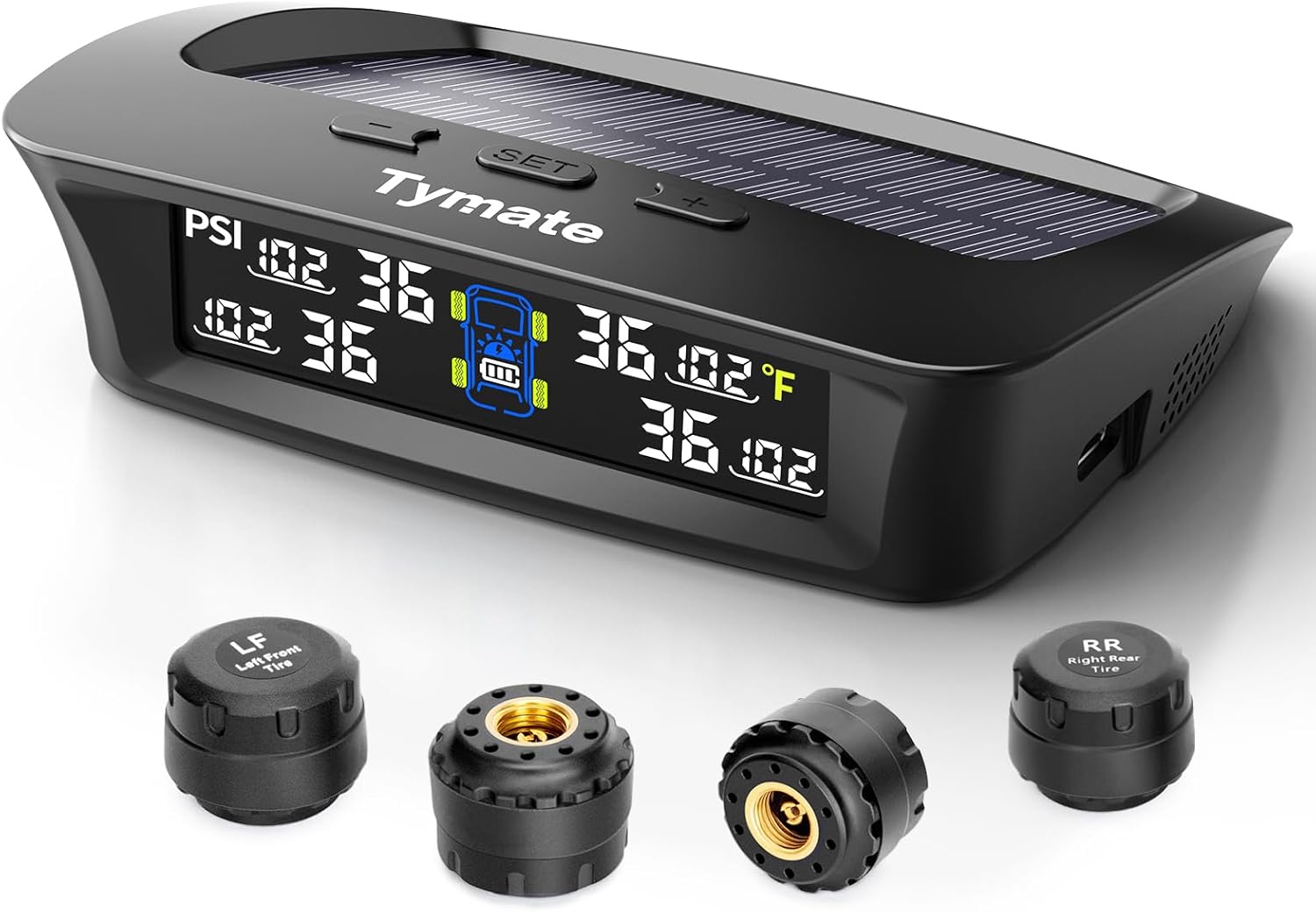
The Tymate TM3 RV TPMS delivers real-time tire pressure monitoring from 0 to 144 PSI with accurate readings and dependable wireless communication. It includes four external sensors with pre-pairing, six alarm modes for rapid leak, pressure extremes, temperature, and signal loss, plus an easy-reference setup for alert thresholds. Solar and USB-C charging help keep the display powered, while the color LCD and adaptive backlight improve visibility for safer driving and towing.
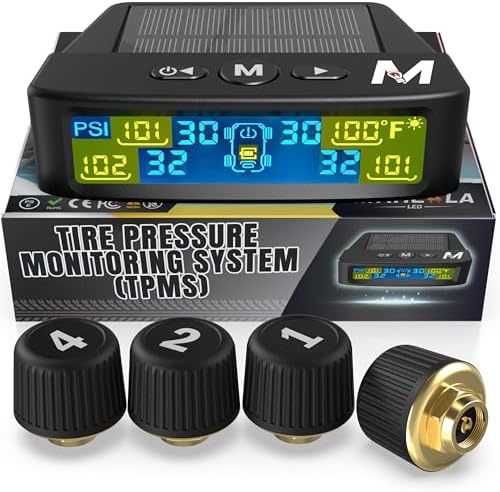
Marcala’s TPMS set of four sensors helps you monitor tire pressure and temperature in real time while driving, with updates every second. The bright color LCD uses auto-dimming for easy viewing, powered by dual solar and USB charging, and offers six alarm modes. Built for trailers, RVs, campers, trucks, and towing setups, the sensors support monitoring 1-4 wheels up to 98 PSI with IP67 waterproof protection.
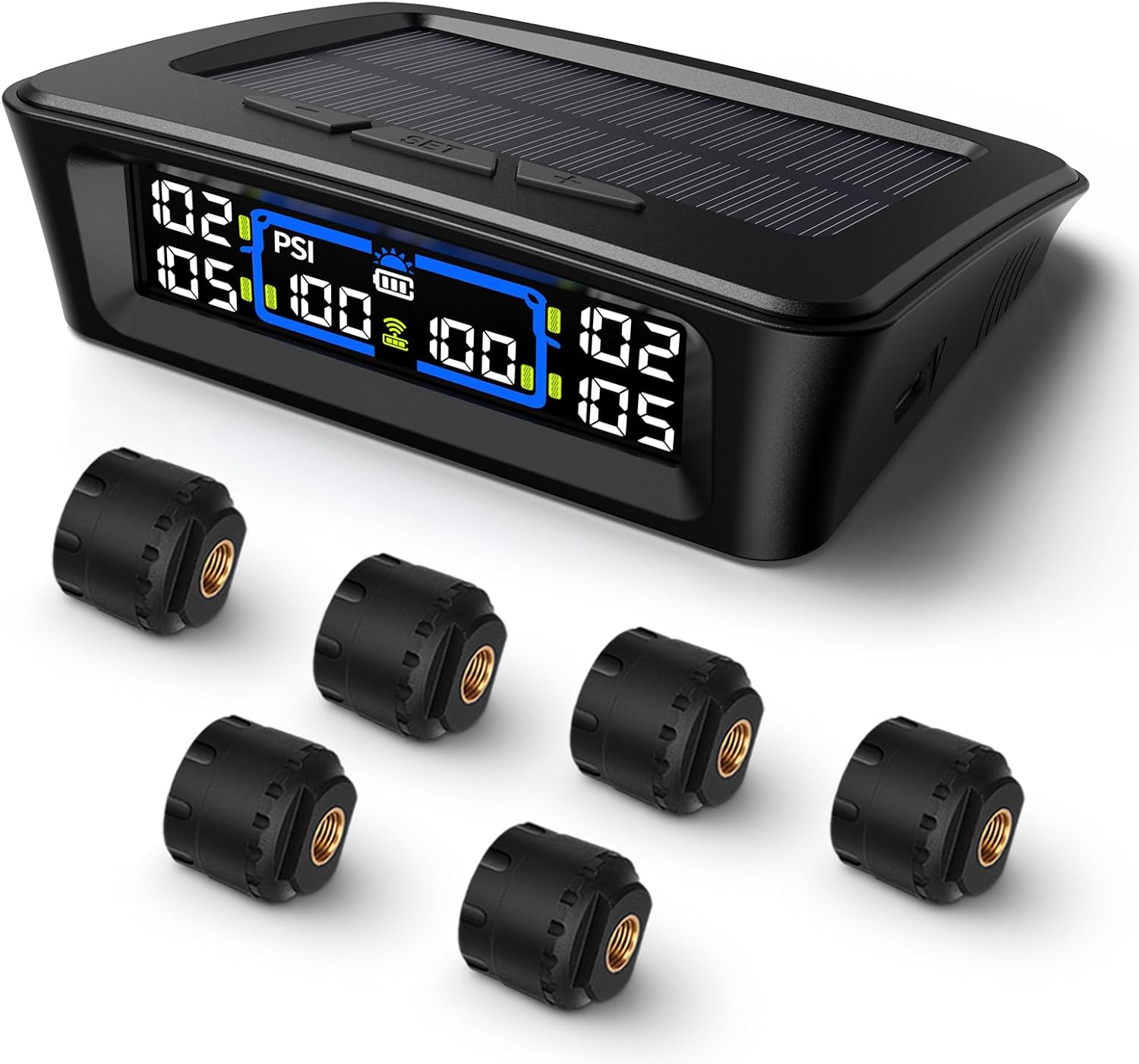
The Tymate TM12 RV TPMS delivers real-time tire pressure and temperature monitoring with a stable 433Hz display for safer long-distance driving. It supports simultaneous monitoring across vehicle and trailer zones, includes six alarm modes for pressure, temperature, leakage, battery, and signal loss, and features easy DIY installation with auto calibration. Power is supplied via USB-C charging or solar recharging, with a wide 0–144 PSI range and up to 50 ft signal coverage for RVs and towable trailers.
What Is the Tymate TM8 TPMS?
The Tymate TM8 is an aftermarket tire pressure monitoring system for drivers who want more detail than a basic dashboard warning light provides. It includes a windshield-mounted color LCD monitor and four external sensors that attach to your tire valve stems. The system is designed for common passenger vehicles, including sedans, SUVs, MPVs, pickups, and smaller RVs.
Its main job is simple: show tire pressure and tire temperature before a small problem becomes harder to manage. The TM8 can alert you to high pressure, low pressure, rapid deflation, high temperature, low sensor battery, or a lost sensor signal. That makes it useful for older vehicles without factory TPMS and for drivers whose built-in system does not show individual tire readings.
The TM8 sits in the practical, budget-friendly part of the TPMS category. It does not support large multi-axle setups or repeater use, but it gives many four-wheel vehicles the core features most drivers need: 0-87 PSI monitoring, solar charging, USB backup charging, and a display you can read without looking down at the dashboard.
Key Takeaways
- The Tymate TM8 is a four-sensor TPMS with a windshield-mounted color LCD display.
- It monitors tire pressure from 0-87 PSI and also tracks tire temperature.
- Six alarm modes cover high pressure, low pressure, rapid air loss, high temperature, low sensor battery, and lost signal.
- Solar charging helps reduce cable clutter, while USB and cigarette-lighter charging provide backup power.
- The biggest limits are four-sensor support, TS3-only replacement sensors, no repeater compatibility, and a recommended vehicle length under 20 feet.
Before You Buy: Do not choose the Tymate TM8 for a long RV, trailer, dually setup, or tow rig that needs more than four sensors or repeater support. It is built for smaller four-wheel setups, not expanded multi-axle monitoring.
Who Should Buy It?
Best For
- Drivers of older sedans, SUVs, pickups, and MPVs that do not show live tire pressure by wheel.
- Road-trip drivers who want real-time tire temperature and pressure readings without installing internal sensors.
- Small RV owners with four monitored wheels and a total vehicle length under 20 feet.
Skip If
- You need to monitor six, eight, ten, or twelve tires on an RV or trailer.
- You want repeater support for a longer vehicle or towing setup.
- You prefer internal TPMS sensors hidden inside the wheel instead of external valve-stem sensors.
What’s Included in the Tymate TM8 TPMS
The Tymate TM8 kit centers on a color LCD display and four external tire sensors. The sensors are pre-labeled and factory-paired with the monitor, which reduces setup time because you do not need to manually identify every sensor from scratch. You still need to match each sensor to the correct tire position before driving.
The display mounts on the windshield, which keeps the pressure and temperature readings close to your line of sight. That placement works well if your dashboard is crowded or curved, but you should test the location before final mounting. The screen should stay visible without blocking your view of the road.
The package also supports setup through the included product guidance and video instructions on the product page. Replacement sensors must be Tymate TS3 sensors, which is important if one sensor is lost, damaged, or needs to be replaced later. You should not assume third-party valve-stem sensors will pair with this monitor.
How the TM8 Alerts You to Tire Problems
The TM8 monitors two tire-health signals: pressure and temperature. Pressure matters because underinflation can increase tire wear and heat buildup, while overinflation can reduce contact patch and ride comfort. Temperature matters because heat can climb before a tire problem becomes visible from the driver’s seat.
The six alarm modes cover the main problems you want a TPMS to catch: high pressure, low pressure, rapid deflation, high temperature, low sensor battery, and lost signal. That last alert is useful because an external sensor can be damaged, loosened, or blocked. A lost-signal warning tells you the system is no longer reading one tire position clearly.
The product listing states pressure precision up to ±1.5 PSI and temperature precision up to ±3°F, while the product information section also lists ±3 PSI measurement accuracy. Because of that difference, use the TM8 as an active warning system and confirm setup readings with a reliable handheld tire gauge. That extra check matters before highway driving, towing, or carrying heavy cargo.
How the TM8 Stays Powered
Power management is one of the TM8’s strongest daily-use features. The monitor supports solar charging, which helps keep the unit topped up during daytime driving. That means fewer loose cables across the dashboard and less need to remember a separate charging routine.
The monitor also supports USB charging and cigarette-lighter charging when sunlight is limited. The cigarette-lighter adapter is sold separately, so you may need an existing car adapter if you want that backup power option. For night driving, parking-garage use, or cloudy road trips, the extra charging options make the system more flexible.
Solar support does not mean you can ignore placement. The windshield mount should let the solar panel receive enough light without blocking your view. If your windshield has a deep tint strip or you regularly park indoors, USB charging may become the more reliable backup.
How the TM8 Screen and Mount Help Daily Use
The TM8 uses a color LCD screen that shows tire pressure and temperature readings in a compact layout. You can switch pressure units between PSI and BAR, and temperature units between Fahrenheit and Celsius. That matters if you follow vehicle placards in PSI but prefer Celsius for temperature alerts.
The windshield mount is helpful because tire data stays visible without taking up console space. It can also be easier to read than a loose dashboard monitor that shifts around during turns or braking. The tradeoff is that any windshield-mounted accessory must be positioned carefully so it does not distract you or interfere with your sightline.
The system is designed for vehicles under 20 feet total length and has a listed sensing distance of 36 feet. That makes it better suited to standard passenger vehicles and smaller RVs than long trailers or larger motorhomes. If your setup stretches beyond that range, a TPMS with repeater support is the safer choice.
How to Set Up the TM8 and Replace Sensors
Setup is designed to take about five minutes when the sensors are ready and the monitor is charged. Start by mounting the display, then install each external sensor on its matching valve stem. After the sensors are installed, check that the monitor shows each tire position correctly.
| Step | Action | Why It Matters |
|---|---|---|
| 1 | Charge and mount the display | A stable monitor position makes readings easier to see. |
| 2 | Attach the four labeled sensors | Correct tire placement prevents confusing alerts. |
| 3 | Confirm pressure readings with a tire gauge | This checks sensor accuracy before driving. |
| 4 | Drive briefly and recheck the display | This confirms signal stability in real use. |
The TM8 sets high and low pressure alert thresholds automatically when you install the sensors. The current pressure becomes the reference point, and the alarm range is based on +25% PSI and -15% PSI from that reference. For best results, inflate your tires to the correct placard pressure before installing the sensors.
If you replace a sensor, use a Tymate TS3 sensor. The TM8 is not designed to pair with any Tymate sensor model or generic TPMS sensor you find online. This limitation is not unusual for aftermarket TPMS kits, but it is important to know before buying spares.
Pro Tip: Inflate all four tires to the correct door-placard pressure before installing the sensors. The TM8 uses the installed pressure as its reference point, so starting with the right pressure helps the automatic alert range make more sense.
Compatibility and Safety Notes
The TM8 is most useful when the display can receive a stable signal from all four sensors. Its listed 36-foot sensing distance and under-20-foot vehicle recommendation make it a better match for smaller vehicles than long RVs or trailers. If your setup includes extra axles, a trailer, or a long wheelbase, choose a TPMS designed for that use.
Because the sensors mount externally on the valve stems, install them carefully and check for air leaks after setup. You should also confirm readings with a handheld tire gauge during routine maintenance. The TM8 gives helpful early warnings, but it should not replace regular tire checks, correct inflation, or tire inspections.
Place the windshield display where you can see it without blocking your view. A clear sightline matters more than a perfect viewing angle. If the mount, display, or charging cable distracts you, move the unit before driving.
How It Performs in Real Use
On a Daily Commute
For daily commuting, the TM8’s best feature is quick visibility. You can see tire pressure and temperature before the car feels strange or the factory warning light turns on. The color LCD and windshield placement make the system easy to glance at when you start the car or stop at a light.
On a Road Trip
On longer drives, the six alarm modes become more useful. A slow leak, rising tire temperature, or lost sensor signal can be caught while you still have time to pull over safely. Solar charging also makes sense on road trips because the monitor can stay powered during daylight hours without constant USB charging.
For a Small RV or Pickup
The 0-87 PSI range covers many sedans, SUVs, pickups, and smaller RV setups. The key limit is vehicle length, because Tymate recommends the TM8 for vehicles under 20 feet and does not support repeater use with this model. For longer rigs, you should choose a system designed for RVs and trailers with extended range.
For Emergency Tire Awareness
The TM8 can help when a tire loses air slowly and the vehicle still feels normal. The rapid deflation and low-pressure alerts give you a chance to stop, inspect the tire, and decide whether you need air, repair, or roadside help. It does not repair the tire, but it can reduce the chance that you keep driving without knowing one tire is changing.
Pros and Cons
Pros
- Four external sensors give you live tire-by-tire pressure and temperature readings.
- Six alarm modes cover pressure, heat, rapid air loss, sensor battery, and signal issues.
- Solar charging reduces cable clutter, with USB and cigarette-lighter backup charging available.
- The 0-87 PSI range fits many sedans, SUVs, MPVs, pickups, and smaller RVs.
- The windshield-mounted color LCD keeps tire data closer to your line of sight.
Cons
- Only four sensors are supported, so it is not ideal for larger multi-axle RV or trailer setups.
- The TM8 is not compatible with Tymate repeaters and is recommended for vehicles under 20 feet.
- Replacement sensors must be Tymate TS3 sensors, which limits third-party replacement options.
- Pressure thresholds are automatic rather than fully custom tire-by-tire settings.
Is It Worth the Price?
The Tymate TM8 offers strong value for the price if you need a simple four-wheel tire monitor. You get live readings, temperature monitoring, solar charging, and six alarm modes without paying for a large RV-focused system. For a commuter car or small SUV, that balance makes sense.
The value drops if your vehicle needs more range, more sensors, or repeater compatibility. In that case, buying a cheaper four-sensor kit can cost more later if you have to replace it. The TM8 is a smart buy for everyday use, but it is not the right tool for every RV or towing setup.
It is also worth considering how much detail your vehicle already gives you. If your factory TPMS shows individual live pressure readings, the TM8 may be redundant. If your car only shows a generic warning light, this system adds practical information you can act on immediately.
How It Compares to Alternatives
If you want a higher pressure range, the Tymate TM7 is worth considering because it is often listed with a 0-144 PSI range. If you need to monitor more than four wheels on an RV or trailer, the Tymate TM12 line is a better fit because it is designed around larger sensor counts. The Tymate TM8 remains the better pick when you want a compact windshield display, solar charging, and four-wheel monitoring for a smaller vehicle.
Other 0-87 PSI systems, such as the Masoll M13, can also fit basic passenger-vehicle needs. The TM8’s advantage is its Tymate-specific ecosystem, color windshield display, and simple setup. Its weakness is the closed TS3 sensor compatibility, which makes replacement planning more important.
Frequently Asked Questions
Is the TM8 suitable for dually RV tires?
The TM8 is best for four-wheel monitoring, not full dually RV coverage. If your dually setup has more than four tire positions to monitor, choose a TPMS that supports more sensors and longer vehicle lengths.
Can I set custom pressure thresholds for each tire?
The TM8 uses automatic reference-based thresholds rather than fully manual tire-by-tire custom limits. When you install the sensors, the current tire pressure becomes the reference point, with alerts based on +25% PSI and -15% PSI from that value.
Does the TM8 work in extreme hot or cold weather?
The TM8 tracks tire temperature and has a listed upper temperature rating of 158°F. Very hot weather, cold mornings, and long highway drives can all change tire pressure, so you should use the display as an early warning tool and still check tires manually when conditions are severe.
How accurate are the external sensors over time?
The listing bullets state pressure precision up to ±1.5 PSI and temperature precision up to ±3°F, while the product information section also lists ±3 PSI measurement accuracy. Because of that difference, compare the TM8 against a quality tire gauge during setup and routine maintenance.
Can I add more than four sensors to the system?
No. The TM8 is a four-sensor system, and it is not the right choice if you need to monitor six, eight, ten, or twelve tires. Look at larger RV-focused Tymate systems if you need expanded sensor support.
Which replacement sensors work with the TM8?
The TM8 is compatible only with Tymate TS3 replacement sensors. This matters if you lose a valve-stem sensor or want to keep a spare, because generic sensors may not pair with the monitor.
What is the most common setup mistake?
The biggest mistake is installing the sensors before your tires are inflated to the correct placard pressure. Since the TM8 uses the installed pressure as its reference point, start with properly inflated tires and confirm the readings with a handheld gauge.
The Bottom Line
The Tymate TM8 earns its 8/10 rating because it gives you the most important TPMS features in a simple package: four external sensors, 0-87 PSI monitoring, tire temperature alerts, solar charging, and a windshield-mounted color display. You should buy it if you drive a sedan, SUV, pickup, MPV, or smaller RV and want better tire visibility than a basic warning light provides.
You should look elsewhere if you need more than four sensors, repeater support, or coverage for a longer RV or trailer. For the right vehicle, the TM8 is a worthwhile add-on because it turns hidden tire changes into clear, early warnings.

Related Articles
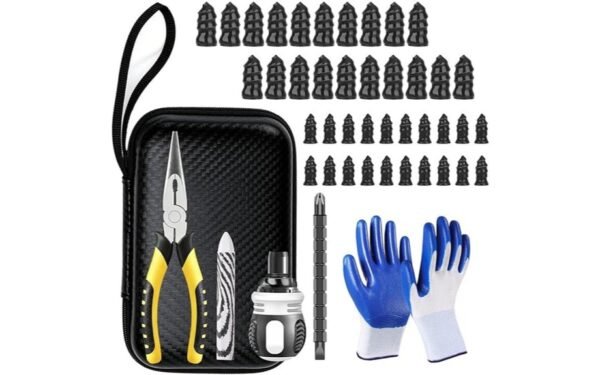
Tire Screw Plug Repair Kit Review
Compact tire screw plug repair kit review reveals fast roadside fixes, but which punctures are truly safe enough to trust?
Read More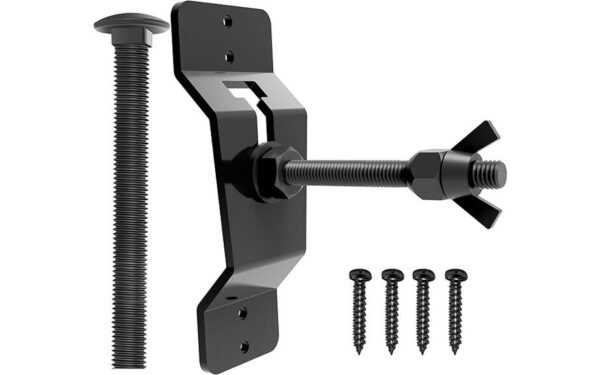
Wall Mount Spare Tire Carrier Mount Review
I review the wall mount spare tire carrier’s fit, strength, and stability—see what could make or break your trailer setup.
Read More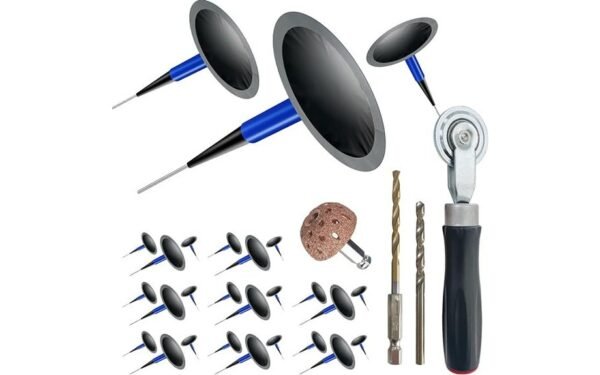
Socpuro Tire Repair Patch Tool Kit Review
Great for quick DIY puncture fixes, the Socpuro Tire Repair Patch Tool Kit has limits and surprises you’ll want to know before buying.
Read More