
2018 Hyundai Sonata Tire Size: OEM Specs & Replacement Options
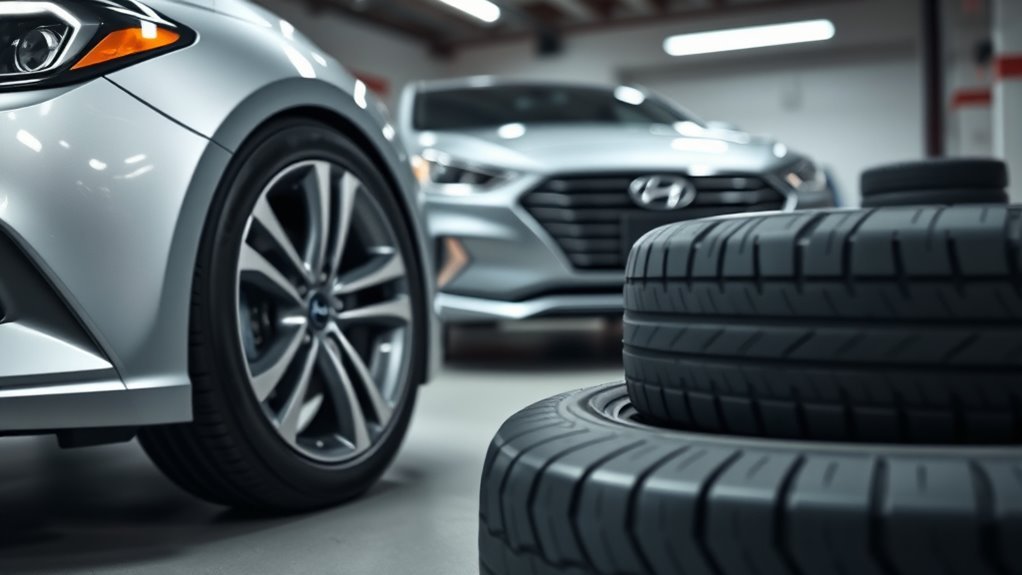
Your 2018 Hyundai Sonata commonly came with 205/65R16, 215/55R17, or 235/45R18 tires; N Line models use 245/40R19. You’ll find the exact OEM size and recommended PSI on the driver’s door jamb and should match load index and speed rating when replacing tires. Alternatives like 215/60R16 or 225/45R18 can fit but change sidewall height and handling. Pick tires by use—touring, performance, or winter—and follow proper fitment and installation for best results, and more specifics follow.
Quick OEM Tire Sizes for the 2018 Hyundai Sonata
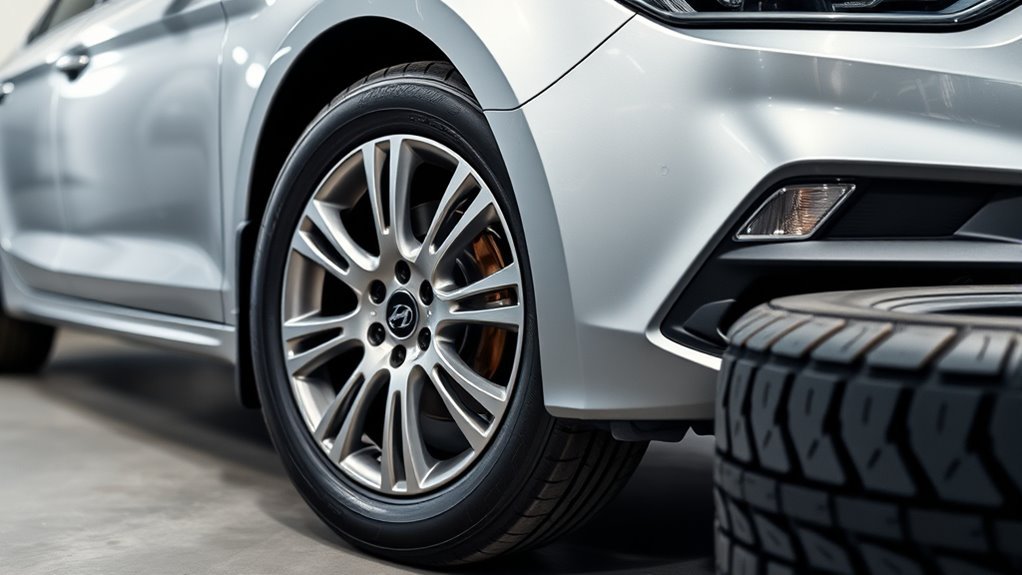
If you own a 2018 Hyundai Sonata, the standard OEM tire size is 205/65 R16, while higher trims use 215/55 R17 or 235/45 R18 and performance-oriented models (like the N Line) can run 245/40 R19; check the driver’s-side door jamb for the exact OEM size and recommended pressures to guarantee proper handling, safety, and fuel efficiency. You’ll select tire sizes that preserve the factory balance between ride comfort, steering response, and rolling resistance. When swapping or upgrading, match load and speed ratings to maintain ABS, traction control, and speedometer accuracy. Prioritize tire maintenance: monitor tread depth, pressure, and alignment frequently to sustain predictable behavior across varied road conditions. Choose replacements that meet Hyundai’s specs to avoid compromising fuel economy or braking distances. If you seek freedom on the road, make precise, spec-driven tire choices so your Sonata performs reliably, safely, and efficiently without sacrificing the control that lets you drive confidently.
Read Your 2018 Sonata Tire Code (Examples: 235/45R18, 215/55R17)
When you read a tire code like 235/45R18 or 215/55R17, the three parts tell you exactly what the tire matches to: the first number is the tread width in millimeters, the second is the aspect ratio (sidewall height as a percentage of that width), and the “R” plus final number gives radial construction and the wheel diameter in inches. You’ll see OEM sizes for the 2018 Sonata such as 215/55R17, 235/45R18, and 245/40R19; each follows the same pattern. For tire code interpretation, read left to right: width(mm) / aspect ratio (%) R wheel diameter(in). Aspect ratio explained: multiply width by the aspect percentage to get sidewall height in millimeters, which affects ride comfort, handling, and overall diameter. “R” denotes radial construction, standard on modern tires. Knowing how to decode these numbers frees you to compare options confidently and choose tires that preserve safety, performance, and the liberation of mobility without guesswork.
Compatible Replacement Sizes for the 2018 Sonata (Fitment & Effects)
Now that you can read tire codes like 235/45R18 or 215/55R17, you can compare compatible replacement sizes for the 2018 Sonata and understand their fitment effects. You’ll see OEM sizes: 205/65R16, 215/55R17, 235/45R18. Compatible alternatives include 215/60R16 and 225/45R18; each choice alters handling, comfort, and efficiency.
- 215/60R16 — slightly taller sidewall than 205/65R16, preserves ride comfort and fuel economy; minimal speedometer error.
- 225/45R18 — narrower than 235/45R18 but wider than 215, balances grip and reduced rotational inertia; expect modest tire width impact on steering response.
- 235/45R18 — maximizes lateral grip and cornering stability; accept heavier unsprung mass and clear performance trade offs.
Always match or exceed OEM load index and speed rating, and verify the door-jamb sticker for exact rim fitment. Make choices that free you from compromise while keeping safety paramount.
Best Tires by Use Case for the 2018 Sonata: All‑Season, Touring, Performance, Winter
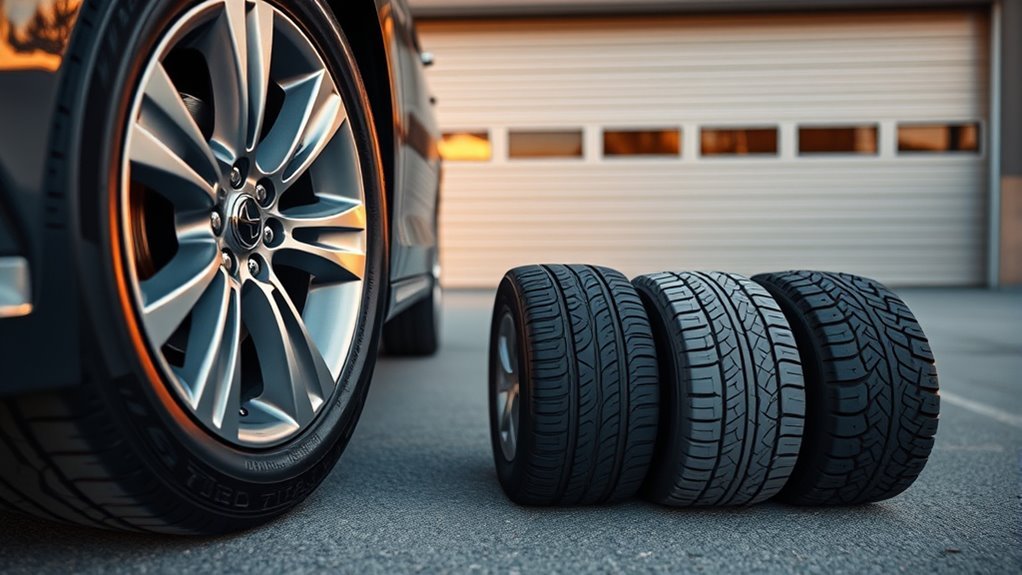
Although your 2018 Sonata comes factory‑fit with 215/55R17 or 235/45R18 tires, choosing the right compound and tread design for your driving conditions makes a measurable difference in safety, handling, and fuel economy. For all‑season use, pick a tire with balanced siping and circumferential grooves—Michelin Primacy Tour A/S delivers reliable wet braking and consistent tire tread wear for year‑round commuting. If you want comfort and longevity, touring options like the Continental TrueContact offer low rolling resistance and predictable lateral stability, maximizing range and durability. For enthusiastic driving, a performance tire such as the Pirelli Cinturato P7 emphasizes stiffer sidewalls and asymmetric tread patterns to improve steering response and cornering grip. In winter, switch to a dedicated snow compound with aggressive siping; Bridgestone Blizzak WS90 provides superior seasonal performance on ice and packed snow. Match tire selection to your priorities—efficiency, comfort, sport, or winter safety—to free yourself from compromise without sacrificing control.
Buying & Installation Checklist: Pressure, Load Index, Rotation, Cost Considerations
You’ve picked the right tire type for your driving needs; next, confirm fitment and service items before you buy. Check the driver’s door jamb for the OEM 205/65R16 size, recommended PSI, and the required load index — replacements must meet or exceed that load rating for safety. Track tire maintenance: verify pressure before installation and recheck after 24–48 miles.
- Inspect load index and speed rating to match or exceed the sticker spec; note installation fees and shipping that add to total cost.
- Plan routine tire rotation every 5,000–7,000 miles to equalize tread wear and extend service life; schedule alignment if uneven wear appears.
- Run a quick cost analysis: tires range roughly $65–$480 each; add mounting, balancing, valve stems, and disposal fees to estimate out-the-door price.
You’re reclaiming control by demanding correct specs, consistent tire maintenance, and transparent cost analysis before committing.
Frequently Asked Questions
What Tires Come on a Hyundai Sonata?
You get various OEM tire sizes depending on trim, and manufacturers like Kumho and Michelin commonly equip Sonatas; you can choose comparable tire brands or upgrade to performance tires for sharper handling while maintaining correct size and load ratings.
What Is My OEM Tire Size?
Your OEM tire size is usually 205/65R16; check your door jamb sticker to confirm. You’ll preserve tire longevity and meet performance ratings by matching load index and speed rating, ensuring safer, freer driving choices.
What Is the Best Oil for a Hyundai Sonata?
Break the chains: you should use 5W-20 oil; favor synthetic options for longevity and protection. Prioritize oil viscosity matching manufacturer specs, change intervals, and quality brands to keep your engine efficient, durable, and free.
Conclusion
You now know the Sonata’s OEM sizes, how to read codes like 235/45R18, and which alternative fits will maintain speedometer accuracy and load capacity. If you’re skeptical that a slightly wider tire won’t affect handling, test it: a 10 mm change can alter cornering grip and steering response measurably. Follow pressure, load index, and rotation rules, and you’ll get safe, predictable performance from your 2018 Hyundai Sonata.

Related Articles

How Does TPMS Work on a Hyundai Sonata? Complete Explanation
How your Hyundai Sonata’s TPMS actually detects and reports tire pressure—indirect versus direct systems—reveals critical steps for troubleshooting and maintenance you’ll want to know.
Read More
Hyundai Sonata Rim Width & Offset Specs for All Trim Levels
Maximize your Hyundai Sonata's performance with essential rim width and offset specs for all trim levels—discover how the right fit can transform your drive.
Read More
Does Hyundai Sonata Use Direct or Indirect TPMS? Explained
Judging by precision, speed, and per-wheel data, discover why the Hyundai Sonata uses direct TPMS—and what that means for alerts, costs, and maintenance.
Read More