
2013 Hyundai Sonata Tire Size: OEM Specs & Replacement Options
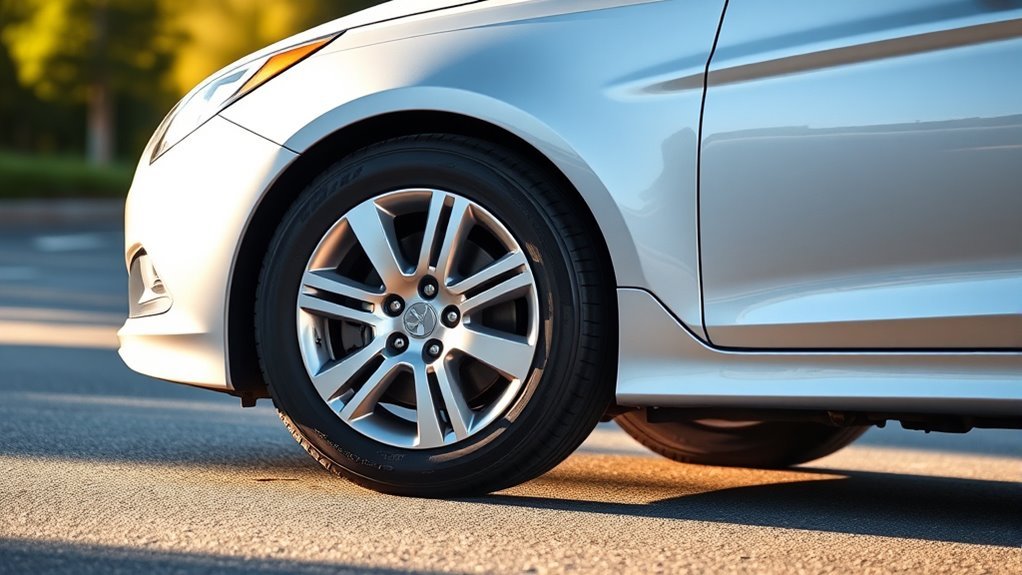
For your 2013 Hyundai Sonata, stick to OEM sizes: 205/65R16, 215/55R17, or 225/45R18, matching wheel diameter and clearance. Choose replacements with a load index ≥95 and speed rating H or higher to preserve handling and safety. Favor all‑season, winter, or performance tires based on climate and driving style, and watch UTQG, tread depth, and manufacture date. Rotate every 5–7k miles and inspect for damage; continue below to get specific model and fitment guidance.
2013 Sonata OEM Tire Sizes by Trim
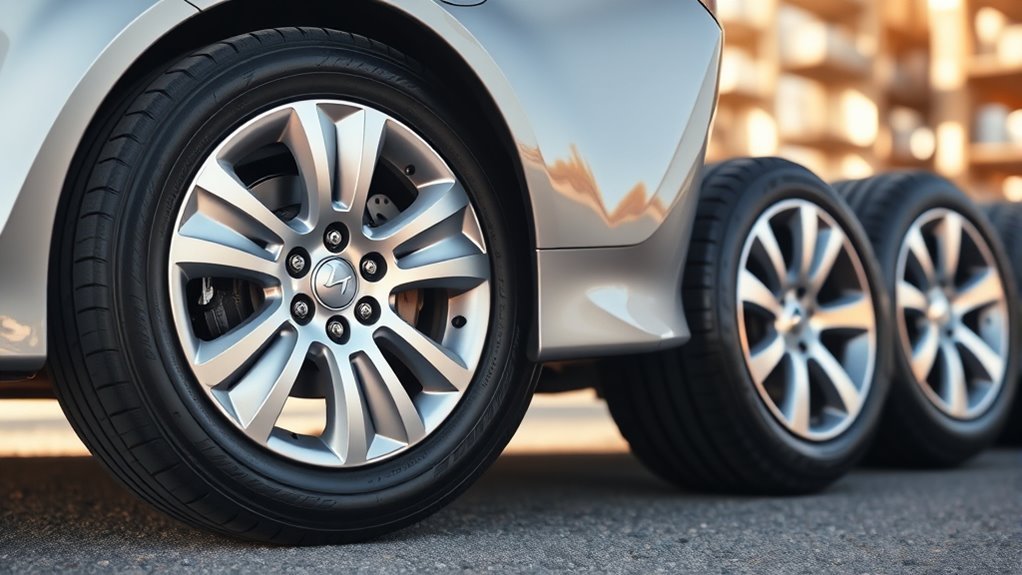
The 2013 Hyundai Sonata shipped with three OEM tire sizes tied to trim: 205/65R16 on the base model, 215/55R17 on mid-level trims, and 225/45R18 on sport models, each matching 16-, 17-, and 18-inch wheels respectively. You’ll recognize that each size was selected to balance ride comfort, handling, and efficiency for its target driver. You’ll want 205/65R16 for softer ride and lower noise; 215/55R17 for a compromise between comfort and sharper steering; 225/45R18 for sportier responsiveness and cornering precision. OEM choices also reflect variations in tread patterns and rubber compounds that tune tire performance to trim intent. When you evaluate replacements, assess how alternate tread patterns affect traction in wet and dry conditions and how compound choices shift rolling resistance and feedback. Use the OEM spec as your baseline to preserve the intended character of your Sonata while asserting control over ride quality, handling, and efficiency.
Safe Replacement Sizes and Required Load Ratings
When replacing tyres, stick to compatible dimensions like the OEM 205/65 R16 or approved alternatives such as 215/55R17 and 225/45R18 to preserve handling and speedometer accuracy. Make sure each replacement meets or exceeds the factory load index (typically 95 for 205/65 R16, ~1,521 lbs per tyre) and choose a speed rating equal to or higher than the original. Also match a UTQG suitable for your driving conditions to maintain expected wear and traction.
Compatible Tire Dimensions
Because tire dimensions affect handling, clearance, and load capability, you should stick to safe replacement sizes and matching load ratings specified for your Sonata. Perform a tire width comparison: OEM 205/65R16 gives balanced ride and clearance; 215/55R17 tightens sidewall for crisper response; 225/45R18 further reduces sidewall, improving grip but increasing road harshness. Check the driver’s door jamb for original load index importance and choose replacements that meet or exceed that index. Maintain or exceed the original speed rating to preserve dynamic behavior. Verify tire pressure recommendations and tread depth after installation. Choose dimensions that respect wheel well clearance and speedometer accuracy. That disciplined approach frees you from compromise while keeping safety uncompromised.
Required Load Index
If you pick replacement tires for your 2013 Sonata, make sure their load index meets or exceeds 95 (the OEM 205/65R16 rating), since that index—95—corresponds to 1,521 lbs per tire and preserves vehicle load capacity and handling. You’ll want replacements that maintain load index importance and tire safety to protect payload, stability, and braking.
- Verify the driver’s side door jamb placard for required load ratings and match or exceed the OEM index.
- Consider alternative sizes like 215/55R17 or 225/45R18 only if their load index equals or surpasses 95.
- Prioritize tires labeled at or above the OEM rating to keep handling predictable and avoid overloading.
You’re choosing freedom on the road; don’t compromise required load ratings.
Speed Rating Considerations
Although you can choose alternate sizes like 215/55R17 or 225/45R18 for your 2013 Sonata, make sure the replacement tires carry a speed rating of at least H (130 mph) and a load index that meets or exceeds the OEM requirement (95 for 205/65R16); this preserves handling, braking, and safety at highway speeds. You’ll want tires with a matching or higher speed rating to maintain handling performance and avoid under-rated rubber that can deform, overheat, or reduce steering precision. Confirm load index values on the placard or owner’s manual so each tire supports axle weight and payload. When you select compliant sizes, you free yourself from compromise: improved confidence, predictable handling performance, and adherence to manufacturer safety margins.
How to Read a Sonata Tire Code (P215/55R17 94V)
Look at the code P215/55R17 94V to identify each specification: P means passenger tire, 215 is the tread width in millimeters, 55 is the aspect ratio, and R17 is the 17-inch rim diameter. Check the 94 load index — that corresponds to a 1,477 lb maximum load per tire when properly inflated. The V speed rating lets you know the tire is rated for up to 149 mph, so match load and speed ratings to your Sonata’s requirements for safety and performance.
Tire Code Breakdown
A tire code like P215/55R17 94V gives you compact, technical info about fit and performance: you can decode size, construction, rim fitment, load and speed quickly to choose tires that free you from uncertainty while driving. Use tire maintenance tips and seasonal tire considerations when selecting replacements.
- P215/55: 215 mm tread width; 55% aspect ratio (sidewall height = 55% of width), affecting ride and handling.
- R17: radial construction (standard) and fits 17-inch wheels, so rims and tires must match.
- 94V: load index 94 = 1,478 lbs per tire; V indicates a high-speed capability. Check compatibility with vehicle requirements and your driving goals.
Speed And Load Ratings
When you read the last group of characters in a Sonata tire code—like “94V” in P215/55R17 94V—you’re seeing the load index and speed rating, which tell you the maximum weight each tire can carry and the top speed it’s certified for. You’re responsible for matching these to maintain safe tire performance and preserve freedom on the road. Load index 94 equals 1,477 lbs (670 kg) per tire at proper inflation. Speed rating V permits up to 149 mph (240 km/h), covering normal and spirited driving.
| Item | Meaning |
|---|---|
| Load index (94) | 1,477 lbs / 670 kg per tire |
| Speed rating (V) | 149 mph / 240 km/h |
Check both to validate required load capacity and performance.
Best Tire Types and Recommended Models for the 2013 Sonata
Although the 2013 Sonata comes stock with 205/65R16 tires that balance comfort and everyday performance, you’ll want to match tire type to your driving needs—choose all-season tires like the Michelin Primacy Tour A/S for year-round versatility, Bridgestone Blizzak for winter traction, or a performance tire such as the Continental ExtremeContact DWS06 for sharper handling; also check treadwear ratings and verify any replacement meets or exceeds the vehicle’s load index. You’ll prioritize tire performance and seasonal considerations: pick an all-season if you want low-maintenance versatility, winter tires for snow and ice, or performance tires for sharper steering and shorter braking distances. Verify load index and treadwear to guarantee safety and value. Consider these recommended options based on use and aspiration:
- Michelin Primacy Tour A/S — balanced ride, dependable wear, strong wet grip.
- Bridgestone Blizzak — optimized winter compound, superior snow/ice traction.
- Continental ExtremeContact DWS06 — sporty response, adaptable in mixed conditions.
Fit tires that liberate your driving style while meeting technical specs.
How Long 2013 Sonata Tires Last: And When to Replace Them
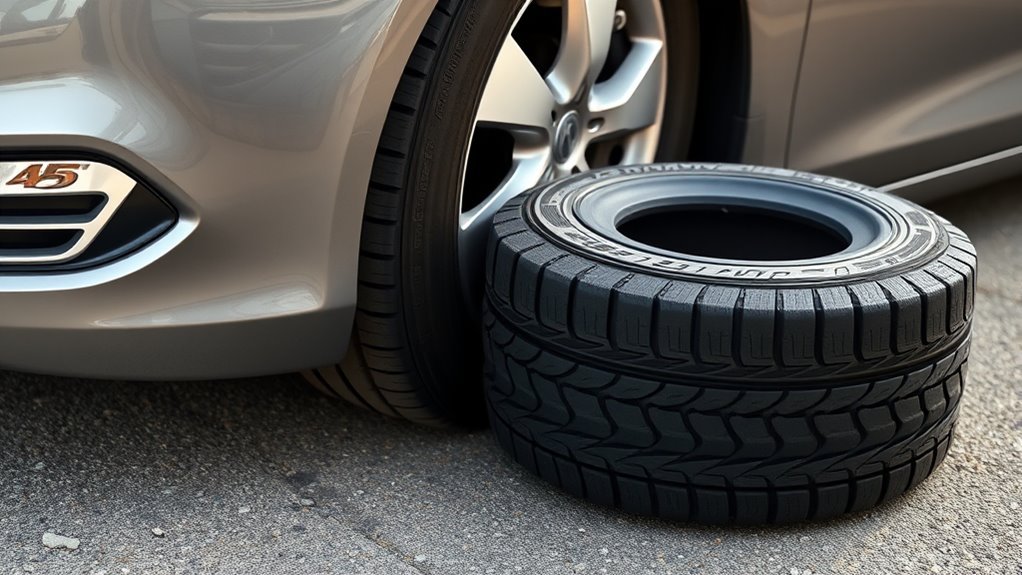
Expect your 205/65R16 OEM tires on the 2013 Sonata to last roughly 40,000–60,000 miles under typical driving, with careful maintenance and rotations every 5,000–7,000 miles extending life toward the higher end. You’ll hit different mileage limits based on driving conditions, style, and brand; some users report up to 73,000 miles on specific models. Monitor tread depth and wear indicators regularly; replace when depth falls below 5/32″ or when cracks, bulges, or other damage appear. Also consider replacement timing at five years due to material degradation regardless of miles.
| Factor | What to check | Action |
|---|---|---|
| Tread depth | Measure with gauge | Replace <5/32" |
| Driving conditions | Road type, climate | Expect faster wear if harsh |
| Tire rotation | Interval | Rotate every 5–7k mi |
| Visual damage | Cracks/bulges | Replace immediately |
| Age | Manufacture date | Replace ~5 years |
Stay proactive and free from risk by replacing tires on objective criteria, not hope.
Quick Maintenance & Buying Checklist (Pressure, Rotation, Fitment)
If you want reliable performance and safety, keep a short maintenance checklist for your 2013 Sonata: Start by confirming the OEM tire size (205/65 R16 SL) on the driver’s door jamb sticker and use that placard for specifications.
- Check tire pressure monthly and before long trips; use the door-jamb recommended psi for ideal handling and fuel economy.
- Rotate tires every 5,000–7,000 miles to equalize tread wear and extend service life; record rotations in a log.
- When buying replacements, match or exceed the placard’s load index and choose OEM-equivalent or reputable aftermarket brands for compatibility.
These maintenance tips free you from avoidable failures: accurate pressure prevents uneven wear and blowouts, regular rotation preserves traction, and proper fitment maintains steering geometry and safety margins. You’ll reclaim control of costs and safety by following this compact, actionable checklist.
Frequently Asked Questions
What Tires Come on a Hyundai Sonata?
You get OEM tires sized 205/65R16, 215/55R17, or 225/45R18 depending on trim; you can choose tire brands like Michelin, Goodyear, Hankook, or opt for performance tires to enhance handling, safety, and driving freedom.
What Is My OEM Tire Size?
Your OEM tire size is 205/65R16. You’ll want regular tire maintenance, check pressure on the door jamb, and consider trusted tire brands for replacements that match your driving needs and support reliable, liberated mobility.
What Is the Best Oil for a Hyundai Sonata?
Use 0W-20 or 5W-20 synthetic oil with API SN/ILSAC GF-5 to maximize engine performance and protect components; you’ll improve efficiency and longevity by choosing correct oil viscosity and changing it every 7,500 miles or six months.
Conclusion
Keeping your 2013 Sonata’s tires within OEM specs (commonly P215/55R17 94V) and matching or exceeding the original load rating is essential for safety and performance. Did you know tire tread depth below 4/32″ increases wet stopping distance by over 50%? Rotate, maintain pressure, and replace when tread or age compromises safety. Use recommended tire types for your driving conditions and check fitment before buying to avoid clearance or handling issues.

Related Articles
Hyundai Sonata Tire Revolutions per Mile by Size Compared
Discover how tire size affects revolutions per mile for Hyundai Sonata, influencing speed, handling, and fuel efficiency—find out which size is right for you.
Read More
Hyundai Sonata Overall Tire Diameter by Size: Full Chart
Hyundai Sonata overall tire diameter by size: discover exact measurements, common OEM examples, and fitment tips to ensure speedometer accuracy and proper clearance.
Read More
Hyundai Sonata Tire Aspect Ratio Explained: What the Number Means
Good to know: discover how the Sonata’s tire aspect ratio affects ride, handling, and speedometer accuracy — and why that number really matters.
Read More