
2023 Hyundai Sonata Tire Size: OEM Specs & Replacement Options
Your 2023 Hyundai Sonata uses OEM sizes by trim: SE/SEL 205/65R16, SEL Plus 215/55R17, and N Line 245/40ZR19; stick to these to preserve ABS/traction calibration and warranty. Decode codes like 235/45R18 for width, aspect ratio, construction, and rim diameter. When replacing, match load index, rolling diameter and rim width; consider all‑season for comfort or summer/winter for performance. Continue for specific tire model recommendations, costs, and installation tips.
2023 Sonata OEM Tire Sizes by Trim
The 2023 Hyundai Sonata ships with three OEM tire sizes mapped to specific trims: SE/SEL use 205/65R16, SEL Plus uses 215/55R17, and N Line uses 245/40ZR19. You’ll choose the size that aligns with trim-specific suspension geometry, load rating, and wheel offset to preserve handling intent. Tire performance factors include contact patch, sidewall height, and compound; the 205/65R16 favors ride comfort and durability, 215/55R17 balances comfort with sharper steering response, and 245/40ZR19 prioritizes lateral grip and high-speed stability. You should stick to OEM specs to maintain warranty and guarantee ABS/traction systems calibrate correctly. When planning swaps, include seasonal tire considerations: winter compounds and tread patterns may require different aspect ratios or wheel diameters, so confirm clearance and speed/load equivalence. You’re empowered to optimize for safety and liberation from compromise by matching purpose-built tires to the Sonata’s engineered parameters.
Read Your Sonata Tire Code (Example: 235/45R18)
Look at the sidewall and you’ll read a code like 235/45R18 that encodes width, aspect ratio, construction, and wheel diameter. The first number (235) is the section width in millimeters and directly affects handling and tire contact patch. The aspect ratio (45) gives sidewall height as a percentage of width and the “R” denotes radial construction, so match these markings to OEM specs when replacing tires.
Decoding Tire Numbers
Think of 235/45R18 as a compact specification: 235 is the tread width in millimeters, 45 is the aspect ratio (sidewall height as a percent of width), R denotes radial construction, and 18 is the wheel diameter in inches — together these numbers dictate fitment, ride characteristics, and compatibility with your 2023 Hyundai Sonata. You use that code to select tires that preserve handling, tire durability, and key performance factors. Width affects grip and rolling resistance; aspect ratio controls sidewall flex and ride harshness; radial construction gives predictable behavior; rim diameter enforces mechanical fit. Choose dimensions that match OEM recommendations to maintain safety margins and liberation through confident control.
| Element | Unit | Effect |
|---|---|---|
| Width | mm | Grip/rolling resistance |
| Aspect | % | Sidewall flex |
| Construction | Type | Predictability |
| Diameter | in | Fitment |
Understanding Sidewall Markings
Although the series of numbers and letters stamped on your Sonata’s tire — for example 235/45R18 — may look cryptic, each element gives precise, usable specs: 235 is the section width in millimeters, 45 is the aspect ratio (height as a percentage of width), R denotes radial construction, and 18 is the wheel diameter in inches. Read the sidewall design for load index and speed rating adjacent to the code to confirm compatibility. You’ll also find recommended tire pressure markings and manufacturing details on the sidewall. Use the code to match replacements that preserve handling, ride quality, and rim fitment. Interpreting these markings empowers you to choose tires that free you from guesswork and maintain safe, predictable performance.
Pick the Right Replacement Size: OEM vs Compatible
When selecting replacement tires for your 2023 Hyundai Sonata, prioritize the OEM size 205/65R16 for guaranteed fit, handling, and safety while considering compatible upsizes like 215/55R17, 235/45R18, or 245/40ZR19 only after evaluating changes to rolling diameter, speedometer accuracy, and load-carrying capacity. You’ll preserve intended tire performance and avoid unintended handling shifts by starting with OEM specs and the door-jamb load index.
- Verify load index: match or exceed the number on the driver’s door jamb to maintain safety margins and proper load-carrying capacity.
- Check rolling diameter and speedometer impact: small diameter shifts alter gearing, ABS, and cruise calibration; keep variations minimal.
- Rim and clearance audit: confirm wheel width, offset, and suspension clearance to prevent rubbing or compromised steering geometry.
Choose compatible upsizes only if you accept calibrated trade-offs. Consult a tire professional to validate choices and keep your mobility liberated and safe.
Best Tire Types for the 2023 Sonata (All‑Season, Summer, Winter)
Having settled on the correct size, pick a tire type that matches your driving environment and trim: all-season tires offer balanced wet/dry performance and year-round convenience for most Sonata configurations (205/65R16 through 245/35ZR20), summer tires deliver increased lateral grip and responsiveness for sportier trims like the N Line, and winter tires (e.g., Bridgestone Blizzak, Michelin X‑Ice) provide the low-temperature compound and tread design needed for snow and ice; always confirm the chosen tire meets the vehicle’s load index and rolling diameter limits to preserve speedometer accuracy, ABS/traction system calibration, and handling characteristics. You’ll favor all-season rubber when you want predictable tire performance, even wear, and simplified maintenance. Choose summer tires if you prioritize steering feedback, cornering Gs, and stiffer sidewalls; their tread patterns minimize hydroplaning risk only in warmer conditions. Fit winter-specific tires for cold climates — soft compound and aggressive tread patterns bite into snow and ice, restoring braking and lateral control. Match specs to OEM recommendations to protect systems and liberate your driving confidence.
Best Tires by 2023 Sonata Trim & Driving Needs
You’ll select tires based on trim-specific OEM sizes (205/65R16 up to 245/35ZR20) and intended use to preserve handling and safety. For standard trims, high-quality all-season models from Michelin, Continental, or Goodyear balance wear and wet traction; sport trims typically perform best on summer tires for superior grip and cornering. Also match seasonal choices to local climate, follow door-jamb pressure specs, and rotate every 5,000–7,000 miles to maximize life and performance.
Trim-Specific Tire Picks
If your 2023 Sonata is a base or mid-level trim, choose compact all-season tires (commonly 205/65R16 or similar) like the Michelin Primacy Tour A/S to balance ride comfort, tread life, and wet traction; you’ll get reliable daily performance and strong performance ratings. For higher trims and the N Line, fit wider, low-profile high-performance tires (e.g., 245/35ZR20) such as the Pirelli P Zero AS to enhance sharper handling and braking. Make selections that liberate you from compromise:
- Base/mid trims: prioritize all-season longevity and comfort; consult tire brand comparisons for tread wear indices.
- Sport/N Line: favor directional tread, higher grip compound, and track-capable heat tolerance.
- Climate-specific needs: select compounds tuned to your dominant conditions for longevity and control.
Seasonal Driving Choices
While your Sonata’s OEM sizes range from compact 205/65R16s to 245/35ZR20s, choose seasonal rubber that matches both trim and driving conditions: all-seasons deliver balanced daily performance for base and mid trims, dedicated winter tires provide measurable gains in snow/ice for cold climates, and summer or performance tires give sharper grip and heat resistance for N Line and sport-focused trims. You’ll prioritize tire performance by aligning compound, tread pattern, and construction with intended use: low-rolling-resistance, eco-focused tires for efficiency; asymmetric summer compounds for lateral grip and thermal stability; studdable or deep-siped winter tires for traction on ice and packed snow. Assess regional seasonal conditions, wheel diameter, and speed/load ratings before swapping sets so you stay safe, efficient, and free to drive confidently year-round.
When to Replace Sonata Tires : Mileage, Age & Tread Signs
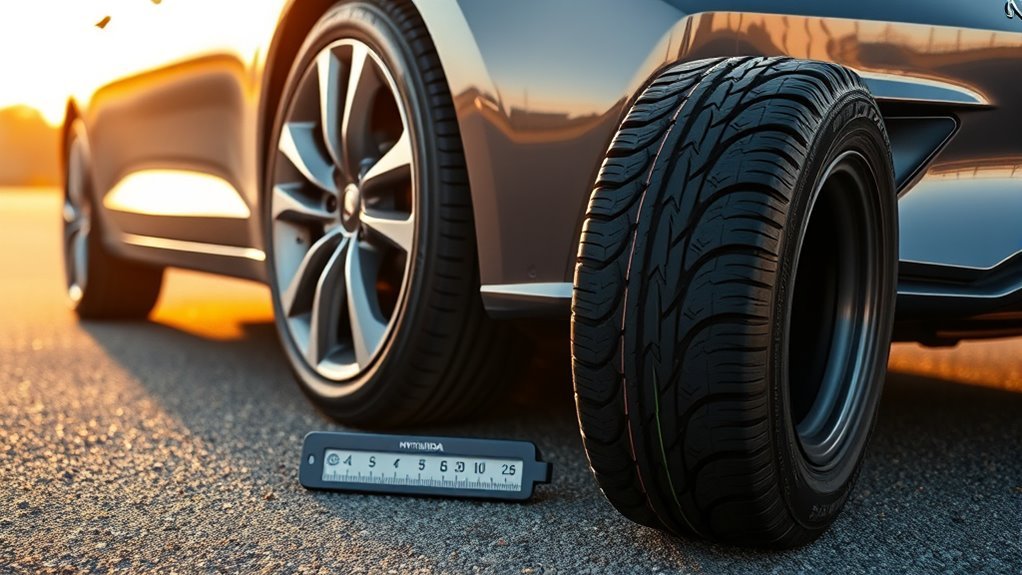
Because tires age and wear in predictable ways, you should replace Sonata tires based on mileage, age, tread depth, or visible damage rather than on guesswork. You’ll manage tire lifespan by tracking miles and inspecting tread wear; most drivers hit replacement thresholds through regular use, not sudden failure. Use objective criteria to free yourself from uncertainty.
- Mileage: If you drive 12,000–15,000 miles annually, plan replacement cycles accordingly; high mileage accelerates compound degradation and reduces safe service life.
- Age: Replace tires at or before five years regardless of appearance because rubber stiffens and structural integrity declines with time, compromising safety.
- Tread & Damage: Replace when tread depth is under 5/32″ or when you see cuts, bulges, or cracks; visible damage mandates immediate removal to prevent catastrophic loss of control.
Perform routine inspections to verify these limits; act decisively when thresholds are met to maintain traction, safety, and mobility.
Maintenance to Maximize Sonata Tire Life (Pressure, Rotation, UTQG)
Having followed mileage, age, and tread cues for replacement, you’ll extend tire life further through disciplined maintenance: keep tire pressure at the manufacturer’s spec (on the driver’s door jamb) to minimize irregular wear and rolling resistance. Check pressure cold, weekly when driving patterns demand, and adjust to compensate for temperature shifts. Rotate tires every 5,000–7,000 miles in the recommended pattern to equalize wear across axle loads; document rotations to track wear trends. Measure tread depth regularly; maintain at least 5/32″ for safe traction and to delay replacement. Use UTQG ratings to select replacement tires with higher treadwear numbers when longevity is a priority—pair that choice with consistent maintenance to realize rated performance. Balance and align wheels whenever you see uneven wear, vibration, or after suspension work; misalignment defeats careful pressure and rotation habits. You’ll preserve handling, reduce cost-per-mile, and retain mobility autonomy by treating these checks as routine, nonnegotiable tasks.
Costs, Warranties, Where to Buy & Install Replacement Tires
When you’re budgeting for replacement tires on a 2023 Sonata, expect prices to span roughly $65 to $480 per tire depending on brand, size, and performance class; OEM-grade options from Continental, Goodyear, and Hankook sit toward the mid-to-upper end of that range. You’ll evaluate tire pricing against intended use, longevity, and ride characteristics.
- Buy: local shops and online retailers both stock OEM and aftermarket options; watch for free shipping, local pickup, and verified fitment to preserve control over choices.
- Install: select a certified installer that follows Hyundai torque and balance specs; correct mounting, torque sequence, and TPMS re-learn preserve safety and performance.
- Warranty: new tires typically include 2–4 year or 30k–50k mile limited warranty coverage; note exclusions for road-hazard damage and pro-rated wear.
You’ll compare out-the-door costs—tire price, mounting, balancing, disposal, and alignment—so your purchase aligns with safety, value, and autonomy.
Frequently Asked Questions
What Tires Come on a Hyundai Sonata?
You get OEM tires ranging from 205/65R16 to 245/40R19 (plus 245/35ZR20 on N Line); check door jamb. Consider tire longevity and performance ratings when choosing replacements to maximize safety, grip, and liberated driving confidence.
What Is My OEM Tire Size?
Your OEM tire size is typically 205/65R16 SL; check your door jamb to confirm. Maintain recommended tire pressure, monitor tread wear, and choose replacements that meet or exceed load and size specs for safe, liberated driving.
What Is the Best Oil for a Hyundai Sonata?
You should use 0W-20 synthetic oil; about 7,500 miles between oil change intervals preserves engine performance. Choose API-certified synthetic and genuine Hyundai filters; if over 75,000 miles, consider high-mileage synthetic blends.
Conclusion
To keep your Sonata safe and smooth, stick with specified sizes, spot signs early, and schedule steady service. Select season-specific soles—summer for grip, all-season for ease, winter for wintry conditions—and swap sizes only when specs suit. Monitor pressure, measure tread, rotate regularly, and mind UTQG and warranty terms. Buy from reputable sellers and install with calibrated care to preserve performance, prolong life, and prevent premature, pricey problems.

Related Articles

How Does TPMS Work on a Hyundai Sonata? Complete Explanation
How your Hyundai Sonata’s TPMS actually detects and reports tire pressure—indirect versus direct systems—reveals critical steps for troubleshooting and maintenance you’ll want to know.
Read More
Hyundai Sonata Rim Width & Offset Specs for All Trim Levels
Maximize your Hyundai Sonata's performance with essential rim width and offset specs for all trim levels—discover how the right fit can transform your drive.
Read More
Does Hyundai Sonata Use Direct or Indirect TPMS? Explained
Judging by precision, speed, and per-wheel data, discover why the Hyundai Sonata uses direct TPMS—and what that means for alerts, costs, and maintenance.
Read More