
2022 Hyundai Sonata Tire Size: OEM Specs & Replacement Options
The 2022 Hyundai Sonata comes with OEM tire diameters from 16–19″ (205/65R16 to 245/40R19); you must match or exceed the factory load index (typically 91–95) and use the tire pressures on the door placard. SE uses 205/65R16, SEL 215/55R17, Limited 235/45R18, N Line 245/40R19; standard pressures are ~32 PSI (sport/N Line ~34 PSI). Below are replacement, seasonal, sizing and maintenance choices to help you pick the right tires.
Which Tire Sizes Come on the 2022 Hyundai Sonata?
When evaluating tire compatibility, match the recommended diameter and load rating; sticking to manufacturer wheel-size ranges (16–19 inches) preserves handling, speedometer accuracy, and braking performance. Upgrading to performance-oriented sizes like 245/40ZR19 improves grip and cornering but changes ride harshness and fuel use. For liberation-minded drivers, choose options that free you from compromise: prioritize the handling or comfort you value most. Account for seasonal considerations—switch to dedicated winter tires within the approved size range to retain traction and safety in cold conditions. Follow the placard and professional guidance to maintain peak performance and compliance.
How to Read Your Sonata Tire Size and Load Index
You’ve seen how different wheel diameters affect ride and handling; now read the tire markings to verify the correct fit. Locate the size on the sidewall or the driver’s door jamb: 205/65 R16 decodes to 205 mm tread width, 65% aspect ratio, radial construction, 16-inch wheel. That concise code tells you what physically fits the rim and preserves designed clearance.
Next, identify the load index near the size code. The load index number (for example, 95) maps to a maximum load per tire — 95 equals 1,521 lbs. You must choose tires with a load index meeting or exceeding Hyundai’s spec to protect structure and handling. Proper selection supports tire maintenance goals: correct inflation, wear patterns, and safe load carrying.
Treat these markings as immutable constraints. Respecting them liberates you from guesswork, guarantees predictable performance, and keeps the Sonata aligned with safety and efficiency expectations.
Which Trims Use 205/65R16, 215/55R17, 235/45R18, or 245/40R19?
Which Sonata trim uses each tire size? You’ll find clear distinctions across the 2022 lineup based on Sonata trim differences and intended driving character. The SE uses 205/65R16 tires to prioritize efficiency and predictable ride compliance; that size reduces rolling resistance and supports fuel-conscious use. The SEL runs 215/55R17 tires, a middle ground that balances comfort with sharper lateral response for everyday control. The Limited ships with 235/45R18 tires to increase contact patch and cornering confidence, trading some compliance for stability at speed. The N Line fits 245/40R19 tires to maximize traction and sporty feedback, aligning tread width and profile with performance intent. This mapping aligns tire geometry to suspension tuning and weight distribution; Tire performance analysis confirms each size’s role in braking, grip, and ride quality. Use these pairings when selecting OEM replacements to preserve each trim’s designed dynamics and your freedom to drive as intended.
2022 Sonata Recommended Tire Pressures (By Trim)
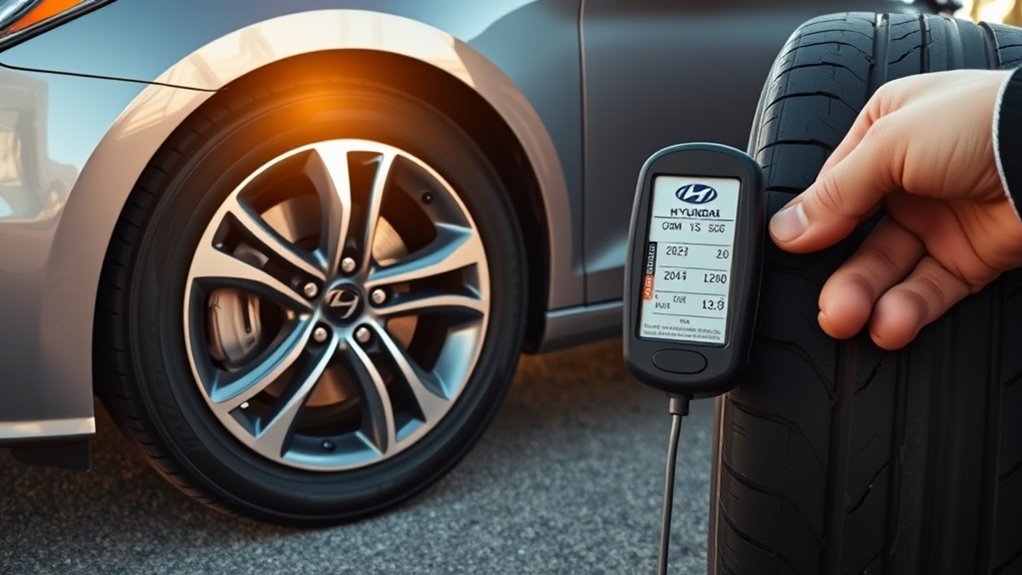
Although recommended pressures vary by trim and tire size, most 2022 Sonata models call for 32 PSI front and rear to enhance handling, wear, and fuel economy; the Sport/N Line variants often specify 34 PSI to support firmer response. You should treat those numbers as baseline targets: they reflect engineered load, ride comfort, and rolling resistance balance for factory tire sizes. Trim differences matter because wheel diameters, tire aspect ratios, and suspension tuning alter the ideal inflation. Check the driver’s door-jamb placard for the exact tire pressure for your specific trim and fitted tire size before adjustment. You’ll preserve fuel efficiency, reduce irregular wear, and maintain predictable handling by maintaining pressures within the recommended band. Monitor pressures weekly and whenever ambient temperature shifts by more than 10°F (≈6°C); cold air reduces PSI, warm increases it. Use a calibrated gauge, measure cold tires, and adjust to the specified PSI — that disciplined habit frees you from unnecessary risk and extends tire life.
Best All‑Season Replacement Tires for the 2022 Sonata
Choose replacement tires that match your Sonata’s OEM sizes (commonly 205/65R16, with 215/55R17 and 235/40ZR19 on some trims) and your driving needs: longevity, wet/snow grip, comfort, and fuel efficiency. For balanced tire performance and predictable handling across varied driving conditions, pick certified all-season models engineered for tread life and wet traction. The Michelin Primacy Tour A/S excels in longevity—regular rotations often exceed 58,000 miles—while maintaining low rolling resistance for fuel efficiency. Continental TrueContact Tour delivers a controlled ride, long tread life, and reliable all-weather traction for commuting and long trips. Goodyear Assurance WeatherReady targets enhanced grip in wet and snowy conditions, useful if winters are variable. Hankook Kinergy GT offers versatile performance for everyday driving, combining comfort and responsive steering. Match load index and speed rating to OEM specs, prioritize tires with proven wet-braking scores, and rotate per interval. Choose confidently: optimized tire performance directly improves safety, autonomy, and the freedom to drive where you want.
Best Summer and Performance Tires for N Line and Sport
Because the N Line and Sport trims come on wider 245/40ZR19 rubber, you should fit tires that prioritize high-temperature grip, lateral stability, and predictable response under load. Choose high-performance summer tires—Michelin Pilot Sport 4S or Pirelli P Zero—to maximize tire performance and track-like handling characteristics. Their softer compounds and optimized tread blocks deliver immediate bite, crisp turn-in, and sustained cornering stability that complement the sport-tuned suspension.
Expect trade-offs: these compounds increase grip in warm conditions but accelerate tread wear versus all-season options. You’ll need disciplined maintenance—rotate every 5,000 to 7,000 miles, monitor pressures, and inspect for uneven wear—to preserve life and consistent handling characteristics. Fitment should match OEM 245/40ZR19 sizing and load/speed ratings to retain steering precision and safety margins. If you crave liberation through control, prioritize tires that sharpen feedback, resist heat fade, and sustain lateral G without ambiguous responses under hard driving.
Winter and All‑Weather Tire Options for Cold Climates
When you equip your Sonata with winter tires like the Michelin X‑Ice Xi3 or Bridgestone Blizzak WS90, you’ll get markedly better grip on snow and ice than with all‑season rubber. If you need one‑set versatility for mixed conditions, all‑weather options such as the Goodyear WeatherReady or Michelin CrossClimate2 offer a compromise between winter traction and dry performance. Whatever you choose, match or exceed the OE size (205/65R16–245/40ZR19) and monitor tread depth—winter tires should have ~6/32″ minimum for effective snow traction.
Winter Tire Performance
If you drive a 2022 Hyundai Sonata in cold climates, fitting dedicated winter tires—available for the model in 215/55R17 and 235/40ZR19 sizes—will noticeably improve traction and control on snow and ice. You’ll get measurable gains in tire performance and winter driving confidence because winter compounds stay flexible below ~7°C, increasing contact and bite. Models like Bridgestone Blizzak and Michelin X‑Ice use specialized rubber and siping patterns to shorten braking distances on ice by up to ~30% versus all-season rubber. Maintain minimum tread depth of 6/32″ and monitor pressure frequently; cold air reduces psi and degrades grip. Install and remove seasonally to preserve compound life. Choose winter tires to reclaim mobility and control when conditions restrict you.
All‑Weather Traction Options
Although your 2022 Sonata ships with all-season tires, swapping to dedicated winter sizes like 215/55R17 or 235/40R18—or choosing an all‑weather model such as the Michelin CrossClimate 2—gives measurable gains in grip and braking in sub‑7°C conditions. You’ll gain tire performance and weather adaptability that lets you move freely in cold climates. Winter compounds stay flexible; tread depth and siping evacuate snow and slush, reducing stopping distances. All‑weather hybrids balance summer stability with winter traction for year‑round use.
- Choose 215/55R17 for balanced ride and winter grip.
- Choose 235/40R18 for sharper handling with winter compound benefits.
- Select CrossClimate 2 for single‑set convenience and proven weather adaptability.
- Swap tires below 7°C to preserve peak tire performance.
When to Replace Sonata Tires: Mileage, Tread, and Age
You should plan replacement on mileage: most drivers need new Sonata tires every 12,000–15,000 miles or sooner with uneven wear. Check tread depth regularly and replace below 5/32″ to maintain traction and safety. Also retire tires after five years regardless of tread due to material degradation and inspect pressure and condition frequently.
Mileage-Based Replacement
When monitoring tire wear on a 2022 Hyundai Sonata, plan replacements around mileage, tread depth, and age to maintain safety and performance: You’ll base decisions on objective intervals and your driving habits. Use mileage as a primary guide, but factor in tire wear patterns and age-related degradation. Rotate tires every 5,000–7,000 miles to equalize wear and extend life.
- Replace most Sonata tires at 12,000–15,000 miles per axle if uneven wear or reduced grip appears.
- Swap tires when tread drops below 5/32 inches, even if mileage is lower.
- Replace all tires after five years regardless of miles — rubber hardens and risks failure.
- Maintain proper pressure per the driver’s door jamb to maximize life and safety.
Tread Depth Checks
If your Sonata’s tread measures 5/32 inches or less, replace the tire immediately to preserve traction and handling; use a calibrated gauge or the built-in wear bars to verify depth at multiple points across the tread. You should monitor tread depth routinely—every oil change or at least quarterly—since most drivers cover 12,000–15,000 miles yearly. Measure across center and shoulders to detect uneven wear that compromises tire safety. Visible damage, cupping, or irregular wear patterns mean replace now, not later. Keep records of mileage and measurements so you control maintenance decisions rather than deferring to fate. Use precise measurements and decisive action: maintain minimum tread, correct alignment or rotation issues, and replace tires that fail inspection to preserve handling and personal freedom on the road.
Age And Degradation
Tread checks tell you when grip is failing, but time degrades rubber even with good tread—so track tire age as rigorously as you track depth. You’ll monitor mileage, tread depth, and visible damage to counter aging effects from tire composition breakdown. Replace tires after five years regardless of miles; inspect sooner if you drive 12,000–15,000 miles annually.
- Check tread depth: replace at or below 5/32″ for safety and performance.
- Track mileage: rotate every 5,000–7,000 miles to even wear and extend life.
- Inspect visibly: cracks, bulges, or separation demand immediate replacement.
- Note manufacture date: prioritize tires over five years old due to material degradation.
These measures free you from avoidable risk and extend reliable control.
How to Choose Load Index and Speed Rating for Your Sonata
Start by matching the Sonata’s factory load index and speed rating to preserve safety, handling, and warranty compliance. Check the driver’s side door jamb for the OEM numbers: load index typically 91–95 and speed ratings H or V. You’ll want tires with a load index equal to or above the factory spec so the carcass supports maximum gross axle loads without compromising handling performance or voiding the tire warranty.
Choose H-rated tires for routine driving; select V-rated if you demand higher-speed capability. Don’t substitute a lower load index or lower speed rating — that reduces lateral grip, braking margin, and stability when the car’s loaded. If you alter wheel size, confirm the new tire’s index and rating match the altered rolling radius and load demands.
When in doubt, consult the tire placard or a dealer service tech. Make selections that free you from compromise: maintain structural adequacy, predictable dynamics, and compliance with manufacturer limits.
Mounting, Rotation, and Maintenance Tips to Extend Tire Life
Rotate your tires every 5,000–7,000 miles and have them remounted by a certified technician following the manufacturer’s mounting specifications to guarantee even wear, correct alignment, and consistent handling. You’ll preserve performance and freedom on the road by following a strict rotation schedule and disciplined tire maintenance. Check pressure at the driver’s side door jamb and adjust cold-pressure to spec before drives.
Rotate tires every 5,000–7,000 miles, remount per manufacturer specs, and set cold pressure at the driver’s door jamb.
- Inspect tread depth monthly; replace at or below 5/32″ to retain grip and control.
- Scan for cuts, bulges, and irregular wear patterns; these signal alignment, suspension, or mounting faults.
- Verify mounting torque and valve condition during remounting to prevent leaks and imbalance.
- Document rotation dates and mileage to enforce the rotation schedule and predict replacement timing.
You’ll extend tire life, reduce risk, and reclaim control by combining routine inspections, correct pressures, timely rotations, and manufacturer-compliant mounting.
Frequently Asked Questions
What Tires Come on a Hyundai Sonata?
You get various OEM Tire Types on a Hyundai Sonata: 205/65R16, 215/55R17, 235/45R18, 245/40ZR19, often from Michelin, Hankook, Continental; you’ll choose replacements matching or exceeding OEM specs for safety and performance.
What Is My OEM Tire Size?
Your OEM tire size is 205/65R16 SL. You’ll perform tire maintenance routinely, inspect tread patterns for wear, and guarantee load index matches the placard so you’ll keep freedom on the road and safety uncompromised.
What Is the Best Oil for a Hyundai Sonata?
Use SAE 5W-30 for ideal oil viscosity, choose high-quality synthetic options for protection, longevity, and efficiency; you’ll maximize performance, reduce wear, extend service intervals, and maintain warranty compliance by following manufacturer specs.
Conclusion
You’ve got the facts to keep your 2022 Sonata rolling safely: pick the OEM tire size and matching load index/speed rating, maintain proper pressures per trim, and rotate/mount tires correctly to maximize life. Swap to all‑season, all‑weather, or winter rubber based on climate and replace at legal tread or after age limits. Follow these steps and you’ll avoid surprises — nip problems in the bud and keep performance and efficiency where they should be.

Related Articles

How Does TPMS Work on a Hyundai Sonata? Complete Explanation
How your Hyundai Sonata’s TPMS actually detects and reports tire pressure—indirect versus direct systems—reveals critical steps for troubleshooting and maintenance you’ll want to know.
Read More
Hyundai Sonata Rim Width & Offset Specs for All Trim Levels
Maximize your Hyundai Sonata's performance with essential rim width and offset specs for all trim levels—discover how the right fit can transform your drive.
Read More
Does Hyundai Sonata Use Direct or Indirect TPMS? Explained
Judging by precision, speed, and per-wheel data, discover why the Hyundai Sonata uses direct TPMS—and what that means for alerts, costs, and maintenance.
Read More