
Hyundai Sonata Compatible Tire Sizes: Full Fitment Guide
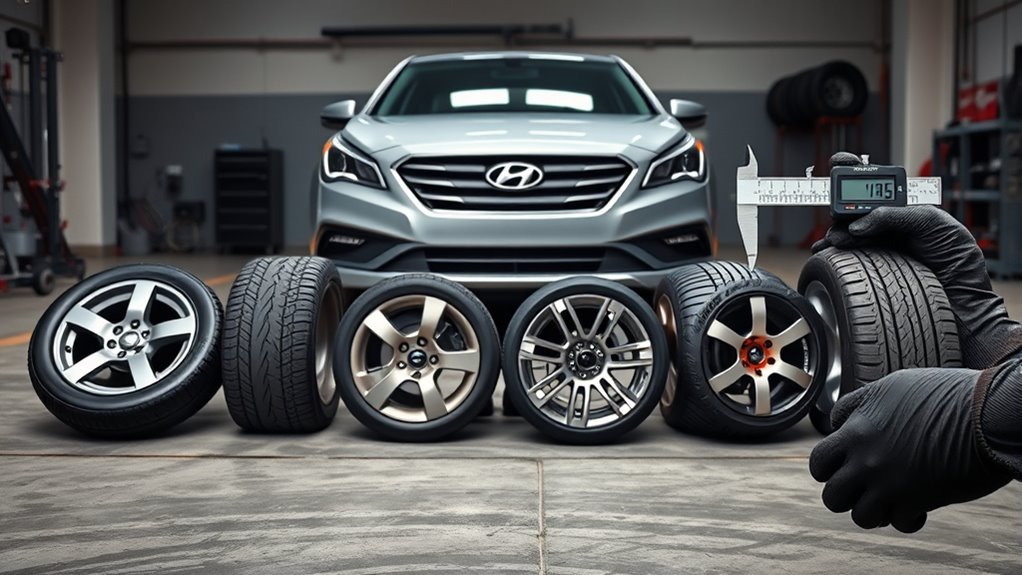
You’ll match tire sizes to your Sonata’s generation and trim—DN8 (2019–) accepts 16–20″ rims with sizes like 205/65R16, 245/40R19, 245/35ZR20; LF (2014–19) fits 16–19″ including 205/65R16, 235/40ZR19; YF (2009–14) covers 16–19″ with 205/65R16, 255/35R19; NF (2004–10) spans 15–18″ such as 215/60R16, 235/40R18. Verify bolt pattern, offset, load index and preserve overall diameter for accurate speedometer and ABS—keep going to see fitment rules, seasonal choices, and maintenance specifics.
Sonata Tire Sizes & Wheel Specs (By Generation)
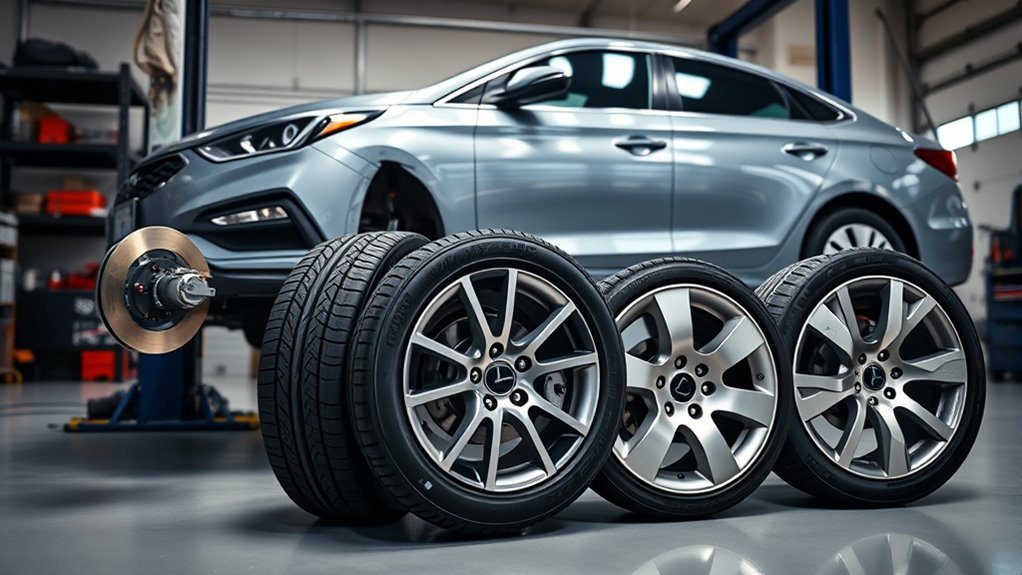
For each Hyundai Sonata generation you’ll need the exact wheel and tire specs—rim diameter, bolt pattern, offset, and recommended tire widths—because fitment varies considerably between codes like DN8, LF, YF, and NF; you’ll reference those codes to match tires and wheels accurately. DN8 (2019–2025) accepts 16–20″ rims with sizes such as 205/65R16, 245/40R19, 245/35ZR20. LF (2014–2019) supports 16–19″ options like 205/65R16 and 235/40ZR19. YF (2009–2014) covers 16–19″ including 205/65R16 and 255/35R19. NF (2004–2010) spans 15–18″ with 215/60R16 and 235/40R18 examples. You’ll verify bolt pattern and offset before fitting different rim diameters to avoid rubbing and adverse handling. Maintain correct tire pressure after any wheel change to preserve safety and intended dynamics. If you’re pursuing performance upgrades, confirm load rating and clearance for braking and suspension modifications so your choices free you rather than constrain you.
Choose the Right Tire Size for Your Sonata Year & Trim
Now that you’ve matched generation codes to wheel and bolt specs, pick a tire size that fits your Sonata’s year and trim while preserving speedometer accuracy, load capacity, and clearance. Use the DN8 (2019–2025) ranges 16–20″ (e.g., 205/65R16, 245/35ZR20), LF (2014–2019) 16–19″ (215/55R17, 235/40ZR19), and YF (2009–2014) 16–19″ (205/65R16, 255/35R19) as baseline choices. Check the driver’s side door for factory pressure and load limits before changing sizes.
Choose tires that match your Sonata’s generation and trim — maintain diameter, load, pressure, and clearance.
- Verify overall diameter to maintain speedometer accuracy and ABS calibration.
- Confirm load index and pressure for your trim to preserve safety and ride quality.
- Factor tire selection tips and seasonal considerations into your final choice; size changes affect clearance, handling, and winter capability.
You’ll liberate performance and safety by matching size to generation and trim, avoiding guesswork, and sticking to manufacturer limits.
Best Hyundai Sonata Tires by Season and Driving Style
Although your Sonata’s wheel diameter and load limits set the starting point, choosing tires by season and driving style lets you optimize grip, wear, and safety; pick all-seasons for year-round versatility in mild climates, dedicated winter tires for snow and ice, and high-performance summer tires (e.g., sizes like 245/40R19 or 245/35ZR20 on DN8 trims) when you prioritize dry handling, and always compare UTQG ratings, load index, and recommended pressures to guarantee compatibility with your trim. You’ll select all-season tires when balanced tire performance and variable driving conditions matter most — they extend usable months and reduce changeover frequency. If you chase spirited handling, fit high-performance summer rubber on compatible 19–20 inch wheels to enhance lateral grip and steering precision; expect reduced longevity reflected in UTQG scores. For liberation in winter, switch to dedicated winter tires to reclaim traction on snow and ice. In every case, match load index and pressure, and choose compounds and tread patterns designed for the specific driving conditions you face to maximize safety and control.
Fitment Problems and Safe Tire Upgrades for Sonata
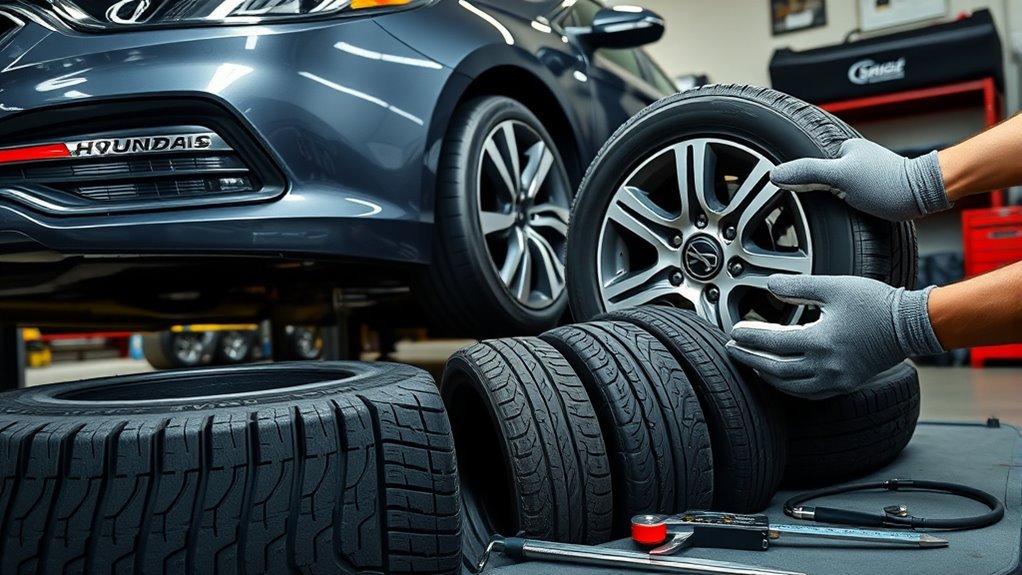
When you upgrade tires on a Hyundai Sonata, stick to the manufacturer’s size ranges (for example, 16–20 inches on the VIII DN8) to avoid clearance, gearing, and handling issues that can compromise safety and fuel economy. You’ll preserve tire compatibility with suspension geometry and wheel wells by choosing sizes like 215/60R16, 245/40R19, or 245/35ZR20, which balance comfort and performance. Deviating increases the risk of rubbing, altered speedometer readings, and changed final drive feel — all reducing your control.
- Confirm trim-specific wheel offsets and recommended sizes to prevent interference with struts or brake calipers.
- Evaluate load and speed ratings; mismatched ratings can worsen braking and performance impact.
- Have a tire professional verify fitment and dyno or road-test changes to validate handling and gearing effects.
Stay deliberate: pick upgrades that free you from compromise while maintaining technical compatibility and predictable performance impact.
Hyundai Sonata Tire Maintenance, Pressures & Replacement Timing
If you want predictable handling and maximum tire life, follow the Sonata’s tire-pressure placard on the driver’s door and check pressures regularly with a calibrated gauge, since correct inflation preserves contact patch, fuel economy, and braking performance. You should inspect tire pressure at least monthly and before long trips; underinflation increases rolling resistance and accelerates uneven tread wear, while overinflation reduces grip. Implement a tire rotation schedule every 5,000–7,000 miles to equalize wear across axles and extend service life. Monitor tread wear visually and with a gauge; replace tires when tread approaches legal or safe minima, or earlier if you detect irregular patterns indicating alignment or suspension faults. Consider replacement timing both by age and mileage: replace tires at around five years regardless of remaining tread due to rubber degradation, and expect replacement intervals aligned with average annual mileage (12,000–15,000 miles). These practices free you from unexpected failures and keep the Sonata performing reliably.
Frequently Asked Questions
How to Determine What Size Tire Will Fit?
Check your door-jamb placard or owner’s manual to match bolt pattern, wheel diameter and tire pressure; confirm compatible tread patterns for season and driving needs, and measure clearance so you can freely choose safe, legal replacements.
Can 22 Inch Rims Fit on a Hyundai Sonata?
No — you shouldn’t fit 22 inch rims on a Sonata; 22 inch benefits won’t outweigh Rim compatibility risks. You’ll encounter clearance, steering and suspension issues, so consult a specialist to preserve safety and driving freedom.
What Is the Best Oil for a Hyundai Sonata?
About 75% of recent Sonatas need synthetic oil; you should use manufacturer-recommended 5W-30 (DN8) or 5W-20 (LF). You’ll do oil changes every 7,500 miles/6 months to free your engine and preserve performance.
Conclusion
You’ve now got the specs and practical guidance to choose the right tires for your Sonata across generations and trims. Remember: 80% of passenger-vehicle tire failures stem from improper inflation and mismatched fitment, so match size and load rating precisely, and check pressures monthly. If you stick to recommended sizes, rotate every 6,000–8,000 miles, and replace at 4/32″ tread, you’ll preserve handling, fuel economy, and tire life.

Related Articles
Hyundai Sonata Overall Tire Diameter by Size: Full Chart
Hyundai Sonata overall tire diameter by size: discover exact measurements, common OEM examples, and fitment tips to ensure speedometer accuracy and proper clearance.
Read More
Hyundai Sonata Tire Aspect Ratio Explained: What the Number Means
Good to know: discover how the Sonata’s tire aspect ratio affects ride, handling, and speedometer accuracy — and why that number really matters.
Read More
How to Find Which Tire Is Low on Your Hyundai Sonata
Practical steps to pinpoint the low tire on your Hyundai Sonata using a pressure gauge — learn quick checks and fixes to avoid surprises on the road.
Read More