
How to Read the DOT Date Code on Hyundai Sonata Tires
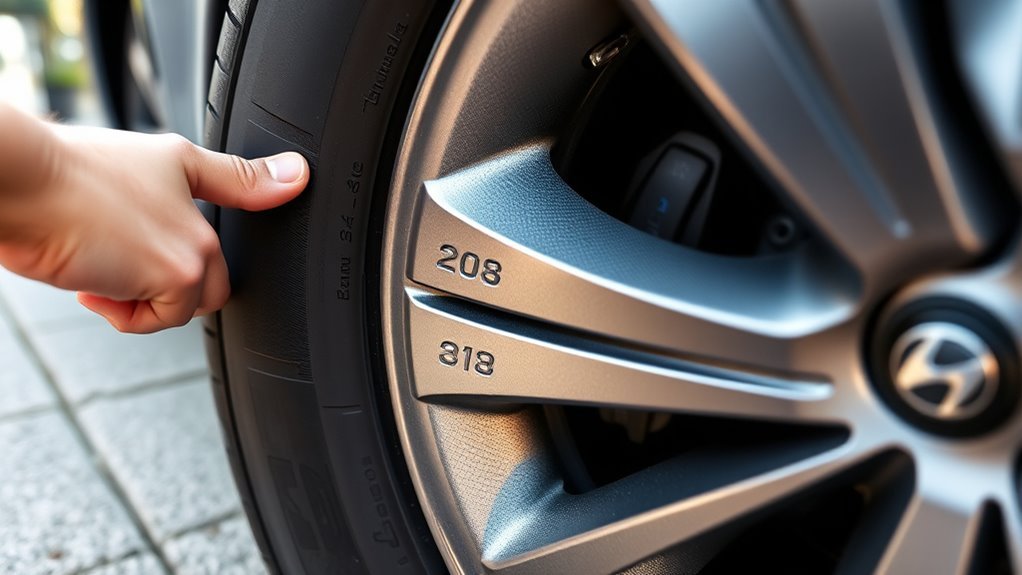
You’ll find “DOT” on the tire sidewall near the rim; clean the surface and check both outer and inner walls. The last four digits give manufacture week and year (WWYY), for example 2519 = 25th week of 2019; three-digit codes are older formats and need special handling. Compare all four tires for consistency, assess age against a 6–10 year service life, inspect for cracks or bulges, and follow up with registration, recalls, or professional checks to learn more.
How to Read the DOT Date Code (Quick Answer for Sonata Owners)

To find your Hyundai Sonata’s tire age, locate the sidewall marking that starts with “DOT” and read the last four digits of that sequence; those digits give the week and year of manufacture (for example, 2519 = 25th week of 2019). You’ll read a sequence of letters and numbers—interpret the final four as WWYY. If you see three digits, the tire predates 2000 and needs special interpretation. DOT code significance is practical: it ties age to material degradation rates and regulatory traceability. You should inspect these codes regularly and compare manufacture dates across all four tires to avoid mixing ages. Tires older than ten years should generally be retired regardless of tread or appearance. Apply tire safety tips by scheduling replacements proactively, keeping records, and prioritizing age over cosmetic condition. This method gives you control over maintenance decisions and reduces risk through measurable, uncompromising criteria.
Find the DOT Code on Your Sonata Tires (Sidewall Locations to Check)
Check the tire sidewalls near the rim for the stamped “DOT” sequence—on many Sonata tires the code sits close to the bead area, but you may need to view the inner sidewall, so rotate the wheel or lift the vehicle to inspect all surfaces. You’ll see “DOT” followed by characters that encode manufacturer and production info; locating that sequence is the first step in objective tire maintenance and safety checks.
- Inspect outer sidewall near rim: manufacturers often stamp DOT near the bead area; clean grime for visibility.
- Rotate wheel and scan inner sidewall: some codes face the vehicle; use a jack or turn the wheel by hand to reveal hidden markings.
- Check both front and rear tires and compare positions: consistent inspection supports systematic safety checks and fleet-style tire maintenance.
Locate DOT reliably to empower informed replacement decisions and assert control over your vehicle’s roadworthiness.
Read the Last Four Digits: Week + Year → Tire Age
Locate the DOT code on the tire sidewall and read the final four digits to determine manufacture week and year. The first two digits are the week (01–52) and the last two are the year (e.g., 2219 = 22nd week of 2019). Use that date to assess age against the typical 6–10 year service life and schedule replacement if needed.
Locate The DOT Code
When you inspect the sidewall of your Hyundai Sonata’s tires, find the “DOT” marking followed by an alphanumeric string; the last four digits indicate the week and year of manufacture (first two = week 01–52, last two = year). You’ll use that tail segment to judge age and inform tire maintenance and safety tips. Look on each tire; orientation, dirt, or curb wear can hide the code.
- Rotate wheels or clean sidewall to expose the DOT sequence; note the final four digits.
- Compare all four tires’ codes to guarantee uniform age and avoid mismatched wear or performance.
- If any code exceeds ten years or tires show damage, prioritize replacement to preserve safety and your mobility rights.
Calculate Week And Year
Once you’ve found the DOT string, read the last four digits to determine manufacture week and year: the first two digits denote the week of production (01–52) and the last two denote the year (e.g., 2319 = week 23 of 2019). Read those digits precisely, then calculate age by comparing manufacture week/year to the current week/year. Account for week rollover when the current year is later. Note three-digit codes on pre‑2000 tires require careful interpretation and may need expert confirmation. Because tire longevity is finite—typically 6–10 years regardless of tread—you’ll act to preserve mobility and safety. If the calculated age exceeds ten years, replace the tire to comply with safety standards and to maintain control, resilience, and the freedom to travel without avoidable risk.
Older Tires & 7–12 Vs 13-Character TINS (What to Watch For)
Older tires can hide critical information because manufacturers used shorter TIN formats; you may still see 3‑digit date codes that only give week and year (e.g., week 29 of ’10 as “2910” on some markings) and 7–12 character TINs that list plant and tire-size codes without the full four‑digit date. You must read these correctly to protect tire safety and confirm compliance with current manufacturing standards.
Recognize differences quickly:
- 7–12 character TIN — contains plant and tire-size/type codes; may omit the four‑digit date, so you’ll need cross-reference data to confirm age.
- 3‑ or 4‑digit date codes — older 3‑digit styles can represent week/year shorthand; interpret cautiously and seek additional markings.
- 13‑character TIN — modern standard: 3‑char plant, 6‑char size/type, and 4‑digit week/year date for precise tracking.
If decoding on your Hyundai Sonata yields an incomplete TIN, document the codes, consult manufacturer resources, and demand clarity to secure your mobility and freedom.
When to Replace Sonata Tires: Date Code Plus Inspection Signs
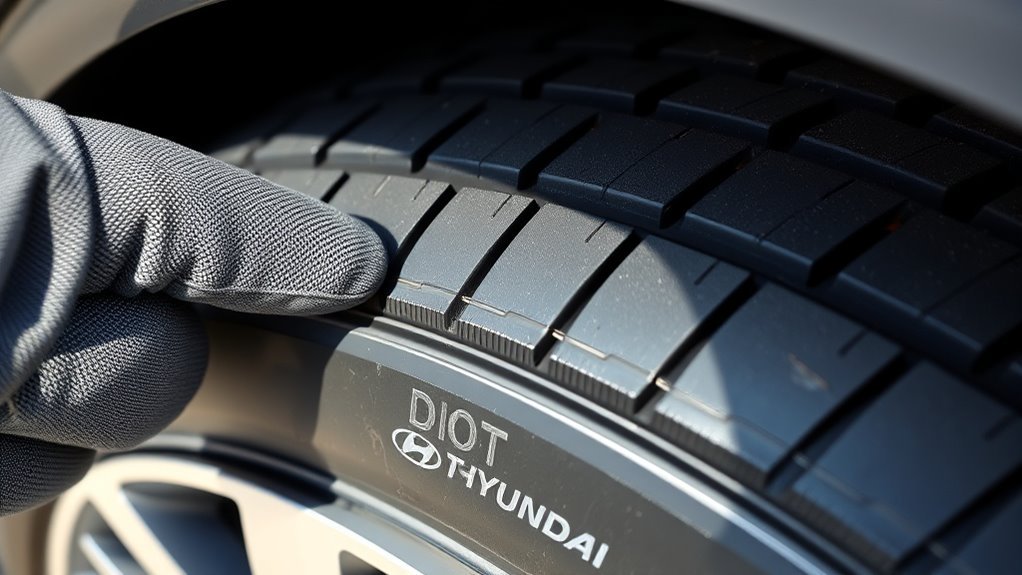
Check the last four digits of the DOT code to confirm tire age—replace Sonata tires over 10 years old regardless of tread. Inspect regularly for visible damage like cracks, bulges, or tread below 2/32″ and replace immediately if any are present. Also note handling changes—persistent pulling or vibrations indicate uneven wear or internal failure and require prompt inspection and likely replacement.
Tire Age Limits
When you read the DOT date code and inspect the tire, you can determine whether your Sonata’s tires should be replaced: the last four digits show week and year (e.g., 2519 = 25th week of 2019). Use the code to track tire lifespan and address safety concerns proactively. Manufacturers advise replacement between 6–10 years; beyond 10 years tires are unsafe regardless of tread. Consult a pro if unsure.
- Check DOT: convert week/year to age; prioritize replacement at or past 6–10 years based on conditions.
- Combine age with inspection findings (cracking, bulges, depth <2/32") to decide sooner.
- If age >10 years, remove immediately and replace; document dates to maintain liberated control of vehicle safety.
Visible Damage Signs
Inspect your Sonata’s tires regularly for visible damage—cracks in the sidewall or tread, bulges, cuts, and embedded objects can all indicate structural failure and require immediate replacement. You should apply consistent tire maintenance tips: inspect for uneven wear patterns that signal alignment or inflation faults, and remove embedded debris promptly. Measure tread depth; replace tires at 2/32″ to preserve grip and legal safety margins—the tread depth importance is nonnegotiable. Check the DOT date code and retire tires older than ten years regardless of appearance. If you feel vibrations or handling changes, stop and inspect; those signs often indicate internal cord or belt separation. Act decisively—replace compromised tires to reclaim control and protect your mobility.
Performance And Handling
A tire’s DOT date code tells you its manufacture week and year, and you should treat that date as a primary factor in replacement decisions—tires usually age out between 6 and 10 years, with professional assessment required by 10 years regardless of appearance. You’ll monitor tire performance and handling stability by combining date-code awareness with physical inspection and driving feedback. Don’t defer replacement if age, wear, or symptoms indicate failure.
- Check tread depth and wear patterns; <2/32" or uneven wear reduces handling stability and mandates replacement.
- Inspect for cracks, bulges, or sidewall damage; these defects degrade tire performance regardless of DOT age.
- Note handling changes—vibration, pulling, or instability—and get a professional evaluation, especially for tires over 10 years.
Next Steps: Register, Check Recalls, and Where to Get Help
Because tire recalls and safety notices can affect your driving immediately, register your Hyundai Sonata tires with the DOT code so the manufacturer can notify you, and keep records of that registration and any inspections. Complete tire registration online or via the dealer; accurate DOT codes enable timely recall notifications and establish a paper trail for claims. Regularly check NHTSA’s site with your VIN or tire DOT code to confirm status and subscribe to manufacturer or dealer updates for proactive alerts.
If you find a recall, contact Hyundai customer service or an authorized service center immediately to schedule inspection or replacement. Retain copies of registration confirmations, inspection reports, and service orders; these documents support warranty or recall remediation and protect your rights. For help decoding DOT markings or evaluating tire condition, request a documented inspection at a trusted shop. Stay vigilant: systematic registration, recordkeeping, and verification free you from avoidable risk and preserve your mobility.
Frequently Asked Questions
What Is the Date Code 2421 on a Tire?
The code 2421 means the tire was made in the 24th week of 2021, between June 14–20. You should track tire aging, assess safety implications, and replace if age compromises performance or regulatory limits.
Conclusion
So you’ve become a tire detective—congrats. Find the DOT on the sidewall, read the last four digits (week/year), and don’t pretend a 2009-printed tire is “vintage.” If the code’s missing or shows 7–12 characters, it’s older tech—treat it like expired software. Replace tires based on date plus cracking, bulges, or low tread. Register them, check recalls, and have a pro inspect if you’re unsure. Your Sonata will thank you.

Related Articles

Hyundai Sonata Tire Revolutions per Mile by Size Compared
Discover how tire size affects revolutions per mile for Hyundai Sonata, influencing speed, handling, and fuel efficiency—find out which size is right for you.
Read More
Hyundai Sonata Overall Tire Diameter by Size: Full Chart
Hyundai Sonata overall tire diameter by size: discover exact measurements, common OEM examples, and fitment tips to ensure speedometer accuracy and proper clearance.
Read More
Hyundai Sonata Tire Aspect Ratio Explained: What the Number Means
Good to know: discover how the Sonata’s tire aspect ratio affects ride, handling, and speedometer accuracy — and why that number really matters.
Read More