
How to Find Which Tire Is Low on Your Hyundai Sonata

Use a calibrated pressure gauge to check each Hyundai Sonata tire when cold (parked 2–3 hours), removing valve caps and pressing the gauge straight onto each stem. Compare each PSI to the driver‑door sticker and flag any tire ≥3 PSI below spec. Inflate low tires to the recommended value, bleed any overinflated tire if needed, and inspect for visible damage or continuous loss; if pressure keeps dropping you’ll want step‑by‑step troubleshooting and repair guidance.
Quick Answer: Which Tire Is Low on a Hyundai Sonata?
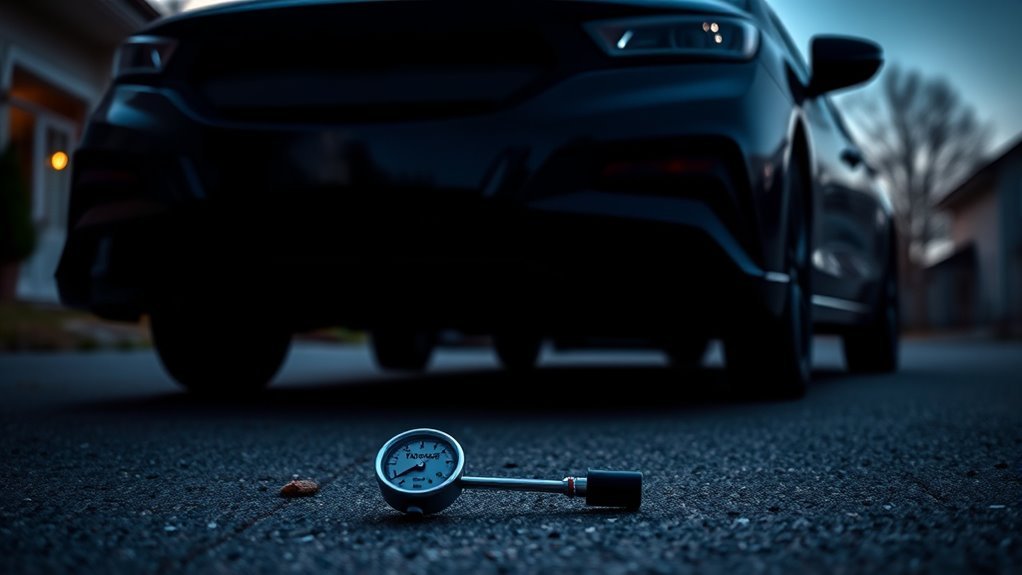
Which tire is low? You check each corner with a tire pressure gauge, compare readings to the PSI on the driver’s door label, and identify the one considerably below spec. Don’t guess. Measure tire pressure on all four tires; the lowest numeric reading marks the low tire. If the TPMS warning light is active, treat it as a prompt to measure immediately—monitoring systems flag under-inflation but won’t tell you which wheel without a gauge. Inflate the identified tire to the recommended PSI and recheck to confirm accuracy. For liberation-minded drivers, this routine gives control: you’ll rely on objective measurements, not anxiety. Record baseline pressures and monitor trends; repeated drops at one corner suggest a leak or valve issue needing repair. Regular checks, especially before long trips, keep performance and safety ideal and prevent being stranded by an overlooked under-inflated tire.
Why Check “Cold” Pressure for Your Sonata
Because tire temperature raises pressure, you should measure cold pressure to get a true baseline for your Sonata’s tires; check them after the car’s been parked at least 2–3 hours (or driven less than a mile) and compare each reading to the PSI on the driver’s door label. You’ll avoid inflated readings caused by heat buildup in the rubber when you test cold. Tire temperature directly affects measured pressure; even short drives or sun exposure can skew values and undermine pressure accuracy.
Measure in cool, shaded conditions when possible to minimize solar heating’s effect on readings. Maintaining correct cold pressure improves safety, fuel economy, handling, and tire life—practical freedoms that reduce dependency on roadside help. Treat the driver’s door PSI as your control value: deviations indicate leaks, underinflation, or overinflation. Regular cold checks create an accurate baseline you can trust for diagnostics and proactive maintenance, giving you technical control over performance and cost.
Measure Each Hyundai Sonata Tire With a Gauge
Check each Sonata tire when cold using a calibrated pressure gauge after the car has been stationary for 2–3 hours. Remove and store the valve stem cap, align the gauge straight and parallel to the valve stem, then take a firm reading. Record each PSI and compare to the driver’s-side door recommended values, inflating any tire below spec and replacing the valve caps.
Check Cold Tire Pressure
Start by letting your Hyundai Sonata sit for 2–3 hours so the tires cool to ambient temperature, then grab a tire pressure gauge and the driver’s-side door placard that lists the recommended PSI for your tire size. You’ll measure each tire’s cold pressure to get an accurate baseline. Use the gauge on every valve stem, record readings, and compare them to the placard values. A markedly lower reading identifies the low tire that needs inflation. Check all four tires for uniformity; unequal pressures degrade handling and efficiency. Make this part of routine tire maintenance tips and seasonal checks to keep control and reduce dependency on roadside assistance. Act decisively: inflate to spec or seek repair if pressure loss repeats.
Use Proper Gauge Alignment
1. You’ll remove each valve stem cover and keep it safe. For precise gauge maintenance, press the tire pressure gauge straight and parallel to the valve stem — perpendicular contact yields false readings. Use consistent alignment techniques on every tire; approach the stem squarely to avoid angled seals that hiss and bleed air. If you hear hissing when seating the gauge, that confirms escaping air and a low tire. Work systematically around the Sonata, measuring each tire while cold and noting the PSI on the gauge. Compare each reading against the driver’s side door placard for the recommended PSI. A notably lower value identifies the underinflated tire that requires inflation. Reinstall valve caps after checking to preserve valve integrity.
Record And Compare Readings
Measure and record the cold PSI for each Hyundai Sonata tire with your gauge, noting values on paper or a phone so you can compare them against the driver’s-side door placard. You’ll take systematic readings front-left, front-right, rear-left, rear-right, using a digital gauge when possible to maximize reading accuracy and repeatability. Log each tire pressure immediately; include time and ambient conditions to maintain traceability. Any value considerably below the placard—commonly under 30 PSI—flags a low tire requiring inflation. If one tire persistently trails the others, treat it as a potential slow leak or puncture and inspect the valve, tread, and inner liner. Accurate records free you to act decisively: inflate, monitor, or seek repair.
Compare PSI to the Driver‑Door Sticker (How to Read Results)
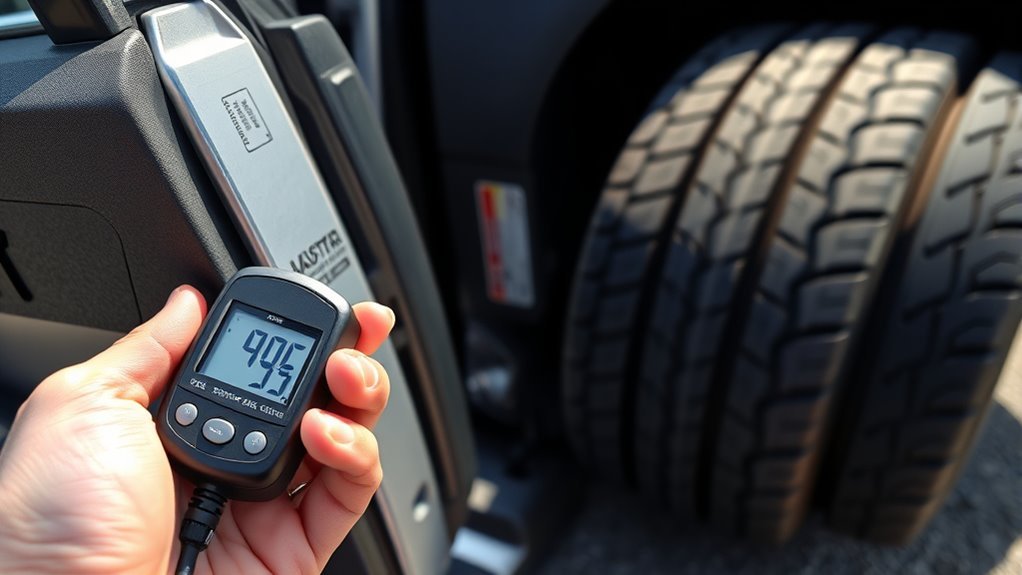
After checking all four tires with a reliable gauge, compare each pressure reading to the recommended PSI on the driver‑door sticker to identify any under‑inflated tire. You’ll use tire pressure values and gauge accuracy to make an objective call: any reading several PSI below the sticker indicates a low tire that needs attention. Read results against the sticker’s single recommended PSI (front/rear if specified), noting deviations and prioritizing the largest deficits.
- Note the sticker PSI and ambient temperature for context.
- List each tire’s measured PSI and calculate delta from sticker.
- Flag tires with deltas ≥3 PSI for immediate inspection.
- Recheck flagged tires after a short rest to confirm readings.
This method liberates you from guesswork: it’s repeatable, auditable, and technical. You’ll act on quantifiable differences, preserving safety and efficiency without wasting time on assumptions.
Fix a Low Hyundai Sonata Tire: Inflate, Bleed, or Swap
Start by confirming which tire is low and why, then choose the appropriate remedy: inflate, bleed, or swap. You’ll verify with a gauge against the driver‑door sticker, isolating the deficit. If PSI is below spec and there’s no visible damage, inflate tires to the recommended PSI using a portable compressor or station air. Add air in short bursts, recheck, and stop at target.
If a tire shows over‑pressure—rare after inspection—bleed pressure by depressing the valve core with the gauge angled against the stem until the correct PSI appears. Use controlled releases; don’t rush.
If pressure drops quickly after inflation or the tire has visible cuts, bulges, or bead damage, swap it for your spare or a matched replacement. Secure the vehicle, follow jacking and lug‑nut procedures, and torque to spec after lowering. Monitor pressures monthly to maintain freedom from roadside immobilization and retain control of your Hyundai Sonata.
Troubleshoot Leaks, Uneven Wear, and When to See a Shop
Inspect each tire for visible damage like cuts, bulges, or nails and note any uneven tread that could indicate under-inflation or alignment issues. Check tire pressure regularly with a gauge against the PSI on the driver’s door placard to catch slow losses. If you hear hissing, see soap bubbles, or can’t locate the source, get professional leak repair at a tire shop.
Inspect For Visible Damage
A careful visual check will quickly reveal punctures, cuts, or sidewall cracks that can cause leaks, so closely examine each tire’s tread and sidewall for abnormalities. Your tire inspection should be systematic: scan for nails, tears, bulges, and feathering. Note uneven wear patterns that imply alignment or inflation faults. Record findings for a clear damage assessment and decisive action.
- Inspect tread for embedded objects and irregular wear depth.
- Check sidewalls for cuts, bubbles, or sliced cords indicating structural failure.
- Compare all four tires for consistent wear and look for one that holds lower pressure.
- If you observe ongoing pressure loss or visible structural damage, consult a tire specialist for repair or replacement to reclaim safety and autonomy.
Check Tire Pressure Regularly
Check your tire pressure with a reliable gauge at least once a month and before long trips, setting each tire to the PSI listed on the driver’s door placard to detect low or leaking tires early. You’ll perform routine tire maintenance by recording readings for all four tires and comparing values; a delta of several PSI (for example, 26 vs. 34 PSI) signals a low or leaking tire. Visually inspect tread for uneven wear patterns indicative of under-inflation. For suspected leaks, apply soapy water and watch for bubbles to localize the breach. Maintain a log for pressure monitoring trends; repeated drops or asymmetric wear require prompt professional inspection. These steps put you in control of safety and mobility.
Seek Professional Leak Repair
When you see uneven tread, hear a hiss, or a single tire consistently reads low PSI, don’t delay—have a professional diagnose and repair the leak. You’ll get a professional assessment that confirms whether uneven wear signals a slow leak, alignment fault, or pressure neglect. Prioritize tire maintenance to preserve safety and mobility; don’t accept roadside fixes if damage is structural.
- Inspect sidewalls for cracks, bulges, or embedded objects.
- Use a gauge to verify which tire holds lower PSI over 24–48 hours.
- Seek a shop for leak detection, patching, or plug-and-replace decisions.
- If TPMS warns, have technicians perform a full tire maintenance and system check.
Act decisively—freedom on the road depends on reliable tires.
Frequently Asked Questions
Can My Car Tell Me Which Tire Is Low?
Yes — your car can tell you which tire is low: tire pressure sensors trigger warning indicators and the TPMS often identifies the affected wheel; you’ll check pressures, inflate as needed, then reset the system for accuracy.
Does the Hyundai App Show Tire Pressure?
Yes — the Hyundai app displays tire pressure. Imagine Sarah avoiding a breakdown after a Blue Link alert; you’ll get live tire pressure readings, alerts and history, empowering proactive Hyundai maintenance so you can stay free and mobile.
How to Reset Low Tire Pressure on Hyundai Sonata?
Reset the tire pressure warning light by inflating all tires to the door‑label PSI, turning ignition on, pressing and holding the TPMS reset button until the light blinks three times, then drive 10–15 minutes above 25 mph.
Conclusion
Checking each tire cold with a gauge pinpoints which Hyundai Sonata tire’s low; don’t guess. Curiously, tire-pressure monitoring systems miss gradual leaks about 25% of the time, so manual checks matter. Use the driver‑door PSI sticker as your reference, inflate to spec, bleed if overfilled, or swap to the spare if needed. If pressure drops repeatedly or you see uneven wear, have a shop inspect for slow leaks, valve issues, or rim damage.

Related Articles

Hyundai Sonata Overall Tire Diameter by Size: Full Chart
Hyundai Sonata overall tire diameter by size: discover exact measurements, common OEM examples, and fitment tips to ensure speedometer accuracy and proper clearance.
Read More
Hyundai Sonata Tire Aspect Ratio Explained: What the Number Means
Good to know: discover how the Sonata’s tire aspect ratio affects ride, handling, and speedometer accuracy — and why that number really matters.
Read More
Hyundai Sonata Compatible Tire Sizes: Full Fitment Guide
I need to show which Hyundai Sonata generations accept which tire sizes and why fitment, offset, and diameter matter—read on to get exact matches.
Read More