How Inner Tubes Are Made: From Raw Rubber to Finished Tube
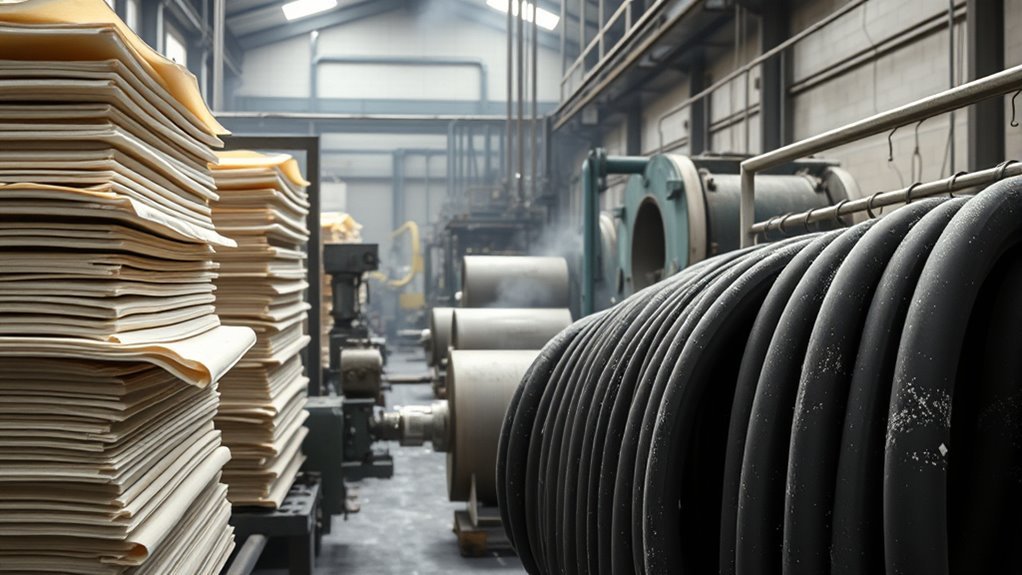
You start with butyl or natural rubber compounded with carbon black, oils, sulfur curatives, accelerators and antidegradants to tune air retention, strength and processing. The blend is extruded through a precision die into a seamless tube, trimmed, vulcanized under controlled heat and pressure, then fitted with a valve stem. Each tube is inflated, pressure-tested, and inspected for leaks and dimensional uniformity. Continue for details on variants, sustainability and end‑of‑life handling.
Raw Materials: Butyl vs Natural Rubber and Key Additives
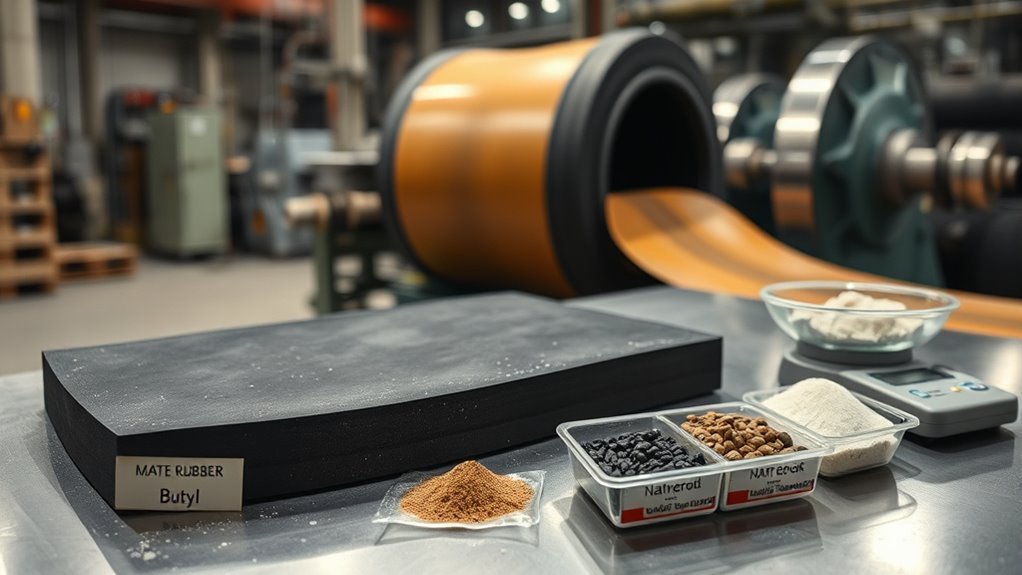
Although both butyl and natural rubber form the basis of inner tubes, manufacturers favor butyl for most applications because it holds air far better and resists ozone, UV, and temperature-induced permeability; natural rubber (from Hevea brasiliensis) remains valuable where higher tensile strength and flexibility are required, such as off-road or performance-specific tubes. You’ll assess raw material choice by quantifying permeability, tensile modulus, and resilience against environmental stressors. You’ll evaluate rubber sourcing not just for technical specs but for supply-chain transparency and environmental impact, privileging sources that minimize deforestation and labor harm. In formulation, you’ll add carbon black or silica for abrasion resistance and stiffness control, sulfur for vulcanization kinetics, and antidegradants to retard UV and thermal aging. You’ll control additive loading to meet dimensional stability and cure characteristics, then document batch properties for traceability. Your decisions link material performance to ethical procurement, so liberated users can demand tubes that perform and respect ecosystems.
Compounding for Inner Tubes: Mixes for Strength and Air Retention
You’ll select a base butyl formulation and adjust reinforcing fillers like carbon black and silica to target specific strength and wear characteristics. You’ll control sulfur and accelerator levels for consistent vulcanization while adding antioxidants and processing oils to stabilize the compound. You’ll then fine-tune air-impermeability additives and precise blend ratios to meet required pressure retention and longevity specifications.
Compound Formulation Choices
When you formulate inner-tube compounds, you combine a butyl base for air retention with reinforcing fillers such as carbon black and silica, then dose vulcanizing agents (sulfur and accelerators) and aging inhibitors to achieve a targeted balance of flexibility, puncture resistance and thermal stability. You select filler grades and loadings to tune compound flexibility versus stiffness, optimizing tear strength without sacrificing ride comfort. You control curative systems and accelerator types to regulate cure rate and crosslink density, directly affecting elasticity and resilience. You add antioxidants and antiozonants to extend service life under heat and oxygen. You enforce tight process controls—mix temperature, rotor speed, dump time—and sample testing for physical properties. Your choices liberate users through dependable performance across varied terrain and conditions.
Air Impermeability Additives
Having set compound bases, fillers and cure systems to balance strength and elasticity, you now focus on additives that drive air impermeability—chiefly butyl rubber grades, halogenated butyls and complementary sealants that cut gas diffusion rates without compromising processing or mechanical properties. You select butyl for its low permeability, blending with natural rubber to retain flexibility while achieving target air retention. Carbon black, curing agents, processing oils and antioxidants are metered to preserve elasticity and prevent aging. You incorporate puncture resistance enhancers and thin-film sealants where service demands dictate, validating mixes via gas-loss and puncture testing across temperature ranges. Controlled mixing and dispersion guarantee uniform performance so the finished tube meets airtightness standards and supports rider autonomy.
Extrusion and Forming: Making a Seamless Tube
Push the formulated rubber compound through a calibrated die to create a continuous, seamless tube: that’s the core of extrusion and forming. You control die design to define wall thickness, cross-section geometry, and surface finish, and you monitor extrusion speed to balance shear heating and dimensional stability. A butyl-based blend with additives flows uniformly when pressure, temperature, and screw profile are optimized.
You cut the continuous tube to specified lengths using precision cutters synchronized with line speed, then inspect each length for concentricity, wall uniformity, and surface defects using gauges and optical sensors. Seamless extrusion removes joint stress concentrators, reducing leak pathways and improving reliability. Process records log die settings, extrusion speed, and inspection outcomes so you can trace deviations and free your production from variability. This disciplined approach yields inner tubes with reproducible dimensions and performance, enabling safer, more liberated mobility.
Vulcanization: Curing, Heat, and Pressure Effects
After extrusion defines the tube’s geometry and surface quality, you move the rubber into vulcanization to convert its thermoplastic behavior into a resilient, elastic network. You apply vulcanization techniques that combine sulfur-based curatives, heat (typically 140–160°C), and controlled pressure to induce cross-linking of polymer chains. You monitor time precisely—often 10–30 minutes—because undercure leaves weak, tacky material and overcure embrittles the tube. You regulate temperature uniformity and platen or autoclave pressure to guarantee consistent rubber elasticity and dimensional stability across batches.
You record cycle parameters and sample mechanical properties; quality control instrumentation verifies temperature, pressure, and cure time against setpoints. You adjust formulations and cycle profiles when drift appears, preserving tensile strength, abrasion resistance, and longevity. This methodical control lets you liberate performance from variability, producing inner tubes that resist wear, retain elasticity, and meet safety and durability expectations for end users.
Common Tube Variants: Bicycle, Motorcycle, and Specialty Differences
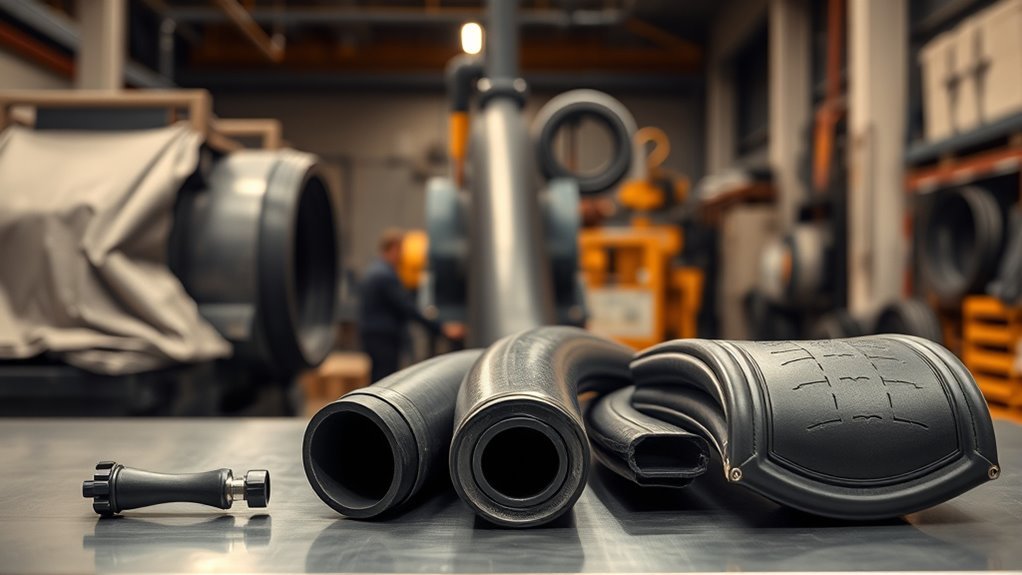
Variants of inner tubes differ primarily in material composition, wall thickness, and construction to meet specific pressure, load, and environmental demands. You’ll see butyl used for bicycle advantages: it balances air retention and flexibility, lowering maintenance and improving ride consistency. Natural rubber appears in winter performance tubes, preserving elasticity and sealing capability at low temperatures.
- Bicycle: thin-walled butyl for low rolling resistance and reliable air retention.
- Motorcycle: reinforced, thicker-walled constructions to guarantee motorcycle durability under high pressure and dynamic loads.
- Specialty: multi-layer or puncture-resistant builds tailored to specialty applications like agriculture and off-road.
You’ll evaluate trade-offs by matching compound selection and wall geometry to required service conditions. Choose tubes when repairability and simple maintenance matter; understand that tubeless systems remove inner tubes entirely, shifting sealing and structural roles to tire and rim interfaces. This methodical comparison helps you select components that free you from frequent failures and constraints.
Valve Fitting and Finishing (Stem, Bead Trim)
One essential step in tube production is securely fitting and finishing the valve stem and bead so the tube seats correctly and holds pressure. You’ll select the valve type—Schrader or Presta—based on valve compatibility with rims and inflators, then position the stem through a reinforced aperture. Machines apply controlled pressure and adhesive or heat-assisted bonding while you monitor alignment to guarantee an airtight joint.
Next, you’ll perform bead trim operations: precision cutting and smoothing of the tube edge so it conforms to rim geometry. CNC-style trimming tools and automated grinders remove excess material to a specified tolerance, preserving the sealing surface.
You’ll employ standardized sealing techniques—mechanical crimping, adhesive curing, or thermal welding—matched to rubber compound and valve design. This methodical approach, enabled by advanced machinery, yields consistent stems and beads that empower users to rely on the tube’s integrity and pursue freedom in movement without fear of failure.
Quality Control for Inner Tube Production: Inflation, Leak Tests, Lifespan Checks
Begin by inflating each tube to its specified test pressure and holding it while you conduct systematic leak and performance checks: monitor for pressure drop over a set dwell time, then submerge the pressurized tube in water and scan for bubbles along seams, valve fittings, and the bead area to pinpoint air escapes. You’ll combine inflation testing with precise visual inspections and recorded pressure logs to confirm structural integrity. Lifespan assessment follows via accelerated thermal and mechanical cycling on sample batches to verify endurance against fatigue and temperature extremes. Integrate automated systems for repeatable, objective measurements and faster throughput.
- Use automated leak detection to flag micro-leaks missed by manual scanning.
- Apply standardized stress cycles for lifespan assessment and compare failure modes.
- Enforce visual inspections with calibrated lighting and imaging sensors for surface defects.
You’ll interpret results against acceptance criteria, quarantine failures, and iterate process controls to guarantee freedom from premature failure and consistent field performance.
Sustainability in Inner Tube Production: Reclaimed Rubber, Bio-Rubber, End-of-Life
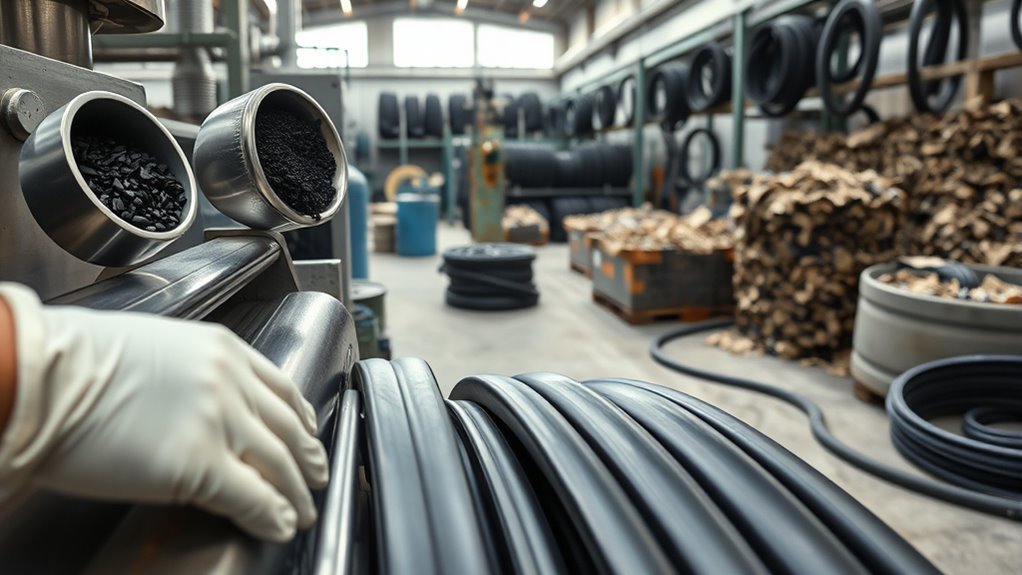
Although integrating sustainable materials into inner tube production requires careful reformulation and process control, manufacturers are increasingly blending reclaimed rubber and bio-based elastomers like guayule and dandelion-derived polymers into standard compounding recipes to reduce virgin natural and synthetic rubber use. You’ll evaluate compound performance by measuring cure kinetics, tensile strength, and fatigue resistance, then adjust accelerators and plasticizers to accommodate heterogeneous feedstocks. Reclaimed rubber enters via devulcanized crumb streams processed with solvent or thermal methods; you’ll monitor crosslink density to guarantee consistency. Bio-based alternatives demand upstream agronomic scaling and chemical characterization to match ASTM property windows. Sustainable manufacturing requires closed-loop solvent recovery, energy optimization, and traceable material sourcing so you can substantiate eco-friendly demand claims. Recycling technologies for end-of-life inner tubes—mechanical grinding, cryogenic milling, peroxide-assisted devulcanization—enable reincorporation at defined loadings. You’ll adopt innovative practices that prioritize reparability and recyclability, thereby liberating supply chains from sole reliance on virgin elastomers while meeting performance and regulatory targets.
Frequently Asked Questions
Which Is Better Butyl or Natural Rubber Tubes?
Butyl tubes are usually better for everyday use: you’ll favor butyl advantages like superior air retention and environmental stability, while natural rubber benefits include flexibility, cold performance and tensile strength for specialized, liberating high-performance needs.
Do They Still Use Rubber Trees to Make Tires?
Yes—you still use rubber trees for tires; you’ll rely on natural latex for high-performance components while integrating synthetic alternatives and pursuing sustainable sourcing, so you methodically balance resilience, supply security, and ecological liberation.
What Kind of Rubber Are Inner Tubes Made Of?
Like a fortress, inner tubes are mainly made from synthetic rubber (butyl) for superior air retention; you’ll see natural rubber used sometimes, and the manufacturing process involves compounding, extrusion, vulcanization, and performance-enhancing additives.
Conclusion
You’ve watched raw polymers become pressure vessels, so congratulate yourself for caring about elastic alchemy. You’ll appreciate that butyl’s impermeability, mixing’s rheology, extrusion’s dimensional discipline, vulcanization’s cross‑link math, valve seating tolerances, and QC’s burst numbers all conspire to keep you rolling. Satirically, you’ll also note humanity’s knack for turning discarded rubber into predictable containment—because nothing says progress like engineering inevitability into a tiny balloon that quietly holds our absurdly mobile lives.
Related Articles
10 Tires That Will Transform Your 2017 Toyota RAV4
You rely on your RAV4 for commuting, errands, and weekend adventures, so the right tires change more than grip — they improve safety, fuel…
Read More
10 Tires That Will Transform Your 2016 Toyota RAV4
You rely on your RAV4 for daily driving, trips and errands, so the right tires make a dramatic difference in safety, comfort and fuel…
Read More
10 Tires to Boost Your 2015 Toyota RAV4’s Performance This Year
You rely on your 2015 Toyota RAV4 for daily driving, road trips and unpredictable weather, so the tires you choose will change how it…
Read More