Full-Size vs Compact Spare Tire: Key Differences
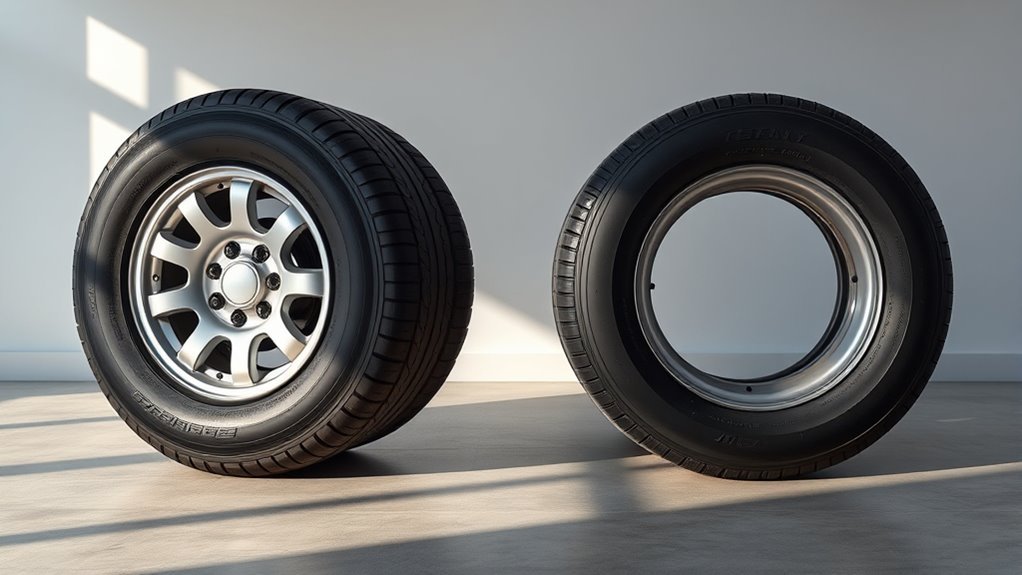
You’ll choose full-size if you want near-original handling, load capacity, and long-term use; it matches tire dimensions, preserves geometry, and performs reliably in wet or adverse conditions. Compact spares save weight and trunk space but are temporary, lower-load, and limit you to about 50 mph and ~50 miles with degraded grip and altered steering. Inspect pressure monthly and confirm bolt pattern, load rating, and offset. Keep going for a detailed comparison and practical buying guidance.
Which Spare Tire Is Right for You: Full-Size or Compact?
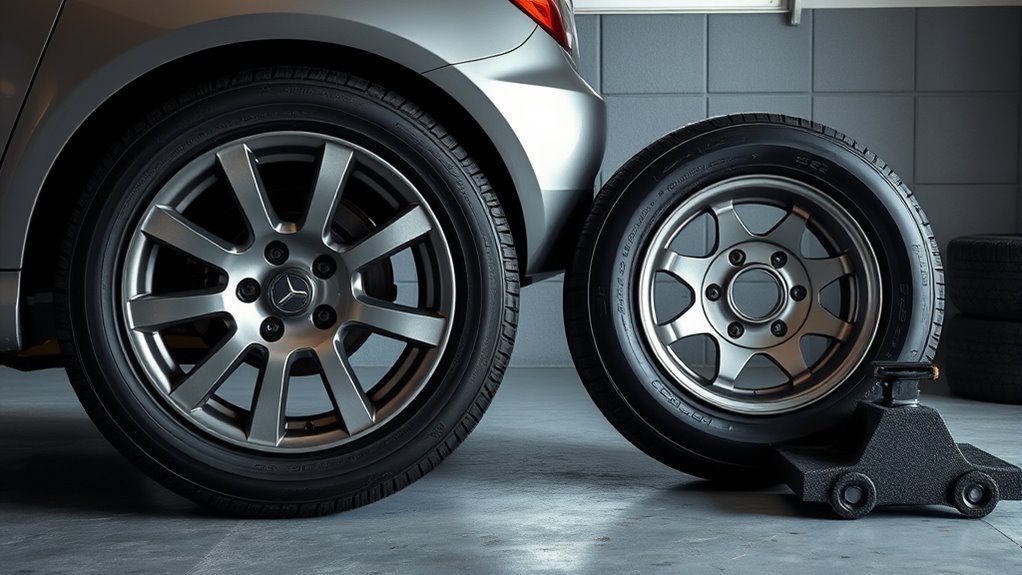
Which spare tire fits your needs depends on trade-offs among performance, space, and intended use. You’ll weigh spare tire benefits against constraints: a full-size spare offers near-identical performance and superior driving safety in varied weather, and can serve long-term if vehicle specs allow. A compact “donut” saves trunk space and reduces weight, but it’s strictly temporary — limited to about 50 mph and 50 miles — and has reduced traction and load capacity, lowering safety margins in foul conditions.
Evaluate your priorities: if you value uninterrupted mobility, frequent long trips, or live where weather is unpredictable, a full-size spare preserves performance and safety. If you prioritize minimalism, occasional short drives, and can promptly reach service, a compact spare provides a pragmatic, liberating compromise. Factor in your vehicle’s manufacturer guidance, trunk volume, and driving habits to choose the option that aligns with your autonomy and risk tolerance.
Size & Construction: Full-Size vs. Compact Spare Tires
After weighing the operational trade-offs between full-size and compact spares, you should next examine their size and construction, because those differences determine load capacity, handling, and service life. In a clear size comparison, full-size spares match your vehicle’s regular tires in diameter, width, and tread pattern, so they sustain rated loads and allow prolonged use. Compact spares (donuts) are smaller and lighter, engineered for temporary mobility only.
Evaluate construction materials: full-size spares use reinforced carcasses and heavier compounds that resist deformation and extend service life under load. Compact spares employ lighter plies and softer sidewalls to save weight and space, which reduces load capacity and increases risk of distortion under pressure. You’ll prefer full-size if you seek resilience and uninterrupted mobility; choose compact only when weight, storage, or emergency-only priorities free you from longer-term reliance. This technical contrast lets you decide strategically and liberates you from compromise.
Traction & Handling Differences Between the Two Spares
When you swap to a full-size spare, you keep the original tread design and wet traction, so braking and cornering behavior remain predictable in rain. A compact “donut” reduces grip in wet conditions and can induce understeer or oversteer because its lighter, narrower construction alters lateral load transfer. Given the compact’s 50 mph/50 mile limits and tendency to deform under load, you should treat it as a temporary compromise for stability and handling.
Traction In Wet Conditions
Although both spare types let you keep moving after a flat, you’ll get markedly different wet-weather performance: Full-sized spares match your vehicle’s tread design, so your wet weather performance and tire safety comparisons favor consistent grip, reduced hydroplaning risk, and predictable braking. Compact “donut” spares compromise traction and can undermine safety in rain. You should evaluate deployment limits and drive accordingly.
- Grip: Full-sized equals original tread, preserving wet traction; compact reduced contact and lighter construction lower grip.
- Speed constraints: Compact spares are limited (≈50 mph), restricting escape options in heavy rain; full-sized permits normal speeds within vehicle limits.
- Risk management: Using a full-sized spare sustains stopping distance and water-shedding capability; compact spares demand conservative speeds and immediate replacement.
Handling And Stability
Wet-weather traction differences naturally lead into how each spare affects overall handling and vehicle stability under load and maneuvering. You’ll notice a full-size spare preserves predictable lateral grip and steering feedback because its tread and reinforced construction match the other tires; it resists deformation under load, maintains tire pressure dynamics, and sustains driving comfort at regular speeds. By contrast, a compact “donut” reduces contact patch fidelity and yields uneven slip angles, forcing you to adapt steering inputs and reduce speed to the mandated 50 mph/50-mile limit. That compromise degrades vehicle stability during abrupt maneuvers and in crosswinds. For liberated drivers who demand control, choosing a full-size spare minimizes handling penalties and preserves confidence, especially when load and emergency responsiveness matter.
Speed, Distance, and Durability Limits for Compact Spares
You should restrict compact spares to about 50 mph and roughly 50 miles of use to avoid overstressing their design limits. Their lightweight construction reduces load capacity and makes them prone to deformation under higher speeds or heavier loads, which degrades handling and increases failure risk. Inspect them frequently, because misuse or extended use materially lowers durability and safety.
Speed And Distance Limits
When fitted, a compact spare (donut) imposes strict operational limits: you should keep speeds at or below 50 mph and restrict use to about 50 miles because its lightweight construction lowers load capacity and reduces durability. You’ll treat it as temporary use only; speed restrictions and distance caps are safety measures, not suggestions. Use the spare to reach service rapidly; prolonged driving risks failure.
- Maximum parameters: 50 mph and ~50 miles — adhere to both to avoid overload and heat buildup.
- Performance trade-off: lower load capacity reduces braking, handling precision, and wear tolerance.
- Operational guidance: minimize highway use, avoid heavy loads, and proceed to a repair shop immediately.
These limits free you to act decisively and safely.
Structural Durability Concerns
Although designed for short-term use, compact spares have structural limits that rapidly become critical at higher speeds or extended distances. You must respect the 50 mph/50 mile guideline because durability testing shows lightweight construction and material differences reduce load capacity and increase deformation risk. You’ll notice inferior traction and accelerated wear under heavier loads or adverse weather; that’s not marginal—it’s a predictable failure mode when speed or mileage exceed design limits. Full-size spares, by contrast, use reinforced constructions that preserve geometry and durability for extended use. Inspect your compact spare regularly; its thin sidewalls and simplified tread wear faster and can fail without warning. If you value autonomy on the road, choose a full-size spare or limit compact-spare use strictly per specifications.
Performance and Safety Impacts of a Full-Size Spare
Because a full-size spare matches your vehicle’s regular tires in size, tread and construction, it preserves original handling and braking performance under normal driving conditions. You’ll retain predictable steering response and consistent braking force, which directly supports safety margins in emergency maneuvers. Matching tread and reinforced construction also sustain traction across wet, dry, and variable surfaces, reducing skid risk.
- Tire longevity: a full-size spare can be used long-term without accelerating wear on the remaining tires, preserving overall fleet life.
- Driving comfort: you’ll keep ride quality and NVH (noise, vibration, harshness) within expected parameters, maintaining comfort and control.
- Operational freedom: no speed or distance restrictions mean you can continue to travel without immediate repair constraints.
Evaluatively, a full-size spare minimizes compromise between mobility and safety. If you value liberated movement and reliable vehicle dynamics, a full-size spare is the technical choice that sustains performance and reduces accident exposure.
Practical Scenarios: When to Carry a Compact vs. a Full-Size Spare Tire
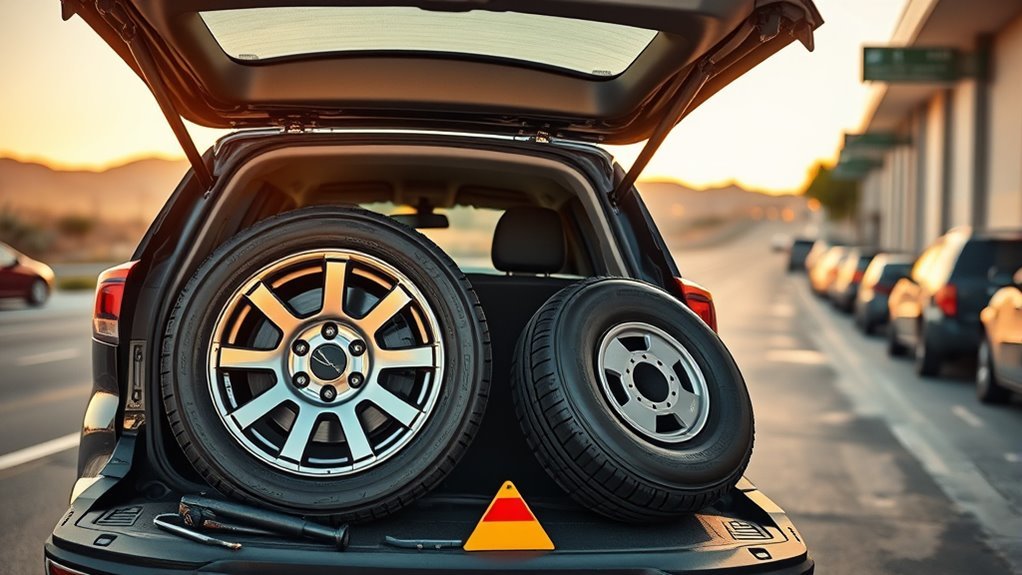
Having a full-size spare preserves vehicle dynamics, but real-world constraints and travel patterns determine whether you’ll carry a compact or full-size replacement. If you drive a small urban car, prioritize compact spare usage: it frees trunk volume and delivers a quick, predictable temporary repair for short, low-speed trips (≤50 mph, ≤50 miles) until a service center restores full capability. Accept its performance limits and avoid adverse-weather reliance.
Conversely, choose full-size advantages when your routes include long distances, remote areas, or rough terrain. A full-size spare matches your tire’s traction and heat-management, removing speed and range limitations and allowing sustained, safe operation—critical if you seek freedom from roadside dependency.
Evaluate mission profile: daily commuting in dense cityscapes leans toward compact; touring, off-pavement travel, or frequent highway use warrants full-size. Balance trunk space, weight, and mission risk to make an informed, liberation-oriented choice.
Maintenance, Storage, and Inspection Tips for Spare Tires
When you store a spare, treat it as an active component of the vehicle: inspect pressure, tread, and sidewalls at least monthly, keep it in a dry, shaded place, and log condition and service dates so you can act before failure. You’ll maintain readiness and strengthen your emergency preparedness by applying consistent spare tire care. Full-size spares require rotation and balancing like main tires; compact spares demand strict adherence to speed/distance limits and immediate replacement after use.
- Checklist routine: measure pressure, assess tread depth, scan for cracks/deformation, and record findings.
- Storage protocol: keep the tire clean, elevated, shaded, and away from solvents or heat sources; rotate position periodically.
- Action thresholds: replace if sidewall damage appears, tread is compromised, or compact limits are exceeded.
You’ll make pragmatic choices that free you from preventable roadside delays. Evaluate condition objectively and act decisively to maintain mobility and safety.
Cost, Trunk-Space Trade-Offs, and Installation Considerations
Although a full-size spare increases upfront and long-term costs compared with a compact unit, it also preserves performance and reliability under extended use, so you should weigh that against trunk-space and budget constraints. In a strict cost comparison, full-size spares command higher purchase and potential maintenance expense due to reinforced construction and near-regular tire performance; compact spares are cheaper, lighter, and free up cargo volume. Evaluate recurring costs against your driving profile—frequent adverse-weather travel favors the higher expense for safety and traction.
Trunk-space trade-offs are quantifiable: full-size units occupy significant volume, reducing payload or storage flexibility, while compacts reclaim usable trunk area. For installation, full-size swaps mirror standard tire changes and minimize handling surprises; compact spares can alter steering feel and require a brief adaptation. Follow installation tips: confirm jack placement, torque lug nuts to spec, and inspect tire pressure immediately. Make a choice that liberates your mobility without compromising operational safety.
How to Choose & Buy the Right Spare: Specs to Check and Dealer Options
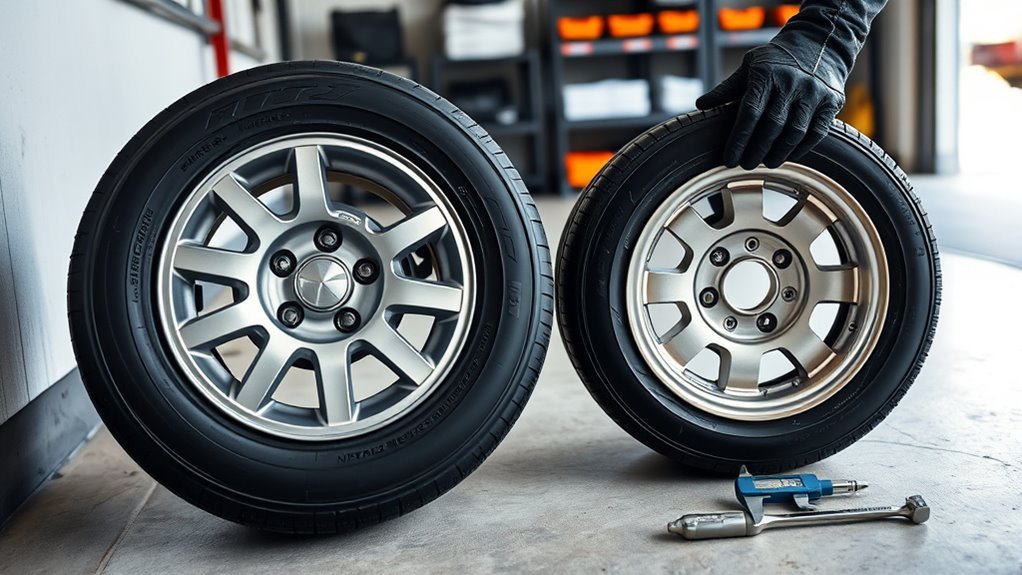
You’ve weighed cost, space, and installation trade-offs; now match those conclusions to specific spare specs and dealer options so the replacement actually fits your vehicle and driving needs. Start by confirming vehicle compatibility: check bolt pattern, wheel diameter, offset, and load rating against your owner’s manual. Decide between spare tire types—full-size for performance parity, compact for space-saving temporary use—and note compact speed/distance limits.
Match specs to needs: confirm bolt pattern, diameter, offset, and load—choose full-size or compact with limits.
- Measure and match: diameter, width, bolt pattern, load index, and recommended inflation pressure.
- Evaluate use-case: daily long-distance driving favors a full-size; urban, occasional drives tolerate a compact if you accept limitations.
- Dealer validation: request OEM-fitment from your dealer (e.g., Heritage Ford), ask for installation torque specs, and verify warranty and maintenance recommendations.
You’ll liberate yourself from uncertainty by choosing a spec-accurate spare and leveraging dealer expertise for safe, reliable on-road readiness.
Frequently Asked Questions
Can You Drive on the Highway With a Full-Size Spare Tire?
Yes—you can drive on the highway with a full-size spare tire; it preserves highway safety and tire compatibility, evaluates like a regular tire, and lets you confidently continue travel until you replace the damaged tire.
Is a Donut Spare Better Than a Full-Size Spare?
No — you’ll choose donuts for portability and quick fixes, and full-size for stability and endurance; donut advantages include lighter weight and space savings, while full size limitations are minimal, offering greater safety and freedom.
Conclusion
You’ll choose based on priorities: space savings or full driving capability. Almost 60% of new cars come with compact “donut” spares, so you’ll likely trade trunk room for a temporary solution that limits speed (~50 mph) and distance (~70 miles). If you value normal handling, durability, and no rush to repair, opt for a full-size spare. Inspect pressure and tread monthly, secure mounting, and confirm bolt pattern and load rating before relying on any spare.
Related Articles

10 Tires That Will Transform Your 2017 Toyota RAV4
You rely on your RAV4 for commuting, errands, and weekend adventures, so the right tires change more than grip — they improve safety, fuel…
Read More
10 Tires That Will Transform Your 2016 Toyota RAV4
You rely on your RAV4 for daily driving, trips and errands, so the right tires make a dramatic difference in safety, comfort and fuel…
Read More
10 Tires to Boost Your 2015 Toyota RAV4’s Performance This Year
You rely on your 2015 Toyota RAV4 for daily driving, road trips and unpredictable weather, so the tires you choose will change how it…
Read More