
Tire Noise Causes: Why Tires Hum, Roar or Squeal

You can usually tell why tires hum, roar, squeal, or thump by watching how the sound changes with speed, steering, braking, and road surface. A steady hum often points to tread pattern or uneven wear. A roar is usually stronger tire-road impact from cupping, low pressure, coarse pavement, or worn tread. Squealing during turns usually comes from stick-slip at the tread caused by low pressure, aggressive cornering, misalignment, or worn suspension parts.
Quick Answer
Tire noise becomes a problem when it is new, getting louder, tied to vibration or pulling, or still present on smooth pavement. Check cold tire pressure, inspect tread for cupping, feathering, flat spots, or damage, rotate the tires to see if the sound follows a wheel, and have wheel bearings, alignment, balance, and suspension checked if the noise persists.
Key Takeaways
- A hum that rises with speed but does not change much while steering is often tire tread or wear-related.
- A growl that changes when you gently steer left or right can indicate a wheel bearing, not just tire noise.
- Cupping, feathering, flat spots, underinflation, poor balance, and alignment problems are common tire-noise causes.
- Use pressure correction, rotation, balancing, and alignment as first checks, but replace tires with unsafe tread, exposed cords, bulges, or severe uneven wear.
- Do not rely only on TPMS; check tires monthly with an accurate gauge when they are cold.
At a Glance
| Time Required | 10–30 minutes for a driveway inspection; longer if a shop performs alignment, balancing, or bearing checks |
| Difficulty | Easy for pressure and tread checks; moderate to professional for bearing, suspension, and alignment diagnosis |
| Tools Needed | Tire pressure gauge, tread-depth gauge or penny, flashlight, gloves, notebook or phone camera; jack stands only if safely lifting the vehicle |
| Cost | Free for basic checks; service cost varies by vehicle, tire size, local labor, and whether rotation, balancing, alignment, tires, suspension, or bearings are needed |
Warning: Do not crawl under a vehicle supported only by a jack. Use properly rated jack stands on a solid, level surface, chock the wheels, and follow the vehicle owner’s manual. If you are unsure, have a qualified technician inspect the tires, wheels, bearings, and suspension.
Is This Tire Noise Normal or a Problem?

Some tire noise is normal. All tires make sound as tread blocks contact pavement, trap and release air, and transmit vibration through the suspension. The same tire can sound quiet on smooth asphalt and loud on coarse concrete. The sound becomes more concerning when it is new, one-sided, getting louder, paired with vibration, or present on many different road surfaces.
Start with a focused noise assessment. Note the pitch, rhythm, speed range, road surface, temperature, steering input, braking input, and whether the noise comes from the front, rear, left, or right. A hum or roar that rises predictably with speed and stays fairly steady while you gently steer often points toward tire tread, tire wear, balance, or road surface. A growl that changes when you load one side of the vehicle during a gentle lane change can point toward a wheel bearing.
Check tire pressure with a gauge when the tires are cold. The National Highway Traffic Safety Administration recommends monthly tire pressure checks and notes that TPMS is not a substitute for regular maintenance. Use the pressure listed on the driver’s door placard or owner’s manual, not the maximum pressure molded on the tire sidewall.
Also inspect tread depth, tread shape, and sidewalls. Tires should be replaced when tread reaches 2/32 inch, and any tire with exposed cord, bulges, severe cracking, or other structural damage should be inspected immediately. Federal inspection guidance in 49 CFR 570.62 also describes checking treadwear indicators or measuring tread in major grooves at multiple points around the tire.
Quick Tests to Isolate Tire Noise vs. Wheel-Bearing Noise
Use simple tests before guessing at parts. You are looking for one question: does the sound follow a tire, follow vehicle speed, or change with steering load?
- Change road surface. Drive at the same speed on smooth asphalt, coarse pavement, and grooved concrete if safe. Tire tread noise often changes sharply with pavement texture.
- Check cold pressure. Low pressure can make the tread squirm, increase heat, and create a louder hum or squeal. Uneven pressure side to side can also cause pulling.
- Inspect all four tires. Look and feel for cupping, feathering, flat spots, cracks, bulges, nails, exposed cord, and uneven shoulder wear.
- Rotate tires and re-test. If the sound moves from front to rear or changes location after rotation, the tire or wheel assembly is likely involved.
- Listen during gentle steering. A wheel bearing noise often changes when you gently steer left or right because load shifts across the vehicle.
- Check for vibration. A tire or wheel that is out of balance often creates speed-specific vibration. A damaged tire can create a thump once per wheel revolution.
- Have the wheel safely inspected off the ground. A technician can spin the wheel, check for roughness, measure play, and inspect hubs, bearings, brakes, suspension, and tires.
Note: A noisy wheel bearing and a noisy tire can sound similar from inside the cabin. Do not diagnose by sound alone. Combine the road test with tread inspection, pressure readings, rotation results, and a professional wheel-end check when symptoms are strong or safety is uncertain.
Why Do Tires Hum?
Tires hum when the tire and road create a repeating vibration or tone. Sometimes that tone is built into the tread design. Other times it appears because the tread is no longer wearing evenly. The most common causes are tread pattern, uneven wear, low pressure, wheel imbalance, alignment problems, and aged or hardened rubber.
Tread Pattern Design
Tread pattern directly affects tire noise. Ribbed highway tires are usually quieter because they keep more continuous contact with the road. Aggressive all-terrain or winter tread blocks can create more air movement and impact noise. Research on tire-pattern noise has identified tread impact force as a major tire-noise mechanism, which is why tire makers vary tread-block shapes and spacing to reduce repeating tones.
- Ribbed patterns: Usually smoother and quieter on highways because the contact patch is more continuous.
- Large tread blocks: Often louder because each block contacts and releases the road more noticeably.
- Uneven block spacing: Helps break up a single repeating tone, reducing a drone-like sound.
- Deep grooves and siping: Improve water or snow performance but can add noise depending on the tire type and road surface.
Tire Wear Condition
A new hum often signals uneven tread wear. Cupping creates scalloped dips around the tire. Feathering makes tread blocks feel smooth in one direction and sharp in the other. Shoulder wear shows that the inner or outer edge is doing too much work. Flat spots create a thump or rhythmic slap, especially after hard braking, long storage, or a tire defect.
Bridgestone describes tire cupping as an irregular pattern where parts of the tread look scooped out every few inches, often connected to alignment, suspension, balance, inflation, or skipped rotation. Once tread has worn into a noisy shape, correcting the cause may stop it from getting worse, but it may not make the tire quiet again.
Why Do Tires Roar?
Tire roar is usually a stronger, broader sound than a hum. It often comes from repeated tread impacts, rough road texture, underinflation, aggressive tread design, or uneven wear that transmits vibration into the cabin.
- Underinflation: A low tire flexes more and changes shape at the contact patch. That can increase heat, rolling resistance, tread squirm, and noise.
- Coarse pavement: Rough concrete or worn asphalt can make even healthy tires roar. If the sound nearly disappears on smooth pavement, the road surface may be the main cause.
- Cupped tread: Scalloped high and low spots strike the road repeatedly and can sound like a wheel bearing at highway speed.
- Out-of-balance wheel assembly: Vibration from imbalance can encourage irregular wear and make existing tire noise more noticeable.
- Worn suspension: Weak shocks, struts, bushings, ball joints, or steering parts can allow the tire to bounce instead of staying planted evenly.
- Aggressive tire type: Mud-terrain, all-terrain, winter, and some run-flat tires may be louder than touring tires because of tread and construction choices.
A tire that gets louder because of road texture is often normal. A tire that gets louder over weeks, vibrates, pulls, or shows uneven wear is a diagnostic signal.
Why Do Tires Squeal?
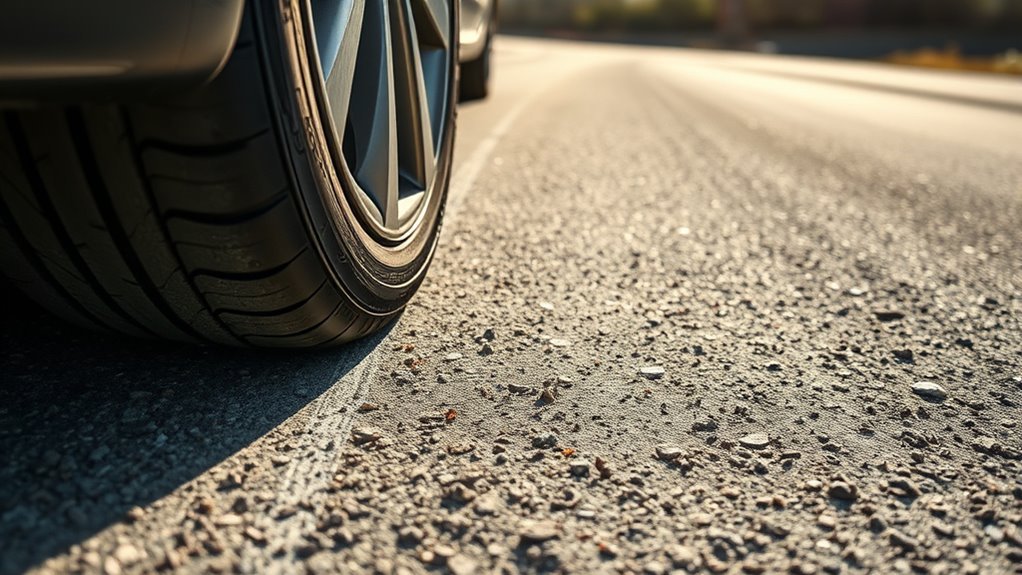
Tire squeal is usually stick-slip friction: the tread grips, slips, and grips again very quickly. You hear it most during sharp turns, fast cornering, sudden braking, hard acceleration, or parking-lot maneuvers on smooth concrete.
Check pressure first. Underinflation increases sidewall flex and can make the tread scrub during a turn. Overinflation can reduce the contact patch and make the tire easier to slide on some surfaces. Then check alignment. Excessive toe or camber can force the tire to drag sideways instead of rolling cleanly, creating squeal and feathered tread wear.
Inspect suspension and steering next. Worn shocks, struts, control-arm bushings, ball joints, tie rods, or wheel bearings can let the tire angle change during cornering. That concentrates force on one edge of the tread and increases noise. Cold tires can also squeal more easily because rubber is less flexible before it warms up.
Pro Tip: If squeal happens mostly in parking lots but the vehicle tracks straight, tires wear evenly, and pressure is correct, the surface and steering angle may be the main reason. If squeal appears during normal turns or comes with feathering, pulling, or uneven wear, schedule an alignment and suspension inspection.
Could a Wheel Bearing Be Causing That Noise?
Yes. A wheel bearing can cause a humming, rumbling, grinding, or growling noise that sounds like tire roar. The key clue is load sensitivity. According to Timken, bearing-related humming, rumbling, or growling may be present when driving straight but intensify when the steering wheel is turned slightly.
Wheel Bearing Symptoms
Common wheel bearing or wheel hub symptoms include:
- Growling or rumbling that rises with speed. The pitch or volume often increases as vehicle speed increases.
- Noise that changes when steering. A gentle left or right lane change can load one side and change the sound.
- Grinding or roughness. A technician may feel rough rotation when the wheel is safely lifted and spun.
- Wheel vibration or wobble. This can also come from tires, wheels, suspension, or lug-nut issues, so it needs inspection.
- ABS or traction-control issues. On some vehicles, the wheel-speed sensor is part of the hub assembly, so bearing or hub damage can affect warning lights.
Differentiating From Tires
If the sound is steady on every road surface, rises with speed, and changes when you steer, suspect a wheel bearing or hub. If it changes dramatically with pavement texture, follows a tire after rotation, or appears with visible cupping or feathering, suspect tires first.
Do not assume that a louder right-side noise always means the right bearing is bad. Vehicle load shifts can make the opposite side louder during a turn, and cabin acoustics can fool your ears. The best diagnosis combines a road test, tire rotation results, hands-on inspection, and professional measurement of bearing play or roughness.
How to Inspect Tires: Cupping, Feathering, and Flat Spots
Inspection starts with a systematic visual and tactile check. Park on a level surface, set the parking brake, let the tires cool, and use a flashlight. Check all four tires, not just the one you think is noisy.
- Measure tread depth in several places. Use a tread-depth gauge for the best result. At minimum, use the penny test as a quick screening check.
- Feel for cupping. Run your hand around the tread surface. Scalloped high-low dips can create a roaring or droning sound.
- Feel for feathering. Slide your hand across the tread blocks in both directions. A saw-tooth feel often points to toe alignment issues.
- Look for shoulder wear. Inner or outer edge wear can indicate camber, toe, overloaded driving, underinflation, or suspension problems.
- Look for center wear. Excessive center wear can come from overinflation or tire/load mismatch.
- Check for flat spots. A flat spot may create a rhythmic thump, especially at low speeds.
- Inspect sidewalls. Bulges, cuts, cracking, exposed cords, and impact damage require prompt professional attention.
- Document the pattern. Photograph wear, note mileage, and compare the same tire after a few weeks or after service.
[Products Worth Considering]

EVOULTES heavy duty tire inflator with an integrated gauge delivers accurate pressure readings from 10–120 PSI, helping you inflate, deflate, and check tires in one tool. The 16.5-inch extended dual-head air chuck with swivel base reaches hard-to-access dual wheel valves on trucks and RVs. A brass trigger core and side-mounted air release valve make operation smooth, with standard 1/4" NPT threading and quick-connect compatibility for easy setup.

This portable cordless tire inflator delivers up to 160 PSI with fast 17 L/min airflow to help you quickly top up tires and get back on the road. It features dual power mode, running on a 21V rechargeable battery or a 12V DC adapter for convenient roadside use. An automatic shut-off with digital pressure gauge helps prevent overinflation, and a built-in LED light improves visibility in low-light conditions.

The JACO FlowPro Tire Inflator measures, inflates, and airs down tires up to 100 PSI with battery-free operation and ±2% accuracy after calibration. It features a glowing pressure dial for night visibility, a heavy-duty steel build with a hybrid hose, and a precision push-to-inflate thumb trigger. The patented Lightning Air Chuck locks on for a secure seal, and the kit includes quick-connect hardware for easy inline use with your air compressor.
Simple Fixes: Pressure, Rotation, Alignment
Once you know what kind of tire noise you have, start with the fixes that prevent noise from getting worse: correct pressure, rotation, balancing, alignment, and suspension repair when needed.
[Products Worth Considering]
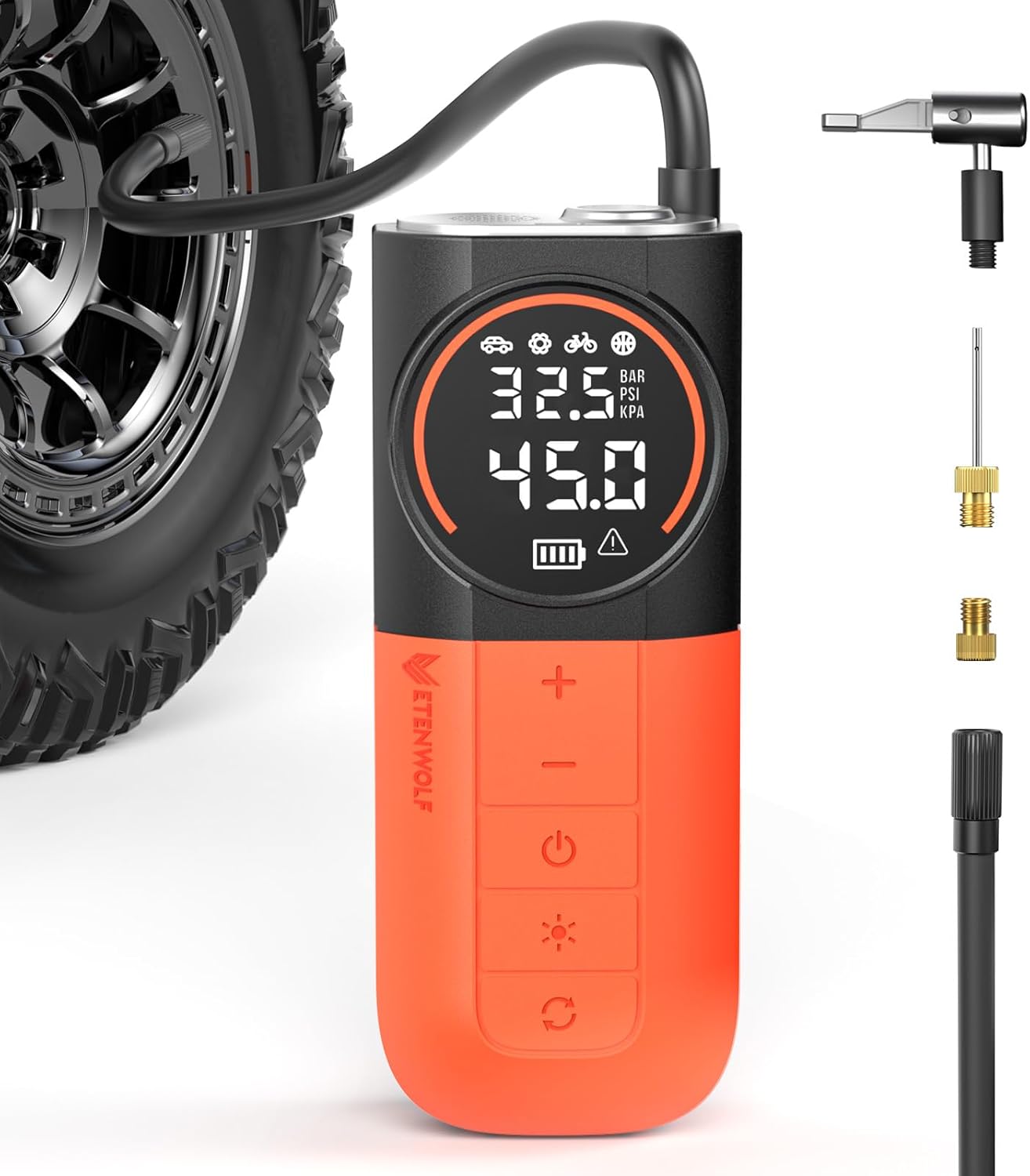
The ETENWOLF S1 cordless tire inflator delivers ultra-fast inflation with up to 160 PSI and a 20 L/min airflow for quicker tire top-offs. Its 5200mAh battery and cooling system support inflating many tires and sports balls on a single charge, while the digital pressure gauge and multi-unit display help you reach the right pressure accurately. With preset modes, pressure memory, an auto-stop feature, and an LED flashlight, it’s built for easy roadside and everyday use.

This portable cordless tire inflator delivers fast, efficient inflation for cars, motorcycles, bikes, and sports balls with a digital pressure gauge. Use the one-click PSI preset with auto shut-off for accurate, hands-free topping to your target pressure up to 150 PSI. It’s compact and rechargeable with a built-in emergency LED light plus valve adapters and accessories for quick, ready-to-go use.

RUGGED DESIGN: The stainless steel components prevent rust and corrosion while the precision-crafted nozzle seamlessly seals onto the valve stems for highly accurate readings (±2% span). We also provide 4 valve stem caps for convenient replacement.
Fix 1: Set Cold Tire Pressure
Check pressure when the tires are cold, meaning the vehicle has been parked for at least three hours or driven only a short distance at low speed. Use the vehicle manufacturer’s recommended pressure from the driver’s door placard or owner’s manual. NHTSA recommends checking all tires, including the spare, at least once a month.
Correct pressure helps the tread meet the road evenly. Low pressure can increase shoulder wear, heat, rolling resistance, and squeal. High pressure can make the ride harsher and may encourage center wear.
Fix 2: Rotate Tires on Schedule
Tire rotation helps even out front-to-rear and side-to-side wear. NHTSA advises checking the owner’s manual and, if the manufacturer recommends rotation, rotating tires every 5,000 to 8,000 miles or sooner if uneven wear appears.
Rotation will not repair severe cupping or restore missing tread, but it can slow irregular wear and help you identify whether a noise follows one tire. Some vehicles with staggered tire sizes, directional tires, or different front and rear fitments may have limited rotation options, so follow the owner’s manual.
Fix 3: Balance the Wheel and Tire Assembly
An out-of-balance wheel and tire assembly can shake at certain speeds and may encourage uneven wear over time. Balance should be checked when new tires are installed, after a pothole impact, when vibration appears, or when a tire is removed and remounted.
Fix 4: Check Alignment
Alignment controls the angles at which the tires meet the road. Out-of-spec toe, camber, or caster can create feathering, shoulder wear, pulling, off-center steering, and squeal. Bridgestone’s tire-wear guidance identifies improper inflation pressure and out-of-spec alignment as common causes of early or irregular tire wear.
Fix 5: Repair Suspension or Steering Problems
If cupping keeps coming back, do not just keep replacing tires. Have shocks, struts, bushings, tie rods, ball joints, wheel bearings, and control arms inspected. A tire that cannot stay planted evenly will keep wearing into a noisy pattern.
When to Replace Tires or Bearings: And When to See a Pro
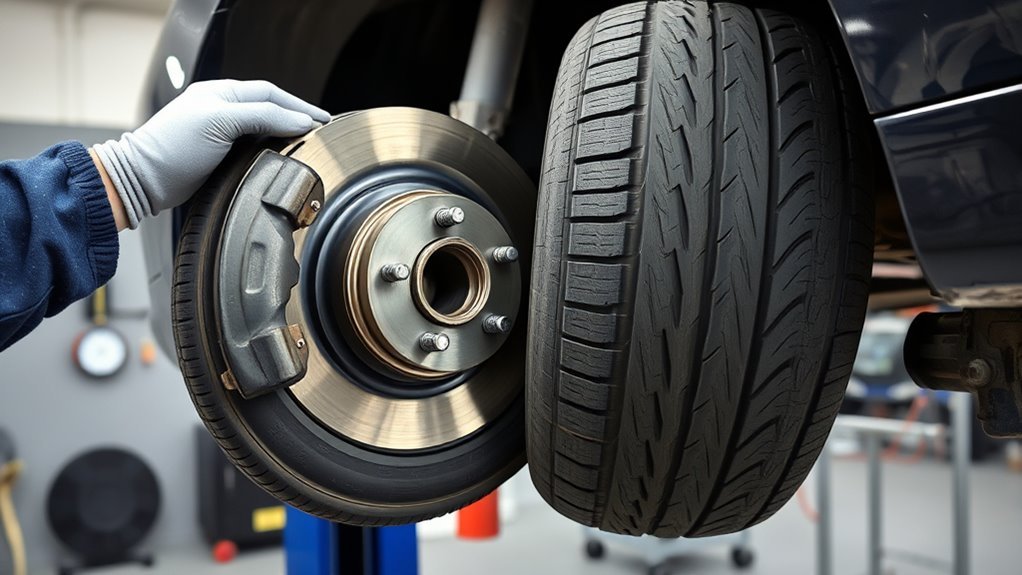
Replace a tire promptly if the tread reaches 2/32 inch, treadwear indicators are flush with the tread, cords are visible, the sidewall has a bulge, the tire has severe cracking, or a technician finds internal damage. Also consider replacement if cupping, feathering, or flat spots create persistent vibration or noise even after the underlying cause is repaired.
Tire age matters too. NHTSA notes that aging occurs as rubber and other tire components change over time due to service, storage, and environmental conditions. Some vehicle and tire manufacturers recommend replacing tires that are six to 10 years old regardless of treadwear. Check the DOT Tire Identification Number on the sidewall to find the tire’s week and year of manufacture.
See a professional immediately if noise is sudden and loud, the vehicle pulls strongly, the steering wheel shakes, the tire has a bulge, you see exposed cord, the wheel feels loose, or you hear grinding from a wheel area. Wheel bearings and hubs are safety-critical parts; if a bearing has play, roughness, heat, or grinding, the correct repair is usually replacement of the affected bearing or hub assembly according to the vehicle service procedure.
Warning: Do not keep driving on a tire with a bulge, exposed cord, rapid air loss, or severe vibration. Slow down, pull over safely, and arrange inspection or towing if needed. A failing tire or severely worn bearing can lead to loss of control.
[Products Worth Considering]

Tyre Valve Dust Caps: valve caps can protect valve against exposure to dirt and dust; Also can replace the original bad valve cap of the tyre
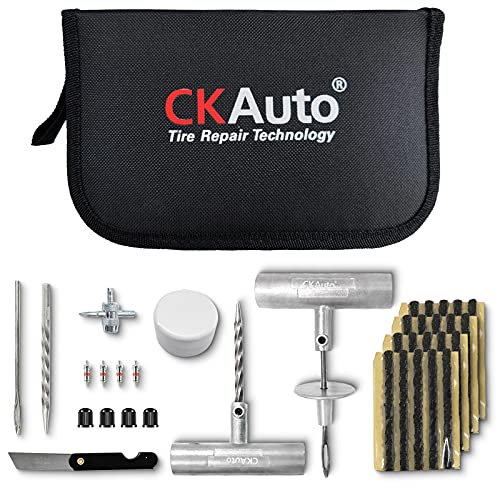
【Car Emergency Kit】-- CKAuto Universal Tire Repair Kit includes T-handle Insertion Tool x 1, Insertion Tool Replacement x 1, T-handle Probe Spiral x 1, Probe Spiral Replacement x 1, 4" Repair Plugs x 20, Valve Stem Caps x 4, 4-Way Valve Stem Tool x 1, Jar of Lubricant x 1, "L" Hex Key x 1, Valve Cores x 4, Knife x 1, Bag x 1. Meet all your needs on tire repairing work totally.
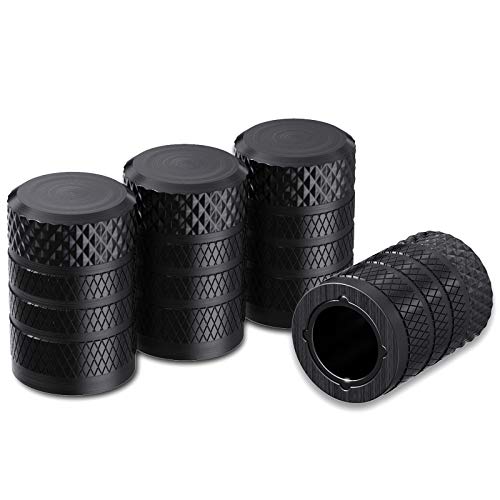
CKAuto 4 Pcs Aluminum Tire Valve Stem Caps , Universal Stem Covers for Cars, SUVs, Bike and Bicycle, Trucks, Motorcycles | TPMS Safe | Corrosion Resistant | Dust Proof
Noise Pattern Cheat Sheet
| Sound | Most Likely Causes | What to Check First |
|---|---|---|
| Steady hum | Tread pattern, uneven wear, low pressure, wheel bearing | Pressure, tread feel, road surface, steering-load test |
| Highway roar | Coarse pavement, cupping, aggressive tread, underinflation | Road-surface comparison, tread inspection, rotation |
| Turn squeal | Low pressure, alignment, aggressive cornering, worn suspension | Cold PSI, toe/camber alignment, suspension parts |
| Rhythmic thump | Flat spot, separated tire, damaged wheel, severe cupping | Visual inspection, tire runout, wheel damage, professional check |
| Grinding or growling | Wheel bearing, brake issue, hub damage, severe tire damage | Steering-load test, brake inspection, wheel-end inspection |
Frequently Asked Questions
Do tire compounds affect cabin noise levels?
Yes. Rubber compound, tread stiffness, tread pattern, sidewall construction, and tire category all affect noise and vibration. A touring tire usually prioritizes quietness, while a winter, mud-terrain, or performance tire may trade some quietness for traction, heat resistance, steering response, or durability.
Can seasonal tires cause more humming or roaring?
Yes. Winter tires often have softer compounds, deeper grooves, and more siping, which can create more pattern noise on dry pavement. Summer tires can be quieter or louder depending on tread design. Any seasonal tire can also become noisy if it is run at the wrong pressure, worn unevenly, or used outside its intended conditions.
How do run-flat tires impact road noise?
Run-flat tires can transmit more impact harshness because they use reinforced sidewalls that help support the vehicle after pressure loss. Whether they are louder depends on the exact tire model, wheel size, road surface, vehicle insulation, and tread wear condition.
Will aftermarket rims change tire noise characteristics?
They can. A different wheel diameter, width, offset, weight, or stiffness can change tire sidewall height, vibration transfer, scrub radius, and alignment behavior. Incorrect fitment can also cause uneven wear, rubbing, pulling, vibration, or new tire noise.
Does tire age, not just tread depth, increase noise?
It can. As tires age, rubber and internal components change due to heat, storage, use, sunlight, and maintenance conditions. Older rubber can feel harder and may transmit more vibration. More importantly, age can increase failure risk, so check the DOT date and follow the vehicle or tire maker’s age guidance.
Why did my tires get louder after rotation?
Rotation can move a tire with existing uneven wear to a position where the noise is easier to hear. It can also reveal cupping or feathering that was less noticeable on the previous axle. If the sound follows a tire after rotation, inspect that tire and wheel assembly closely.
Can low tire pressure make tires squeal?
Yes. Low pressure increases sidewall flex and tread movement, which can make the tire scrub or squeal during turns. Check pressure cold, set it to the vehicle placard value, and inspect for leaks if one tire keeps losing air.
Can electric vehicles make tire noise more noticeable?
Yes. Electric vehicles have less engine noise, so tire and wind noise can stand out more. EVs are also often heavier and produce strong instant torque, which can make tire selection, pressure, rotation, alignment, and load rating especially important.
Conclusion
Tire noises are diagnostic clues. A steady hum often points to tread pattern or uneven wear. A roar usually comes from stronger tread-road impact, coarse pavement, low pressure, cupping, or aggressive tread. Squeal usually means the tread is slipping during turning, braking, or acceleration. Grinding, growling, vibration, or steering-sensitive noise may point to a wheel bearing, brake, hub, or suspension problem.
Start with cold tire pressure, tread inspection, rotation history, and a road-surface comparison. Then move to balancing, alignment, suspension, and wheel-bearing checks. Replace unsafe tires immediately, and do not ignore a sound that is new, getting louder, one-sided, or paired with vibration, pulling, or visible damage.
Sources
- NHTSA TireWise — tire pressure, tread depth, rotation, TPMS, tire aging, and tire safety guidance.
- 49 CFR 570.62 Tires — federal inspection guidance for tread depth, tire condition, and tire defects.
- Bridgestone: Tire Cupping — causes, symptoms, inspection clues, and prevention of scalloped tire wear.
- Bridgestone: Tire Tread Wear & Causes — improper inflation, alignment, feathering, shoulder wear, and tread-depth guidance.
- Timken: Symptoms of a Worn Wheel Hub Bearing — wheel-bearing noise patterns, steering-load clues, vibration, and wheel-end symptoms.
- Applied Sciences: Tire Pattern Noise Optimization — technical background on tread-pattern impact forces and tire-road noise.

Related Articles

What Is a Fat Tire? Complete Guide & Best Options
I’ll show you what makes fat tires different, which setups work best, and why the right choice could change your ride.
Read More
What Does W Mean on a Tire? Load, Speed & Rating Guide
Huh, what does W on a tire really mean, and why could choosing the wrong rating affect your safety and performance?
Read More
What Does Tire Flipping Work? Muscles, Benefits & Workout Guide
Strong tire flips hammer your entire body, but which muscles and benefits matter most?
Read More