
P-Metric Tires vs Euro-Metric: 5 Swap Checks Before Buying
What’s in This Article
- Quick Take: Can You Swap P-Metric and Euro-Metric?
- P-Metric vs Euro-Metric: What the Codes Mean
- Reading P215/60R16 vs 215/60R16
- When Swapping Is Safe: Match Load, Rim, Pressure
- Performance Trade-Offs: Handling, Ride, and Load
- Common Replacement Mistakes to Avoid (With Fixes)
- Replacement Checklist: What to Confirm Before You Buy
- When to Consult a Tire Pro (Fitment, Load, Legal Limits)
- Frequently Asked Questions
- Conclusion
A tire can look like a perfect match and still carry the wrong load rating. You can swap P-Metric and Euro-Metric tires only when the size, load index, speed rating, rim fit, and inflation needs all match your vehicle’s requirements. This guide explains what the markings mean, where the risks show up, and what to check before you buy.
Quick Answer
You can swap P-Metric and Euro-Metric tires when their size, rim diameter, load index, speed rating, and required pressure match your vehicle placard. Don’t judge compatibility by size alone. A tire marked P215/60R16 and one marked 215/60R16 may fit the same wheel, but they can carry different load ratings.
Key Takeaways
- Match the tire size, load index, speed rating, and rim diameter before you swap tires.
- Use the vehicle placard and owner’s manual as your main fitment guides.
- A P-Metric tire and a Euro-Metric tire can share dimensions but differ in load capacity.
- Avoid mixing P-Metric and Euro-Metric tires on the same axle.
- Ask a qualified tire pro to confirm fitment when load, pressure, or legal limits matter.
Quick Take: Can You Swap P-Metric and Euro-Metric?
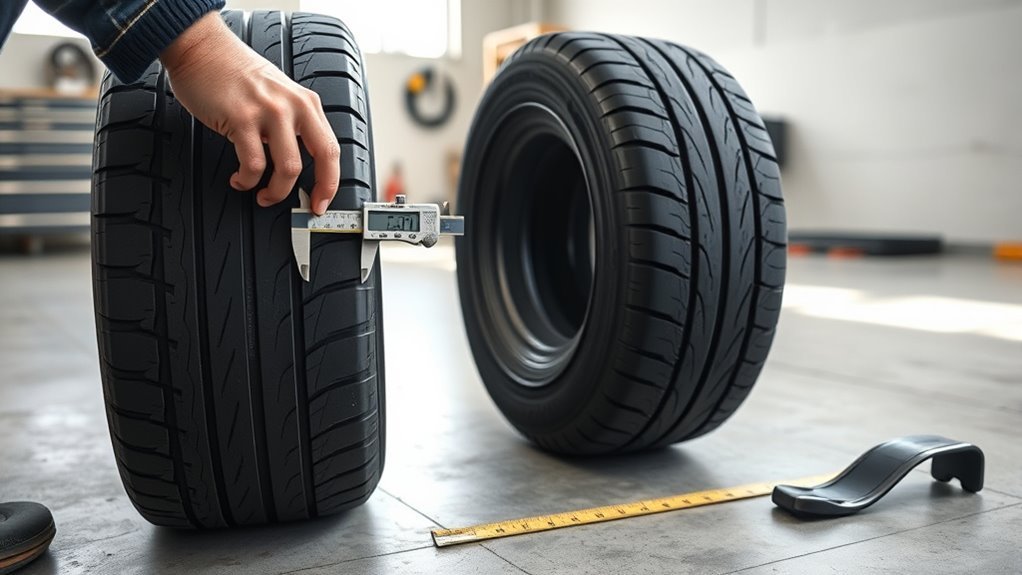
You can swap P-Metric and Euro-Metric tires in some cases, but you must verify more than the numbers on the sidewall. The tires need the same approved size, rim diameter, equal or higher load index, suitable speed rating, and correct inflation pressure.
A P215/60R16 and a 215/60R16 share the same nominal width, aspect ratio, and rim diameter. That means they may fit the same wheel. But they may not carry the same load. For example, one tire may list load index 94, while another lists 95.
That small change affects payload reserve, heat buildup, braking balance, and handling under load. For the safest result, replace tires with the manufacturer’s specified designation when you can. If you use an alternate designation, match or exceed every rating on the original tire and vehicle placard.
Warning: Don’t install a replacement tire with a lower load index than the vehicle manufacturer specifies.
P-Metric vs Euro-Metric: What the Codes Mean
The “P” in P-Metric marks a passenger-car tire sizing system, such as P225/70R16. Euro-Metric tires use the same number format without the prefix, such as 225/70R16.
The numbers tell you the nominal section width, aspect ratio, construction type, and rim diameter. They do not tell the whole story. The load index, speed rating, service description, and inflation table decide whether the tire suits your vehicle.
Treat the prefix as a clue about the tire’s intended use and load standard. When you shop for replacements, compare the full sidewall code against the door placard and owner’s manual. Don’t assume matching numbers guarantee matching capacity.
Reading P215/60R16 vs 215/60R16
When you read P215/60R16 and 215/60R16, both tire codes show a 215 mm section width and 60% aspect ratio. They also fit a 16-inch rim. The outside fit may match, but the load rating and pressure needs may differ.
Check the load index and speed rating printed after the size code. Then compare those values with the original tire and the vehicle placard. If the replacement tire falls short, choose a different tire.
Dimensional Comparison Basics
The markings P215/60R16 and 215/60R16 share the same basic dimensions. The 215 shows section width in millimeters. The 60 means the sidewall height equals 60% of the section width. The R marks radial construction, and 16 shows the rim diameter in inches.
Because those dimensions match, the tires usually have the same nominal overall diameter and rolling circumference. Still, you must confirm the approved rim width range, bead seat fit, and load rating before mounting. The tire’s construction and intended use can change how it handles on the same vehicle.
Load Capacity Differences
Load capacity creates the biggest difference between many P-Metric and Euro-Metric tire swaps. A P215/60R16 may carry load index 94, while a similar Euro-Metric 215/60R16 may carry load index 95. In that example, index 94 equals about 1,477 pounds, and index 95 equals about 1,521 pounds.
That difference may look small, but it can affect safety margins when the vehicle carries passengers, cargo, or towing tongue weight. Heat also rises faster when a tire works near its limit. Choose a replacement tire that meets or exceeds the load index listed by the vehicle manufacturer.
Replacement Compatibility Guidelines
Use the original tire designation whenever it’s available. If you choose a different designation, match the original tire size, load index, speed rating, rim fit, and pressure requirements. Don’t mix different tire standards on the same axle unless a tire professional confirms the setup.
| Attribute | P-Metric (P215/60R16) | Euro-Metric (215/60R16) |
|---|---|---|
| Nominal Size | 215/60R16 | 215/60R16 |
| Example Load Index | 94 | 95 |
| Example Max Load | 1,477 lbs | 1,521 lbs |
| Best Action | Match the placard | Match the placard |
Use the table as an example, not a universal rule. The exact load index depends on the tire model. Always read the sidewall and the tire maker’s data.
When Swapping Is Safe: Match Load, Rim, Pressure
A swap becomes safer when the replacement tire matches the vehicle’s required size, rim diameter, load index, speed rating, and inflation pressure. Start with the door placard because it lists the manufacturer’s approved tire size and cold tire pressure. Then compare the original tire’s sidewall with the replacement tire’s full service description.
Do not rely on sidewall maximum pressure as your normal setting. Use the vehicle placard pressure unless a qualified tire pro calculates a different pressure for a verified alternate tire. Check pressure when the tires are cold, and recheck it after installation.
- Match or exceed the original load index.
- Match the rim diameter and approved rim width range.
- Match or exceed the speed rating required for the vehicle.
- Use the vehicle placard pressure as your starting point.
- Install matching tires across the same axle whenever possible.
Pro tip: Photograph your original tire sidewall and door placard before you shop so you can compare every rating.
Performance Trade-Offs: Handling, Ride, and Load
P-Metric and Euro-Metric tires can feel different even when their size matches. Construction, sidewall stiffness, tread design, and pressure requirements all affect ride comfort, steering response, braking feel, and load support.
A tire with a stronger load rating may support weight better, but it may also feel firmer. A tire tuned for comfort may ride softer, but it may not offer the same load reserve. Your goal is not to choose the “strongest” tire by default. Your goal is to choose the tire that matches your vehicle’s approved specs.
Mixing tire standards can also change how the vehicle reacts in a quick lane change or hard stop. Keep the same tire type, size, tread pattern, and ratings on the same axle when you can. This helps the vehicle respond in a more predictable way.
Common Replacement Mistakes to Avoid (With Fixes)
The most common mistake is treating two similar tire sizes as identical. A tire can match the rim and still fail the load, pressure, or speed requirement. Another common mistake is replacing only one tire with a different standard, which can create uneven grip and handling.
Use these fixes before you buy:
- Compare the full tire code, not just width, aspect ratio, and rim size.
- Check the load index and speed rating against the original tire.
- Confirm the replacement tire fits the approved rim width range.
- Ask a tire retailer to verify pressure requirements for non-original fitments.
- Replace tires in axle pairs when tread depth or tire type differs.
Wrong Size Swap
A wrong-size swap can change speedometer accuracy, ride height, clearance, and suspension behavior. Even a small diameter change can affect anti-lock braking systems, traction control, and all-wheel-drive systems.
If you already installed a questionable size, stop using heavy loads until you confirm the setup. Compare the tire with the vehicle placard and owner’s manual. If the size or load rating falls short, replace it with an approved option.
Mixing Load Ratings
Mixing load ratings can reduce the vehicle’s safe load capacity and change handling balance. For example, if one tire carries load index 94 and another carries 95, the lower-rated tire limits that axle’s reserve capacity.
Do not place a lower-rated tire on a vehicle that requires a higher rating. Choose a tire with equal or greater load capacity. This protects stability, braking, and tire life.
Replacement Checklist: What to Confirm Before You Buy
Before you buy, confirm the tire specification from the vehicle’s doorjamb placard, owner’s manual, and original tire sidewall. The placard should guide your decision because it reflects the vehicle manufacturer’s approved setup. Use the old tire only as a reference, especially if you bought the vehicle used.
Check these items before purchase:
- Exact tire size and designation, such as P215/60R16 or 215/60R16.
- Load index that meets or exceeds the vehicle requirement.
- Speed rating that meets or exceeds the vehicle requirement.
- Rim diameter and approved rim width range.
- Cold inflation pressure from the vehicle placard.
- Tread type that matches your climate and driving conditions.
- Manufacturer-approved alternate sizes, if you plan to change sizes.
Also check tread depth on the tires you plan to keep. A new tire mixed with worn tires can change grip and handling. This matters more on all-wheel-drive vehicles.
Can You Mix P-Metric and Euro-Metric Tires on the Same Vehicle?
You should avoid mixing P-Metric and Euro-Metric tires on the same axle. Different load curves, construction, and pressure needs can make one side respond differently than the other. That can affect steering, braking, and stability.
If you must replace only two tires, place the matched pair on the same axle and follow the vehicle maker’s tire rotation guidance. For many vehicles, especially rear-wheel drive and all-wheel drive models, a full matching set gives the most predictable result.
When to Consult a Tire Pro (Fitment, Load, Legal Limits)
Consult a qualified tire professional before you change tire type, wheel diameter, load range, or tire pressure. Tire sizing, load ratings, and legal limits affect safety and vehicle dynamics. A pro can compare the replacement tire with the vehicle’s original equipment specifications.
You should also get help if you tow, haul heavy cargo, use aftermarket wheels, or drive an all-wheel-drive vehicle. These cases leave less room for guesswork. A professional can check fitment, load capacity, inflation needs, axle limits, and local inspection rules.
Note: Tire sidewalls show maximum limits, but your vehicle placard gives the pressure and size your vehicle maker recommends.
Frequently Asked Questions
Is P225 the Same as 225?
P225 and 225 show the same nominal width, but they are not always identical tires. The P prefix signals a P-Metric passenger tire, while the no-prefix size follows Euro-Metric sizing. Check load index, speed rating, and pressure requirements before you swap them.
What Is the P-Metric Tire Size?
A P-Metric tire size starts with “P,” such as P225/60R16. The P means passenger-car sizing, 225 shows width in millimeters, 60 shows aspect ratio, R means radial construction, and 16 shows rim diameter in inches.
Can I Use Euro-Metric Tires Instead of P-Metric Tires?
You can use Euro-Metric tires instead of P-Metric tires only when the replacement meets the vehicle’s size, load, speed, rim, and pressure requirements. Compare the full service description before mounting. Ask a tire pro to confirm any alternate fitment.
What Happens if the Load Index Is Too Low?
A tire with a load index that is too low may overheat, wear faster, or fail under normal vehicle loads. It can also reduce handling and braking stability. Choose a tire that meets or exceeds the vehicle manufacturer’s required load index.
Should All Four Tires Match?
Yes, all four tires should match in size, type, load index, speed rating, and tread pattern when possible. Matching tires help the vehicle steer, brake, and ride predictably. This matters most for all-wheel-drive vehicles and vehicles with stability control systems.
Conclusion
You can swap P-Metric and Euro-Metric tires only when the replacement meets the full vehicle specification, not just the visible size. Check the door placard, tire sidewall, load index, speed rating, rim fit, and cold inflation pressure before you buy. Avoid mixing standards on the same axle unless a qualified tire professional approves the setup. The right tire choice keeps your vehicle stable, safe, and ready for the way you drive.
References
- Tires — National Highway Traffic Safety Administration
- Tire Ratings and Placard Information — National Highway Traffic Safety Administration
- Tire Safety — U.S. Tire Manufacturers Association

Related Articles

Aneson 150 PSI Tire Inflator Review: Cordless Air Pump with Battery and 12V DC Power
You want a compact, reliable way to top up tires without hunting for a gas station or bulky compressor. The Aneson 150 PSI portable…
Read More
VIAIR 300P Portable Compressor Review: 12V 150 PSI Offroad Tire Inflator for Trucks and SUVs
You want a reliable way to inflate tires whether you are heading off-road or handling a roadside repair. The VIAIR 300P is built to…
Read More
Truck Tire Inflator Kit Review: 50 FT Hybrid Air Hose with Gladhand Connection
If you spend time on the road or manage a fleet, having a dependable inflator kit can save you time, reduce downtime, and keep…
Read More