
Test Driving a Used Car: 10 Things to Check
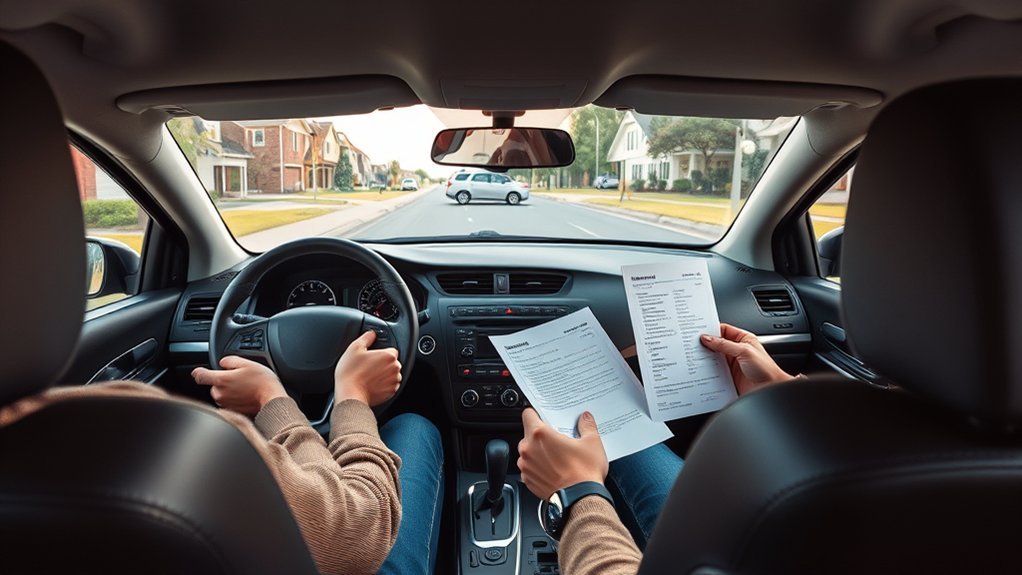
Before you test drive a used car, inspect the exterior for rust, dents, mismatched paint, tire wear, and damaged glass. Start the engine and listen for knocking, ticking, or whining, then check that the transmission shifts smoothly. Test the brakes, steering, and suspension for straight, controlled response. Adjust mirrors, seats, and pedals for comfort and visibility, and watch for warning lights, leaks, or blind spots—you’ll spot the key signs quickly, and there’s more to check.
Key Takeaways
- Inspect the exterior, tires, windshield, lights, and mirrors for damage, uneven wear, rust, or poor repairs.
- Listen for unusual engine noises and check for smooth idle, acceleration, and shifting through every gear.
- Test brakes and steering for firm pedal feel, straight stopping, responsive handling, and proper alignment.
- Evaluate cabin comfort, visibility, seating position, controls, and driving ease in traffic and on open roads.
- Check warning lights, blind-spot sensors, and leaks or fresh fluids under the car before and after startup.
[Products Worth Considering]

This 9-piece detailing brush set helps you clean interior and exterior vehicle areas with versatile sizes and ergonomic handling. Stiff bristle brushes tackle heavy grime on tires, carpets, and floors, while smaller brushes are suitable for tight engine and cabin gaps. Designed for thorough car care across wheels, vents, seats, and hard-to-reach detailing spots.

Monitor tire tread wear with a smart, color-coded depth gauge that shows clear condition ranges at a glance. The bar is range marked for fast, easy readings, helping you maintain safer traction and performance. Each gauge is portable with a pocket clip, and the set includes 20 units for daily use and sharing.

Measure tire tread depth quickly and accurately with this LUMITECO dial gauge that reads in 1/32" increments up to 14/32". The color-coded green/yellow/red zones make it easy to judge tire wear and know when replacement is needed. A rugged, compact design with a protective pouch helps keep the gauge ready for use on cars, trucks, motorcycles, and more.
Check the Exterior Before the Test Drive

Before you start the test drive, take a careful walk around the car and inspect the exterior for signs of damage, poor repairs, or wear that could point to bigger problems.
Check panel gaps, mismatched trim, and uneven reflections in the paint condition, which can suggest past bodywork. Look closely for rust, dents, cracks, and bubbling around wheel arches, door bottoms, and the lower edges of the hood and trunk.
Check panel gaps, mismatched trim, and uneven paint reflections for signs of past bodywork and hidden damage.
Examine the windshield, mirrors, lights, and lenses for chips or fogging. Compare both sides of the car for symmetry, and make sure doors, hood, and trunk open and close smoothly.
Inspect the tires for even wear and adequate tire tread, since irregular wear can hint at alignment or suspension issues.
If you spot fresh wax hiding scratches, or overspray on rubber and glass, ask for an explanation before you drive.
Listen for Engine Noise
Start the engine and listen closely as it idles, then as you gently rev it and let it settle back down. You’re checking for smooth, even sound, not rough shaking or irregular surges.
Pay attention to knocking, ticking, hissing, whining, or squealing, since each can point to a different issue. A deep knock may suggest internal wear, while a light tick can indicate valvetrain problems or low oil. Hissing may signal a vacuum or coolant leak, and whining can come from belts or accessories.
Watch how the sound changes with rpm, because consistent behavior often reflects better engine health. Do your noise assessment with the windows up and down, and turn off the radio and HVAC so nothing masks the engine.
If the sound changes when the engine warms up, note it carefully. Trust your ears, but also compare what you hear with how the engine runs overall.
Test the Brakes
With the car moving at a safe, low speed, press the brake pedal firmly and notice how the vehicle responds. The car should slow in a straight line without pulling, shuddering, or making unusual noises.
Pay attention to brake responsiveness: the pedal should produce a predictable, immediate reaction, not a delayed or spongy one. If the pedal sinks too far, feels overly soft, or requires excessive force, the brake system may need service.
You should also note pedal feel. A healthy system usually gives you a firm, consistent pedal that doesn’t pulse unless you’re on a rough surface. If the brakes squeal, grind, or vibrate, that can point to worn pads, rotors, or other wear.
Try a few stops at different speeds, if traffic and conditions allow, so you can compare performance. Consistent stopping power matters because it affects safety, repair costs, and how confidently you can use the vehicle.
Feel the Steering and Suspension
As you drive, notice whether the steering responds quickly and tracks straight without excess play or pulling.
Turn over rough pavement and small bumps to see if the suspension feels controlled, with no clunks, bouncing, or drifting after impact.
These checks can reveal wear in the steering components or suspension parts before you buy.
Steering Response Check
Once you’re on a safe, open stretch of road, gently turn the wheel left and right to see how quickly the car responds and whether the steering feels smooth, tight, and consistent. You should notice immediate, predictable movement, not delay, pulling, or vague play. If the wheel centers cleanly after each turn, steering alignment is likely sound. Listen for whining or hesitation from the power steering system, which can signal low fluid, wear, or pump trouble.
| Check | What it suggests |
|---|---|
| Quick response | Precise control |
| Excess play | Wear in linkage |
| Pulling | Possible alignment issue |
| Noise | Power steering concern |
| Clean return | Stable road behavior |
Keep both hands light and even; uneven effort can reveal a developing problem.
Suspension Bump Test
Next, drive slowly over a few small bumps, cracks, or uneven patches so you can feel how the suspension and steering work together.
Pay attention to whether the car settles quickly after each bump or keeps bouncing, swaying, or nosing around. A healthy suspension should absorb impacts without sending sharp jolts through the cabin.
If you hear clunks, rattles, or squeaks, they can point to suspension wear in bushings, shocks, struts, or control arms.
Keep both hands on the wheel and note whether the vehicle tracks straight or needs constant correction after each dip.
Watch for vague, twitchy, or wandering handling characteristics, which may suggest worn components, poor alignment, or other steering issues.
Repeat the test at different speeds to compare how the car responds.
See How the Transmission Shifts
Shift the transmission through every gear and pay close attention to how it responds. In an automatic, you should feel smooth, timely changes without delay, flare, or harsh jolts.
Note the shifting speed in light and moderate acceleration, then compare it to how the car behaves when you ease off the throttle. If the transmission hesitates, slips, or hunts between gears, that can signal worn internal parts or low transmission fluid.
In a manual, the clutch should engage cleanly, and each gear should slot in without grinding or resistance. Listen for abnormal noises, such as whining, clunking, or buzzing, because they often point to deeper problems.
Watch for a warning light or a visible leak under the car after the drive. A transmission that shifts consistently and quietly usually indicates better maintenance and fewer expensive surprises later.
Try Every Light and Control
With the engine running, test every light and control so you can spot electrical or accessory problems before you buy. Switch on the headlights, high beams, turn signals, brake lights, hazard flashers, dome lights, and dash illumination, and confirm each one works immediately.
Check the climate controls, radio, power windows, locks, mirrors, seat adjustments, wipers, washers, and defroster, if equipped. You should look for consistent lighting functionality, dim bulbs, flickering, or warning indicators that stay on.
Move each switch, knob, and button through its full range and note any lag, sticking, or uneven control responsiveness. If the car has extra features such as a sunroof, heated seats, or cruise control, verify that they engage and disengage properly.
Faulty accessories can signal wiring issues, worn switches, or weak batteries. Any delay, noise, or failure deserves attention before you decide whether the car’s condition matches the seller’s description.
[Products Worth Considering]

Accurately measure tire tread depth with a calibrated gauge marked from 0 to 1 inch in 1/32 inch increments. The color-coded bar helps you quickly identify tread condition ranges, supporting safe driving for trucks, motorcycles, automobiles, and passenger vehicles.

Black Magic Tire Wet delivers a deep wet-look shine that makes tires appear dark, rich, and freshly detailed. Its long-lasting formula helps resist rain, dust, and road grime for weeks of glossy protection, not days. Apply by spraying onto clean, dry tires—no buffing or wiping required—with a low-sling design to reduce splatter on paint and wheels.

This metal-free wheel and tire cleaning brush uses dense, fluffy synthetic wool to safely clean rims, spokes, fenders, and engine areas without worrying about damaging surfaces. Its flexible, comfortable design helps you reach detailed areas while maintaining durability, and the extra absorbent fibers work well with wheel spray cleaners for faster cleanup. Reusable and washable performance helps prevent grime and build-up for cleaner vehicles and easier maintenance at home.
Check Visibility and Blind Spots
From the driver’s seat, check that you can see the road, gauges, and surrounding traffic without straining.
Adjust the mirrors to confirm they cover the lanes beside and behind you with minimal overlap.
Then note any blind spots by turning your head and seeing whether cars or pedestrians disappear from view.
Driver Seat Visibility
Before you commit to a used car, sit in the driver’s seat and check how well you can see in every direction. Adjust the seat height so your eyes clear the hood without forcing you to hunch. Notice whether the dashboard angle blocks gauges, warning lights, or the road ahead. A good driving position lets you scan lanes, curbs, and pedestrians with minimal head movement.
- Check forward visibility at intersections.
- Look for thick roof pillars that hide traffic.
- Turn your head to judge shoulder blind spots.
- See whether the seating position feels natural on long drives.
If you must strain to spot surrounding vehicles, the car may be harder to drive safely in traffic and parking lots.
Mirror Coverage Check
Adjust all three mirrors and verify that each one gives you a clear, usable view of the road, adjacent lanes, and the area behind the car. You should confirm mirror alignment from the driver’s seat without leaning or straining.
The center mirror should frame the rear window evenly, while the side mirrors should show only a narrow slice of the car’s body and extend outward enough to reduce overlap. Check that reflections stay steady over bumps and don’t vibrate excessively.
If you adjust your seating position, recheck the views. Look for cracks, haze, or looseness that could distort distance judgment. A properly set mirror helps you monitor traffic efficiently and reveals any blind spot that remains after adjustment.
If you can’t achieve a balanced view, note it as a needed repair before purchase.
Blind Spot Awareness
Once the mirrors are set, check how much of the surrounding traffic still falls outside your direct view. You should scan left, right, and over your shoulder to judge blind spots, because rearview mirrors alone can miss small cars and cyclists.
During the drive, note how the car reacts to lane departure and whether visibility aids reduce strain.
- Verify blind spot sensors trigger clearly, not too late.
- Compare the view with your usual driving habits.
- Test safety features in heavy traffic and on turns.
- Review accident history for hidden blind-side damage.
Advanced technology can help, but it shouldn’t replace careful checks. If the layout forces frequent head turns, visibility may be weaker than you want.
Judge Cabin Comfort and Driving Position
How comfortable does the cabin feel when you settle in for a real drive? Check whether the seat adjustments let you set height, tilt, lumbar support, and reach without strain. Evaluate cabin materials for wear, odors, and touchpoints that feel flimsy or sticky. Make sure the steering wheel aligns with your shoulders and wrists, and that pedals sit naturally under your feet. You should also confirm that the dashboard, mirrors, and controls stay visible after you find your best position.
| Area | What to check | Good sign |
|---|---|---|
| Seat | Cushion support | Even, firm feel |
| Seat | Adjustment range | Easy, precise movement |
| Wheel | Reach and tilt | Relaxed arm bend |
| Pedals | Leg position | Natural extension |
| Cabin | Material condition | Clean, intact surfaces |
If you feel cramped, distracted, or forced to compensate, the driving position may become tiring over time.
Test the Car at City and Highway Speeds
Take the used car through both stop-and-go streets and open roads so you can see how it performs in real conditions. At low speeds, note whether the car pulls away smoothly, shifts cleanly, and follows throttle input without hesitation.
Take the used car through stop-and-go streets and open roads to see how it performs in real conditions.
In traffic, you should feel consistent braking and predictable steering. On the highway, merge firmly and check acceleration response when you press the pedal to pass or join faster lanes. Maintain a steady cruising speed and watch for speed stability; the car shouldn’t wander, surge, or require constant correction.
- Test from a full stop several times.
- Accelerate gently, then more assertively.
- Hold 55–70 mph for a few minutes.
- Change lanes and reapply throttle.
Also listen for excessive engine strain, transmission hunting, or vibration at speed. If the car feels composed in both settings, that’s a strong sign it can handle everyday driving well.
Look for Warning Lights and Leaks
After you’ve checked how the car drives, inspect the dashboard and the ground beneath it for signs of trouble.
Turn the key to accessory mode and make sure every warning indicator illuminates briefly, then goes out after startup. If the check-engine, oil, battery, brake, or airbag lights stay on, ask why. Don’t ignore flashing lights, since they can signal urgent faults.
Next, complete a fluid inspection by looking under the car and around the engine bay for fresh drips, wet spots, or crusted residue. Dark oil, green coolant, red transmission fluid, or clear water each point to different sources, so note the color and location.
Check the pavement after the test drive, and compare any leaks with fluid levels on dipsticks and reservoirs. A small seep may be manageable, but active leaking often means repair costs and possible hidden damage.
Frequently Asked Questions
How Can I Verify the Car’s Service History?
Ask the seller for service records and maintenance logs, then compare dates, mileage, and shop names. You can also call listed shops, check VIN-based reports, and review receipts for consistent repairs and scheduled maintenance.
Should I Get a Pre-Purchase Inspection Before Buying?
Yes, you should get a pre-purchase inspection; it’s worth its weight in gold. You’ll gain pre purchase benefits by uncovering hidden issues, and inspection costs usually pale beside costly surprises, repairs, or a bad buy.
What Documents Should I Review Before Test Driving?
You should review the title history, ownership records, registration, service log, and lien release before driving. They’ll show you the car’s legal status, maintenance pattern, and whether anything suggests hidden problems.
How Do I Check for Flood Damage Signs?
Look for flood indicators: musty odors, rust under seats, mud in crevices, and water stains on carpets, upholstery, and trunk liners. You should also check electrical functions, because hidden moisture can cause later failures.
What Mileage Is Acceptable for a Used Car?
You’ll find acceptable mileage depends on maintenance and age, not a magic number. High mileage isn’t automatically bad; test that theory by checking service records, wear, and engine condition, then compare yearly average mileage objectively.
Conclusion
Before you buy, you should inspect the exterior, listen for engine noise, test the brakes, and feel the steering and suspension. You should also check how the transmission shifts, evaluate visibility and blind spots, and judge cabin comfort and driving position. Then, drive the car in city and highway conditions, and look for warning lights and leaks. If each system feels solid, you’re closer to choosing a used car that’s safe, reliable, and worth your money.
[Products Worth Considering]

The Big Rig Defense Tire Thumper is a truck tire pressure checker that lets you quickly check multiple tires by giving them a firm whack. Listen for a reassuring thump and feel the stick bounce when a tire is fully inflated, helping you get back on the road safely. It features a comfortable, glove-friendly handle and a secure wrist strap for confident use on busy routes.

Chemical Guys Tire Kicker Sprayable Extra Glossy Tire Shine restores a deep, wet look on tires, rubber, vinyl, and plastic trim. It delivers a rich showroom shine that enhances color and luster while helping protect against fading, cracking, and discoloration. The spray application dries to the touch with a streak-free finish and no greasy sling, for fast results on cars, trucks, motorcycles, RVs, and boats.

The SAFELIFE dial tire tread depth gauge measures tread depth in 1/32 inch increments with clear, easy-to-read 2-inch dial face. Color zones using a traffic light system help you quickly judge whether tread is low, marginal, or ample for safer driving. Built with a durable zinc cast body and a metal detect probe for precise, comfortable use across cars, motorcycles, trucks, and buses.

Related Articles

Best Mastercraft Tires 2026: Reliable Tire Picks for Trucks, SUVs, and Daily Drivers
You need tires that match how you drive, where you live, and what your vehicle carries. This guide highlights Mastercraft models that stand out…
Read More
Best Lionhart Tires 2026: Budget Performance Tires for Cars and SUVs
You want tires that deliver confident handling, predictable braking, and acceptable longevity without stretching your budget. Lionhart’s 2026 lineup focuses on delivering those trade-offs…
Read More
Best Winter Tires for Snow 2026: Reliable Tires for Ice, Slush, and Cold Roads
You drive differently in winter because the road does. Choosing the right winter tires reduces stopping distances, improves cornering on ice and slush, and…
Read More