
Tallew 40 Pcs Tire Patch Kit Review: Heavy-Duty Radial Repair Patches for Vehicles

Tallew 40 Pcs Tire Patch Kit Review
A tire patch pack can save time in a shop, service van, or garage, but only if you know exactly what is included and what still has to be supplied. The Tallew 40 Pcs Tire Patch Kit is a bulk pack of rectangular radial tire repair patches, not a complete plug kit with cement, tools, or an air source. This review helps you decide whether the 40-count, 2.56 x 3.15 inch version makes sense for your repair setup. Its strength is simple value and patch supply. Its tradeoff is that safe results depend on proper tire inspection, surface prep, vulcanizing material, pressure, cure time, and leak testing.
Quick Verdict
Rating: 7.8/10, Recommended with caveats
Best For: Drivers, fleet users, and workshop users who already have tire prep tools and vulcanizing cement.
Bottom Line: The Tallew 40 Pcs Tire Patch Kit is a useful low-cost supply of large rectangular radial patches. It is not the right buy if you want a full roadside repair kit with adhesive, plug tools, and inflation gear included.
[Products Worth Considering]

This tire repair patch tool kit helps you quickly seal small punctures using upgraded mushroom plugs and a built-in roller system that presses for even penetration. The tungsten buffing wheel and HSS twist drill bits prepare the damaged surface for stronger adhesion, while the crown-angle friendly plugs are designed to keep water and debris out. Ideal for puncture repairs on many vehicle types, from cars and trucks to bikes and scooters.

Wykodra tire plugs provide quick vulcanizing repairs for tubeless tires, helping you seal punctures and get back on the road. The industrial-strength rubber creates a long-lasting, leak-resistant bond and is designed for emergency fixes without removing the tire. Choose between two standard plug sizes with color-matched options for small to larger damage across many vehicles and off-road uses.
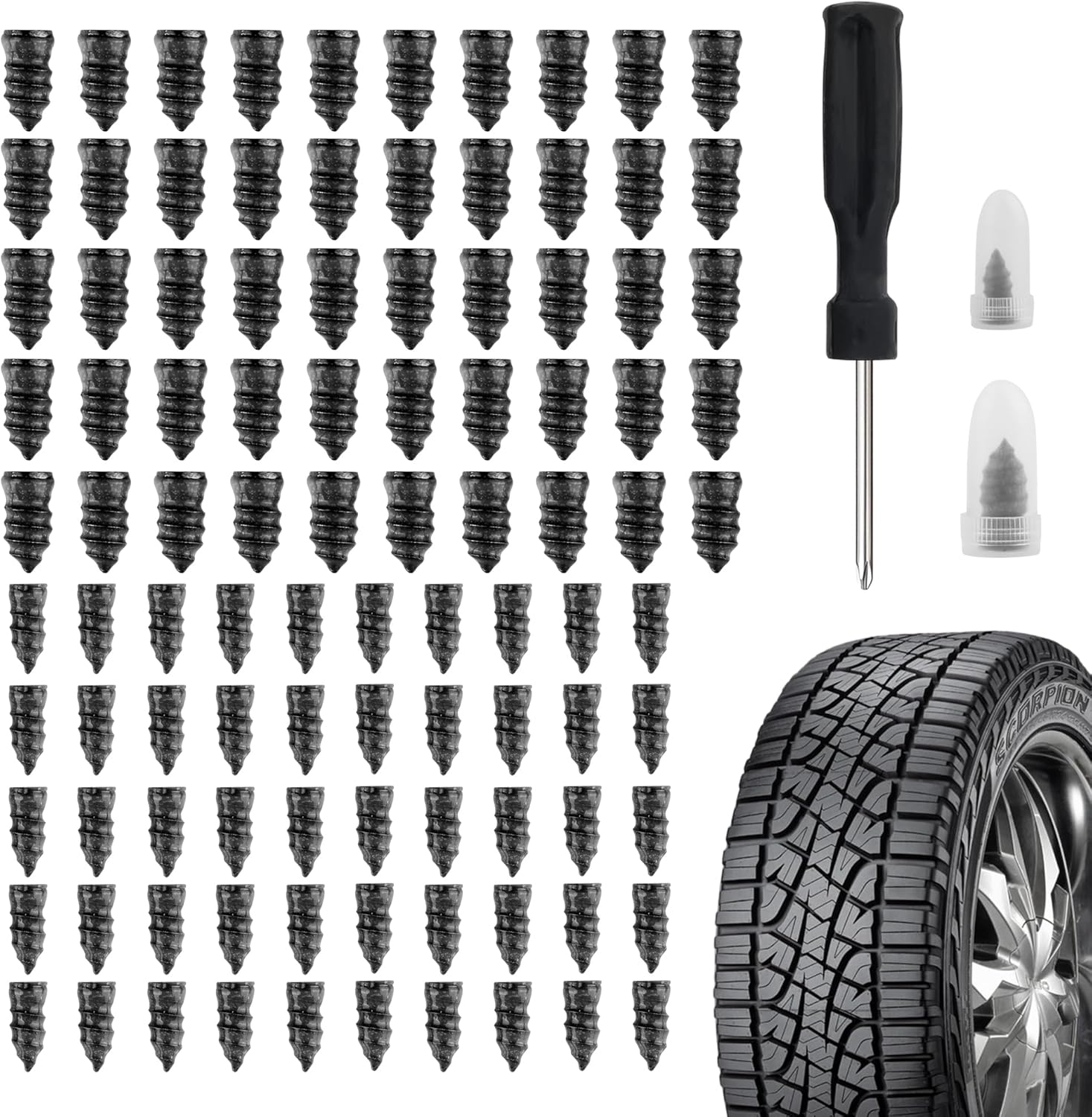
Salior’s tire plug kit provides a fast, reliable self-service fix for punctured or leaking tires without the need for flaring tools. Choose the correct plug size, then screw the nail into the puncture using the included screwdriver for an enhanced seal. The set is durable and convenient for on-the-go maintenance across multiple vehicle types.
Key Specs
| Specification | Detail |
|---|---|
| Brand | Tallew |
| Product Name | 40 Pcs Tire Patch Heavy Duty Rubber Patches Radial Repair Patch Tube and Tire Plug Kit |
| ASIN | B0B68HS6FY |
| Manufacturer Part Number | UG-Tallew-2279 |
| Model Number | 1 |
| Product Type | Rectangular radial tire repair patch pack |
| Patch Size | Approx. 65 x 80 mm / 2.56 x 3.15 inch |
| Count | 40 tire patches in the reviewed variant |
| Material | Rubber with a canvas layer listed by Amazon |
| Color | Dark colors |
| Listed Vehicle Use | Cars, trucks, trailers, buses, tractors, and other vehicle tires listed by Amazon |
| Required Supplies Not Clearly Included | Vulcanizing cement or repair compound, tire buffer or grinder, stitcher or press wheel, air source, and leak-test supplies |
| Other Variants Shown | Amazon shows other size and count options, but this review covers the 40-count, 2.56 x 3.15 inch version. |
| Rating at Review Time | 4.5 out of 5 from 234 global ratings on Amazon |
| Best Use | Small, localized puncture repairs after proper tire inspection and prep |
Tallew 40 Pcs Tire Patch Kit

What Is the Tallew 40 Pcs Tire Patch Kit?
The Tallew 40 Pcs Tire Patch Kit is a bulk supply of rectangular rubber patches for radial tire repair. The selected Amazon variant includes 40 patches sized about 65 x 80 mm / 2.56 x 3.15 inch. The listing describes the patch material as rubber with high elasticity and a canvas layer.
This product is best viewed as a patch refill or shop supply. It does not clearly include glue, cement, a rasp, a roller, a pump, plug tools, or tire removal tools. You need those items separately before you can make a proper repair.
The larger rectangular shape gives you more coverage than many small round patches. That can be helpful for a prepared repair area, but the patch is still only one part of the job. The tire must be inspected, cleaned, roughened, treated with the right vulcanizing material, pressed flat, cured, and checked for leaks.
Before You Buy: This is not a complete emergency tire repair kit. Do not buy it expecting cement, plug tools, a pump, or a roadside inflation solution in the same package.
Who Should Buy It?
Best For
- Drivers who want spare radial patches in a trunk or garage repair bin.
- Shop users who already own tire prep tools, vulcanizing cement, and a press wheel.
- Fleet, trailer, farm, or work-vehicle users who want multiple patches on hand.
Skip If
- You need a full plug-and-go roadside kit with handles, plugs, cement, and inflation tools.
- Your tire has a sidewall puncture, bulge, blowout, bead damage, or a large cut.
- You are not comfortable removing, inspecting, preparing, and leak-testing a tire repair.
Materials and Build Quality
The main build detail is the listed rubber construction with a canvas layer. The rubber gives the patch flexibility, while the canvas layer is intended to support the patch during use. This matters because a tire patch has to bond to a curved, moving surface without lifting at the edges.
The 2.56 x 3.15 inch size is a practical middle ground for small puncture repair work. It covers more surface than a tiny round patch, but it is still compact enough to store in a toolbox drawer, service van, trailer box, or trunk organizer.
Fit and Compatibility
The Amazon title and bullets list use with cars, trucks, trailers, buses, tractors, and other vehicles. That broad compatibility should not be read as permission to patch every tire injury. The correct repair depends on the tire type, the puncture location, the damage size, the internal condition of the tire, and the tire maker’s guidance.
For best results, match the patch size to the prepared injury area. The grinding or buffing area should be slightly larger than the patch contact area, and the surface needs to stay clean before bonding. If the damaged spot is too large, too close to the sidewall, or connected to internal belt damage, this patch pack is not the answer.
Installation and Prep
The listing describes a repair process that includes polishing or roughening the damaged area, applying vulcanizing material, letting it dry for a few minutes, placing the patch, and pressing from the center outward until trapped air is removed. That process is more involved than sticking on a decal. Surface prep is the difference between a patch that bonds and one that peels.
You should also plan for a leak check after the patch cures. Soapy water can help reveal bubbles around the repair area before the tire returns to normal use. If a repair still leaks, loses pressure, or looks uneven, the tire should be inspected by a qualified tire shop.
Pro Tip: Keep these patches with vulcanizing cement, a tire buffer, a stitcher or press wheel, gloves, and a leak-test bottle. The patches alone are not enough to finish a safe repair.
How It Performs in Real Use
[Products Worth Considering]
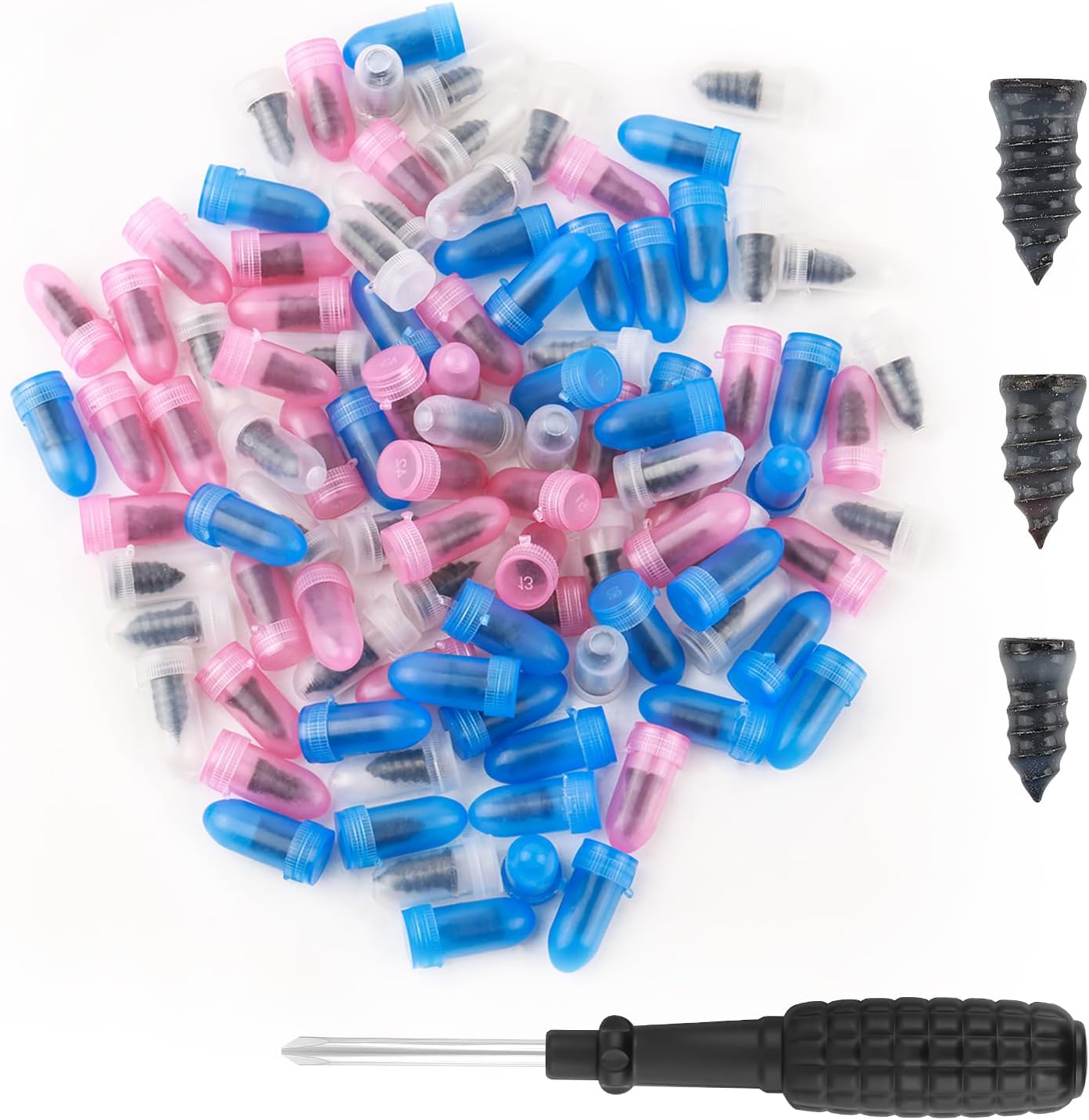
This 100-piece tire repair screw plug kit provides a fast, self-service solution for punctures on the road. Choose the correct plug size, insert it into the break, and screw it in to help seal the puncture and temporarily restore tire pressure. Thickened threads and rubber-wrapped plugs improve bite and sealing while remaining compact and easy to carry.
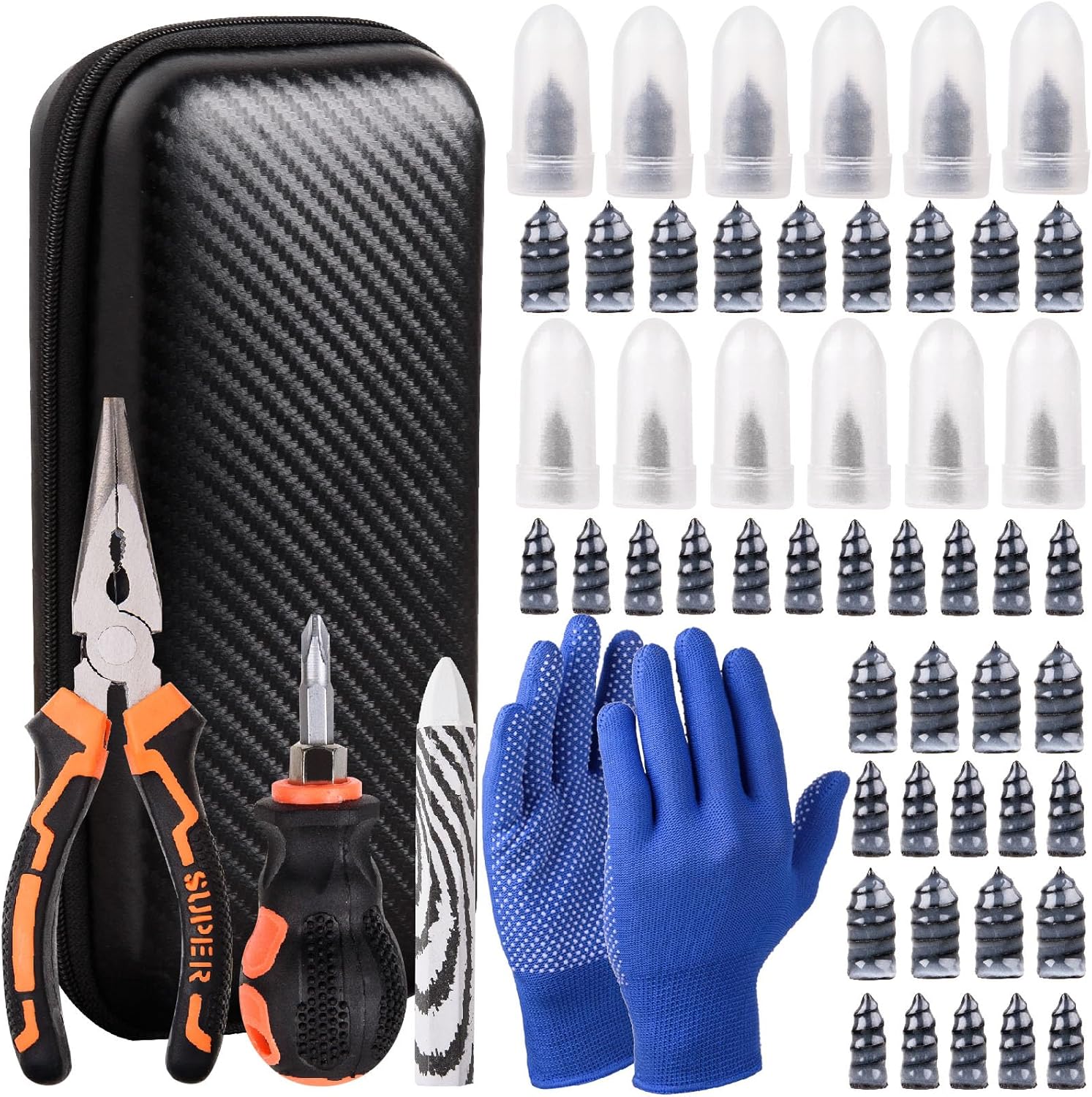
This tire sidewall puncture repair kit fixes flats fast without removing the tire, helping you get back on the road in minutes. It includes self-tapping repair nails, essential tools, gloves, and a portable storage bag for convenient roadside use. Designed for tubeless tires, it helps create a tight, leak-resistant seal for cars, motorcycles, trucks, SUVs, and ATVs.
For Garage and Workshop Use
This is the strongest use case for the Tallew patch pack. You can store 40 patches near your other tire repair supplies and avoid running out after a few jobs. The rectangular size also gives you a consistent patch option for repeated small puncture work.
For Fleet, Trailer, and Farm Equipment Prep
If you maintain several tires, a 40-count pack is more practical than buying only a few patches at a time. It can work well as a backup supply for trailers, work trucks, tractors, and utility vehicles when you already have the proper repair tools nearby.
For Trunk or Road Trip Storage
The patches are compact enough to keep in a trunk or roadside kit, but they are not enough by themselves. On the road, you still need the correct cement or repair compound, prep tools, a way to reinflate the tire, and enough time to inspect and test the repair. Many drivers will be better served by using these as backup supplies rather than the only emergency solution.
For First-Time DIY Repairs
New DIY users should be careful. The patch may be simple, but tire repair is safety-related work. If you are unsure about tire removal, inner-liner prep, curing, or leak testing, use this pack for practice only and have driving tires checked by a professional.
What Buyers Are Saying
Based on Amazon customer reviews at review time, the kit is consistently well-reviewed for basic repair jobs and bulk value.
- Praise: Several reviewers say the patches worked well for basic tire repair jobs.
- Praise: Buyers also mention good quality, durability, and strong value for a bulk patch pack.
- Watch-out: Some negative reviews say the patches did not stick well, and one complaint says no glue was included.

How to Use It Correctly
Use these patches only after the tire has been inspected and the injury is suitable for repair. The basic process is to find and mark the puncture, clean the inner repair area, roughen the surface, apply the correct vulcanizing material, wait for the listed tack or dry time, position the patch, and press it firmly from the center toward the edges.
Do not rush the air-removal step. Trapped air under a patch can weaken the bond and cause a leak. After curing, test the repair with soapy water and monitor tire pressure before normal driving.
Common Mistakes to Avoid
- Patching over dirt, moisture, loose rubber, or an oily surface.
- Using the patch without a suitable vulcanizing cement or repair compound.
- Skipping pressure from a stitcher, roller, or press wheel.
- Treating sidewall damage, blowouts, or large cuts as normal DIY patch jobs.
- Driving before the repair has been checked for leaks.
Compatibility and Safety
Tire repair affects vehicle safety, so this product should be used with caution. A patch pack can support a proper repair, but it does not replace tire inspection. Sidewall damage, visible bulges, bead damage, severe cuts, run-flat damage, or any tire that was driven while very low on air should be checked by a qualified tire professional.
You should also follow the tire manufacturer’s repair guidance and the instructions on any cement or vulcanizing material you use with the patch. Do not rely on this patch pack for high-speed driving, heavy loads, or long trips if the repair quality is uncertain.
Pros and Cons
Pros
- 40-count pack gives you enough patches for repeated repairs, practice, or shared workshop storage.
- 2.56 x 3.15 inch rectangular size covers more area than many small round patches.
- Rubber construction with a canvas layer is listed for flexible, durable repair use.
- Compact format stores easily in a trunk, toolbox, garage shelf, or service vehicle.
- Useful for cars, trucks, trailers, buses, tractors, and similar vehicle tires when the repair is suitable.
Cons
- Adhesive, prep tools, press wheel, pump, and tire removal tools are not clearly included.
- Correct prep matters, so poor cleaning, roughening, pressure, or curing can make the patch fail.
- Not suitable for blowouts, sidewall damage, large cuts, bead damage, or structural tire problems.
Is It Worth the Price?
The Tallew 40 Pcs Tire Patch Kit can be a strong value for the price if you need a stored supply of radial repair patches. The value comes from the 40-count pack and the larger rectangular size, not from a complete tool bundle.
It is worth considering if you already own the missing repair supplies or maintain tires often enough to use more than a few patches. It is not the best fit if you need one all-in-one roadside kit for occasional emergencies.
Why Buyers Choose It
Buyers choose this kit because it gives them many patches in one pack. The larger 2.56 x 3.15 inch size is useful when you want more coverage than small round patches can provide.
The main reason to buy it is simple: you get a stored supply of repair patches for small tire puncture jobs. The main reason to be careful is also simple: the patch only works as well as the prep, adhesive, pressure, and cure time behind it.
How It Compares to Alternatives
Compared with small patch assortments, the Tallew 40-count pack gives you more of one rectangular size. That is helpful if you like a consistent 2.56 x 3.15 inch patch and do not need mixed diameters.
Zhengmy 40 Pieces Tire Patches may be worth comparing if you want a similar rectangular patch option with multiple sizes in some versions. SUNSOUL 20pcs Radial Tire Patch is a lower-count alternative, while ZERINT Professional Self-Vulcanizing Tire Repair Patches may suit buyers who want several patch diameters. The Tallew pack makes the most sense if your priority is a larger bulk count in one rectangular size.
Frequently Asked Questions
Does the Tallew 40 Pcs Tire Patch Kit include glue?
The Amazon listing clearly describes 40 tire patches, but it does not clearly list glue, cement, a rasp, a roller, a pump, or tire tools as included. Plan to supply suitable vulcanizing cement and the right prep tools separately.
What size are the patches?
The reviewed version uses rectangular patches sized about 65 x 80 mm / 2.56 x 3.15 inch. Amazon also shows other size or count options, so check the selected variant before ordering.
What tires can you use these patches on?
The listing mentions cars, trucks, trailers, buses, tractors, and other vehicles. The tire still needs to be suitable for repair based on damage location, damage size, tire condition, and the tire maker’s guidance.
Can you use these patches on sidewall damage?
No. Do not treat a visible sidewall puncture, cut, tear, or bulge as a normal DIY patch job. Sidewall damage can be structural, so have the tire inspected before relying on it.
Are these patches permanent or temporary?
They can be part of a long-lasting repair when used correctly, but the patch alone does not make a repair safe. The tire still needs proper inspection, preparation, bonding, curing, and leak testing.
What steps are needed to apply a patch?
The listing describes roughening the damaged area, keeping it clean, applying vulcanizing material, waiting a few minutes, placing the patch, and pressing it from the center outward to remove trapped air. After curing, test the repair for leaks before driving.
Who should skip this kit?
Skip it if you need a complete emergency kit with plugs, handles, cement, and inflation gear. Also skip DIY repair if the tire has serious damage or if you are not sure the puncture is safe to repair.
The Bottom Line
The Tallew 40 Pcs Tire Patch Kit is a practical buy if you want a bulk pack of large radial tire patches and already have the tools and skill to apply them properly. Its main strength is the 40-count supply of 2.56 x 3.15 inch patches. Its main limitation is that it is not a complete repair kit and should not be used for serious tire damage.
Buy it as a patch supply for suitable small punctures, not as a complete roadside system. If you see sidewall damage, a blowout, a large cut, bead damage, or any repair you are unsure about, get the tire checked by a professional.

Related Articles
Best Tires for 2500HD Duramax 2026: Heavy-Duty Tires for Towing and Work Trucks
You depend on your 2500HD Duramax to tow heavy loads and handle demanding worksite conditions, so tire choice is not optional. The right tires…
Read More
Best Mastercraft Tires 2026: Reliable Tire Picks for Trucks, SUVs, and Daily Drivers
You need tires that match how you drive, where you live, and what your vehicle carries. This guide highlights Mastercraft models that stand out…
Read More
Best Lionhart Tires 2026: Budget Performance Tires for Cars and SUVs
You want tires that deliver confident handling, predictable braking, and acceptable longevity without stretching your budget. Lionhart’s 2026 lineup focuses on delivering those trade-offs…
Read More