
30 PCS Heavy Duty Tire Plugs Review: 4-Inch Rubber Repair Strings for Tubeless Tires

Disclosure: As an Amazon Associate, we earn from qualifying purchases. If you click a link on this page and make a purchase, we may receive a small commission at no extra cost to you.
A small nail or screw can leave you choosing between a roadside delay and a quick temporary repair. The Sixzoo 30 PCS Heavy Duty Tire Plugs give you a supply of 4-inch by 0.24-inch butyl rubber strings for qualifying punctures in tubeless tires. They are compact, inexpensive to keep on hand, and useful when you already own the correct insertion tools. The main limitation is important: these strings are emergency repair supplies, not a substitute for an internal inspection and a professional plug-and-patch repair on a road-going tire.
TL;DR
Quick Verdict
Rating: 7/10, recommended with safety caveats
Best For: Drivers and equipment owners who already have a reamer, insertion tool, pressure gauge, and inflator.
Bottom Line: The 30-piece pack is a practical refill supply for temporary tread-puncture repairs in compatible tubeless tires. It does not include the tools needed for installation, and an external string plug should not be treated as a complete permanent repair for passenger-car or light-truck tires.
Key Specifications
| Specification | Detail |
|---|---|
| Brand | Sixzoo |
| Model or MPN | Sixzoo-TRS-01 |
| Product Type | Tubeless tire repair string refills |
| Quantity | 30 repair strings |
| String Size | 4 inches long by 0.24 inch thick |
| Material | Butyl rubber repair strings |
| Color | Black |
| Compatibility | Qualifying punctures in compatible tubeless tires, subject to the tire manufacturer’s repair policy |
| Suggested Applications | Cars, SUVs, trucks, ATVs, tractors, lawn equipment, RVs, and motorcycles when the tire maker permits this repair method |
| Tools Included | None stated; this is a refill pack rather than a complete tire repair kit |
| Tools You Still Need | Pliers, reamer, insertion tool, pressure gauge, inflator, and suitable eye and hand protection |
| Best Use | Emergency or temporary sealing of a small, straight puncture in the repairable tread area |
| Major Safety Limit | Do not use on sidewall, bead, shoulder, large, angled, or structurally damaged punctures |
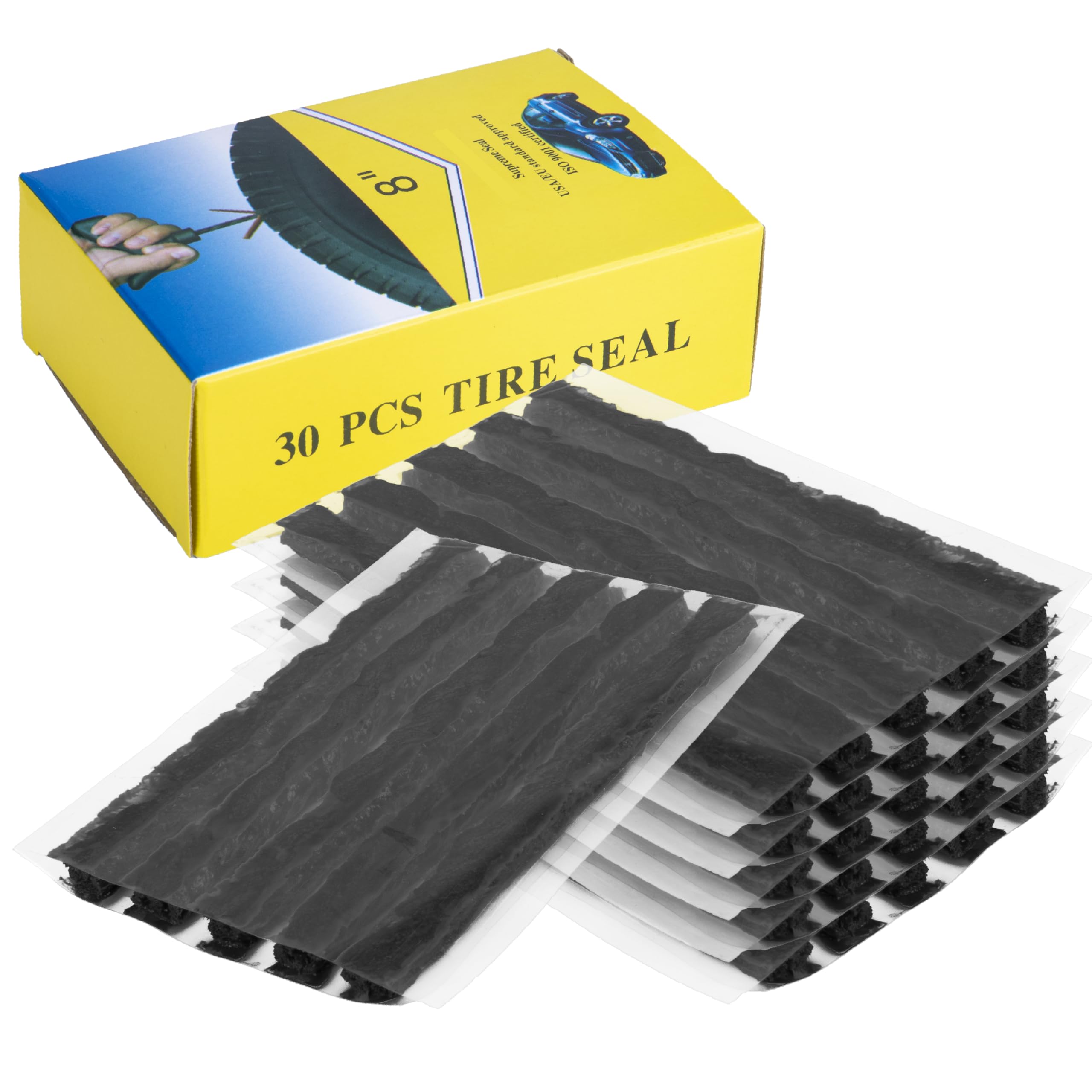
What Are the Sixzoo Heavy Duty Tire Plugs?
The Sixzoo plugs are sticky butyl rubber strings that are pushed into a puncture channel with a separate insertion tool. Their 4-inch length gives you enough material to fold the string through the tool and leave part of it inside the puncture while the ends remain outside for trimming.
This package contains repair material only. It makes the most sense as a refill for an existing T-handle or pistol-grip repair kit. You will still need a reamer to prepare the channel, an insertion tool to place the string, a pressure gauge to verify inflation, and an inflator to restore the tire to the pressure shown on the vehicle or equipment label.
The “universal” description refers to the broad range of tubeless applications that may use repair strings. It does not mean every puncture, tire design, speed rating, motorcycle tire, run-flat tire, or manufacturer warranty permits an external string repair.
Before You Buy: These are refill strings, not a complete repair kit. For passenger-car and light-truck tires, industry guidance does not consider an external string plug by itself a complete permanent repair. A qualified technician should remove the tire, inspect it internally, and use an approved repair method when the damage is repairable.
Who Should Buy It?
Best For
- You already own a compatible reamer and plug-insertion tool.
- You maintain several tubeless tires on vehicles, trailers, ATVs, tractors, or lawn equipment.
- You want compact emergency repair material in a roadside or workshop kit.
Skip If
- You need a complete kit with tools, cement, an inflator, and a pressure gauge.
- The damage is in the shoulder, sidewall, bead, or a previously repaired area.
- You want a confirmed permanent repair without having the tire removed and inspected.
Materials and Build
Each repair string measures 4 inches by 0.24 inch and is described as being made from butyl rubber. The tacky, flexible construction helps the string compress against the puncture channel after insertion. The material also lets you fold the string through a standard split-eye insertion tool without needing a rigid plug body.
The thicker 0.24-inch profile may be useful for ordinary nail or screw punctures after the channel has been prepared with a correctly sized reamer. It should not be used to justify repairing a large tear, irregular cut, or hole that exceeds the tire maker’s repair limits.
Fit and Compatibility
These strings are intended for tubeless tires. That can include many passenger vehicles, SUVs, trucks, RVs, trailers, ATVs, motorcycles, tractors, and lawn machines, but the puncture location and tire manufacturer’s policy matter more than the vehicle category printed in a product description.
Check that the injury is a small, straight puncture within the central tread area. Do not attempt to seal exposed cords, a split casing, bulge, bead damage, sidewall damage, shoulder damage, or a tire that was driven while severely underinflated without first obtaining a professional internal inspection.
Run-flat, speed-rated, motorcycle, foam-lined, and specialty tires may carry additional restrictions. Consult the tire manufacturer’s repair policy before using an external repair product.
Installation and Ease of Use
The basic process is simple in concept, but it requires strength, control, and the correct tools. You must identify the puncture, remove the object with pliers, prepare the channel with a reamer, center a string in the insertion tool, push it to the proper depth, withdraw the tool, and trim the exposed ends.
You must also reinflate the tire and check the repair with an appropriate leak-detection method. A string that is difficult to insert may indicate that the channel has not been prepared correctly, the tool is undersized, or the damage is not suitable for this repair.
Pro Tip: Assemble the plugs with a sturdy reamer, insertion tool, pliers, pressure gauge, valve-core tool, flashlight, gloves, and a working inflator. Having only the refill strings will not help you complete a roadside repair.
What People Say
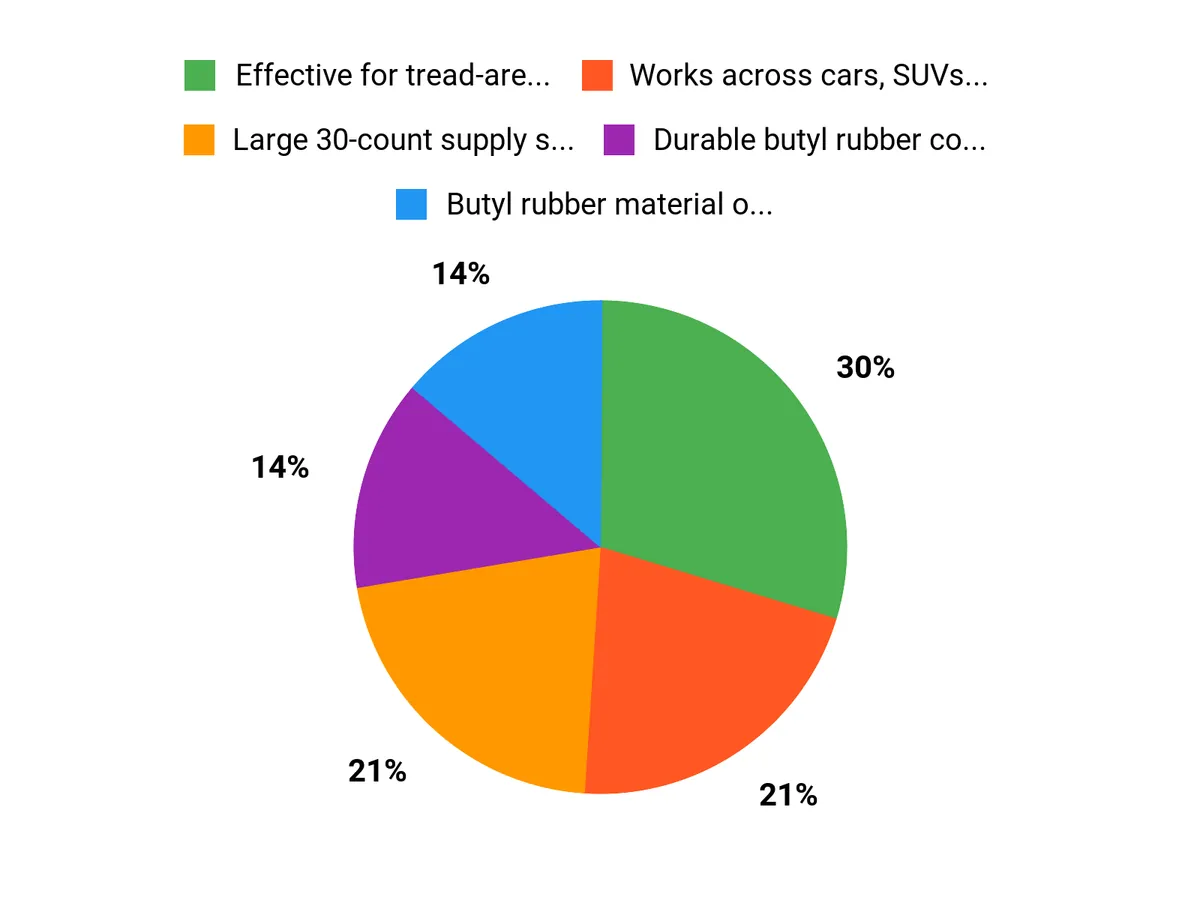
The customer-feedback summary supplied with the article is positive and focuses on ease of insertion, the useful 30-piece quantity, and the convenience of keeping spare strings in a vehicle or tool bag. The most meaningful benefit is practical preparedness rather than a claim that the strings provide a professional permanent repair.
Feedback about successful sealing should be viewed in context. A plug can appear to hold air while hidden inner-liner, belt, or sidewall damage remains, which is why a road tire still needs an appropriate inspection.
Overall Sentiment: Positive, with important repair-method limitations

Pros and Cons
Pros
- The 30-piece pack provides multiple refills for an existing repair kit.
- Each 4-inch string fits common split-eye insertion tools.
- The butyl rubber construction is flexible and tacky for easier placement.
- The compact package is easy to store in a vehicle, garage, trailer, or equipment toolbox.
- The strings can serve several compatible tubeless-tire applications.
Cons
- No reamer, insertion tool, pliers, gauge, or inflator is included.
- The strings are unsuitable for shoulder, sidewall, bead, large, or structural damage.
- A plug-only repair is not a complete permanent repair for a passenger-car or light-truck tire.
How It Performs in Real Use
Passenger-Car Roadside Emergencies
For a small puncture in the repairable tread area, the string may slow or stop the immediate air loss long enough to move the vehicle from an unsafe location or reach professional service. You should monitor pressure closely, avoid assuming the repair is permanent, and follow the vehicle and tire manufacturers’ instructions.
ATVs, Tractors, and Lawn Equipment
The pack can be especially convenient when you maintain several low-speed tubeless tires around a property or worksite. The 30-string quantity gives you enough material for repeated incidents, although you still need to confirm that the tire casing is sound and that the equipment manufacturer allows the repair.
Road Trips and Towing
A refill pack takes little storage space, but it should accompany a complete kit and a suitable inflator. Before a long trip, inspect your tools, confirm the strings have not dried out or become contaminated, and make sure the inflator can reach the required pressure for your vehicle or trailer tires.
Workshop and Fleet Storage
The large count makes sense for a garage that already has durable insertion tools. Keep the package sealed and away from dirt, petroleum products, direct sunlight, and excessive heat so the strings remain clean and pliable until needed.
How to Use the Plugs Safely
- Stop in a safe location. Move away from traffic when possible, switch on your hazard lights, set the parking brake, and follow the vehicle manual.
- Inspect before repairing. Do not use the plug if the tire has sidewall, shoulder, bead, casing, bulge, cord, or major impact damage.
- Confirm the tire is tubeless. These strings are not intended to patch an inner tube.
- Mark and remove the object. Use pliers while noting the angle of entry. An angled injury may extend outside the repairable area.
- Prepare the channel carefully. Use the correct reamer and avoid enlarging the hole more than necessary.
- Insert one centered string. Follow the tool manufacturer’s instructions for depth and withdrawal technique. Do not stack several strings into an oversized injury.
- Trim and reinflate. Inflate to the pressure specified on the vehicle placard or equipment label, not the maximum pressure molded onto the tire sidewall.
- Check for leakage. Recheck pressure before driving and again after a short interval.
- Arrange professional inspection. A road-going tire should be removed from the wheel and examined internally to determine whether an approved permanent repair is possible.
Compatibility and Safety
A tire supports the vehicle, absorbs road impacts, and transmits braking and steering forces. Damage that appears small from the outside can extend through the inner liner or belt package. That makes puncture location, size, angle, and any distance driven while flat more important than whether a string temporarily stops the leak.
For passenger-car and light-truck tires, the U.S. Tire Manufacturers Association recommends limiting repairs to qualifying punctures in the tread area that are no greater than 1/4 inch, or 6 mm. Its procedure calls for removing the tire from the wheel, inspecting it internally, filling the puncture channel, and sealing the inner liner with a patch.
Do not use these strings on a sidewall or shoulder. Do not repair a tire with a bulge, exposed cords, bead damage, a large cut, overlapping repairs, or signs that it was damaged by driving while flat. Replace or professionally assess the tire instead.
Use eye protection and gloves when working with pointed reamers and insertion tools. Never work beneath a vehicle supported only by a jack, and never place yourself in an exposed traffic lane to complete a repair.
Maintenance and Storage
Keep unused strings in their original package or another sealed container. Dust, grit, moisture, and chemical contamination can make installation harder and may interfere with the string’s contact with the puncture channel.
Inspect the package before a trip. Replace the strings if they have become dry, brittle, unusually hard, dirty, or fused together. Check the reamer and insertion tool for rust or damage, and test your inflator so you know it works before an emergency.
After any temporary repair, check the tire pressure with a reliable gauge. Continued pressure loss, vibration, noise, pulling, heat, or visible distortion means you should stop driving and obtain assistance.
Is It Worth the Price?
The Sixzoo pack is positioned as a budget refill supply rather than a complete roadside system. Its value comes from the 30-piece count and broad potential use across compatible tubeless equipment. Buyers who already own quality tools receive more practical value than someone starting without a repair kit.
It is worth considering when you manage several vehicles or machines and regularly replace used plug strings. It is less compelling when you need a ready-to-use emergency kit because purchasing the required tools and inflator separately adds cost and preparation.
The largest tradeoff is not price. It is the limited role of an external repair string. For road tires, you still need a qualified inspection and an approved repair or replacement decision.
How It Compares to Alternatives
The Slime 30-count black refill pack is a close alternative with 4-inch strings and clearly published emergency-use instructions. It may be easier to evaluate when you prefer a product with accessible manufacturer documentation. Safety Seal also offers repair refills and complete systems for buyers who want a more established tire-repair brand.
A complete kit is the better alternative when you do not already have a reamer, insertion tool, pliers, gauge, and inflator. A professionally installed combination plug-and-patch is the appropriate comparison when you need a complete repair for a qualifying passenger-car or light-truck puncture.
Frequently Asked Questions
What is included in the Sixzoo package?
The package contains 30 black butyl rubber repair strings. Each string is listed as 4 inches long and 0.24 inch thick. The product description does not state that repair tools or an inflator are included.
Do these plugs come with an insertion tool?
No complete tool set is shown as part of this refill pack. You should already have a suitable reamer, split-eye insertion tool, pliers, pressure gauge, and tire inflator before relying on the plugs during a roadside emergency.
Which tire punctures can these strings seal?
They are intended for small punctures in the repairable tread area of a compatible tubeless tire. A straight nail or screw puncture may qualify, but the tire’s condition, injury size, entry angle, and manufacturer policy must also be considered.
Can you use a plug on sidewall or shoulder damage?
No. Sidewall, shoulder, bead, and structural damage should not be repaired with an external string plug. Those areas flex heavily and may have hidden casing damage that requires tire replacement.
Is a Sixzoo string plug a permanent repair?
You should treat it as an emergency or temporary measure for a road-going tire. Industry procedures for passenger-car and light-truck tires require removal from the wheel, internal inspection, a filled puncture channel, and a patch that seals the inner liner.
Can these plugs be used in motorcycle or run-flat tires?
Do not assume compatibility based only on the product’s broad vehicle list. Motorcycle, run-flat, speed-rated, and specialty tires may have strict repair limits. Check the tire manufacturer’s instructions and obtain professional advice before use.
What is the most common mistake when using tire strings?
A major mistake is attempting to plug damage that is too large or outside the repairable tread area. Other errors include lacking an inflator, using several strings to fill a large cut, setting the wrong pressure, and treating a leak-free external plug as proof that no internal damage exists.
How should unused tire plugs be stored?
Keep them sealed, clean, and protected from direct sunlight, excessive heat, petroleum products, and loose dirt. Inspect them periodically and replace any strings that have become dry, brittle, contaminated, or difficult to separate.
Why Customers Choose
You may choose the Sixzoo pack because it places 30 replacement strings in one compact package. That quantity suits a prepared vehicle owner, workshop, property owner, or equipment operator who already has the required tools and maintains several tubeless tires.
The simple dimensions also make the strings easy to match with many common plug-insertion tools. The appeal is convenience and refill value, not a claim that the product can safely repair every tire or replace professional service.
The Bottom Line
The Sixzoo 30 PCS Heavy Duty Tire Plugs are a practical refill option when you already have the tools and understand the limits of an external repair string. Buy them for emergency preparation and compatible tubeless equipment, but skip them if you need a complete kit or plan to treat a plug-only repair as permanent.
The large count, compact storage, and flexible butyl rubber construction are the main strengths. The missing tools and strict puncture-location limits are the main tradeoffs, which supports the recommended-with-caveats verdict.
Ready to Buy?
Check the latest product details and confirm that you already have the required repair tools.

Related Articles
California Air Tools 8010 Review: 1 HP Ultra Quiet 8-Gallon Oil-Free Air Compressor
You want an air compressor that does the job without turning your workshop into a noisy zone. The California Air Tools 8010 is built…
Read More
Acmount W160 Jump Starter with Air Compressor Review: 5000A Battery Booster and 150 PSI Tire Inflator
You want gear that actually helps when a battery dies or a tire goes flat, not something that sits unused in the trunk. The…
Read More
ALL-TOP Dual Cylinder Air Compressor Kit Review: 12V 150 PSI Offroad Tire Inflator
You want a reliable way to manage tire pressure when you head off road or travel with a heavy load, and a dedicated 12V…
Read More