
Dr.Roc Tire Valve Stem Puller Tools Set Review
Disclosure: As an Amazon Associate, we earn from qualifying purchases. If you click a link on this page and make a purchase, we may receive a small commission at no extra cost to you.
A leaking rubber valve stem can leave you with a tire that will not hold pressure, but replacing the stem takes more than a basic core tool. The Dr.Roc Tire Valve Stem Puller Tools Set bundles a steel puller, ten snap-in stems, and a valve core remover in one compact package. It is a useful garage kit for standard tubeless wheels, but it is not universal, and you still need safe access to the inside of the rim for a full stem replacement. This review explains the fit limits, included parts, installation steps, and situations where a high-pressure or TPMS-specific valve is the better choice.
Quick Verdict
Rating: 8.4/10, recommended with fit and pressure caveats
Best For: DIY owners servicing standard 0.453-inch tubeless valve holes on motorcycles, ATVs, lawn equipment, cars, and light trucks
Bottom Line: The kit gives you the puller, core tool, and two common stem lengths in one portable set. Its main limits are the 65 PSI maximum, 0.156-inch rim-thickness limit, non-TPMS stems, and the need to confirm wheel fit before installation.
Key Takeaways
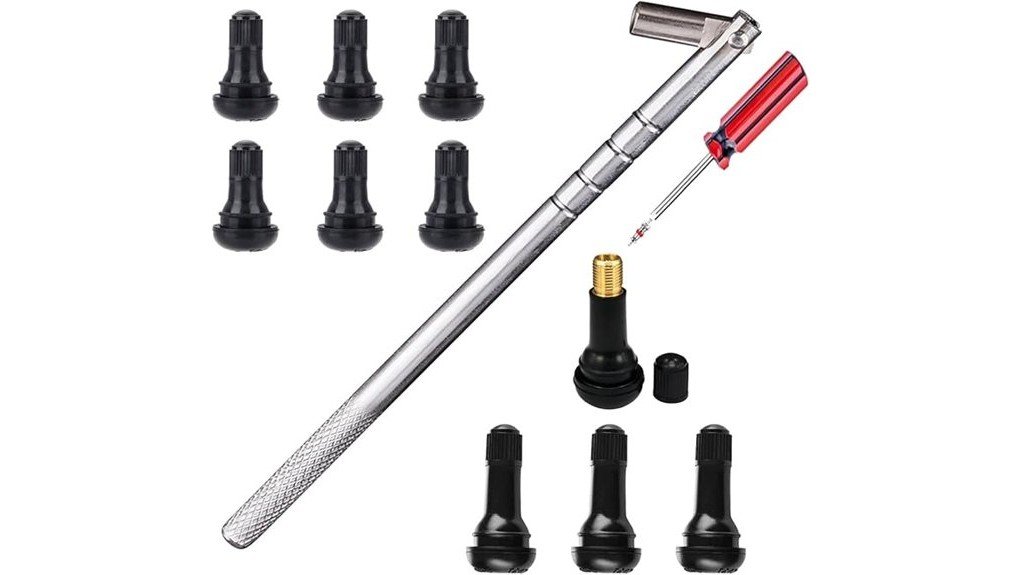
- The package contains one valve stem installer, six TR412 stems, four TR413 stems, and one valve core remover.
- The puller uses steel construction with a soft rubber sleeve to reduce the chance of marking the wheel during use.
- The supplied snap-in stems fit 0.453-inch (11.5 mm) rim holes and are rated for up to 65 PSI cold inflation pressure.
- TR412 has a 0.875-inch effective length, while TR413 has a 1.25-inch effective length.
- The stems are not presented as TPMS replacements, high-pressure truck valves, or a solution for every wheel design.
| Specification | Detail |
|---|---|
| Brand | Dr.Roc |
| Product type | Snap-in tire valve stem puller and replacement kit |
| Package contents | 1 installer, 6 TR412 stems, 4 TR413 stems, 1 valve core remover |
| Puller length | 9.85 inches (25 cm) |
| Puller material | Steel with a soft rubber protective sleeve |
| Stem materials | Brass components with ozone-resistant EPDM rubber |
| Rim-hole diameter | 0.453 inch (11.5 mm) |
| TR412 effective length | 0.875 inch |
| TR413 effective length | 1.25 inches |
| Maximum cold inflation pressure | 65 PSI |
| Maximum rim thickness | 0.156 inch |
| Typical applications | Tubeless tires on motorcycles, ATVs, UTVs, lawn mowers, cars, and light trucks when wheel specifications match |
| Key limitation | Not a high-pressure, clamp-in, or TPMS-specific valve kit |
[Products Worth Considering]

This multi-function tire valve stem removal tool set makes it fast to remove, install, bleed, and clean valve cores for easier tire maintenance. It includes valve core removers, a 4-way spool tool, replacement valve caps, and spare cores to handle replacements and repairs with confidence. Universal compatibility suits cars, trucks, motorcycles, bicycles, and more for roadside convenience.

This 4-in-1 tire valve core removal tool helps you deflate, unblock, and remove or install valve cores quickly for easier tire repair. The multifunction design also supports re-taping damaged threads and reaming inside the valve stem for smoother service. Included as a 2-pack, it’s compact for convenient carry and works for cars, bicycles, and motorcycles.

Upgrade your tires with authentic 40mm caliber bullet-shaped stem caps designed to help keep inflation consistent and secure. The patented insert helps protect TPMS and the lacquer coating resists tarnishing for a stylish look. Easy to install on standard Schrader valve stems, these caps fit cars, trucks, SUVs, motorcycles, BMX and bicycles.
What Is the Dr.Roc Tire Valve Stem Puller Set?
The Dr.Roc set is a small tire-service kit for installing and removing standard snap-in rubber valve stems. Its main tool is a 9.85-inch steel puller with a rubber-covered contact area. The sleeve helps protect painted or finished wheel surfaces while you lever a lubricated stem through the rim hole.
The package also includes ten replacement stems with valve cores already installed. Six are the shorter TR412 size, and four are the longer TR413 size. A separate core remover lets you remove or reinstall a valve core when deflating the tire, checking the core, or replacing a damaged core.
Before You Buy: Measure the rim hole and confirm the wheel’s valve type, rim thickness, required inflation pressure, and TPMS setup. A 0.453-inch hole alone does not guarantee that these standard 65 PSI snap-in stems are correct for your vehicle.
Who Should Buy It?
Best For
- DIY owners who already have safe tire-lifting and bead-access equipment
- Garages that service standard tubeless 0.453-inch valve holes below 65 PSI
- Motorcycle, ATV, lawn-equipment, car, and light-truck owners who want common TR412 and TR413 replacements on hand
Skip If
- Your wheel uses a TPMS sensor valve, metal clamp-in valve, or another stem-hole diameter
- Your required cold pressure exceeds 65 PSI or the rim is thicker than 0.156 inch at the valve hole
- You need a complete roadside puncture kit, bead breaker, jack, or inflation equipment
Materials and Build Quality
The puller’s steel body supplies the leverage needed to draw a snap-in stem through the rim. A soft rubber tube covers the wheel-contact area, which is useful because bare metal can scratch clear coat or painted finishes. You still need to keep the tool clean and place the protected section flat against the wheel before applying pressure.
The replacement stems combine brass components with ozone-resistant EPDM rubber. That material choice is common for standard snap-in tire valves because it must flex during installation and resist weather exposure. The listing also states that the stems are leakage tested, but you should still check each completed repair with soapy water before reinstalling the wheel.
TR412 vs TR413: Which Stem Fits?
Both included stem sizes are intended for 0.453-inch (11.5 mm) rim holes, but their exposed lengths differ. TR412 has a 0.875-inch effective length, while TR413 measures 1.25 inches. The shorter TR412 can reduce protrusion where clearance is limited, while the longer TR413 can make an air chuck or pressure gauge easier to attach.
Length is only one part of the decision. You also need to confirm the rim-hole diameter, metal thickness around the hole, wheel profile, required pressure, and vehicle specification. Do not choose a valve only because it looks similar to the old one.
Pro Tip: Before removing the old stem, photograph its position and measure the exposed length. Compare those details with the wheel specification, not just the tire size, because the wheel determines the required valve fit.
Installation and Ease of Use
The kit can simplify a job when the wheel is already removed and the tire is safely deflated. The core remover gives you a controlled way to release air, while the puller provides leverage after the correct new stem is inserted through the rim from the inside. The tool does not replace a jack, stands, wheel tools, bead breaker, lubricant, torque wrench, air source, or pressure gauge.
A typical safe workflow is to confirm the replacement valve, remove the wheel, fully deflate the tire, break the bead near the stem, cut or remove the old rubber valve, clean and inspect the valve hole, lubricate the new stem with approved tire-mounting lubricant, and pull it straight into place. After inflation, check for leakage at the base and core, then reinstall the wheel using the vehicle maker’s tightening procedure.
Common Mistakes to Avoid
- Do not pull against an unprotected wheel surface or use the tool at a sharp angle.
- Do not install a dry stem, use petroleum grease, or reuse a damaged rubber valve.
- Do not work on an inflated tire or rely on a vehicle jack alone while the wheel is removed.
- Do not assume a standard rubber stem is correct for TPMS, heavy-duty, high-speed, or high-pressure applications.
- Do not inflate beyond the valve, tire, wheel, or vehicle maker’s lowest stated limit.
Fit and Compatibility
The listing identifies dirt bikes, sport bikes, motorcycles, ATVs, UTVs, lawn mowers, cars, and light trucks as possible applications. That list describes broad use, not guaranteed fit. Your wheel must use a standard snap-in tubeless valve with a 0.453-inch hole, and the surrounding rim thickness must stay within the stated 0.156-inch maximum.
Many newer road vehicles use direct TPMS sensors attached to special valve stems. The included TR412 and TR413 stems are standard snap-in valves and should not be treated as universal TPMS replacements. If your warning light, sensor design, or service information indicates TPMS hardware at the valve, use the specified service kit or have a tire professional perform the repair.
[Products Worth Considering]

Upgrade your Toyota tire setup with these corrosion-resistant, leak-proof valve stem caps designed to help protect the valve core from water, snow, and road grime. The caps feature a snug rubber seal and durable copper alloy construction to resist rust and oxidation while maintaining stable tire pressure. Ideal for replacing worn original caps and keeping your wheels looking clean and stylish.

This tire valve adapter kit lets you connect a 3/4-inch garden hose to tire valves to fill tires with air or liquid. It includes two adapters for standard bore and large bore valves plus a convenient bleeder valve to release trapped air. Designed for tractor tire tubes and compatible air/water valves and extensions, it’s a practical repair tool for getting back on the road or field quickly.
Compatibility and Safety
The supplied stems have a 65 PSI maximum cold inflation rating. That makes them unsuitable for applications that require higher pressure, even if the stem fits the hole. High-pressure snap-in valves, metal clamp-in valves, and commercial-vehicle valves use different specifications and should not be substituted without checking the wheel and vehicle requirements.
Split rims, multi-piece wheels, damaged valve holes, corroded rims, and heavy-duty truck assemblies need specialized procedures. Stop if the hole is enlarged, sharp, cracked, or badly corroded. The Schrader-Pacific snap-in valve reference also shows that standard TR412 and TR413 valves are 65 PSI parts, while separate high-pressure series are used for higher limits.
How It Performs in Real Use
For Routine Garage Maintenance
For a wheel that already matches TR412 or TR413 specifications, the all-in-one package reduces the number of small parts you need to gather. The long handle gives useful leverage, and the core tool keeps deflation and core service in the same kit. It works best as part of a complete tire-service setup rather than as a stand-alone repair solution.
For Motorcycles, ATVs, and Lawn Equipment
The compact size is convenient when you maintain several smaller vehicles with standard tubeless wheels. Having both stem lengths helps when access around the wheel differs. You still need to check each rim because powersports and lawn-equipment wheels can use different hole sizes, pressures, tubes, or specialty valves.
For Cars and Light Trucks
The tool can handle standard non-TPMS snap-in stems on compatible wheels. On newer vehicles, the main challenge is confirming whether the valve is part of a TPMS sensor. If it is, the included rubber replacements are not the correct substitute, even when the outer shape looks similar.
For Emergency or Travel Storage
The 9.85-inch puller is easy to store in a garage cabinet, trailer toolbox, or service vehicle. However, a stem replacement usually requires safe lifting, wheel removal, full deflation, bead access, reinflation, and a leak check. For that reason, it is better described as a compact service kit than a complete roadside fix.
Pros and Cons
Pros
- Includes the puller, core remover, and ten replacement stems in one set
- Provides both 0.875-inch TR412 and 1.25-inch TR413 stem lengths
- Steel puller supplies leverage for snap-in installation
- Rubber sleeve helps protect the wheel at the tool’s contact point
- Compact enough for a garage, trailer, or service toolbox
Cons
- Limited to compatible 0.453-inch holes, rims up to 0.156 inch thick, and 65 PSI maximum cold pressure
- Does not include TPMS valves, high-pressure stems, lifting tools, bead tools, or an inflator
- A full stem replacement normally requires wheel removal and access inside the tire bead
Is It Worth the Price?
The Dr.Roc kit sits in the budget tool category and offers strong value when you need only the common TR412 and TR413 sizes. Buying the puller, core remover, and a small stem assortment together can be more convenient than sourcing each piece separately.
You get the most value if you already own the equipment needed to remove a wheel, open the tire bead, reinflate the tire, and verify pressure. It is not the best fit for a high-pressure vehicle, a shop that needs many valve sizes, or a wheel with TPMS-specific hardware.
How It Compares to Alternatives
A larger Riseuvo-style multi-size kit may suit a busy garage that wants more stem types and spare cores. For applications above 65 PSI, Schrader 600HP or 602HP high-pressure snap-in valves are the relevant category to compare, but you must match the exact wheel specification. Metal clamp-in or TPMS service valves are better choices when the vehicle maker requires sensor-compatible or higher-duty hardware.
The Dr.Roc set makes the most sense when you want a compact, low-cost tool and replacement assortment for standard TR412 and TR413 work, not a universal valve inventory.
Frequently Asked Questions
How do I avoid damaging the rim during installation?
Clean the wheel and the puller’s rubber sleeve before you start. Keep the stem straight, place the protected part of the tool flat against the wheel, and use steady leverage instead of a sudden pull.
Are the included valve stems compatible with TPMS sensors?
The listing presents them as standard TR412 and TR413 snap-in stems, not TPMS service valves. Check the vehicle service information and inspect the wheel before removing the old valve.
What pressure can the included stems handle?
The stated maximum cold inflation pressure is 65 PSI. Use a high-pressure valve specified for the wheel when the required pressure exceeds that limit.
Does the puller work on split rims or multi-piece wheels?
The kit is intended for ordinary snap-in tubeless valve service, not specialized split-rim work. Multi-piece wheel assemblies can store dangerous energy and should be serviced with the correct equipment and training.
Can I replace a valve stem without removing the tire?
You normally need the tire fully deflated and the bead pushed away from the wheel so the new stem can enter from the inside. The wheel may not need complete tire removal, but you still need proper bead access and safe lifting equipment.
How do I choose between TR412 and TR413?
TR412 has a 0.875-inch effective length, and TR413 measures 1.25 inches. Match the original valve and wheel specification, then confirm there is enough access for your air chuck without creating unnecessary protrusion.
How long do rubber valve stems last?
Service life depends on heat, ozone, road chemicals, age, and flexing. Inspect the stem whenever you service the tire and replace it if you see cracking, hardening, leakage, or damage.
Is this a complete roadside tire-repair kit?
No. It does not include puncture plugs, a jack, stands, wheel tools, bead equipment, an inflator, or a pressure gauge, all of which may be needed depending on the repair.
The Bottom Line
The Dr.Roc Tire Valve Stem Puller Tools Set is a sensible buy for you when you service compatible standard tubeless wheels and want a compact puller, core remover, and small supply of TR412 and TR413 stems. Its main strength is the complete basic package, while its main limitation is narrow compatibility with 0.453-inch holes, 0.156-inch maximum rim thickness, and 65 PSI maximum cold pressure. Skip it for TPMS valves, high-pressure wheels, split rims, or any job where you cannot safely access the inside of the tire bead.
Ready to Buy?
Check the latest price, package details, and seller information before you decide.

Related Articles
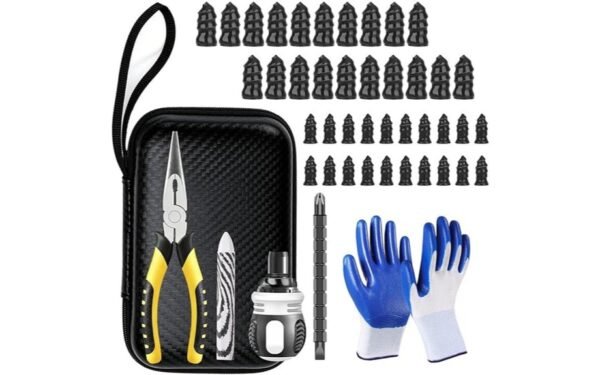
Tire Screw Plug Repair Kit Review
Compact tire screw plug repair kit review reveals fast roadside fixes, but which punctures are truly safe enough to trust?
Read More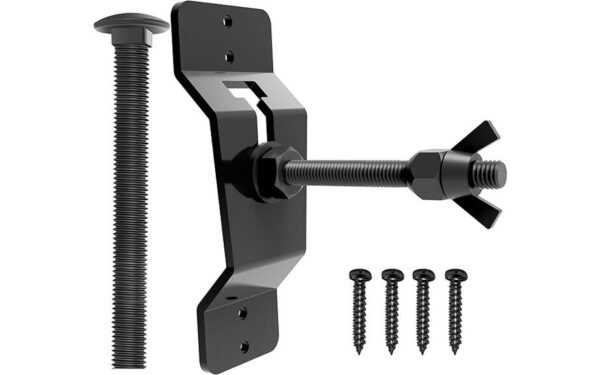
Wall Mount Spare Tire Carrier Mount Review
I review the wall mount spare tire carrier’s fit, strength, and stability—see what could make or break your trailer setup.
Read More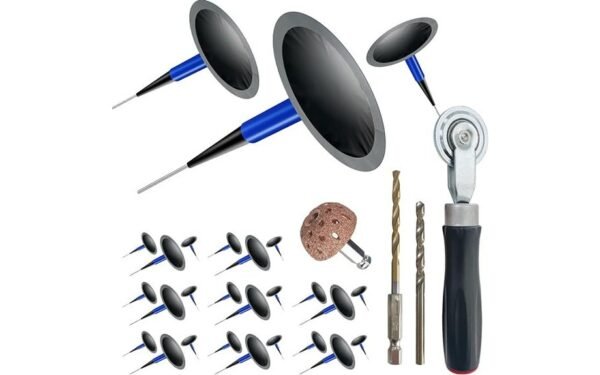
Socpuro Tire Repair Patch Tool Kit Review
Great for quick DIY puncture fixes, the Socpuro Tire Repair Patch Tool Kit has limits and surprises you’ll want to know before buying.
Read More