
TheraTears Dry & Tired Eye Drops Review
Disclosure: As an Amazon Associate, we earn from qualifying purchases. If you click a link on this page and make a purchase, we may receive a small commission at no extra cost to you.
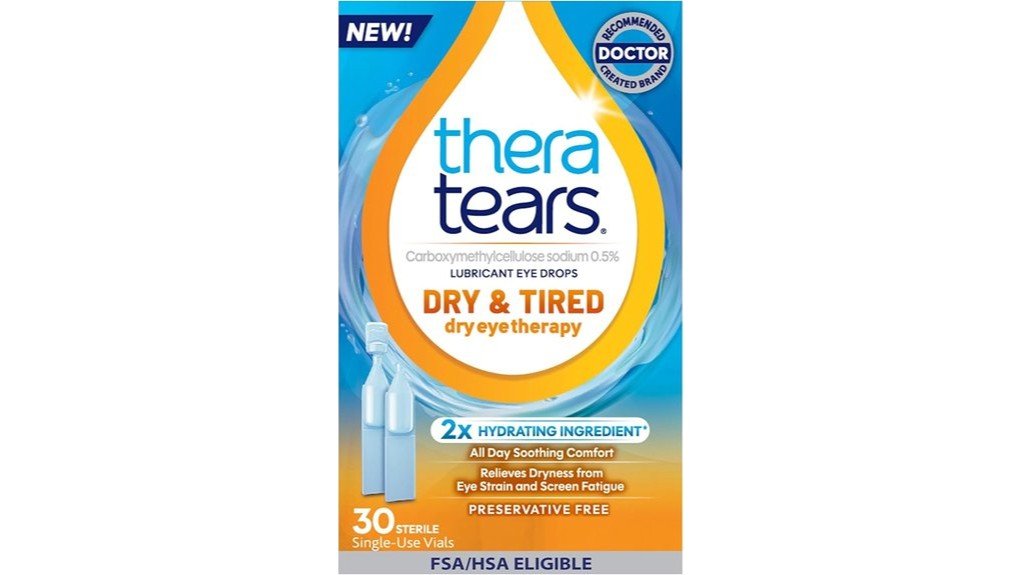
Long screen sessions can leave your eyes feeling dry, irritated, and tired, but not every artificial tear is equally convenient for repeated use. TheraTears Dry & Tired Preservative Free Lubricant Eye Drops use 0.5% sodium carboxymethylcellulose in 30 sterile single-use vials, giving you a preservative-free option for temporary dry-eye relief. The active-lubricant concentration is higher than the 0.25% concentration in the brand’s original preservative-free drops, while the small vials are easy to keep at a desk or in a bag. The tradeoff is that each opened vial must be discarded, and the label does not identify this product as a contact-lens rewetting drop.
Quick Verdict
Rating: 8/10, Recommended with caveats
Best For: People who want preservative-free lubricant drops for temporary dryness linked to screens, reading, dry indoor air, wind, or sun.
Bottom Line: The 0.5% lubricant formula and sterile single-use format make these drops practical for sensitive eyes and occasional daytime relief. You should skip them if you need a clearly labeled contact-lens rewetting drop, a thicker nighttime gel, or a lower-waste multidose bottle.
| Specification | Detail |
|---|---|
| Brand | TheraTears |
| Product | Dry & Tired Preservative Free Lubricant Eye Drops |
| Product type | Over-the-counter ophthalmic eye lubricant |
| Active ingredient | Sodium carboxymethylcellulose 0.5% |
| Preservatives | Preservative-free |
| Count | 30 sterile single-use vials |
| Volume | 0.4 mL per vial, 12 mL total |
| Package layout | Six pouches with five vials in each pouch |
| Directions | Instill 1 or 2 drops in the affected eye or eyes as needed, then discard the opened vial |
| Storage | 59°F to 86°F (15°C to 30°C) |
| NDC | 58790-013 |
| Best use | Temporary relief of burning, irritation, and discomfort caused by dry eyes or minor environmental irritation |
How This Review Was Evaluated: We checked the current Amazon listing, the manufacturer’s product information, and the Drug Facts label for ingredient, package, direction, storage, and warning details. This is an editorial product assessment, not hands-on or clinical testing.
Key Takeaways
- The formula uses 0.5% sodium carboxymethylcellulose, an eye lubricant that temporarily relieves dryness, burning, and irritation.
- It contains twice the active-lubricant concentration of TheraTears Original Preservative Free drops, which use 0.25%.
- The box contains 30 sterile 0.4 mL single-use vials, for 12 mL total.
- The preservative-free format can suit people who prefer to avoid preservatives, but every opened vial must be discarded.
- The current label does not say the drops can be applied while contact lenses are in place.
[Products Worth Considering]

The Ptwola eye wash cup kit uses a soft silicone edge and gentle rinse action to help soothe tired, dry, or irritated eyes. It’s designed for convenient rinsing with saline solution or eye drops, offering comfort for contact lens wearers and those using eye ointments. A portable design with a storage container helps make quick eye cleansing easier at home or on the go.

TheraTears Dry & Tired preservative-free eye drops provide all-day soothing comfort for dry, tired eyes. The formula contains twice the hydrating ingredient found in the original TheraTears blend, helping relieve discomfort from eye strain and screen fatigue. Convenient single-use vials make it ideal for sensitive eyes and daily eye care.

NOVEHA self-heating steam eye masks deliver gentle, soothing warmth without needing a microwave—just open and wear for convenient hot compress comfort. The air-activated, unscented design helps relax tired eyes from screen time, reading, travel, and nighttime routines. Crafted with skin-friendly, lint-free non-woven cotton fabric, these disposable warm masks provide a calming, spa-like experience wherever you go.
What Are TheraTears Dry & Tired Eye Drops?
TheraTears Dry & Tired is a preservative-free artificial tear designed for temporary relief of dry-eye symptoms. Its active ingredient, sodium carboxymethylcellulose 0.5%, coats and lubricates the eye’s surface to reduce friction and discomfort.
The formula is packed in 30 sterile single-use vials rather than a resealable bottle. That design gives you a fresh container each time, which is useful when you are sensitive to preservatives or want portable doses. It also creates more packaging and requires you to throw away any liquid left after one use.
How Does the Formula Relieve Dry, Tired Eyes?
Sodium carboxymethylcellulose is the product’s lubricating ingredient. At a 0.5% concentration, it adds moisture to the eye’s surface and can temporarily relieve burning and irritation caused by dryness.
The “Dry & Tired” positioning is aimed at dryness linked to eye strain and screen fatigue. The drops may make blinking and focusing feel more comfortable when surface dryness is the problem, but they do not correct an outdated glasses prescription, poor screen setup, or an underlying eye condition.
Pro Tip: Keep a sealed pouch near your main screen and use the drops only as directed. Pair them with regular screen breaks and deliberate blinking, since lubricant drops do not remove the cause of screen-related dryness.
Key Benefits for Screen Fatigue and Dryness
0.5% Lubricant Concentration
TheraTears Dry & Tired contains 0.5% sodium carboxymethylcellulose. That is twice the 0.25% active-lubricant concentration found in TheraTears Original Preservative Free drops. This makes it the more concentrated daytime option of the two, although thicker is not automatically better for every eye.
Preservative-Free Single-Use Vials
Each 0.4 mL vial is opened, used, and discarded. You do not need to recap a bottle or track how long a multidose container has been open. The main drawback is waste: a vial may contain more liquid than you need for one application, but the label still tells you to discard it after opening.
Portable Daytime Format
The small vials are easy to carry to work, a hotel, or another travel destination. The box contains six pouches of five vials, so you can keep a pouch in a desk drawer while leaving the rest stored at home within the labeled temperature range.
Relief for Common Dry-Eye Triggers
The Drug Facts label supports temporary relief from dryness, burning, irritation, and discomfort, including minor irritation linked to wind or sun. The manufacturer also positions this version for eye strain and screen fatigue. Results and duration will vary, so “all-day” comfort should be treated as a product claim rather than a guarantee.
Who Should Buy It?
Best For
- You want preservative-free daytime lubricant drops.
- Your eyes feel dry after screens, reading, air conditioning, wind, or sun exposure.
- You value portable single-use doses more than the lower waste of a multidose bottle.
Skip If
- You need drops specifically labeled for use while contact lenses are in.
- You want a thicker gel designed for overnight use.
- You prefer a resealable bottle with less single-use packaging.
How It Performs in Real Use
During Long Screen Sessions
The single-use format works well at a desk because you can open a fresh vial without carrying a full bottle. The drops may ease dryness that builds when you blink less while concentrating, but you should still take screen breaks and adjust your work habits if symptoms keep returning.
For Reading and Detailed Work
Reading, crafting, and other close-focus tasks can produce the same dry, tired feeling as computer use. A 1- or 2-drop dose may provide temporary surface lubrication without the heavier feel of a nighttime gel. Give the drops a moment to spread across the eye before returning to close work.
In Dry Indoor Air, Wind, or Sun
The label includes temporary relief for minor irritation from wind and sun, making the vials useful during travel, outdoor errands, or time in air-conditioned rooms. The drops are a lubricant, not protective eyewear, so they do not replace sunglasses or protection from dust and debris.
For Travel and Backup Use
A pouch of small vials takes little room in a personal bag. Store them between 59°F and 86°F, and do not leave them in a hot vehicle. Because every opened vial must be discarded, pack enough unopened vials for your trip.
How to Use Single-Use Vials Safely
Follow the Drug Facts label and any instructions from your eye care professional. Wash and dry your hands before handling the vial. Do not use the solution if it has changed color or looks cloudy.
| Step | What to Do | Why It Matters |
|---|---|---|
| 1 | Twist the tab completely off. | Opens the sterile unit-dose container. |
| 2 | Avoid touching the tip to your eye, fingers, or any surface. | Reduces contamination risk. |
| 3 | Instill 1 or 2 drops in the affected eye or eyes as needed. | Matches the labeled dose. |
| 4 | Discard the vial and any remaining solution. | The container is not designed for reuse. |
[Products Worth Considering]

Mighty Patch for Tired Eyes helps visibly awaken and de-puff under eyes with soothing hydrogel comfort. Infused with niacinamide, tri-hyaluronic acid, panthenol, and allantoin, the patches cool the eye area and refresh the look of tired eyes. Contoured to fit and designed not to slip, they’re worn for 30+ minutes or until clear for a quick morning pick-me-up.

These lavender steam eye masks provide a warm, self-heated compress to relieve eye fatigue, dryness, and puffiness while helping reduce the look of dark circles. The mask releases fine moist steam for a relaxing 20 to 30 minute eye spa experience that can be used at home, in the office, or while traveling. Soft, elastic ear hooks help it fit comfortably for naps, sleep, or screen-time breaks.

Fran Wilson Nourish My Eyes eye pads are a convenient at-home spa treatment designed to soothe tired eyes, reduce puffiness, and help diminish the look of dark circles. Infused with a cucumber, green tea, and mulberry extract blend, they provide targeted hydration and a cooling, refreshing under-eye experience. Simply apply for 5–15 minutes to help restore a more bright, refreshed appearance.
Common Mistakes to Avoid
- Do not save an opened vial for later, even if liquid remains.
- Do not touch the tip to your eyelid, lashes, fingers, or countertop.
- Do not use a discolored or cloudy solution.
- Do not treat ongoing pain, vision changes, or persistent redness as routine screen fatigue.
Safety and Contact Lens Notes
These drops are for use in the eyes only. Stop using them and ask a doctor if you have eye pain, a change in vision, continued redness or irritation, worsening symptoms, or symptoms that last more than 72 hours. Keep the vials out of reach of children, and get medical help or contact Poison Control if the solution is swallowed.
The current TheraTears Dry & Tired label does not state that the product is a contact-lens rewetting drop or that it can be used while lenses are in place. If you wear contacts, follow your lens instructions and ask your eye care professional which drops are appropriate. Remove your lenses and seek care if you develop redness, pain, irritation, or a vision change.
Before You Buy: Do not assume “preservative-free” means “approved for use over contact lenses.” Choose a product specifically labeled for your lens type, or confirm use with your eye care professional.
Pros and Cons
Pros
- 0.5% sodium carboxymethylcellulose provides a clearly identified lubricant concentration.
- Preservative-free formula suits shoppers who want to avoid preserved multidose drops.
- Thirty sterile single-use vials are easy to divide between home, work, and travel.
- Labeled for temporary relief of dryness, burning, irritation, and minor environmental discomfort.
- Simple directions allow use as needed without a complicated dosing schedule.
Cons
- Every opened vial must be discarded, which can waste liquid and create more packaging.
- The label does not confirm use while contact lenses are in place.
- It may not be thick or long-lasting enough for people who prefer a nighttime gel.
Is It Worth the Price?
TheraTears Dry & Tired is best viewed as a convenience-focused preservative-free option rather than the lowest-waste way to buy artificial tears. You are paying for individually sealed doses, portability, and a 0.5% lubricant concentration.
It offers the strongest value when you use drops occasionally, need easy-to-carry vials, or prefer a preservative-free format. A resealable multidose bottle may cost less per application and create less waste, while a thicker gel may be a better purchase for overnight dryness. Compare the current cost per vial and confirm the seller’s package count before ordering.
How It Compares to Alternatives
TheraTears Original Preservative Free uses 0.25% sodium carboxymethylcellulose, so Dry & Tired provides twice that active-lubricant concentration. TheraTears Liquid Gel Nighttime uses a thicker 1% sodium carboxymethylcellulose gel and is positioned for overnight relief, but it may feel heavier for daytime screen use.
TheraTears Extra Preservative Free also uses 0.25% sodium carboxymethylcellulose but has a different formula and longer-comfort positioning. Dry & Tired makes the most sense when your priority is a straightforward 0.5% daytime lubricant in single-use vials.
Frequently Asked Questions
Are TheraTears Dry & Tired Eye Drops preservative-free?
Yes. The box contains 30 sterile preservative-free single-use vials. Open one vial when needed and discard it after the dose.
What is the active ingredient?
The active ingredient is sodium carboxymethylcellulose 0.5%, an eye lubricant. It is labeled for temporary relief of burning, irritation, and discomfort caused by eye dryness.
How many drops should you use?
The label directs you to instill 1 or 2 drops in the affected eye or eyes as needed. Follow the package directions and any separate instructions from your eye care professional.
Can you reuse an opened vial?
No. The Drug Facts label says not to reuse the container and to discard it after opening. Saving leftover solution can increase contamination risk.
Can you use these drops with contact lenses?
The current label does not identify the product as a contact-lens rewetting drop or state that it can be used while lenses are in. Follow your lens instructions and ask your eye care professional which drops are suitable for your lenses.
How is Dry & Tired different from TheraTears Original?
Dry & Tired uses 0.5% sodium carboxymethylcellulose, while TheraTears Original Preservative Free uses 0.25%. The Dry & Tired formula is also specifically positioned for dryness associated with eye strain and screen fatigue.
How should you store the vials?
Store them between 59°F and 86°F (15°C to 30°C). Avoid leaving the box in a hot car or another place that can exceed the labeled range.
When should you stop using the drops and call a doctor?
Stop use and ask a doctor if you have eye pain, vision changes, continued redness or irritation, worsening symptoms, or symptoms that last more than 72 hours. Do not use the solution if it changes color or becomes cloudy.
The Bottom Line
TheraTears Dry & Tired is a solid choice when you want a preservative-free 0.5% eye lubricant in portable single-use vials for temporary daytime dryness. Skip it if you need confirmed use over contact lenses, a thicker overnight formula, or less disposable packaging. Its strongest advantages are the clearly labeled lubricant concentration and sterile unit-dose format, while its main limitation is the need to discard every opened vial.
Ready to Buy?
Check the latest price, seller, and 30-vial package details before you decide.
[Products Worth Considering]

This Olay depuffing eye roller helps instantly awaken tired-looking eyes while soothing the skin around the eye area. Cooling metal micro-rollers massage a concentrated, hydrating anti-aging treatment to reduce puffiness and the look of under-eye bags. It is dermatologically tested and non-comedogenic to support clearer-feeling skin and a more refreshed appearance.

Dr. Scholl’s self-heating foot mask warms gently to relax and soothe tired, achy feet for immediate relief. The booties infuse Epsom salt and menthol for deep comfort, while shea butter and essential oils help moisturize and revitalize your skin. Designed for easy, mess-free use, it’s a convenient self-care step after a long day.

Enjoy intense cooling relief for tired feet with a Peppermint and Eucalyptus blend that refreshes hot, fatigued soles. The foot cream deeply hydrates to help relieve dry, cracked, and uncomfortable feet, supported by ceramides for nourishing moisture. Its non-greasy formula helps leave feet feeling comfortable without heaviness.

Related Articles
Tire Screw Plug Repair Kit Review
Compact tire screw plug repair kit review reveals fast roadside fixes, but which punctures are truly safe enough to trust?
Read More
Wall Mount Spare Tire Carrier Mount Review
I review the wall mount spare tire carrier’s fit, strength, and stability—see what could make or break your trailer setup.
Read More
Socpuro Tire Repair Patch Tool Kit Review
Great for quick DIY puncture fixes, the Socpuro Tire Repair Patch Tool Kit has limits and surprises you’ll want to know before buying.
Read More