Spare Tire Types Explained: Full-Size, Donut & Folding
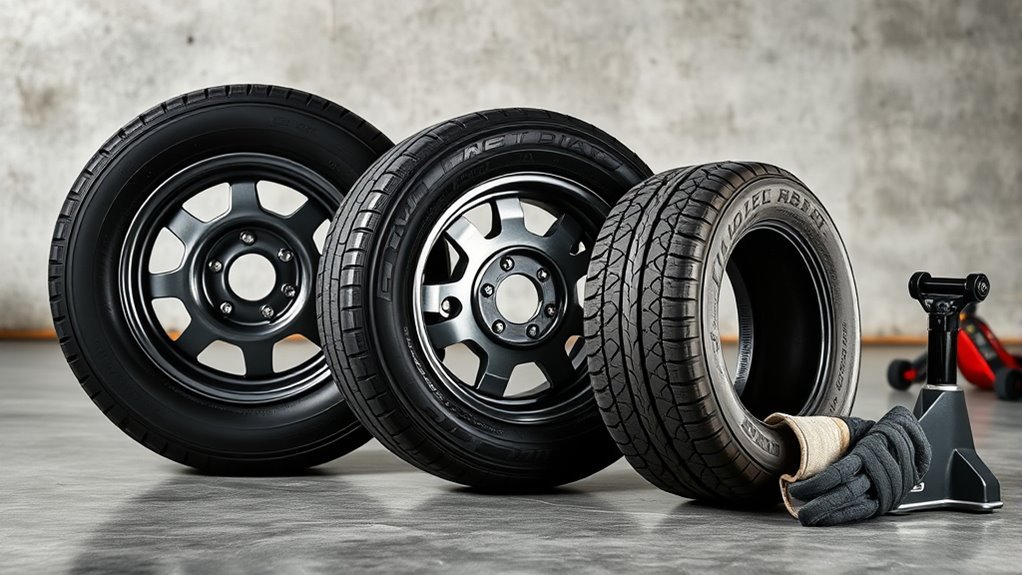
You should pick a spare based on vehicle load, fitment, and intended use. A full‑size spare matches your tire’s diameter, load rating and handling, so you can drive normal distances and speeds. A compact “donut” saves space and weight but limits you to about 50 mph and 50–60 miles. Folding spares are lightweight short‑term solutions with lower traction. Check bolt pattern, diameter and load rating before fitting, and follow maintenance and speed limits to stay safe — more specifics follow.
Which Spare Tire Should I Pick? Quick Answer
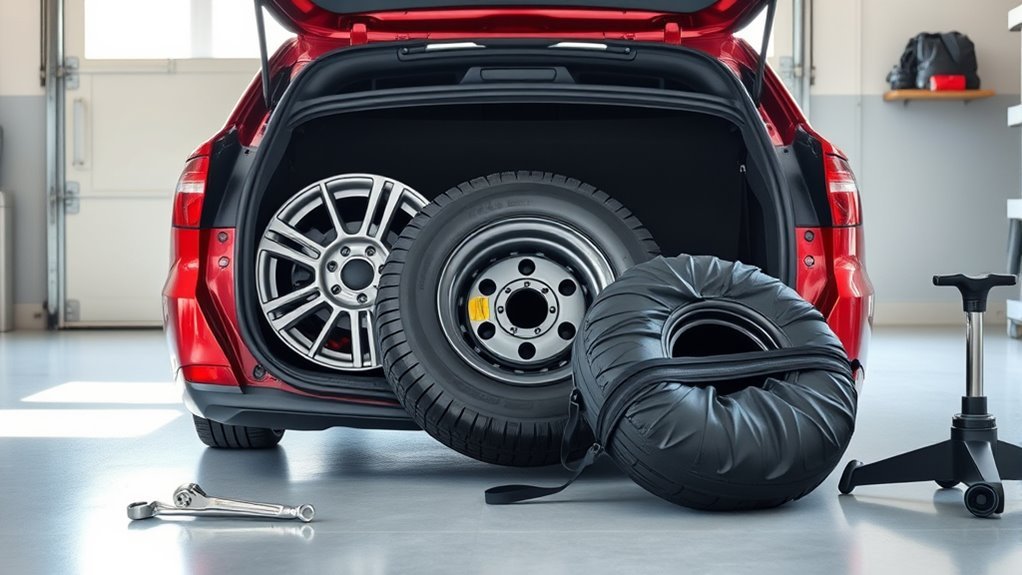
Which spare should you pick depends on how you drive and how much space you have. You’ll choose based on spare tire compatibility with your vehicle and your driving habits. If you travel frequently or need uninterrupted handling, opt for a spare that matches your regular tires to maintain stability and control until you replace the damaged unit. If you prioritize cargo freedom and minimal weight, a compact donut or folding spare saves trunk space and reduces mass, but it limits speed and range and’s for temporary use only. Check manufacturer specs to confirm bolt pattern, load rating, and diameter before buying; incompatibility creates a safety hazard and potential mechanical damage. Balance your need for autonomy against constraints: storage, cost, and frequency of long trips. Make a deliberate choice that preserves your mobility and independence without compromising mechanical fit or operational limits.
Full‑Size Spare Tire: What It Is and When to Use It
If you need an immediate, full-performance replacement, a full‑size spare matches your vehicle’s regular tires in diameter, load rating, and tread, so you can drive at normal speeds and for extended distances without compromising handling or stability. You get predictable dynamics and the reassurance of Full size benefits when you must keep moving—no speed caps, no temporary-use warnings. For liberation-minded drivers who refuse delays, a full-size spare supports sustained travel and immediate rotation to preserve tire life.
- Identical performance: maintains handling, traction, and load capacity.
- Longevity: can be rotated with other tires to balance wear.
- Suitability for larger vehicles: meets higher load and durability demands.
- Space and weight trade-off: occupies cargo room but enhances Emergency preparedness.
Choose a full-size spare if you travel frequently, haul loads, or may be far from service. It’s a deliberate, technical choice: more space used for uncompromised mobility and reliable contingency planning.
Donut Spare Tire: What It Can (and Can’t) Do
A donut spare is a compact, lightweight temporary tire that you’re limited to using at about 50 mph and for roughly 50–60 miles. You’ll need to confirm fitment and proper installation torque on your vehicle before driving, since mismatches or improper mounting affect handling. Keep it stored correctly and check pressure and rubber condition regularly, because degradation or low pressure makes it unsafe even if unused.
Limited Speed And Distance
Because donut spares are built for temporary use, they’re limited to about 50 mph and roughly 50–60 miles of driving to prevent overheating, tread wear, and structural failure. You’ll treat them as temporary solutions and follow tire recommendations to reach a service center safely. Their reduced size and weight aid storage and emergency handling but impose strict operational limits.
- Use donuts only to reach a repair shop; don’t depend on them for extended travel.
- Maintain recommended speed; higher speeds raise centrifugal forces and heat.
- Limit distance; prolonged use degrades tread, structure, and handling.
- Replace promptly to restore vehicle stability and fuel efficiency.
You’ll prioritize liberation: get back on full-size tires quickly to regain performance and independence.
Installation And Fitment
1 step you’ll take when fitting a donut spare is to confirm wheel compatibility and lug pattern before lifting the vehicle, since the smaller, lighter spare must seat correctly to avoid stress concentrations and handling issues. You’ll follow basic installation tips: use jack and lug wrench as usual, torque lug nuts to spec, and lower the vehicle slowly. Watch for fitment issues—mismatched offset or stud pattern will induce vibration or failure. Remember speed/distance limits; don’t rely on the donut long-term.
| Component | Consideration |
|---|---|
| Wheel hub | Match hub diameter |
| Lug pattern | Confirm bolt circle |
| Tire size | Verify outer diameter |
| Load rating | Respect vehicle limits |
These steps free you from guesswork while keeping control and safety paramount.
Storage And Maintenance
Keep your donut spare ready by storing it properly, checking it regularly, and understanding its limits. You’ll rely on a donut only as a temporary fix: limit use to ~50–60 miles and under 50 mph. Its reduced size aids compact storage solutions but degrades handling and traction if overused. Apply maintenance tips: monitor pressure, inspect for cracking, and replace aged rubber. Don’t tow or go off-road with it.
- Store the donut in a dry, cool compartment, secured against movement.
- Check air pressure monthly and before long trips; follow manufacturer PSI.
- Inspect tread, sidewall, and valve for damage or dry rot.
- Replace any donut older than manufacturer-recommended service life or showing visible decay.
Folding/Space‑Saving Spares: Who Benefits
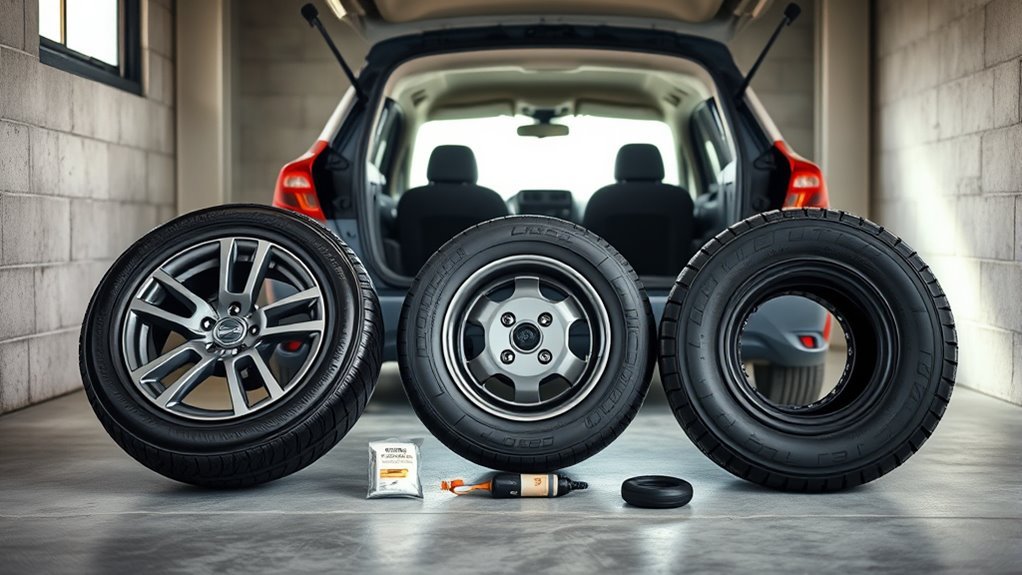
If you need to save trunk space without adding much weight, folding or space‑saving spares give you a compact, lightweight temporary solution designed for short-term use. You get clear space saving benefits and compact storage without sacrificing emergency mobility. They’re engineered with smaller diameter and width to fit tight cavities, reducing mass and freeing cargo for liberated travel.
| Benefit | Typical Vehicle | Limitations |
|---|---|---|
| Weight reduction | Sedans, hatchbacks | Lower traction |
| Space efficiency | Compact trunks | Short-term use only |
| Ease of install | DIY-friendly | Speed restricted (~50 mph) |
| Cost | Lower than full-size | Not for extended driving |
| Emergency readiness | Modern vehicles | Replace promptly |
You should use these spares for temporary, controlled runs to reach repair services. They’re ideal if you prioritize cargo freedom and minimal vehicle weight, but you must replace them with a full-sized tire as soon as feasible to restore normal performance and safety.
Will This Spare Fit? Size, Fitment, and Bolt Patterns
How will you know whether a spare will fit your vehicle? You check exact dimensions and mounting specs. Tire compatibility hinges on matching wheel diameter, width, and the vehicle’s bolt pattern. Mismatches can prevent mounting or create hazardous handling.
- Verify wheel diameter and width against the vehicle plate or manual.
- Confirm the spare’s bolt pattern matches lug count and pitch precisely.
- Distinguish full‑size spares (match regular tires) from donuts (smaller, temporary).
- Consult a tire specialist or manual for fitment tolerances and mounting guidance.
You’ll prefer a spare that preserves vehicle geometry and braking balance; full‑size spares do that, donuts do not. Bolt pattern compatibility is non‑negotiable—even slight deviations stop safe installation. Use specifications, not guesswork, to assert control over your mobility. When in doubt, get expert confirmation so your spare empowers you rather than limits you.
Performance: Speed, Distance, Handling, and Fuel Impact
When you compare spare types, check posted speed limits and recommended range: full‑size spares allow normal speeds and distances, while donut spares are rated to about 50 mph and roughly 50–60 miles. Expect degraded traction and altered handling if you run a donut beyond its intended use, increasing risk during abrupt maneuvers. Also note fuel effects: full‑size spares maintain baseline efficiency, whereas prolonged use of a donut can reduce gas mileage.
Speed And Limits
Because spare designs differ, you should treat full-size and donut spares differently for speed, distance, handling, and fuel impact. Full-size spares maintain normal tire performance and let you drive at standard speeds and distances without special limits; they integrate with vehicle dynamics. Donut spares impose strict speed limitations (max 50 mph) and short-range use (50–60 miles) to prevent failure and traction loss.
- Full-size: no speed restrictions, normal tire performance, standard range.
- Donut: max 50 mph, 50–60 mile safe limit, reduced traction.
- Risk: high-speed use on donuts raises tire failure probability.
- Efficiency: prolonged donut use can worsen fuel economy due to smaller diameter and altered rolling resistance.
Respect limits to retain control and preserve freedom to move safely.
Handling And Fuel
Although both spare types get you moving, they affect handling and fuel differently: a full-size spare matches your vehicle’s original tire geometry and mass, preserving steering response, stability, and rolling resistance, while a donut—lighter and smaller—limits speed to about 50 mph and range to 50–60 miles, can reduce traction and cornering grip, and may alter fuel consumption depending on vehicle size and drivetrain. You’ll prefer a full-size spare when you want uncompromised handling and predictable fuel use; it maintains tire pressure dynamics and tread depth consistency so steering feel and traction remain constant. A donut trades mass for portability: on small cars it can slightly improve fuel economy, but prolonged use degrades grip, increases wear on drivetrain components, and risks unstable handling.
Safety: Best Practices for Driving on Each Spare Type
If you fit a donut spare, keep speeds below 50 mph and limit travel to about 50–60 miles; full‑size spares, by contrast, let you drive at normal speeds and for longer distances until you replace the damaged tire. For tire safety and spare usage, treat the spare as a temporary mission-critical component: donuts conserve space but reduce grip and stability, full‑size spares restore normal dynamics.
- Use lower speeds and avoid hard braking or rapid lane changes with a donut to maintain control.
- Prefer full‑size spares for extended travel or high-speed routes; they preserve handling and vehicle balance.
- Verify inflation and visual integrity before fitting any spare; a correctly pressurized spare supports predictable behavior.
- Inspect mounting torque after initial miles and monitor steering feel; abnormal vibration signals immediate service.
You’ll want decisive, liberated action: replace temporary spares promptly, choose full‑size units when freedom of movement matters, and always prioritize predictable handling over convenience.
Maintenance and Storage: Pressure, Age, and Inspection Tips
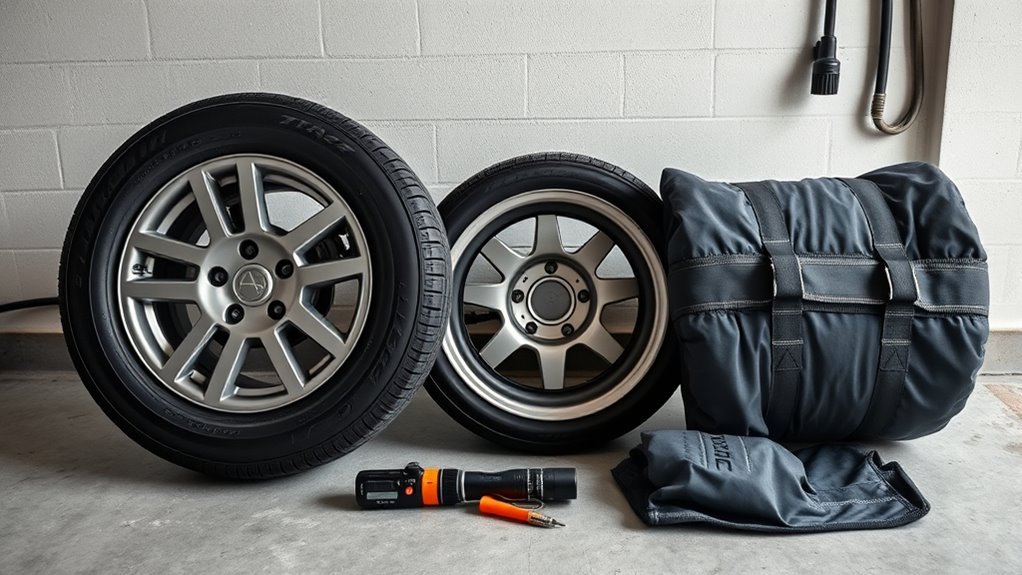
One routine check you should never skip is verifying spare-tire condition and pressure before it’s needed. You’ll monitor tire pressure regularly—donut spares commonly require ~60 psi; full-size spares follow vehicle specs. Inspect at least annually for cracks, dry rot, punctures, and visible damage that reduces reliability. Check the manufacturing date; replace spares older than 6–10 years. If you have a full-size spare, rotate it with the road tires to equalize wear and guarantee readiness.
Maintain proper storage conditions: cool, dry, out of direct sunlight, and away from ozone sources. Avoid stacking heavy objects on stored tires.
| Item | Action | Frequency |
|---|---|---|
| Pressure | Inflate to spec (donut ≈60 psi) | Monthly |
| Visual inspection | Look for cracks, damage | Annually |
| Age check | Verify manufacture date; replace if >6–10 yrs | At least yearly |
These measures give you freedom from roadside uncertainty while preserving safety and performance.
How to Decide: Match Spare Tire Type to Your Vehicle and Trips
Now that you’ve covered upkeep and storage, pick a spare that matches your vehicle and typical trips. You’ll balance spare tire compatibility and driving environment considerations to choose efficiently. Check vehicle specs first: hub size, bolt pattern, and load rating determine compatibility; donuts often won’t fit larger wheels. Match spare to vehicle mass—heavy SUVs need full-size spares for stability and handling; compact cars work with donuts for stowage and lightness.
- If you drive long distances or through remote areas, choose a full-size spare for sustained use and safety.
- For urban, infrequent travel, a donut spare saves space and weight but limits speed and distance.
- For mixed use, consider a folding spare as a compromise—verify load rating and installation practicality.
- Always confirm spare tire compatibility with manufacturer specs and factor driving environment considerations into your decision.
Decide deliberately: prioritize safety, practicality, and freedom to travel without constraint.
Frequently Asked Questions
Is a Donut Spare Better Than a Full-Size Spare?
No — you’ll favor a full-size spare for safety; donut advantages include compactness and cost, but full size disadvantages are outweighed by stability and unlimited use, so don’t rely on a donut for long trips.
What Are the Two Types of Spare Tires?
About 60% of drivers keep a temporary tire; you’re dealing with full-size spares and compact temporary tires (donuts). You’ll prioritize spare tire maintenance, inspect pressure, and swap per fitment to retain mobility and independence.
What Happens if You Go Over 50 Mph on a Donut Tire?
You risk tire failure, blowouts and loss of control if you drive over 50 mph on a donut tire. Respect speed limitations; the safety concerns include reduced stability, uneven wear, and urgent need to reach a tire shop.
Conclusion
Choose the spare that matches your vehicle, driving needs, and tolerance for compromises. Full‑size spares give normal performance for long hauls; donuts save space but limit speed and range; folding spares balance packaging with moderate use. Check diameter, bolt pattern, pressure, and age before relying on any spare. Drive conservatively on reduced‑capacity tires, replace or repair promptly, and keep tools and instructions handy—you’ll avoid nearly catastrophic delays and unsafe situations.
Related Articles

10 Tires That Will Transform Your 2017 Toyota RAV4
You rely on your RAV4 for commuting, errands, and weekend adventures, so the right tires change more than grip — they improve safety, fuel…
Read More
10 Tires That Will Transform Your 2016 Toyota RAV4
You rely on your RAV4 for daily driving, trips and errands, so the right tires make a dramatic difference in safety, comfort and fuel…
Read More
10 Tires to Boost Your 2015 Toyota RAV4’s Performance This Year
You rely on your 2015 Toyota RAV4 for daily driving, road trips and unpredictable weather, so the tires you choose will change how it…
Read More