
Hyundai Sonata Tire Treadwear Rating Explained (UTQG Guide)
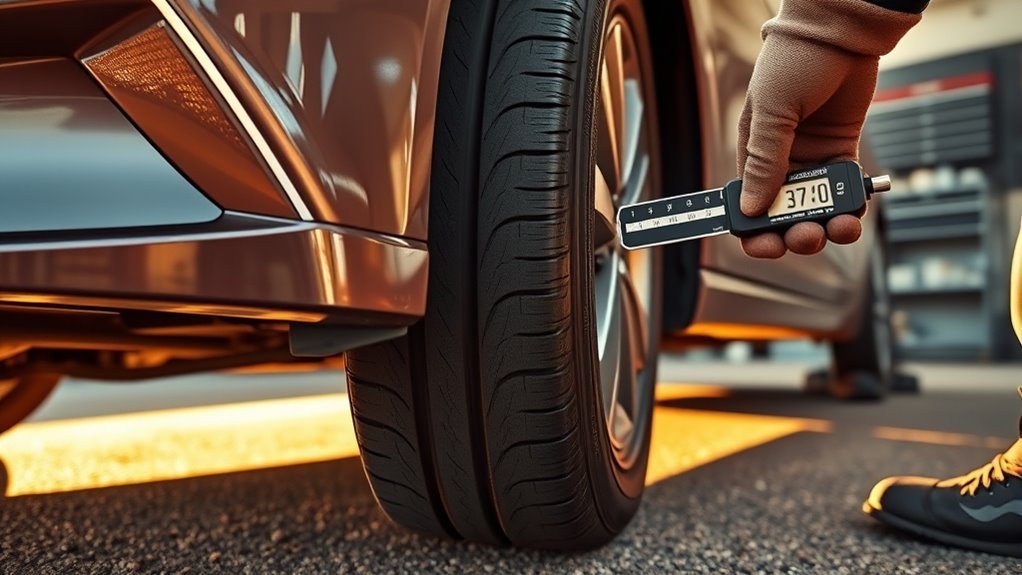
You’ll typically see Sonata tires rated about 400–600 on the UTQG treadwear scale, with 500 common for all‑season models and sub‑400 for performance variants prioritizing grip. Find the UTQG on the sidewall near size/load markings; winter or temporary spares may lack it. The treadwear number is a relative wear index (100 = control); multiply by 100 for rough mileage estimates. Check traction and temperature grades too, and continue for practical selection and maintenance tips.
Quick Answer: Typical Sonata Tire Treadwear Ratings
Most Hyundai Sonata tires carry UTQG treadwear ratings between 400 and 600, which you can expect to translate roughly to 40,000–70,000 miles of service with proper maintenance. You’ll typically see many Sonata tires graded at 500, meaning they wear about five times slower than the UTQG control at 100. Real-world lifespan depends on your driving habits, road conditions, and adherence to tire maintenance tips: maintain correct pressure, rotate at recommended intervals, align when necessary, and inspect for uneven wear. If you drive a performance Sonata, expect ratings below 400; those compounds trade longevity for grip. You should check the sidewall UTQG stamp for specific figures on your fitted tires rather than assume model averages. Also factor seasonal tire considerations — summer and winter compounds alter expected wear and effective service life. Use this data to choose tires aligned with your goals for range, safety, and the freedom to drive without compromise.
Where to Find the Sonata Tire UTQG Code
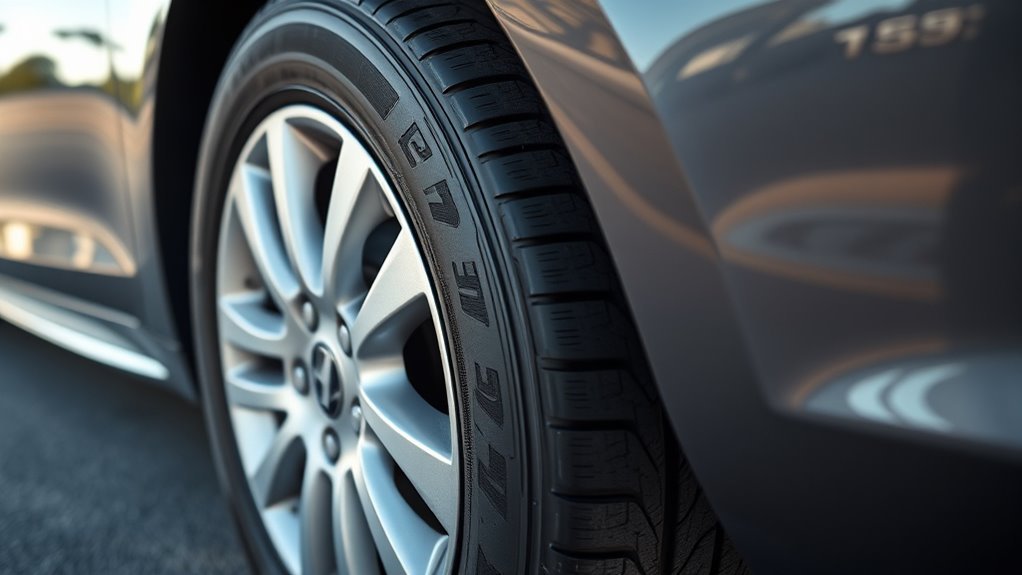
Check the tire sidewall near the size and load information to locate the UTQG code, which lists treadwear, traction, and temperature grades. Note that some tires on the Sonata—such as winter-specific tires and temporary spares—may be exempt and lack UTQG markings. Verify the presence or absence of the code on each tire before comparing ratings.
Sidewall Location
Look at the tire sidewall near the rim’s edge and you’ll find the UTQG code stamped into the rubber; this trio of numbers and letters indicates treadwear, traction, and temperature ratings that help you assess performance and durability. You’ll also see sidewall markings showing tire dimensions and load indicators; these locate the UTQG visually so you can compare tires quickly. Manufacturers must include UTQG on applicable passenger tires, so inspect tires over 12 inches in diameter. Checking these markings frees you from guesswork and lets you choose replacements that align with your standards for longevity and grip.
| Location | What to look for |
|---|---|
| Near rim | UTQG code |
| Sidewall text | tire dimensions |
| Raised letters | traction/temp |
| Numeric trio | treadwear rating |
Exempt Tire Types
While the Sonata’s UTQG code is usually stamped on the tire sidewall, several tire categories won’t display it: deep‑treaded light truck tires, winter/snow tires, temporary spare tires, and any tire under 12 inches in diameter are exempt from UTQG requirements. You should know these rating exemptions so you don’t assume absence equals noncompliance. For those tire types, look to manufacturer specifications, DOT codes, and technical sheets to assess durability, traction, and temperature performance. When replacing or upgrading tires, verify the intended application and confirm which metrics are available; some performance data will be presented differently for exempt tire types. This lets you make liberated, technically informed choices for your Sonata’s safety and long‑term value.
Reading the Treadwear Number: What Those Digits Mean
Although the three-digit treadwear number stamped on your Hyundai Sonata tire may look simple, it quantifies expected wear relative to a control tire rated 100—so a 300-rated tire is engineered to last about three times longer under standardized test conditions. You’ll use that value for straight treadwear comparison between models and brands; higher numbers imply greater tire longevity under the controlled protocol. Manufacturers derive the number through standardized abrasion tests; the NHTSA verifies compliance to guarantee the metric’s reliability as a relative indicator.
Remember that the rating isn’t an absolute mileage promise. Your driving style, road surfaces, alignment, and maintenance materially alter real-world wear rates. You should treat the treadwear number as a planning tool: combine it with warranty terms and your expected usage pattern to choose tires that align with your desire for freedom from frequent replacements. Read the digits, compare objectively, and select the tire that matches your operational priorities.
Converting Treadwear to Expected Miles for Sonata Drivers
Now that you know how to read a Sonata tire’s treadwear number, convert that figure into an expected mileage range to set realistic replacement and maintenance plans. Use the UTQG ratio: a treadwear value of 100 is the baseline. Multiply the Sonata tire’s rating by 100 miles (approximate industry convention) to generate mileage expectations. For example, ratings of 400–600 imply roughly 40,000–60,000 miles; many manufacturers and tests extend the upper bound to near 70,000 miles under ideal conditions. A 500 rating signals about 50,000–60,000 miles—commonly interpreted as five times the control tire’s wear rate, yielding near 60,000 miles if you maintain pressure, rotate on schedule, and avoid aggressive driving. Remember factors such as road surface, climate, and driving style will alter treadwear longevity; treat the calculated range as a planning tool, not a guarantee. Combine these mileage expectations with other UTQG metrics when choosing tires for balanced performance and safety.
Typical OE and Replacement Treadwear Ranges for the Sonata
Because Hyundai equips the Sonata with touring-oriented tires, their OE UTQG treadwear ratings typically sit between 400 and 600, implying roughly 40,000–70,000 miles under normal driving and maintenance. You’ll find replacement options span about 300–700 UTQG: lower-rated compounds sacrifice treadwear for grip, while higher-rated compounds extend tire longevity for those with high driving frequency. Remember that UTQG is manufacturer-specific; a 500-rated tire from Brand A may not equal Brand B’s 500 in compound, construction, or real-world wear. To maximize freedom on the road, match treadwear expectations to your routine: choose >=500 for frequent commuters seeking longevity, or 300–450 if you prioritize handling and drive less often. Always balance UTQG with your habits, budget, and advertised performance metrics. Inspect real-world wear reviews and warranty mileage claims to translate ratings into predictable service life for your Sonata without compromising the liberating experience of confident driving.
Traction & Temperature Ratings Sonata Drivers Should Know
You should read traction grades (AA, A, B, C) as standardized measures of wet-stopping performance — most Sonata all-season tires are A-rated and offer reliable wet grip, while AA denotes superior wet traction for higher-performance needs. Temperature ratings (A, B, C) quantify a tire’s heat resistance at sustained speeds, with A-rated tires giving the best durability under thermal stress. Together these ratings let you match tire selection to your driving conditions and safety priorities.
Traction Grades Explained
Although often overlooked, traction grades tell you how well a tire will stop on wet pavement, with NHTSA-standardized tests assigning ratings from AA (superior) to C (marginal). You should prioritize wet pavement performance because tire safety importance directly affects braking distances and directional control. The UTQG traction mark gives you a reproducible metric to compare options for your Sonata; most all-season fits carry an A grade, balancing grip and longevity. If you drive in frequent rain or on slippery surfaces, select tires with the highest practical traction rating—AA when available—to maximize stopping power and confidence. Check traction ratings before purchase and during replacements so you retain empowered control, predictable handling, and measurable reductions in hydroplaning risk.
Temperature Ratings Meaning
Two key letters—A, B, or C—on your Sonata’s tire sidewall tell you how well the rubber resists heat buildup at sustained high speeds; A is best. You should read this temperature rating as a measure of heat dissipation capability: A-rated tires shed heat most effectively, reducing internal temperatures that degrade compounds and compromise tire integrity. Most all-season Sonata tires carry an A, reflecting their design for prolonged highway stress. Selecting tires with an appropriate temperature grade helps you prevent rapid wear, belt separation, or blowouts caused by overheating. Use the rating to match driving patterns—if you spend time at sustained high speeds, prioritize A-rated tires to preserve tire integrity, enhance safety, and extend service life without sacrificing control.
Real‑World Factors That Speed Up Treadwear on a Sonata
When you drive a Sonata hard, rapid acceleration and late braking shave tread quickly and create uneven wear patterns that shorten tire life; similarly, rough or unpaved roads, improper tire pressure, excess load or uneven weight distribution, and misaligned or worn suspension components all increase localized stress on the contact patch and accelerate degradation. You’ll see accelerated edge scalloping from repeated hard turns and cupping from suspension play. Incorrect tire pressure alters the contact patch: underinflation boosts flex heat and shoulder wear, overinflation concentrates load centerline wear. Overloading or shifting cargo shifts axle loads, increasing wear on overloaded corners. Misalignment introduces feathering and uneven lateral wear; worn shocks fail to control rebound, producing cupping. To reclaim control, prioritize tire maintenance and refine driving techniques: rotate tires at spec intervals, check pressure cold, inspect tread depth and suspension, and correct alignment promptly. These targeted actions reduce unpredictable wear, extend usable tread, and free you from premature replacements without sacrificing performance or safety.
Choosing the Right Treadwear Rating for Your Sonata (Warranty Tips)
After you’ve tightened maintenance habits and corrected alignment, pick a treadwear rating that matches your driving profile and warranty expectations. You should favor ratings of 400+ for daily commuting; they balance grip and longevity. If you drive extensively, choose 500-rated tires—these often project 60,000+ miles when you follow basic treadwear maintenance tips: maintain correct pressure, rotate on schedule, and monitor alignment and suspension wear. Prioritize all-season models with robust UTQG numbers for year-round traction without sacrificing mileage.
Review warranty considerations before purchase: manufacturer treadwear warranties quantify expected life under normal conditions and dictate pro-rata compensation if treadwear fails prematurely. Keep purchase records, service logs, and mileage to substantiate claims. Select tires whose stated treadwear and warranty align with your liberated goals—maximize distance, minimize intervention. That disciplined approach preserves performance, simplifies claims, and lets you drive free of preventable replacement cycles.
Frequently Asked Questions
What Is a Good UTQG Treadwear Number?
A good UTQG treadwear number is about 400–600; you’ll prefer 500+ for daily driving. Consider treadwear factors and tire maintenance, since driving habits, load, and care determine actual longevity and liberated mobility.
Is UTQG 600 AA Good?
Isn’t six times the control tire impressive? You’re getting excellent tire longevity and reliable tread performance: a 600 AA balances durable wear with superior wet grip, so you’ll enjoy safer, longer-lasting commuting without compromise.
Is UTQG the Same as Treadwear?
No — you’re right to distinguish them: treadwear definition refers to the numeric wear rating; UTQG significance encompasses treadwear, traction, and temperature. You’ll use both metrics to precisely assess tire longevity and performance.
How Many Miles Is 600 Treadwear Good For?
“Measure twice, cut once.” You can expect a 600 treadwear to deliver about 60,000–70,000 miles of tire lifespan, though tread patterns, driving habits, and maintenance will affect actual longevity, so stay proactive and free.
Conclusion
Think of your Sonata as a precision instrument and its tires as the strings: UTQG treadwear numbers are the tension you tune. Higher numbers feel like looser strings—longer life, gentler ride—while lower numbers tighten grip at the cost of mileage. Read the code on the sidewall, match expected miles to your driving score, and pick a treadwear that balances warranty, performance, and conditions so the instrument stays in peak pitch.

Related Articles
Hyundai Sonata Tire Revolutions per Mile by Size Compared
Discover how tire size affects revolutions per mile for Hyundai Sonata, influencing speed, handling, and fuel efficiency—find out which size is right for you.
Read More
Hyundai Sonata Overall Tire Diameter by Size: Full Chart
Hyundai Sonata overall tire diameter by size: discover exact measurements, common OEM examples, and fitment tips to ensure speedometer accuracy and proper clearance.
Read More
Hyundai Sonata Tire Aspect Ratio Explained: What the Number Means
Good to know: discover how the Sonata’s tire aspect ratio affects ride, handling, and speedometer accuracy — and why that number really matters.
Read More