
Hyundai Sonata Tire Speed Rating Explained: What the Letter Means
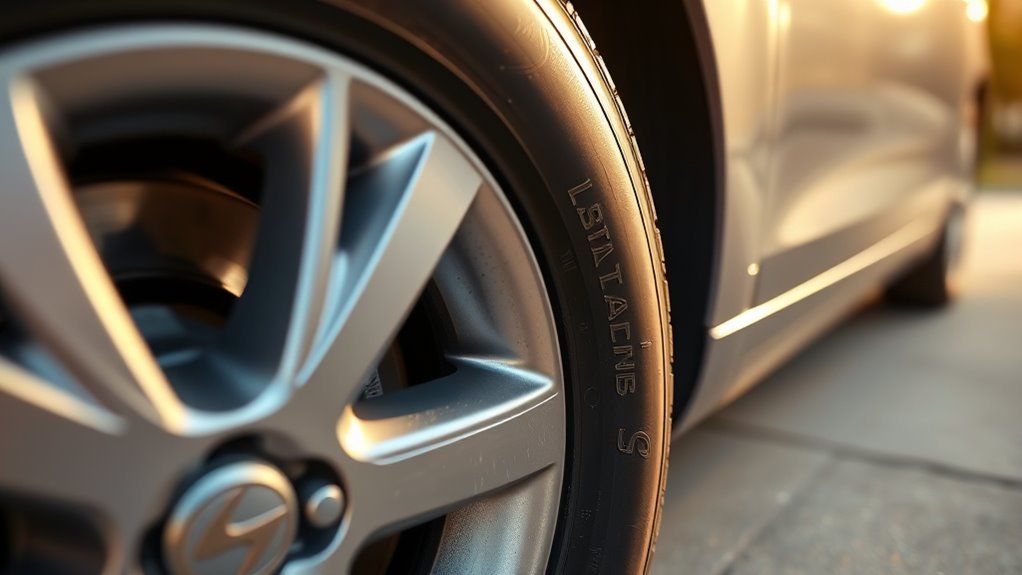
Your Sonata’s tire speed rating is the letter on the sidewall (e.g., 94H) that tells you the tire’s maximum sustained speed, heat tolerance and handling limits; you’ll usually see H (130 mph) on standard trims, T (118 mph) on comfort-focused setups and higher letters (V, W, Y or ZR) on sport variants. Always match or exceed the OEM rating and load index across an axle to keep predictable steering, braking and tire life—keep going for specifics on codes, mixing and replacement.
Speed Rating : What It Means for Your Hyundai Sonata
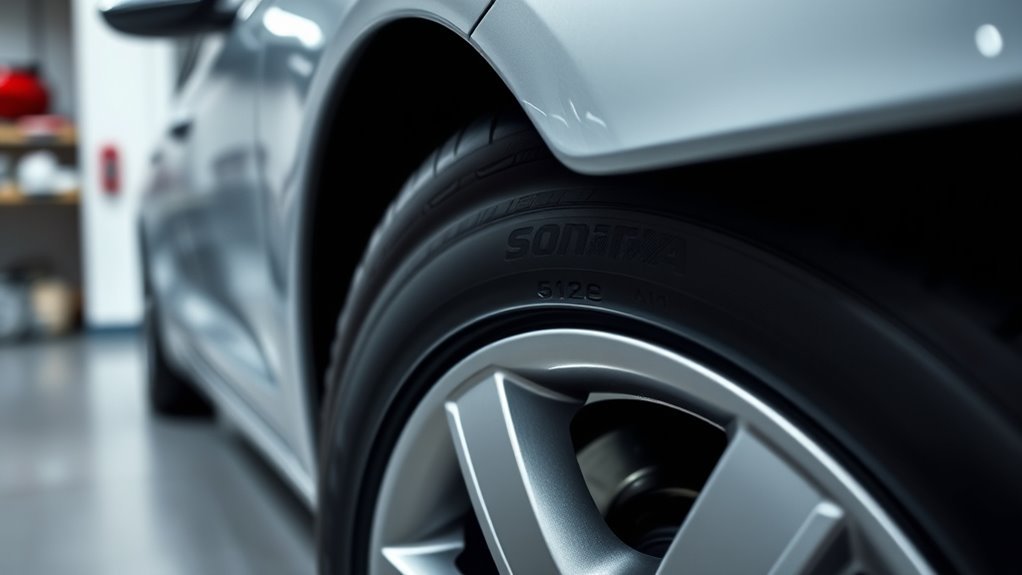
Think of the tire speed rating as a built‑in performance limit: it tells you the maximum sustained speed the tire can safely handle under specified conditions (for example, H = up to 130 mph, T = up to 118 mph). For your Hyundai Sonata, that letter quantifies heat tolerance and sustained cornering capability, so you can choose tires that match the vehicle’s design and your driving goals. You’ll see the rating on the sidewall code and should follow the owner’s manual recommendation to avoid degrading tire performance or increasing wear. From a practical standpoint, selecting a higher-rated tire improves resistance to overheating at highway speeds, but you shouldn’t exceed the vehicle’s handling design. Prioritize safety considerations: mismatched or lower-rated tires can reduce control, shorten service life, and create hazards. You’re entitled to drive confidently; use the speed rating as a precise specification that protects performance, preserves safety margins, and supports responsible vehicle liberation.
How to Find the Speed Rating on the Tire Sidewall
Reading the sidewall will quickly show the speed rating: locate the tire size code (for example, P215/55R17 94H) and note the final letter—here “H”—which denotes the tire’s maximum sustained speed capability. When you perform a tire inspection, scan the entire sidewall for the size sequence; the speed rating always follows the numeric load index and is the last character in that block. Use good light and clean the rubber if markings are obscured by dirt. If you find multiple tires with different letters, don’t assume interchangeability—mismatched ratings can undermine speed safety and vehicle stability. After noting the letter, cross-check with your owner’s manual or the driver-side door placard to confirm manufacturer recommendations. Keep a record of the ratings during seasonal checks or before long trips so you can assert control over your vehicle’s performance and make informed, liberated choices about replacements and upgrades.
Common OEM Speed Ratings for the Hyundai Sonata
Now that you know how to read the speed symbol on a tire sidewall, you’ll want to match that information to what Hyundai specifies for the Sonata. You’ll most commonly encounter H-rated tires on Sonatas; they’re engineered for up to 130 mph (210 km/h) and balance handling, longevity, and predictable tire wear. Family-oriented trims may come with T-rated tires, limited to 118 mph (190 km/h), prioritizing comfort and slower-wear compounds.
Performance-focused Sonata variants can be fitted with ZR-rated tires, capable of exceeding 149 mph (240 km/h), delivering sharper response and higher heat tolerance. OEM speed ratings are documented in your owner’s manual and stamped on the sidewall—always confirm both to verify compatibility with vehicle suspension, braking, and performance factors. Don’t substitute a lower-rated tire to save cost; doing so compromises safety margins, alters handling dynamics, and can accelerate uneven tire wear. Follow Hyundai’s specs to preserve freedom of safe, uncompromised driving.
What T, H, V, W, Y Mean (Mph / Km/H)

When you read a tire’s speed letter—T, H, V, W, or Y—it tells you the maximum safe speed rating and helps match tire performance to your Hyundai Sonata. Each letter corresponds to a specific top speed (T = 118 mph / 190 km/h; H = 130 mph / 210 km/h; V = 149 mph / 240 km/h; W = 168 mph / 270 km/h; Y = 186 mph / 300 km/h). Use these conversions to confirm tires meet or exceed your vehicle’s required rating for handling, heat tolerance, and safety.
Speed Letter Meanings
Although tire speed ratings use single letters, they convey precise maximum-speed limits you should respect; T, H, V, W and Y are shorthand for engineered thresholds that guide tire performance and speed safety. You’ll see T on family sedans and vans — rated to 118 mph (190 km/h) — offering durability and predictable handling. H covers most commuter sedans to 130 mph (210 km/h), balancing comfort and responsiveness. V steps into performance territory at 149 mph (240 km/h), tuned for quicker steering and heat management. W is aimed at sports cars with a 168 mph (270 km/h) capability, prioritizing lateral grip. Y denotes high-performance tires up to 186 mph (300 km/h), focused on maximum stability and controlled authority at extreme speeds.
Maximum Speed Conversions
Because tire speed ratings are standardized, you can directly translate the letter codes into exact top-speed limits: T = 118 mph (190 km/h); H = 130 mph (210 km/h); V = 149 mph (240 km/h); W = 168 mph (270 km/h); Y = over 186 mph (300 km/h). You’ll use these conversions to match tire performance to your driving needs and legal constraints. Select a rating that exceeds the vehicle’s maximum speed to preserve control and avoid overstressing the tire. For a Hyundai Sonata, T or H ratings typically cover maximum speed requirements while offering balanced tire performance and longevity. If you seek liberation through higher speeds, choose V/W/Y only when the vehicle and conditions truly justify that capability.
How Load Index and Speed Rating Work Together
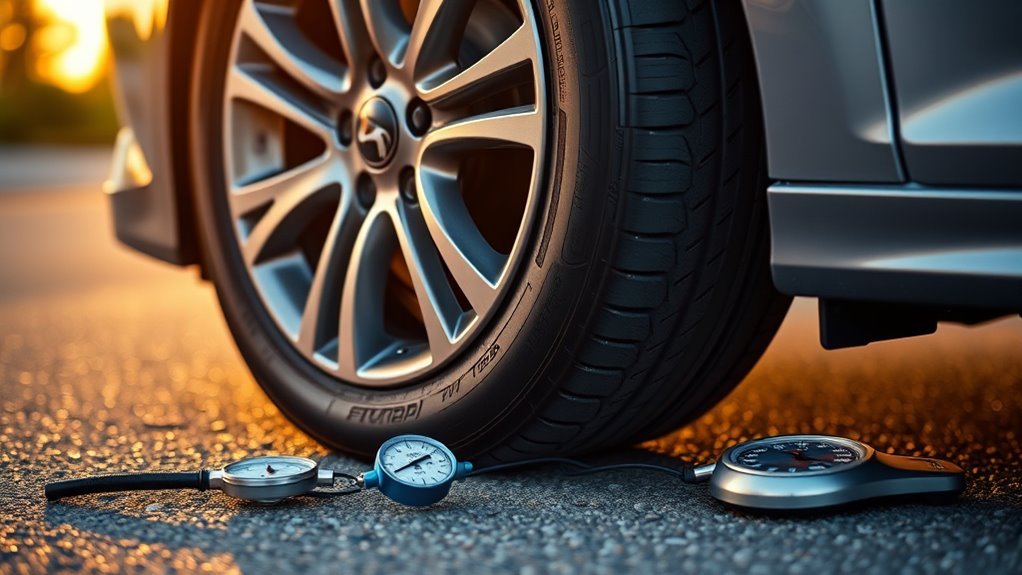
You should read the load index as the exact weight capacity per tire and use it with the speed rating to guarantee the tire can carry your Sonata’s axle loads at the intended operating speeds. Match the manufacturer’s recommended load index and speed letter so each tire supports the vehicle weight and the dynamic forces encountered at higher speeds. Incorrect pairing can reduce handling precision, increase heat buildup, and raise the risk of tire failure.
Load Index Basics
Think of the load index as the tire’s certified carrying capacity: it’s a numeric code stamped on the sidewall that tells you the maximum weight one tire can support (for example, a 94 load index equals 1,477 lb / 670 kg per tire). You’ll read that number next to the speed rating; together they define the tire’s operational envelope. Never substitute a lower load index—doing so reduces load capacity and undermines tire safety, especially under high-speed stress. Use the owner’s manual to identify required load and speed values, and verify sidewall markings before fitting replacements. Matching both parameters preserves handling, braking, and structural integrity. This disciplined approach gives you freedom to drive confidently without compromising performance or safety.
Matching Load And Speed
Having matched the load index to your Sonata’s weight requirements, you now also need to pair that capacity with an appropriate speed rating so both limits are respected simultaneously. You’ll guarantee load safety by choosing tires whose load index equals or exceeds the vehicle specification, and a speed rating that covers the maximum intended speed under that load. Tire compatibility means both values must work together—overrating one parameter doesn’t compensate for underrating the other. Visualize choices:
- A 94/H tire: supports 1,477 lbs at up to 130 mph — balanced for spirited freedom.
- A 94/V tire: same load, higher speed — greater speed margin, same load safety.
- An 88/H tire: insufficient load index despite speed rating — incompatible, restricts liberty.
Match both numbers for reliable, liberated driving.
Impact On Handling
When you pair a tire’s load index with an appropriate speed rating, its construction and thermal limits directly shape the Sonata’s steering response, cornering grip, and braking stability under real-world loads. You rely on the load index to confirm each tire can bear vehicle weight and cargo, and on the speed rating to guarantee sustained high-speed heat resistance—both are essential for predictable tire performance. Tires with higher load and speed capacities use stronger casings and compounds, yielding crisper steering input and improved handling stability during aggressive maneuvers. Mixing ratings forces the system to the weakest tire’s limits, degrading balance and safety. For liberated drivers, matching both specs precisely preserves the Sonata’s engineered dynamics and lets you exploit its capabilities with confidence.
Why You Should Match or Exceed the Original Rating
Because the tire speed rating defines the maximum sustained speed a tire can handle under load, you should match or exceed the original rating to preserve handling, steering response, and braking performance at higher speeds. You rely on the manufacturer’s rating to maintain tire longevity and the vehicle’s built-in safety features; downgrading reduces margin for heat buildup and accelerates wear, increasing blowout risk. Matching or exceeding keeps the chassis dynamics predictable and lets you drive confidently, not constrained by avoidable limitations.
Match or exceed your Sonata’s original tire speed rating to preserve handling, braking, longevity, and safety at higher speeds.
- Visualize firm steering on a highway lane change at speed—rated tires keep response crisp.
- Picture progressive braking from 70 mph—proper-rated tires maintain bite and stability.
- Imagine sustained high-speed cruising—adequate rating prevents overheating and premature wear.
Choose tires that meet or exceed the original speed rating so your Sonata retains designed performance, maximizes tire longevity, and preserves critical safety features while you pursue the freedom to drive without unnecessary compromise.
How Mixing Speed Ratings Affects Handling and Speed
If you mix tires with different speed ratings on your Sonata, the car’s safe operating envelope drops to that of the lowest-rated tire, so you must treat the vehicle as limited to that slower rating and expect altered handling. You’ll be constrained by that tire’s maximum speed and by its dynamic limits: lower-rated tires often offer reduced cornering grip, slower steering response, and longer braking distances compared with higher-rated counterparts. That undermines tire performance symmetry across axles and compromises handling stability during lane changes, emergency maneuvers, or sustained highway speeds. Practically, you should avoid driving at speeds near the higher-rated tire’s capability, because the mismatched tire will dictate overall safety margins. For liberation on the road, maintain uniform speed ratings so you retain predictable, balanced behavior and full control authority. Matching all four tires preserves consistent lateral force capability, braking performance, and the handling stability you need to exploit your Sonata’s performance confidently and safely.
Choosing Speed Ratings: Daily Driving vs. Sport Trims
When choosing between T/H-rated tires for daily driving and V/W options for sport trims, you should match the rating to your typical speeds and handling demands. Higher ratings improve high-speed stability and sidewall response but can slightly increase road noise and reduce ride compliance. Always fit a rating that meets or exceeds the vehicle’s performance capability to preserve safety and intended handling.
Daily Driving Tire Needs
Although you might not need high-speed capability for everyday commuting, choosing the right tire speed rating affects ride quality, handling, and safety; most Hyundai Sonata daily trims are fitted with H-rated tires (up to 130 mph) to balance comfort and longevity, while sport trims often use V-rated tires (up to 149 mph) to prioritize responsiveness and cornering. You’ll want tires that emphasize tire comfort and longevity factors: tread compound, construction, and targeted tread pattern. Match rating to real-world use and consult your manual for specifications. Choose H for civilized daily driving; select V only if you regularly exploit higher dynamic performance. Visualize how tires behave:
- Soft compound, cushioned ride, predictable grip.
- Stiffer sidewalls, sharper turn-in, firmer feedback.
- Worn tread, reduced braking, higher heat buildup.
Sport Trim Performance Tradeoffs
Having covered how everyday trims favor comfort and longevity, let’s look at what the Sport trim asks of its tires: higher speed ratings like V (up to 149 mph) or H (up to 130 mph) improve steering responsiveness, lateral grip, and stability under sustained higher-speed loads, but they also bring firmer sidewalls and a stiffer ride. You’ll gain sport trim advantages in cornering precision and high-speed control, useful if you push the car on twisty roads or highways. Those benefits are tire performance trade offs: reduced ride compliance, potentially faster wear, and harsher road feedback. Don’t mix ratings across positions—handling defaults to the lowest rating. Choose based on how often you need elevated dynamic capability versus daily comfort and longevity.
Matching Rating To Use
If you mostly use the Sonata for commuting and local driving, choose a T-rated tire for its balance of comfort, lower road noise, and adequate safety margins at typical speeds; reserve H-rated tires for Sport trims or drivers who regularly push higher-speed corners and need sharper lateral response. You should match rating to use by evaluating your driving conditions, expected speeds, and desired handling. Verify tire compatibility with wheel size and the owner’s manual before upgrading. Select H only if you routinely exploit higher-speed stability and cornering; otherwise T maximizes comfort and economy.
- Urban commute: T-rated, softer compound, quieter ride.
- Occasional spirited driving: consider H for improved lateral grip.
- Track or high-speed use: H required for rated safety.
Replacing Tires: Checklist, Shop Questions, and Paperwork
Before you buy new tires for your Sonata, verify the recommended speed rating, size, and load index in the owner’s manual and prepare a checklist that includes those specs plus preferred brands and any seasonal requirements. Use that checklist to document tire maintenance tips, warranty considerations, and desired service add-ons so you’ll stay organized during purchase and post-install care. At the shop, ask clearly about mileage guarantees, prorated terms, and conditions that void coverage; request written confirmation. Confirm installation scope: mounting, torque specs, wheel balancing, and alignment tolerances; get estimated labor time and QA steps. Provide paperwork: vehicle registration, previous tire receipts, and warranty cards to streamline claims. Verify that the shop records DOT numbers and stamps installation date on the invoice. After service, inspect the invoice for correct size, load index, and speed rating entries before you sign. Retain all documents digitally and physically to preserve options for exchange or warranty remedy.
When to Consult a Dealer or Tire Shop About Ratings
When you’re unsure whether the speed rating on your current tires matches the Sonata’s requirements, consult a dealer or qualified tire shop to prevent mismatches that can degrade handling or safety. You should get expert input when specifications are unclear, when sidewall markings are ambiguous, or when you’re changing tire size or type. Dealer recommendations align with factory limits; tire shops handle practical selection and precise tire installation.
- Visualize a technician comparing sidewall codes to the owner’s manual, confirming speed rating compatibility.
- Picture dealer recommendations that note vehicle model year specifics and approved rating ranges.
- Imagine a shop performing tire installation, balancing, and verifying matching ratings across axles.
If you catch discrepancies between existing tires and manufacturer specs, stop driving at high speeds and seek immediate assessment. Mixing different speed ratings requires professional evaluation because unequal ratings can alter handling dynamics and compromise the freedom you expect from safe, responsive driving.
Frequently Asked Questions
Is V or W a Higher Speed Rating?
W is higher than V. You’ll weigh V vs W for Tire performance: W handles greater top speeds and stresses. Speed rating importance matters when Choosing tires; choose per specs, avoid unnecessary upgrades that compromise safety and control.
Conclusion
You’ll spot the speed rating on the tire sidewall like a small code after the load index; imagine reading it as a top-speed handshake between tire and Sonata. Match the letter to the required performance — don’t mix lower-rated tires on alternating corners — and pair it correctly with the load index for safe handling. When in doubt, bring your VIN and current tire spec to a trusted shop or dealer; they’ll confirm the correct, roadworthy choice.

Related Articles
Hyundai Sonata Tire Revolutions per Mile by Size Compared
Discover how tire size affects revolutions per mile for Hyundai Sonata, influencing speed, handling, and fuel efficiency—find out which size is right for you.
Read More
Hyundai Sonata Overall Tire Diameter by Size: Full Chart
Hyundai Sonata overall tire diameter by size: discover exact measurements, common OEM examples, and fitment tips to ensure speedometer accuracy and proper clearance.
Read More
Hyundai Sonata Tire Aspect Ratio Explained: What the Number Means
Good to know: discover how the Sonata’s tire aspect ratio affects ride, handling, and speedometer accuracy — and why that number really matters.
Read More