
Hyundai Sonata Tire Load Index Explained: What It Means for You

You need to match your Sonata’s tire load index to the weight each tire must carry; it’s a numeric code (typically 91–95) that converts to pounds per tire (about 1,356–1,521 lbs). Read it after the size on the sidewall or on the driver’s doorjamb/manual, and don’t fit lower-rated tires without recalculating payload. Maintain proper PSI for rated capacity and pick tires with equal-or-higher load and speed ratings; more details follow below.
Quick Answer: What the Sonata Tire Load Index Means
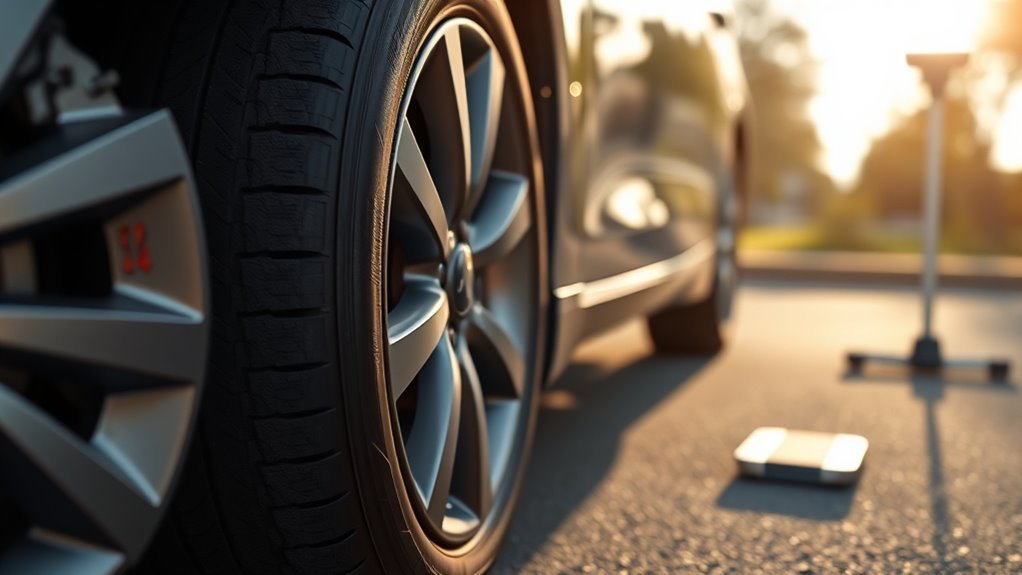
Think of the tire load index as the numeric cap on how much weight each Sonata tire can safely carry; it typically falls between 91 and 94 depending on model year and trim. You’ll use that value to match tires to the vehicle’s expected load: index 91 supports 1,356 pounds per tire, index 94 supports 1,477 pounds. That difference changes total vehicle load capacity and influences handling, braking, and tire longevity. You shouldn’t substitute a lower index without recalculating payload limits, and you’ll consult the sidewall and owner’s manual to confirm specs. Practically, apply tire maintenance tips such as regular pressure checks and load-aware packing to keep stresses within rated limits. The load index importance is straightforward: it’s a safety parameter that prevents overloading, reduces failure risk, and preserves performance. You’ll treat the index as mandatory equipment data, not optional guidance, to maintain control and freedom of movement on the road.
Reading the Tire Service Code (Example: 225/45R17 94V)
Now that you know why the load index matters, you’ll also need to read the full tire service code to confirm tire fitment and performance. Take 225/45R17 94V as an example: the first number, 225, is tire width in millimeters—one key dimension within overall tire dimensions. The second number, 45, is the aspect ratio: the sidewall height equals 45% of the 225 mm width, which affects ride comfort and handling. The letter R denotes radial construction, the standard design that yields predictable behavior and efficiency. The final group, 94V, splits into load index and speed rating: 94 corresponds to a maximum load of 1,477 pounds per tire; V specifies a maximum safe speed of 149 mph under appropriate load and conditions. You should verify that these specifications match your Sonata’s recommended tire dimensions and operational needs before mounting replacements to preserve safety, performance, and your freedom to drive confidently.
Where to Find Your Sonata’s Load Index: Doorjamb, Manual, Tire Sidewall
Although it’s often easiest to check the driver’s side doorjamb, you can also verify your Sonata’s load index in the owner’s manual or directly on the tire sidewall; each source lists the required two- or three-digit load index that corresponds to the maximum weight a single tire can support at its recommended pressure. You’ll want this number for safe, liberated mobility and practical tire maintenance tips.
- Driver’s side doorjamb: the placard states tire size, pressure, and load index—your primary quick reference.
- Owner’s manual: offers thorough specs and context on load index importance and replacement guidance.
- Tire sidewall: read the two- or three-digit load index stamped after the size (e.g., 94 = 1,477 lbs at max pressure).
- Replacement checks: verify new tires meet or exceed the specified load index to preserve handling and safety.
Use these sources together when evaluating tire condition, planning maintenance, or choosing replacements to maintain autonomy and vehicle integrity.
Common Hyundai Sonata Load Index Values and What They Support
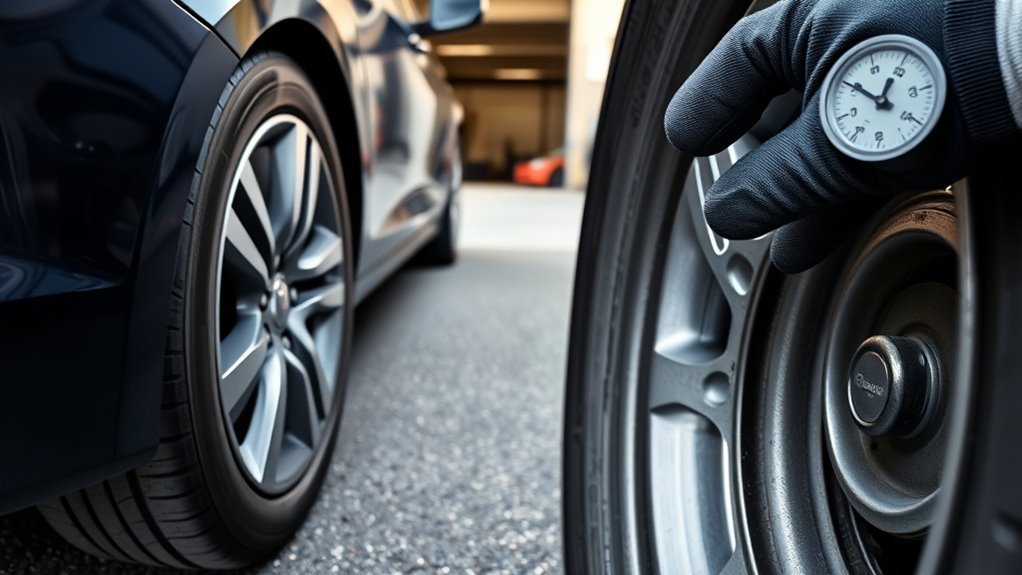
When you check your Sonata’s tire specs, you’ll commonly find load index ratings between 91 and 95, which directly indicate how much weight each tire can support at its maximum inflation. You should recognize load index importance: 91 equals about 1,356 pounds per tire, 92 about 1,389 pounds, and 95 about 1,521 pounds. Those figures matter for tire performance under load and for maintaining control and heat management.
You’ll want to match or exceed the original equipment (OE) load index when replacing tires to preserve handling, braking, and durability. Choosing a lower index risks overloading a tire, increasing failure likelihood and compromising safety. Selecting an equal or higher index gives you margin and supports liberated driving choices—carrying gear, passengers, or towing within manufacturer limits—without degrading tire performance. Check tire placards and replace with appropriate ratings to keep your Sonata safe and responsive.
From One Tire to Four: Calculating Total Vehicle Load Capacity
After checking individual tire load indexes, you’ll need to convert that single-tire capacity into the vehicle’s total supported load. You’ll multiply one tire’s rated pounds by four to get total capacity (e.g., load index 91 = 1,356 lb × 4 = 5,424 lb). Then compare that number to the vehicle’s curb weight plus payload to guarantee a safe margin and liberation from overburden.
- Verify the tire’s load index on the sidewall and convert to pounds using a load chart.
- Multiply the per-tire capacity by four to determine maximum axle-agnostic total load.
- Confirm proper weight distribution across axles; uneven loading reduces usable total capacity and degrades tire performance.
- Inflate tires to the specified maximum pressure and cross-check owner’s manual or door placard for OEM recommended total load to avoid overload and potential failure.
Why You Should Match or Exceed the Sonata’s OEM Load Rating
Because the Sonata’s OEM load rating defines the maximum weight each tire can safely support when properly inflated, you should match or exceed that rating to preserve handling, braking, and structural integrity. You rely on the specified 91–94 load index because it guarantees each tire supports roughly 1,356–1,477 pounds; deviating downward compromises margin for dynamic loads, cornering, and emergency maneuvers. Matching or exceeding the OEM rating maintains designed contact patch, predictable steering response, and consistent braking distances.
Choosing equal-or-higher load-index tires also protects tire durability and minimizes accelerated wear from chronic overload. Installing lower-rated tires raises the risk of tread separation, blowouts, and sudden failure—clear safety implications that undermine your freedom to travel confidently. Always verify the load index stamped on the sidewall; don’t assume visual size or load-carrying feel equates to rated capacity. When you prioritize the OEM load index or higher, you preserve vehicle dynamics and reduce avoidable risk.
When a Sonata Needs Higher Load‑Rated or E‑Range Tires (Towing, Heavy Cargo, Hybrid/EV Variants)
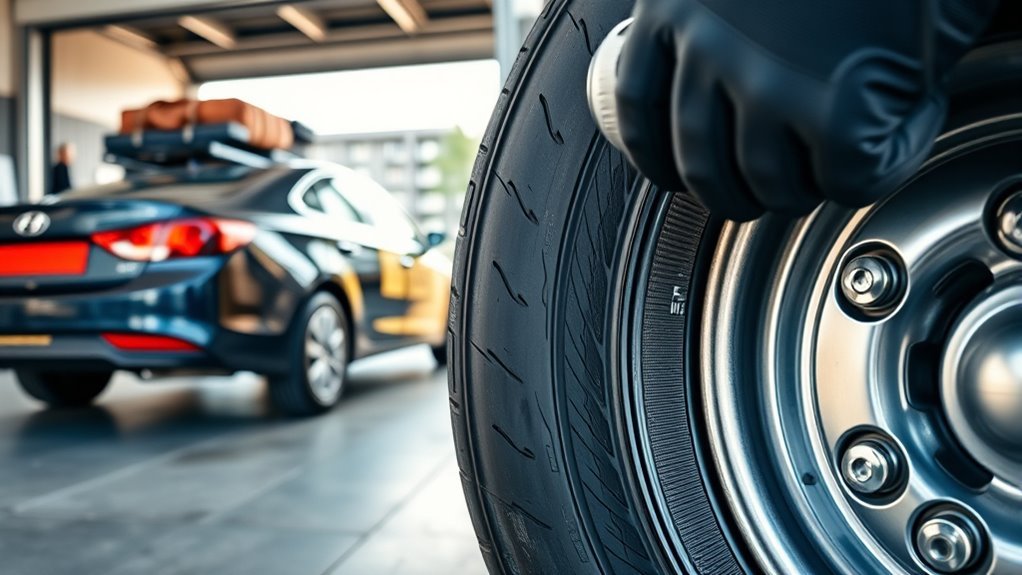
If you plan to tow or carry heavy payloads, match tire load capacity to the combined vehicle and cargo weight and consider moving to a higher load index (for example, 94+). Hybrid and EV Sonatas add significant battery mass, so you’ll need tires rated for the increased axle loads to prevent overheating or premature wear. Check the owner’s manual and a load index chart to determine when an upgrade to higher load‑rated or E‑range tires is required.
Towing And Payload Needs
When you plan to tow or regularly carry heavy loads in a Hyundai Sonata, choose tires with a load index that meets or exceeds the vehicle’s GVWR and original-equipment specifications to prevent overload and maintain handling. You’ll protect towing safety and payload stability by selecting tires rated for the actual combined weight you’ll carry or tow. Higher load-index or E-range tires reduce overheating, lower blowout risk, and preserve steering response under load.
- Verify GVWR and tongue weight; match tire load index accordingly.
- Prefer load indices above OEM when towing frequently to increase safety margin.
- Use E-range or reinforced tires for sustained heavy loads and improved heat dispersal.
- Inspect pressure and wear more often when hauling to maintain predictable handling.
Hybrid/EV Battery Weight
Although hybrid and plug‑in Sonata models retain the same footprint as their gas counterparts, their battery packs add hundreds of pounds that change axle loads and raise per‑tire demand, so you should consider higher load‑rated or E‑range tires to maintain margin against overheating, tread fatigue, and blowout under heavy use. You’ll assess battery weight impact by reviewing the vehicle’s curb and GVWR, then comparing per‑axle load distribution with tire load indexes. E‑range tires rated 3,000–3,500 lb per tire provide buffer for heavy battery systems and occasional towing or cargo. Match or exceed the required load index to preserve handling and braking under dynamic loads. Consult specifications and select tires that address static battery mass and shifting load distribution during acceleration, cornering, and braking.
When To Upgrade Tires
The added mass of hybrid and plug‑in battery packs raises per‑axle loads, so you should reassess tire load requirements whenever your Sonata regularly handles towing, heavy cargo, or has a battery‑heavy variant. Upgrade when duty exceeds stock ratings to preserve safety, handling, and liberation from preventable failure. Follow tire maintenance tips and respect load index importance.
- Match tire load index to Gross Vehicle Weight Rating (GVWR) before towing or heavy hauling to avoid overloading.
- Choose E‑range tires (3,000–3,500 lbs per tire) for sustained heavy loads or frequent towing to sustain stability and performance.
- For hybrid/EV variants, err on the side of higher load ratings due to battery mass and altered axles.
- Check load index regularly and consult a tire professional if usage changes.
Tire Pressure Rules Tied to the Sonata Load Index
If you keep your Sonata’s tires inflated to the manufacturer’s recommended 32–35 PSI, each tire can deliver its rated load index capacity (typically 91–95, or about 1,356–1,521 lb per tire) without excessive flexing or heat buildup. You should treat tire pressure maintenance as a safety and performance discipline: check pressures monthly and before long trips, use a calibrated gauge, and adjust cold pressures to the owner’s manual values. The load index importance is direct—underinflation reduces the effective load capacity, raises sidewall flex, and accelerates heat generation that can cause structural failure under heavy load. Overinflation, meanwhile, concentrates load on the tread center and degrades grip and wear patterns. Never exceed the combined rated load of all four tires; distributing cargo and passengers reduces strain on individual tires. Consult the owner’s manual for specific ratings and pressure tables, and correct pressures restore the tire’s designed load-bearing behavior so you can drive free and confidently.
Choosing Replacement Tires: Load Index, Speed Rating, and Load Range Checklist
When you pick replacement tires for your Sonata, match or exceed the original equipment load index, speed rating, and load range to preserve safety and handling. You’ll prioritize tire performance factors and the load index importance to retain structural capacity and predictable behavior. Consult the owner’s manual or doorjamb placard for OE specs, then select tires that meet or surpass those numbers.
- Verify load index: confirm the numeric rating on the sidewall equals or exceeds OE to support per-tire weight loads.
- Confirm speed rating: choose a rating that meets or exceeds manufacturer recommendation for intended driving speeds.
- Check load range: select the letter indicating ply/pressure capability appropriate for expected loads and inflation needs.
- Cross-check compatibility: guarantee dimension, construction, and ratings align with suspension and handling goals.
You’ll maintain safety, handling, and freedom to drive confidently by following this precise, technical checklist.
Quick Pre‑Install Checklist for Buying or Fitting Sonata Tires
After confirming load index, speed rating, and load range, move on to a pre‑install checklist that verifies the tires will perform under real‑world loads and pressures. First, consult the owner manual or doorjamb placard to note the recommended load index — load index importance can’t be overstated. Cross‑check the new tire’s load index against OE specs; choose equal or higher values to preserve safety margins when you carry cargo or passengers.
Use a tire load index chart to translate index numbers into per‑tire weight capacity and confirm four tires combined exceed vehicle gross weight. Inspect the tire sidewall for maximum air pressure and set inflation to that rating when needed; proper inflation is crucial for achieving rated load capacity. Follow basic tire installation tips: verify bead condition, match tire sizes and construction, and torque lug nuts to spec. Final step: document tire codes and pressure, then perform a short post‑install road check to guarantee predictable handling and freedom from compromise.
Frequently Asked Questions
What Does Load Index on Tires Mean?
The load index tells you a tire’s maximum load capacity, ensuring tire safety by rating how much weight each tire can carry at proper inflation; you’ll pick equal or higher indices to protect performance and personal freedom.
Is a Higher Load Index Always Better?
No — you shouldn’t assume higher’s always better. You’ll gain load capacity but may harm tire performance and handling; safety considerations demand matching manufacturer recommendations so you retain intended ride comfort, control, and avoid premature wear.
Conclusion
Knowing your Sonata’s tire load index keeps you safe and legal—so don’t skip it when replacing tires. You might think any same‑size tire will do, but mismatched load ratings reduce capacity and can overheat under stress. Check the doorjamb, owner’s manual, or tire sidewall, match or exceed the original load index (and consider E‑range for towing or hybrids), and follow recommended pressures. That quick verification prevents premature wear, handling issues, and potential failures.

Related Articles
Hyundai Sonata Tire Revolutions per Mile by Size Compared
Discover how tire size affects revolutions per mile for Hyundai Sonata, influencing speed, handling, and fuel efficiency—find out which size is right for you.
Read More
Hyundai Sonata Overall Tire Diameter by Size: Full Chart
Hyundai Sonata overall tire diameter by size: discover exact measurements, common OEM examples, and fitment tips to ensure speedometer accuracy and proper clearance.
Read More
Hyundai Sonata Tire Aspect Ratio Explained: What the Number Means
Good to know: discover how the Sonata’s tire aspect ratio affects ride, handling, and speedometer accuracy — and why that number really matters.
Read More