
How to Read Hyundai Sonata Tire Sidewall Numbers Step-by-Step

You’ll find the tire code—like P215/60R16—on the sidewall or the driver’s door placard; clean the rubber to see it clearly. Read left to right: P = passenger, 215 = tread width in mm, 60 = aspect ratio, R = radial, 16 = wheel diameter in inches. Check load index and speed rating to match Sonata specs, inspect the DOT four-digit week/year code for age, and note UTQG and special markings. Continue and you’ll get step-by-step decoding and maintenance tips.
Quick Decode for Sonata Tire Sidewall Numbers: P215/60R16
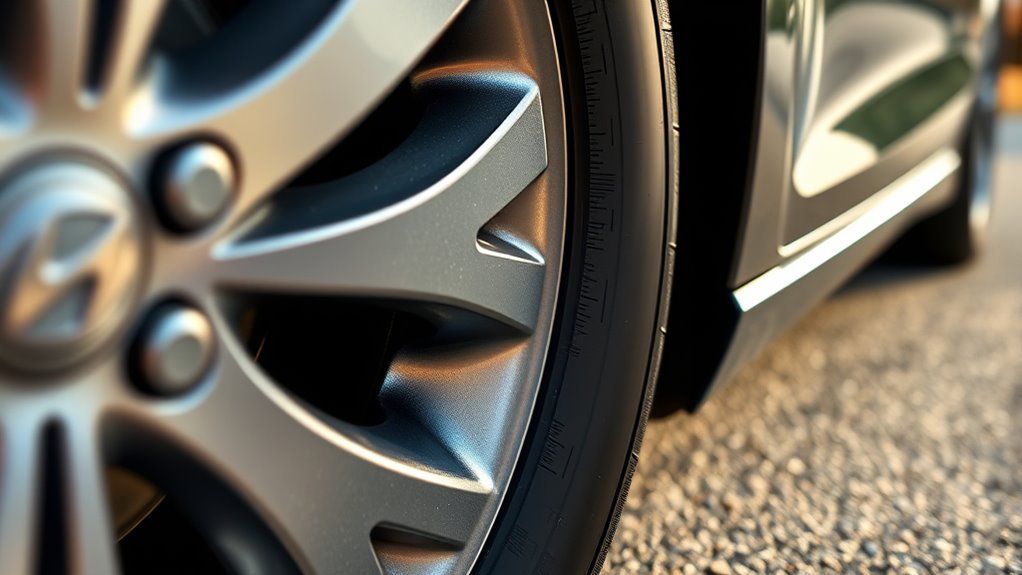
Start by reading P215/60R16 left to right: the “P” tells you this tire’s for passenger cars (like a Hyundai Sonata), “215” is the tread width in millimeters, “60” is the aspect ratio (sidewall height is 60% of 215 mm), “R” means radial construction, and “16” is the wheel diameter in inches. You’ll use that code to match replacement tires precisely, ensuring handling and fitment align with the Sonata’s design. A 215 mm width balances grip and fuel efficiency; the 60% aspect ratio preserves ride comfort while supporting predictable cornering. Radial construction gives you longevity and consistent performance under load. Selecting the correct 16-inch wheel diameter prevents fitment issues and maintains accurate speedometer readings. For effective tire maintenance, inspect tread depth, wear patterns, and pressures regularly, and swap tires with seasonal changes to retain traction and safety. Read the code, act on measurements, and you’ll keep mobility reliable and free — a practical step toward automotive autonomy.
Where to Find the Tire Code on Your Hyundai Sonata
Now that you can read a code like P215/60R16, locate that same code on your Sonata to verify fitment. Check the tire sidewall first: the full alphanumeric code is stamped into the rubber of each tire and shows size and type. Inspect all four tires; replacements or mismatched tires will reveal differences. Open the driver’s door and read the placard on the door jamb — it lists the manufacturer-recommended tire code and inflation pressures for front and rear. Consult the owner’s manual for the official explanation and diagram if you need confirmation. Record the exact code before ordering or rotating tires to support consistent tire maintenance and to preserve handling. Use this verification step as part of routine pre-trip checks and service appointments. These actions advance your control over vehicle upkeep and release dependence on assumptions — a practical move toward freedom and improved roadway safety. Follow these safety tips: verify codes, pressures, and replacement matches.
Decode Width, Aspect Ratio, and Construction (P215/60R16)
Take the code P215/60R16 and parse it left to right: 215 is the tire width in millimeters, 60 is the aspect ratio meaning the sidewall height is 60% of that width, R denotes radial construction, and 16 is the wheel diameter in inches, so a P215/60R16 tire fits a 16-inch rim and gives the handling and comfort characteristics specified. You’ll read 215 as the contact patch width; wider tires improve tire performance and deliver measurable traction benefits on acceleration and cornering, but cost rolling resistance and fuel economy. The 60 aspect ratio defines sidewall height, which you’ll use to balance ride comfort against steering precision: higher ratios yield more compliance, lower ratios sharpen response. R confirms radial construction, the industry standard that maximizes durability and consistent behavior under load. Together these figures tell you what the tire will do on the road and let you choose a size that aligns with your desire for control, comfort, and liberated driving confidence.
Wheel Diameter: Why It Must Match Your Rim
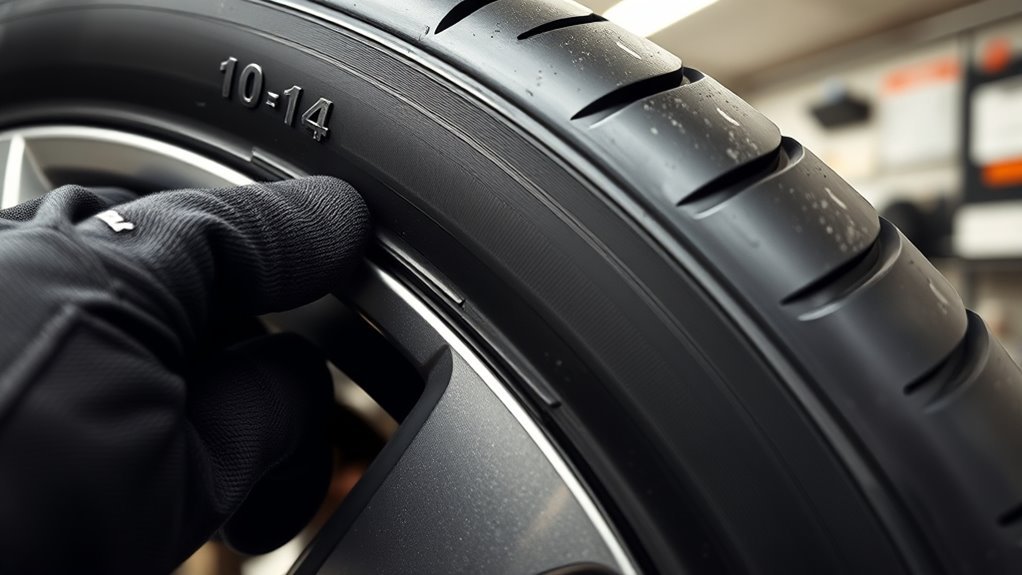
Having decoded width, aspect ratio, and construction, you next need to match the tire’s wheel diameter—the final number on the sidewall—to your rim: a P215/65R15, for example, fits only a 15-inch wheel. You must install tires whose diameter equals the manufacturer’s rim size to maintain rim compatibility and predictable dynamics. Fit a different diameter and you’ll introduce handling anomalies, abnormal tire wear, and possible safety failures.
Check your Hyundai Sonata’s specification plate or owner’s manual for approved wheel diameters, and confirm all four tires share the same diameter to preserve balanced handling and stability. Mismatched diameters also skew speedometer calibration, undermining performance feedback. While selecting tires, maintain correct tire pressure per the placard; proper inflation complements correct diameter for traction and longevity. Fitment is an intentional act of liberation: you control safety and performance by enforcing exact rim compatibility. If in doubt, consult a qualified technician before mounting to avoid compromises that limit your vehicle’s capability.
Match Load Index to Your Sonata’s Weight
Check the tire’s load index to verify each tire can support the weight specified for your Sonata. Compare that index to the vehicle rating found in your owner’s manual or on the driver’s door placard, and choose tires that meet or exceed that number. Don’t use tires with a lower load index, as they can fail and compromise safety.
Match Load Index
Load index numbers on your tire sidewall tell you how much weight each tire can carry, so you should match that number to your Sonata’s weight requirements as listed in the owner’s manual or door jamb sticker. Check the two- or three-digit load index value; for example, 95 equals 1,521 pounds per tire. Multiply a single-tire capacity by four to confirm total load capacity meets or exceeds your vehicle’s curb and maximum load. Prioritize tire compatibility with factory specifications when replacing tires — never install lower-rated tires. You’ll prevent tire failure and preserve handling. Understand the safety implications: inadequate load index risks blowouts, loss of control, and reduced durability. Choose tires that match or exceed recommended ratings.
Check Vehicle Rating
Start by confirming the exact load index your Sonata needs—found in the owner’s manual or the driver’s door jamb sticker—and compare that number to the load index stamped on any replacement tire. You’ll use vehicle load figures (including passengers and cargo) to verify that each tire’s load index matches or exceeds the required index—typically 91–99 for Sonatas, supporting 1,356–1,521 lbs per tire. Don’t fit tires with a lower index; that reduces tire safety and risks failure under strain. Regularly reassess when hauling heavy loads. If calculations or conditions aren’t clear, consult a professional technician to guarantee the selected tires meet your Sonata’s rating and liberate you from unnecessary risk.
Speed Ratings: Choose the Right Performance Level
When you pick replacement tires, match their speed rating letters—like S (112 mph), T (118 mph), H (130 mph), or V (149 mph)—to the specs in your owner’s manual or tire placard, because those letters denote the maximum safe sustained speed the tire can handle, not a recommended driving speed. You’ll choose a rating that preserves tire performance and safety features specified by the manufacturer. Higher ratings give better grip and stopping power for spirited driving or emergency maneuvers; lower ratings may reduce performance. Don’t downgrade without confirming compatibility.
| Rating | Max Speed |
|---|---|
| S | 112 mph |
| T | 118 mph |
| H | 130 mph |
| V | 149 mph |
Check the placard, then select tires that meet or exceed the original rating to maintain handling, braking, and legal conformity. You’ll keep control and protect your right to move freely.
Find and Decode the DOT Code to Determine Tire Age
Locate the DOT code stamped on the tire sidewall, usually starting with the letters “DOT.” Read the last four digits to get the week and year of manufacture (e.g., 3323 = week 33 of 2023). Compare that date to current guidelines: replace tires older than 10 years and inspect closely after six years for safety concerns.
Locate The DOT
Although the DOT code might look like a random string, it tells you where and when the tire was made; read the full code on the sidewall, then use the last four digits to decode the week and year of manufacture (for example, 3323 = 33rd week of 2023). Locate the DOT by inspecting both sidewalls; manufacturers sometimes stamp the full code on one side and a shorter version on the other. Clean grime to reveal letters and numbers. Note factory identifiers and plant codes that relate to tire manufacturing traceability and compliance with safety standards. Record the full DOT before decoding. If you’re buying used tires, confirm the DOT to avoid aged rubber. Use a flashlight and magnifier for worn or small stamps.
Read Week And Year
Now that you’ve found the DOT code, read the last four digits to determine the tire’s production week and year; for example, 3323 means the tire was made in the 33rd week of 2023. Locate those four digits on the sidewall, split into week (first two) and year (last two). Record the date and compare it to current year to assess age quickly. You should verify DOT dates when buying used tires to avoid hidden safety concerns. Track tire longevity from manufacture, not purchase date, and schedule inspections for tires older than six years. This straightforward decode lets you make empowered choices about replacement timing and reduces risk, supporting both safety and your freedom to control vehicle maintenance.
Interpret Age And Safety
Start by finding the DOT code on the sidewall and reading its last four digits to determine tire age—e.g., “3323” means week 33 of 2023—because age directly affects safety and serviceability. You’ll decode week and year, log that date, and compare it to current time. Tires over six years need professional safety inspections; plan replacement by ten years regardless of tread. Regular DOT checks let you monitor tire longevity and spot aging-related risks like cracking or stiffness that increase blowout potential. Inspect before long trips and during routine maintenance. Treat age as a limiting factor in your vehicle’s performance and freedom to move; proactive checks and timely replacement preserve safety and assert control over your mobility.
Decode UTQG and Special Markings (Run-Flat, M+S, XL)

When you inspect a tire’s sidewall, the UTQG ratings and special markings like M+S, Run-Flat, and XL give you compact, actionable information about treadwear, traction, temperature resistance, winter capability, puncture resilience, and load capacity so you can pick the right tire for your Hyundai Sonata and driving conditions. Read the UTQG triple: a numeric treadwear value (higher = longer wear expectation), a letter traction rating (AA, A, B, C) denoting wet stopping ability, and a temperature grade (A, B, C) for heat resistance. Use these tire performance metrics to compare models and prioritize safety or longevity. Spot M+S for basic mud-and-snow capability—helpful in light winter conditions but not a substitute for dedicated winter tires. Identify Run-Flat when you want to maintain mobility after a puncture; know its limited range and required wheel/TPMS compatibility. Note XL for extra load capacity when you carry heavier loads. Combine UTQG and markings to match tire choice with your driving needs and liberation-minded mobility goals.
Monthly Checks: Pressure, Rotation, Inspection, and When to Replace
Understanding UTQG scores and sidewall markings helps you pick the right tire, but maintaining that tire’s performance requires regular hands-on checks. Monthly tire maintenance keeps you independent on the road: check pressure with a gauge against the PSI on the door sticker, inspect sidewalls for cuts, cracks, or bulges, and measure tread depth with a gauge—replace tires below 2/32″.
Do these three steps each month:
- Measure and adjust tire pressure to spec; correct inflation improves handling, comfort, and fuel economy.
- Rotate tires every 5,000–7,500 miles to equalize wear; front tires usually wear faster.
- Perform visual inspections for damage and track tire age; have tires older than six years professionally evaluated and replace by ten years regardless of tread.
Follow these safety tips consistently. You’ll extend tire life, preserve traction, and protect yourself and others—practical liberation through disciplined tire care.
Frequently Asked Questions
How to Read Tire Sidewall Numbers?
You read tire sidewall numbers by decoding width, aspect ratio, construction, and rim diameter, then checking load index and speed rating; you’ll monitor tire pressure and tread wear regularly, so you stay liberated and drive safely.
What Does 215 Mean on a Tire?
215 means the tire width is 215 mm, a crucial spec you’ll use to match rims and performance ratings. You’ll select widths that free your driving, balancing grip, handling, speedometer accuracy, and safety.
Conclusion
You now know how to read every key tire marking on your Sonata — size, load, speed, age, and special codes — so you can pick the right replacement and keep things safe. Check pressure monthly, rotate and inspect regularly, and replace tires when tread or DOT age demands it. Don’t ignore mismatches: wrong diameter, load, or speed rating can ruin handling and safety faster than lightning. Stay proactive and follow the specs.

Related Articles
Hyundai Sonata Tire Revolutions per Mile by Size Compared
Discover how tire size affects revolutions per mile for Hyundai Sonata, influencing speed, handling, and fuel efficiency—find out which size is right for you.
Read More
Hyundai Sonata Overall Tire Diameter by Size: Full Chart
Hyundai Sonata overall tire diameter by size: discover exact measurements, common OEM examples, and fitment tips to ensure speedometer accuracy and proper clearance.
Read More
Hyundai Sonata Tire Aspect Ratio Explained: What the Number Means
Good to know: discover how the Sonata’s tire aspect ratio affects ride, handling, and speedometer accuracy — and why that number really matters.
Read More