
Airless Tire Technology Explained: How It Works & Limits
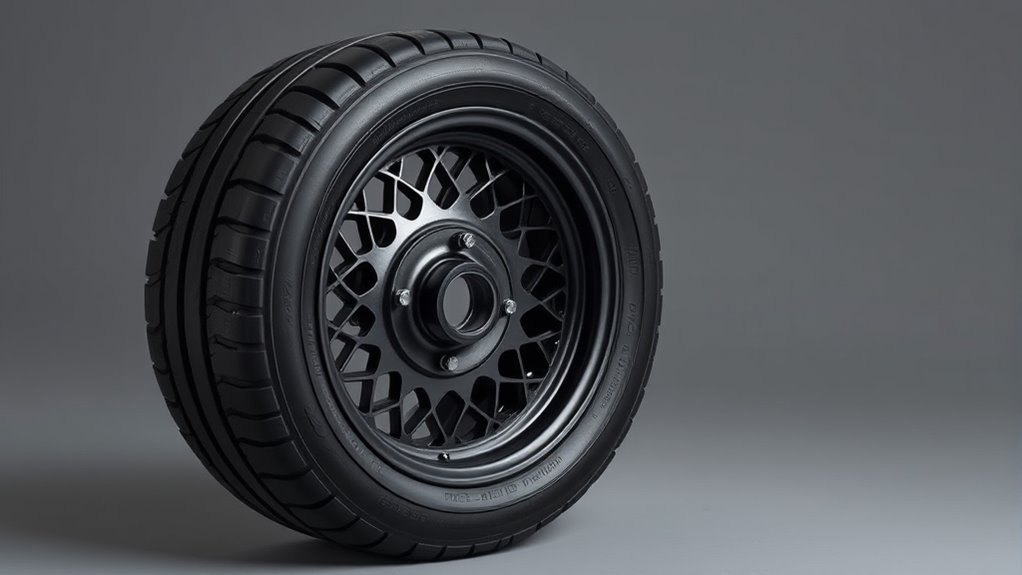
You get load support from engineered structures—spokes, honeycombs, solids or foams—instead of pressurized air, so the tire carries weight through tuned flex and high‑strength polymers. That gives puncture immunity and much longer life, but increases mass, rolling resistance, heat buildup and ride stiffness, which can harm range and comfort at speed. Airless designs suit low‑speed, high‑puncture or maintenance‑sensitive fleets; continue for specifics on types, tradeoffs and ROI.
How Airless Tires Work: Core Designs and Materials
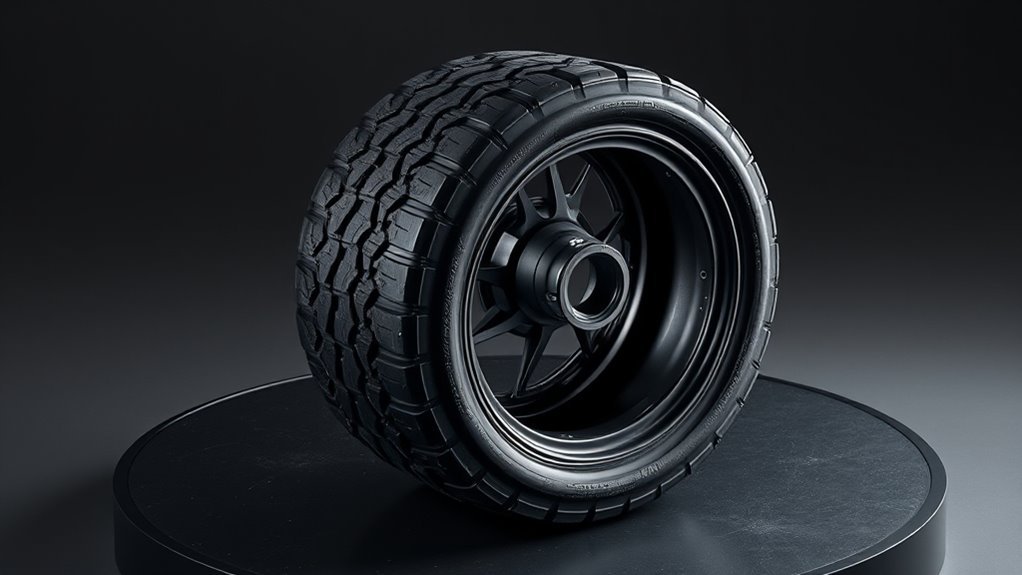
While they eliminate the need for air pressure, airless tires rely on engineered structural elements—rigid hubs, flexible polymer spokes or honeycomb cores, and a durable tread band—to bear loads and absorb impacts. You examine core designs that transfer vehicle weight through spokes whose spoke flexibility is tuned via polymer modulus and geometry, letting the structure deform predictably under load. Materials combine high-strength polymers, glass fiber–reinforced plastics, and specialized rubber compounds to resist cuts, temperature extremes, and abrasion. You expect impact resistance from controlled energy dissipation in the spokes and an outer tread formulated for rebound and wear life. Design choices target predictable stiffness, fatigue life, and serviceability: replaceable tread bands, modular hubs, and polymer chemistries that maintain properties from −40°F to 140°F. In practice, you balance mass, durability, and manufacturability to free yourself from flats while retaining ride quality and reliable performance across conditions.
Non‑Pneumatic Tire Types: Spokes, Honeycomb, Solid, Foam – How They Differ
You’ll find spoke-design tires give predictable deflection, integrated load support, and tunable comfort by varying spoke geometry and material stiffness. In contrast, honeycomb constructions distribute loads through cell networks for impact absorption, while solid units trade compliance for maximal puncture resistance and durability. Comparing their behavior under load and damage scenarios clarifies application trade-offs for construction, off-road, and recreational use.
Spoke Design Benefits
Spoke-design airless tires use an array of flexible polyurethane or composite spokes to support loads and absorb impacts without pressurized air, giving you even weight distribution, enhanced stability, and reduced puncture risk compared with conventional pneumatic tires. You’ll find spoke design concentrates load paths through engineered members, optimizing weight distribution and delivering predictable impact absorption that improves ride comfort on uneven terrain. The spoke geometry preserves structural integrity while allowing controlled deflection, so durability comparison favors spokes over traditional tires in harsh conditions. Maintenance benefits are tangible: no pressure checks, no puncture repairs, lower operational costs for fleets and liberated operators. You get a resilient, lower-maintenance rolling solution that prioritizes consistent performance and freedom from air-dependency.
Honeycomb And Solid Differences
Having examined how spoke designs concentrate load through engineered members, it’s helpful to compare two other common non‑pneumatic approaches: honeycomb and solid constructions. You’ll find honeycomb advantages in their interconnected cell geometry: they distribute weight, tune stiffness spatially, and absorb shocks across uneven terrain while keeping mass moderate. That design lets you trade local compliance for global support, freeing vehicle dynamics from constant pressure maintenance. By contrast, solid tires deliver maximum puncture resistance and longevity for heavy loads, but you must accept solid drawbacks: higher unsprung mass, limited vibration isolation, and harsher ride quality. Choose honeycomb when you want controlled compliance and mobility; choose solid when durability and zero flats outweigh comfort and dynamic efficiency.
Performance Trade‑Offs of Airless Tires: Durability, Rolling Resistance, Heat, Comfort
You’ll find that the superior durability of airless designs—often lasting up to three times longer than pneumatics—comes with added mass that affects unsprung weight and vehicle dynamics. That increased weight and the structural materials used also raise rolling resistance and concentrate heat, creating thermal management challenges during sustained operation. Expect a firmer, more vibration-prone ride that forces trade-offs between comfort and the gains in puncture resistance and service life.
Durability Versus Weight
Although airless tires deliver superior puncture resistance and service life, they trade that durability for increased mass and altered dynamic behavior. You must evaluate weight distribution and durability metrics together: airless units can last up to three times longer, cutting replacement cycles, but their higher mass shifts unsprung weight, raising inertia and reducing responsiveness. That extra mass concentrates loads on suspension components and braking systems, so you’ll recalibrate tuning and accept marginally slower transient response. Higher rolling resistance further penalizes efficiency, so your range or fuel economy will decline despite longevity gains. For liberation-focused operators, the choice is strategic: prioritize lifecycle resilience and lower maintenance cadence, or opt for lighter pneumatic systems to preserve agility and range.
Heat And Comfort
Weight and durability considerations naturally lead into thermal and ride-quality effects, since mass and structural stiffness directly influence heat generation and vibration transmission. You’ll notice airless tires often raise rolling resistance, causing greater internal hysteresis and heat buildup; without an air core, thermal management relies on material selection and geometry to disperse energy. Expect a firmer ride: the absence of pneumatic cushioning increases vibration impact transmitted to the chassis and operator, reducing comfort on irregular surfaces. Advanced elastomers and engineered spokes extend service life—sometimes up to three times longer—but can’t fully recreate pneumatic compliance. For liberation-minded users, the trade-off is clear: choose durability and puncture immunity at the cost of increased heat sensitivity and reduced passive isolation, unless active design mitigations are applied.
Which Vehicles and Jobs Benefit Most From Airless Tires?
When vehicles operate in environments where punctures and pressure loss are common, airless tires cut downtime and maintenance by eliminating flats and the need for inflation checks. You’ll find the highest operational gains in construction vehicles working amid sharp debris and uneven surfaces; airless designs sustain loads and resist cuts that would sideline pneumatic tires. Utility equipment and lawn care machines likewise gain predictable uptime because the tire structure tolerates repeated impacts without pressure management. Golf carts benefit through simplified service routines—no pressure checks, fewer replacements—freeing staff for higher-value tasks. Off road vehicles used in harsh conditions exploit airless reliability to maintain mobility where blowouts would be mission-critical failures. For bicycle sharing systems, airless tires minimize fleet maintenance and maximize availability, reducing logistics overhead and enabling broader access. In each application you trade some ride compliance for robustness, but you liberate operations from frequent tire servicing and puncture-related interruptions.
Costs, Maintenance, and Fleet ROI: Calculating Payback
Start by quantifying your total cost of ownership: airless tires typically cost 2–3× more up front, but they cut recurring expenses—pressure checks, puncture repairs, emergency downtime, and spare inventory—so you should model capital outlay against predictable annual savings in maintenance labor, parts, and vehicle availability. Run a cost analysis that projects multi-year cash flows: initial purchase, expected service-life extension, eliminated repair events, and reduced spare-tire stocking. Quantify maintenance savings per vehicle by tracking avoided labor hours, repair parts, and mean time to repair for puncture incidents. Include uptime value: assign revenue or productivity per hour of vehicle availability to convert downtime avoidance to dollars. Calculate simple payback and discounted cash flow to assess fleet-level ROI under conservative and optimistic scenarios. Use operator feedback and field data to validate assumptions. If your fleet prioritizes resilience and liberation from reactive maintenance, airless tires can deliver measurable returns, particularly in high-puncture or remote operations where downtime costs dominate.
Limits, Availability, and a Checklist: When to Adopt Airless Tires and When to Wait
Although airless tires promise puncture immunity and lower reactive maintenance, you should treat adoption as a targeted decision: assess user needs, operational profile, and market trends before switching. Current availability is limited—products serve construction, utility equipment, and niche fleets rather than mainstream passenger cars. Performance trade-offs matter: higher rolling resistance reduces range and fuel economy (critical for EVs), while lacking pneumatic damping increases ride stiffness and transmits vibration on uneven surfaces. Thermal management and limited high‑speed capability impose safety and durability constraints. Cost remains a barrier: manufacturing prices run three to five times conventional tires, affecting total cost of ownership and payback calculations. Checklist: 1) Match duty cycle to current airless applications (low speed, high puncture risk). 2) Quantify rolling‑resistance impact on energy use. 3) Inspect ride comfort thresholds for occupants. 4) Evaluate high‑speed and heat dissipation needs. 5) Monitor market trends for broader availability and cost declines before fleetwide or personal adoption.
Frequently Asked Questions
What Are the Downsides of Airless Tires?
You’ll face durability concerns and performance issues: higher rolling resistance reduces range, firmer ride transmits vibration, heat buildup risks structural failure, and steep manufacturing costs plus limited sizes restrict widespread, liberating mobility choices for users seeking freedom.
Why Haven’t Airless Tires Taken Off?
Costly craftsmanship, constrained choices — you haven’t adopted airless tires because market challenges and design complexity keep retail prices high, performance variable, heat and vibration issues unresolved, and availability limited despite your desire for liberation.
Conclusion
You’ll want to adopt airless tires when uptime is sacred and punctures are a disaster, but don’t expect magic: they trade plush ride and ultimate thermal tolerance for resilience and near-zero flat risk. For short-haul, industrial, municipal, and some off‑road fleets they’re transformative—like swapping temperamental soufflés for industrial cast‑iron skillets. Calculate total lifecycle costs, monitor rolling resistance and heat, and pilot before fleetwide rollout; otherwise, wait until materials and heat management catch up.
Related Articles
Latex vs TPU Tubes: Best Performance Guide
Uncover whether latex’s unbeatable rolling resistance or TPU’s lighter, tougher profile wins your rides — and what trade-offs you’ll actually feel in the saddle.
Read More
Wide vs Narrow Tires: Ultimate Grip vs MPG Guide
A concise guide comparing wide and narrow tires for grip, speed, and fuel efficiency—discover which suits your driving needs and why it matters.
Read More
Motorcycle Tire Pressure Chart: Recommended PSI by Type
Discover ideal PSI ranges for road, track, and wet motorcycle tires — practical tips and adjustments await to optimize grip and safety.
Read More