
Is Summit a Good Tire Brand? Budget Review & Ratings
Summit can be a good tire brand if you want a budget-friendly replacement tire for normal commuting, highway driving, and everyday errands. The key is matching the right Summit model to your vehicle, climate, and expectations. Summit is not a premium performance brand, but its current lineup gives price-focused drivers practical options for passenger cars, CUVs, SUVs, pickups, and light trucks.
Quick Answer
Yes, Summit tires are a solid budget choice for everyday driving, especially if you want decent wet-road grip, quiet comfort, and a lower purchase price. They are best for normal city and highway use, not for drivers who need premium handling, heavy off-road abuse, or severe-winter traction from a basic all-season tire.
Key Takeaways
- Summit is a value-focused tire brand, not a luxury or top-tier performance brand.
- Current Summit passenger and light-truck models commonly carry limited treadwear warranties around 50,000 to 60,000 miles, depending on the tire and size.
- The Summit Ultramax A/S 2.0 is the most practical everyday pick for many passenger cars, CUVs, and SUVs.
- The Trail Climber HT03 and AT02 are better fits for pickups, SUVs, and light-truck use.
- Choose by tire size, load index, speed rating, climate, and driving style—not by price alone.
Who Makes Summit Tires?
The safest current answer is this: Summit tires are sold under the Summit brand, and the current U.S. Summit passenger and light-truck warranty states that the only expressed warranty is made by Sailun Tire Americas. That does not always tell you the exact factory that made the tire in front of you, because tire production can vary by model, size, and DOT plant code.
If you are trying to confirm where a specific Summit tire was built, check the DOT Tire Identification Number on the sidewall and the warranty paperwork from the retailer. That is more reliable than assuming every Summit tire comes from one factory or one distributor.
Note: Tire brand ownership, distribution, and manufacturing are not always the same thing. For safety and warranty questions, use the DOT code, invoice, and current warranty document for the exact tire you buy.
[Products Worth Considering]

The 22800 wheel stud installer makes replacing wheel studs quick and secure, saving time and effort during tire service. It uses a ratchet or impact wrench to pull new studs firmly into place, helping when existing studs are too long. Compatible with most automotive wheels and light-duty truck wheel studs, it’s designed for easy, tool-assisted installation.

Protect tire valves from water, dust, and sand to help prevent leaks and support safe driving. These universal stem caps install quickly by hand and feature durable aluminum alloy construction with an inner sealing ring for better air retention. Compatible with cars, SUVs, trucks, motorcycles, and bicycles for everyday convenience.

Measure tyre tread depth precisely with a digital gauge that reads in both MM and inches, helping you monitor safe driving conditions. The large LCD screen is easy to operate, and the compact tool fits for cars, trucks, and motorcycles. It provides high accuracy with a 0-25.4mm range and includes a 1-year warranty for added peace of mind.
Are Summit Tires Good for Daily Driving?
For daily driving, Summit tires can be a good value. They are built for drivers who need a practical tire for commuting, school runs, local errands, and highway trips without paying premium-brand prices. On the current Summit Ultramax A/S 2.0, Summit highlights an all-season tread, four broad circumferential grooves, full-siped inner tread blocks, and a balanced variable pitch tread design to support wet traction, stability, and a quieter ride.
That makes Summit a reasonable choice if your priorities are:
- Lower upfront tire cost
- Comfortable everyday road manners
- Dry and wet traction for normal driving
- Common sizes for cars, CUVs, SUVs, and light trucks
- A limited treadwear warranty on many current models
Summit is not the best choice if you expect premium steering feel, track-style grip, maximum winter braking, or the longest possible tread life compared with top-tier brands. Think of Summit as a practical replacement tire, not a performance upgrade.
What Do Summit Tire Reviews Say?
Summit tire reviews are generally strongest on price, comfort, and acceptable all-season performance. The most common positive theme is value: drivers often look at Summit because they need dependable tires at a lower cost. The most common caution is consistency. Budget tires can perform well for the money, but they may not match the refinement, wet braking, treadwear consistency, or winter confidence of premium tires.
| Review Theme | What It Usually Means |
| Price | Summit is usually bought as a lower-cost alternative to premium brands. |
| Comfort | Many drivers want a smooth, quiet tire for commuting and highway use. |
| Wet and dry traction | Good enough for normal driving, but not a substitute for premium wet-braking test winners. |
| Tread life | Warranty coverage is useful, but real life depends on alignment, rotation, pressure, road surface, and driving habits. |
Warning: Do not judge a tire only by star ratings. Some Summit listings have small review samples, and reviews may refer to older versions rather than the current model you are buying.
What Makes the Summit Ultramax Line Different?
The Summit Ultramax line is aimed at everyday passenger-car, CUV, and SUV drivers. The current Ultramax A/S 2.0 is the main all-season touring-style option. It focuses on comfort, wet traction, straight-line stability, and everyday usability rather than aggressive performance.
Summit also offers the Ultramax UHP AS for drivers who want a more performance-oriented all-season tire, and the Ultramax 4S for drivers who want a tire marketed for broader seasonal use. The right one depends on your tire size and what your vehicle needs.
Which Summit Tires Offer the Best Value?
The best-value Summit tire depends on your vehicle. For many cars, CUVs, and small SUVs, the Ultramax A/S 2.0 is the most balanced pick because it targets comfort, wet traction, and normal year-round driving. For pickups and larger SUVs, the Trail Climber HT03 or Trail Climber AT02 may make more sense.
| Summit Model | Best For | Current Warranty Note | Main Caution |
| Ultramax A/S 2.0 | Everyday cars, CUVs, and SUVs | 60,000-mile limited treadwear warranty | Not for moderate or severe winter weather |
| Ultramax UHP AS | Drivers wanting a sportier all-season feel | 50,000-mile limited treadwear warranty | May cost more than the basic touring option |
| Trail Climber HT03 | Highway use on pickups, large SUVs, and 4x4s | 60,000 miles for P-metric sizes; 50,000 miles for LT sizes | Not an aggressive mud-terrain tire |
| Trail Climber AT02 | SUVs and trucks needing all-terrain traction | 50,000-mile limited treadwear warranty | More tread aggression can affect road feel and noise |
Are Summit Tires Good in Rain and Snow?
Summit’s all-season tires are built for dry roads, rain, and light winter conditions. The Ultramax A/S 2.0 uses wide circumferential grooves and siping to help move water away from the tread, which supports wet-road confidence during normal driving.
Snow is different. A regular all-season tire is not the same as a dedicated winter tire. If you drive in frequent snow, ice, mountain passes, or long freezing winters, look for a tire with the Three-Peak Mountain Snowflake symbol or use dedicated winter tires. Summit’s Trail Climber AT02 is marketed with 3PMS certification for trucks and SUVs, but the Ultramax A/S 2.0 is not listed as a severe-snow-rated tire.
Pro Tip: If winter traction matters, do not rely on the word “all-season” alone. Check for the Three-Peak Mountain Snowflake symbol and compare braking tests for your tire size.
[Products Worth Considering]

Slip the Powerbuilt tire step over your vehicle’s tire to reach roof racks, engine bays, truck boxes, and more without overreaching. Its adjustable, universal design fits tires with a cross tread width up to 13 inches, including car, truck, RV, and semi tires. The non-slip cheesegrater surface and anti-slip tape provide secure grip while the open design lets mud and debris pass through. Fold-flat storage with rubber bumpers helps keep your tire and the step protected between uses.
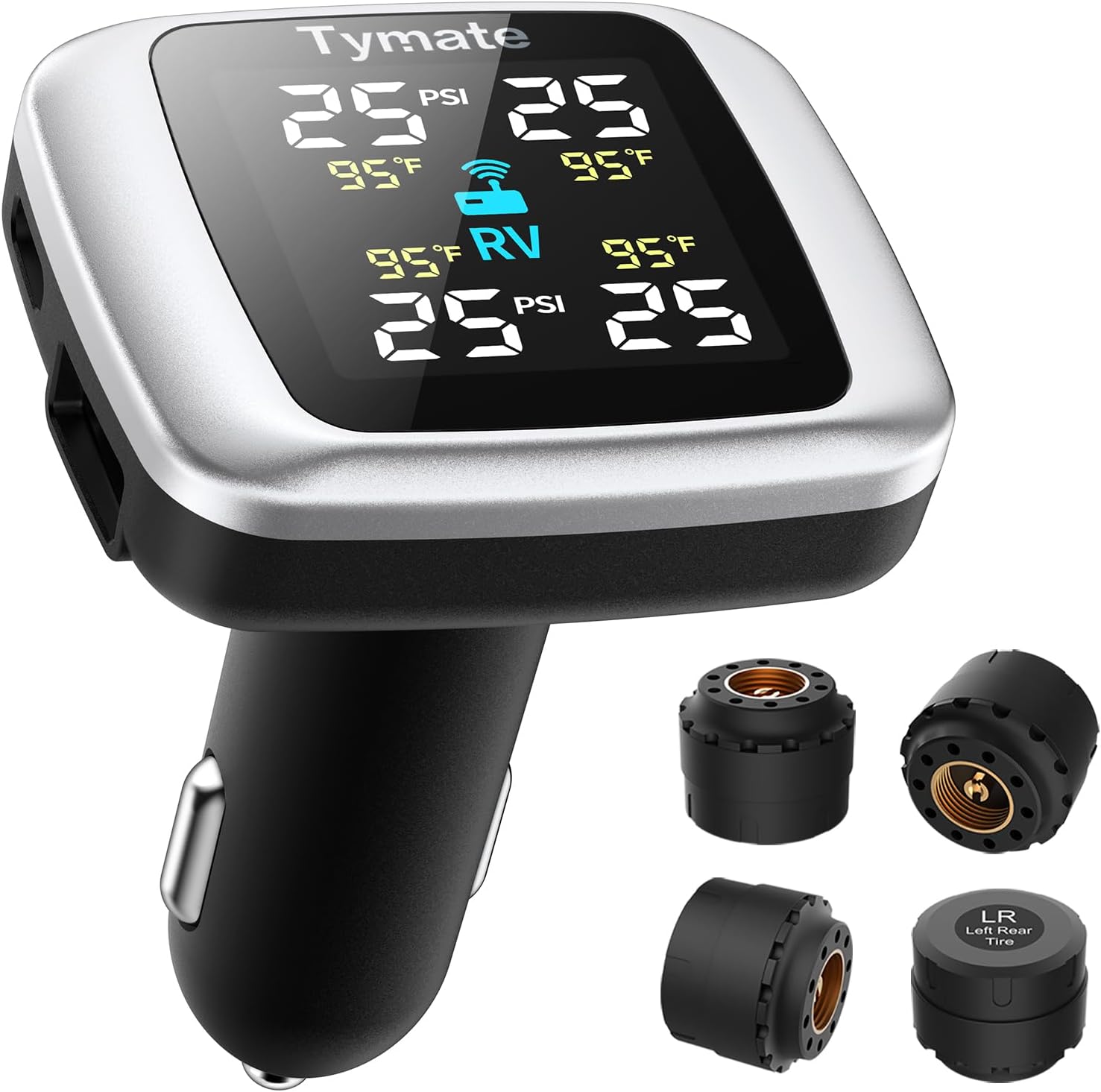
Tymate TM7 is a wireless tire pressure monitoring system that delivers real-time pressure and temperature readings for safer driving. It includes four external sensors, a bright color LCD display with adjustable backlight, and six alarm modes for high/low pressure, fast leakage, high temperature, and sensor signal or battery issues. The system covers a wide 0–144 PSI range and plugs into your vehicle’s cigarette lighter socket for quick DIY setup.

The Big Rig Defense Tire Thumper is a truck tire pressure checker that lets you quickly check multiple tires by giving them a firm whack. Listen for a reassuring thump and feel the stick bounce when a tire is fully inflated, helping you get back on the road safely. It features a comfortable, glove-friendly handle and a secure wrist strap for confident use on busy routes.
How to Choose the Right Summit Tire
Before buying Summit tires, start with your vehicle’s correct tire size. The NHTSA TireWise guide recommends checking your owner’s manual or the Tire and Loading Information Label on the driver-side door edge or door post. Match the size, load index, and speed rating before comparing prices.
- Check the size: Use the exact size shown on your vehicle placard unless a tire professional confirms another fitment is safe.
- Match the load rating: Do not choose a tire with a lower load capacity than your vehicle requires.
- Match the climate: Choose all-season for mild conditions, all-terrain for mixed surfaces, and winter/3PMSF tires for serious snow.
- Compare UTQG: The federal UTQG system helps compare treadwear, traction, and temperature resistance on many passenger tires.
- Plan maintenance: Keep tires inflated, rotate them on schedule, and check alignment if you see uneven wear.
Summit Tire Warranty and Roadside Help
Summit’s current warranty page says coverage applies to eligible Summit replacement passenger car and light-truck tires used in normal highway service in the United States. It also excludes tires that become unserviceable or wear out because of neglect or mistreatment. That means proper inflation, rotation, alignment, and installation matter if you ever need warranty support.
Summit also advertises roadside assistance for Summit tires in the United States and Canada for 3 years from the purchase date. Roadside assistance is separate from treadwear warranty coverage, so read the current paperwork before buying and keep your invoice.
Who Should Buy Summit Tires?
Summit tires make the most sense for drivers who want a lower-cost tire from a current, easy-to-find lineup and who mainly drive on paved roads. They are a practical fit for older daily drivers, commuter cars, family crossovers, and budget-conscious truck or SUV owners who do not need premium-brand performance.
You may want to spend more on Michelin, Bridgestone, Goodyear, Continental, Pirelli, or another premium brand if you care most about tested wet braking, emergency handling, luxury-level quietness, long-term treadwear consistency, or severe-weather traction. Premium tires cost more, but the difference can matter if you drive fast, tow often, live in a harsh climate, or put high annual mileage on your vehicle.
Frequently Asked Questions
Are Summit tires very good?
Summit tires are good for the price, especially for everyday commuting and highway use. They are not usually the best choice if you want premium handling, luxury quietness, or top winter performance.
How long will Summit tires last?
Many current Summit passenger and light-truck models list limited treadwear warranties around 50,000 to 60,000 miles, depending on model and size. Real tread life depends on tire pressure, rotation, alignment, road surface, load, and driving style.
Who makes Summit tires?
The current U.S. Summit warranty says the only expressed warranty is made by Sailun Tire Americas. The exact manufacturing plant can vary, so check the DOT code and warranty paperwork for the specific tire you buy.
How do Summit tires perform in the rain?
Summit’s all-season models are designed for normal wet-road driving. For example, the Ultramax A/S 2.0 uses broad circumferential grooves and siped tread blocks to help evacuate water. Still, wet braking depends heavily on tread depth, tire pressure, road conditions, and vehicle speed.
Are Summit tires good in snow?
Basic Summit all-season tires are best for light winter conditions, not deep snow or ice. If snow traction matters, look for a 3PMSF-rated tire or use dedicated winter tires. The Trail Climber AT02 is the Summit line to check first for truck and SUV all-terrain winter capability.
What tire brands should I compare with Summit?
Compare Summit with other value-focused brands first, then compare it with premium brands such as Michelin, Bridgestone, Goodyear, Continental, and Pirelli if you want to see what extra money may buy in braking, handling, comfort, and treadwear.
Conclusion
Summit is a good tire brand for budget-minded drivers who want dependable everyday tires without paying premium prices. The best Summit tires are practical, not flashy: the Ultramax A/S 2.0 is a sensible daily-driver option, while the Trail Climber HT03 and AT02 serve truck and SUV needs. Just be realistic. Check the current warranty, match the correct size and load rating, and choose a tire that fits your climate. If you need premium performance or serious winter traction, Summit may not be the best final pick.
Sources
- Summit Tire Warranty — warranty eligibility, exclusions, and Sailun Tire Americas warranty language.
- Summit Ultramax A/S 2.0 — current product features and 60,000-mile limited treadwear warranty.
- Summit Ultramax UHP AS — performance all-season model and 50,000-mile limited treadwear warranty.
- Summit Trail Climber HT03 — highway tire use case and P-metric/LT warranty details.
- Summit Trail Climber AT02 — all-terrain truck/SUV use case and 3PMS certification language.
- NHTSA TireWise — tire size, tire maintenance, and safety guidance for consumers.
[Products Worth Considering]

This digital tire pressure gauge with built-in inflator helps you accurately check and adjust tire pressure for safer driving and better fuel efficiency. It supports multiple units (PSI, KPA, BAR, KG/CM²) and reads within 1% for reliable results. The 3-in-1 design inflates, deflates, and measures, with a quick-connect air chuck and compatible hose setup for cars, trucks, SUVs, RVs, and motorcycles.

AZUNO’s digital tire inflator delivers stable, accurate pressure readings with a bright LCD and a 0.1 resolution display for confident inflation. It supports one-handed operation for inflating and quick deflating, and it’s built with rugged steel and brass components for reliable shop or garage use. With multi-unit pressure display and compatibility across cars, SUVs, motorcycles, and trucks, it’s a convenient accessory for everyday tire maintenance.

Measure tire tread depth quickly and accurately with this LUMITECO dial gauge that reads in 1/32" increments up to 14/32". The color-coded green/yellow/red zones make it easy to judge tire wear and know when replacement is needed. A rugged, compact design with a protective pouch helps keep the gauge ready for use on cars, trucks, motorcycles, and more.

Related Articles
Best Tires for 2500HD Duramax 2026: Heavy-Duty Tires for Towing and Work Trucks
You depend on your 2500HD Duramax to tow heavy loads and handle demanding worksite conditions, so tire choice is not optional. The right tires…
Read More
Best Mastercraft Tires 2026: Reliable Tire Picks for Trucks, SUVs, and Daily Drivers
You need tires that match how you drive, where you live, and what your vehicle carries. This guide highlights Mastercraft models that stand out…
Read More
Best Lionhart Tires 2026: Budget Performance Tires for Cars and SUVs
You want tires that deliver confident handling, predictable braking, and acceptable longevity without stretching your budget. Lionhart’s 2026 lineup focuses on delivering those trade-offs…
Read More