
Dcenti DC33 Tire Review: All-Season Performance
Disclosure: As an Amazon Associate, we earn from qualifying purchases. If you click a link on this page and make a purchase, we may receive a small commission at no extra cost to you.
Finding a dependable 155/80R13 replacement tire can be difficult because choices in this older compact-car size are limited, and seller descriptions do not always agree. The Dcenti DC33 offers a budget-focused 79T touring design with a symmetrical tread, a 50,000-mile seller-listed warranty, and a compact 22.8-inch overall diameter. Its specifications look suitable for routine commuting, but there is an important catch: some sellers classify this exact model as all-season, while others list it as a summer tire. This review helps you decide whether its value outweighs that labeling uncertainty.
Quick Verdict
Rating: 7.2/10, Recommended with caveats
Best For: Budget-minded drivers whose vehicle specifically requires a 155/80R13 79T tire for mild-weather commuting.
Bottom Line: The DC33 combines useful touring specifications, a compact-car fit, and a seller-listed 50,000-mile warranty. The conflicting summer versus all-season classification means you should confirm the sidewall markings and intended climate use before ordering.
| Specification | Detail |
|---|---|
| Brand | Dcenti |
| Model | DC33 |
| Manufacturer part number | T1558013DCEDC33 |
| Product type | Passenger touring radial tire |
| Size | 155/80R13 |
| Load index and speed rating | 79T, up to 963 pounds per tire and 118 mph under rated conditions |
| Load range | SL, 4-ply rated |
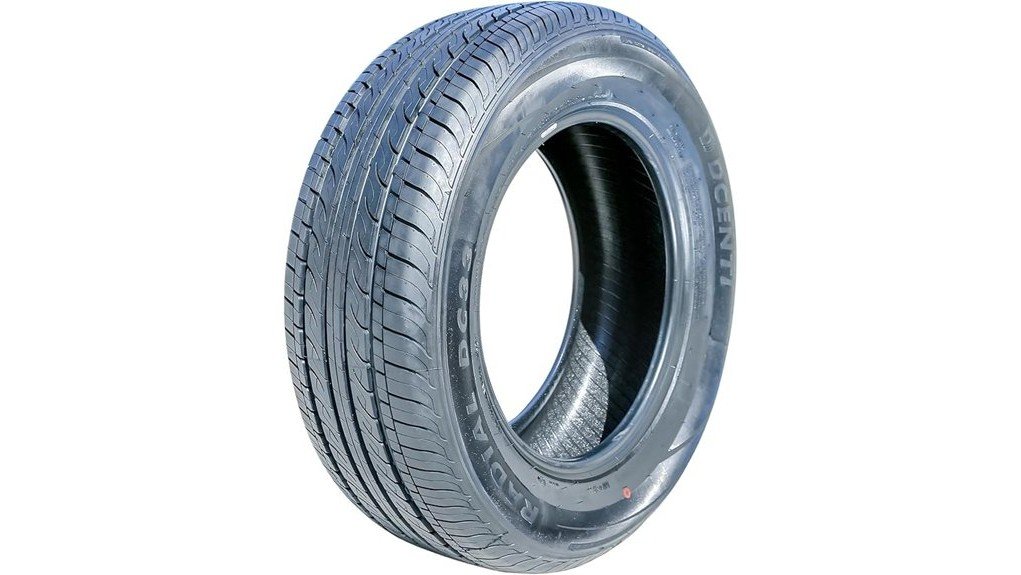
| Tread design | Symmetrical pattern with four wide grooves, siping, center ribs, and shoulder blocks |
| Listed tread depth | About 9/32 inch; retailer data vary slightly |
| Overall diameter | About 22.8 to 23 inches |
| Approved rim width | 4 to 5 inches; 4.5 inches is commonly listed |
| Listed tire weight | About 13 to 13.65 pounds |
| Sidewall | Black sidewall |
| UTQG | 500 A A on current retailer listings |
| Run-flat | No |
| Maximum listed inflation | 44 PSI, not the recommended operating pressure for every vehicle |
| Warranty | Seller-listed 50,000-mile limited warranty; confirm eligibility and terms |
| Package note | One tire only; wheel and installation are not included |
Key Takeaways
- The Dcenti DC33 reviewed here is the 155/80R13 79T passenger touring version.
- Its four-groove symmetrical tread is designed to move water and support predictable everyday handling.
- The SL 4-ply-rated construction carries a 79 load index, equal to 963 pounds per tire under rated conditions.
- Retailer listings report a 50,000-mile limited warranty, but warranty coverage should be confirmed before purchase.
- Season labeling is inconsistent across sellers, so do not assume winter capability from the words “all-season” alone.
What Is the Dcenti DC33?
The Dcenti DC33 is a standard-load radial touring tire for passenger vehicles using 13-inch wheels. This review covers size 155/80R13 with a 79T service description, not every DC33 size or variant. The package contains one tire, so you must order the quantity your vehicle needs and arrange mounting and balancing separately.
The main selling point is straightforward value. You get a symmetrical tread, four circumferential grooves, dense siping, a black sidewall, and a seller-listed 50,000-mile warranty in a size often used by older compact cars. These features make the DC33 worth considering for basic transportation, but they do not replace proper vehicle fitment checks or independent wet, snow, and braking tests.
Who Should Buy It?
Best For
- Drivers whose door-jamb label or owner’s manual specifies 155/80R13 with an equal or compatible 79T service rating
- Older compact cars used mainly for city driving, commuting, and moderate highway trips
- Budget-focused buyers who can verify the tire’s seasonal classification before installation
Skip If
- You need a tire with clear M+S or three-peak mountain snowflake documentation for winter use
- Your vehicle requires a different size, load index, speed rating, or rim width
- You want a premium tire backed by extensive independent test data and a broad dealer network
[Products Worth Considering]

This 100-piece tire repair screw plug kit provides a fast, self-service solution for punctures on the road. Choose the correct plug size, insert it into the break, and screw...
Fit and Compatibility
The 155/80R13 code means the tire is 155 millimeters wide, its sidewall height is 80 percent of the section width, and it fits a 13-inch wheel. Current listings show an approved rim-width range of 4 to 5 inches. A matching diameter alone does not guarantee safe fitment, because load index, speed rating, wheel width, clearance, and vehicle requirements also matter.
The 79T service description supports up to 963 pounds per tire and a T speed rating under specified test conditions. Those numbers are limits, not targets. Your replacement tire should meet or exceed the vehicle manufacturer’s required load and speed ratings unless a qualified tire professional approves another configuration.
Before You Buy: Confirm the exact size, load index, speed rating, rim width, and seasonal markings shown on the tire you will receive. Seller descriptions for this DC33 conflict between “all-season” and “summer,” so the listing title alone is not enough for a winter-use decision.
Tread Design and Wet-Road Potential
The DC33 uses four wide circumferential grooves and dense siping. That layout is intended to create channels for water and more biting edges across the tread. Notched center ribs help maintain a continuous path through the contact area, while larger shoulder blocks are designed to support cornering stability.
These are useful design features, but tread appearance cannot prove stopping distance or hydroplaning resistance. No reliable independent test for this exact size was found during verification. You should therefore treat the wet-grip claims as design intent rather than measured superiority over competing tires.
The UTQG 500 A A listing adds context. A traction grade of A refers to straight-line wet braking performance under a standardized test, and the temperature grade of A indicates heat resistance within that grading system. UTQG does not measure snow traction, hydroplaning performance, ride comfort, or real-world tread life.
Ride Comfort, Steering, and Noise
The tall 80-series sidewall can help absorb smaller pavement impacts better than a low-profile tire, assuming the tire is correctly inflated and the suspension is in good condition. The narrow 155-millimeter section width also suits the light, compact vehicles that commonly use this size.
The symmetrical tread should make routine rotation easier on many vehicles, which can help reduce uneven wear. Seller feedback often describes the tire as smooth or quiet, but cabin noise depends heavily on the car, road surface, alignment, wheel bearings, and inflation pressure. Expect basic touring manners rather than sharp performance-tire response.
How It Performs in Real Use
For Daily City Driving
The DC33’s compact size and standard-load construction fit the needs of light passenger vehicles used for errands and commuting. The tread has enough conventional water channels and siping to make sense for ordinary wet streets, but you should still slow down in standing water and leave extra braking distance.
For Highway Trips
The T speed rating is more than adequate for legal highway speeds when the tire is correctly fitted, loaded, and maintained. Long trips make pressure, alignment, and age more important, so inspect the tread and sidewalls before departure and check cold pressure against the vehicle placard.
For Rainy Conditions
Four wide grooves provide a reasonable water-evacuation layout, while the center ribs help preserve tread continuity. Because no comparative wet-braking data were found for this exact model, avoid treating the pattern as proof that it will match a premium touring tire in heavy rain.
For Snow and Freezing Weather
This is the weakest part of the buying case. Some retailers list the DC33 as summer, and available listings do not consistently document M+S or three-peak mountain snowflake markings. Choose a clearly identified winter or all-weather tire when your climate regularly includes snow, ice, or prolonged cold.
Installation, Pressure, and Maintenance
Professional mounting and balancing are the safest choices, especially on older wheels that may have corrosion, bends, or worn valve stems. Ask the installer to inspect the wheel, verify the tire’s date code and sidewall markings, and confirm that all four tires are compatible with the vehicle and each other.
Do not inflate the DC33 to 44 PSI simply because that maximum appears in seller specifications. Use the cold inflation pressure on the driver-side door placard or in the owner’s manual. NHTSA also recommends monthly cold-pressure checks, routine tread inspections, and professional attention if you notice vibration, pressure loss, cracks, bulges, or irregular wear.
Rotate the tires according to the vehicle manufacturer’s schedule and keep alignment within specification. The symmetrical tread may allow several rotation patterns, but directional arrows or other sidewall instructions on the delivered tire take priority.
Pro Tip: Photograph the tire’s full sidewall before installation. This gives you a record of the size, service description, DOT date code, seasonal markings, maximum load, and maximum pressure if a warranty or fitment question comes up later.
For additional maintenance guidance, review NHTSA’s tire safety information.
Pros and Cons
Pros
- Correctly sized for vehicles that require the less-common 155/80R13 fitment
- 79T service rating provides a 963-pound listed load capacity per tire
- Four circumferential grooves and siping create a sensible wet-road tread layout
- Symmetrical design supports flexible rotation on compatible vehicles
- Seller listings include a 50,000-mile limited warranty
Cons
- Conflicting summer and all-season classifications create a serious climate-use question
- Limited independent test data make wet braking, noise, and longevity hard to compare
- The listing is for one tire only, with no wheel, mounting, balancing, or road-hazard plan included
Is It Worth the Price?
The Dcenti DC33 sits in the budget tier and can be a smart buy for everyday use when your vehicle needs this exact size and you mainly drive in mild conditions. Its standard load rating, conventional touring tread, and seller-listed mileage warranty cover the basics without adding premium-brand cost.
The value becomes less convincing when you need verified year-round capability, extensive test data, or easy nationwide warranty support. Before buying a full set, compare the installed cost, warranty process, manufacturing date, and seasonal markings rather than looking only at the tire price.
How It Compares to Alternatives
The Kumho Solus TA51a and Travelstar UN106 are real 155/80R13 79T alternatives that retailers clearly list as all-season. The Kumho is the stronger comparison when you want an established touring brand and a longer listed mileage warranty, while the Travelstar may appeal if you want an M+S-rated budget option or a narrow whitewall style.
The DC33 makes the most sense when its lower-cost positioning is your priority and the delivered tire’s markings match your climate. For winter regions, a clearly documented all-weather option such as the Kumho Solus 4S HA32 is easier to evaluate than a tire with conflicting season labels.
Frequently Asked Questions
Is the Dcenti DC33 an all-season or summer tire?
Seller descriptions conflict. Some identify this 155/80R13 DC33 as all-season, while other retailers classify the same model and part number as summer. Confirm the sidewall markings and written seller documentation before using it in cold, snowy, or icy conditions.
What vehicles use a 155/80R13 tire?
This size appears on some older compact cars, but fitment changes by model year, trim, wheel, and market. Use the driver-side placard, owner’s manual, or a qualified tire dealer to confirm compatibility instead of relying on a general vehicle list.
What does the 79T rating mean?
The load index of 79 corresponds to a listed maximum load of 963 pounds per tire under rated conditions. The T speed symbol corresponds to 118 mph, but it does not override legal limits, vehicle requirements, road conditions, or the need for correct inflation.
Does the listing include a wheel or a full set?
No. The listing is for one tire only, and the wheel, valve-stem service, mounting, balancing, disposal, and alignment work are separate unless the seller or installer states otherwise.
Should I inflate it to 44 PSI?
Not automatically. The 44 PSI figure is a listed maximum, while your correct operating pressure comes from the vehicle’s tire placard or owner’s manual and should be checked when the tires are cold.
What treadwear and manufacturer warranty coverage is listed?
Current retailer listings state a 50,000-mile limited warranty or treadlife coverage, along with coverage for eligible manufacturing defects. Terms may depend on registration, rotation records, even wear, vehicle condition, and the seller, so request the written policy before purchase.
Does the DC33 include road-hazard protection?
No road-hazard plan was consistently included in the product information reviewed. Road-hazard coverage may be offered separately by a seller or installer, so check what punctures, impact damage, prorated replacements, and service locations the plan covers.
How much does one Dcenti DC33 tire weigh?
Retailer specifications place the tire at about 13 to 13.65 pounds. Small listing differences may reflect rounding or data updates, so use the delivered tire and shipping label when an exact weight matters.
The Bottom Line
The Dcenti DC33 is a reasonable budget option for a driver who needs a 155/80R13 79T touring tire and can verify the delivered tire’s fitment and seasonal markings. Its practical strengths are the conventional four-groove tread, standard-load capacity, and seller-listed 50,000-mile warranty, while its main weakness is the unresolved summer versus all-season labeling. Choose it for mild-weather daily use, but skip it when winter capability or independently tested performance is a priority.
Ready to Buy?
Check the latest product details, sidewall markings, and seller warranty before you decide.

Related Articles
Green Max GTL202 Tire Review: Performance Insights
I review the Green Max GTL202’s load, wet grip, and highway manners to reveal whether this trailer tire truly earns fleet trust.
Read More
Landspider Citytraxx H/T Tire Review
Curious if the Landspider Citytraxx H/T delivers on a budget? Discover the grip, comfort, and trade-offs before you decide.
Read More
GT Radial Savero HT2 Tire Review
Never settle for guesswork—discover what the GT Radial Savero HT2 really delivers in wet, dry, and everyday driving before you buy.
Read More