
Accelera Iota EVT Tire Review
Disclosure: As an Amazon Associate, we earn from qualifying purchases. If you click a link on this page and make a purchase, we may receive a small commission at no extra cost to you.
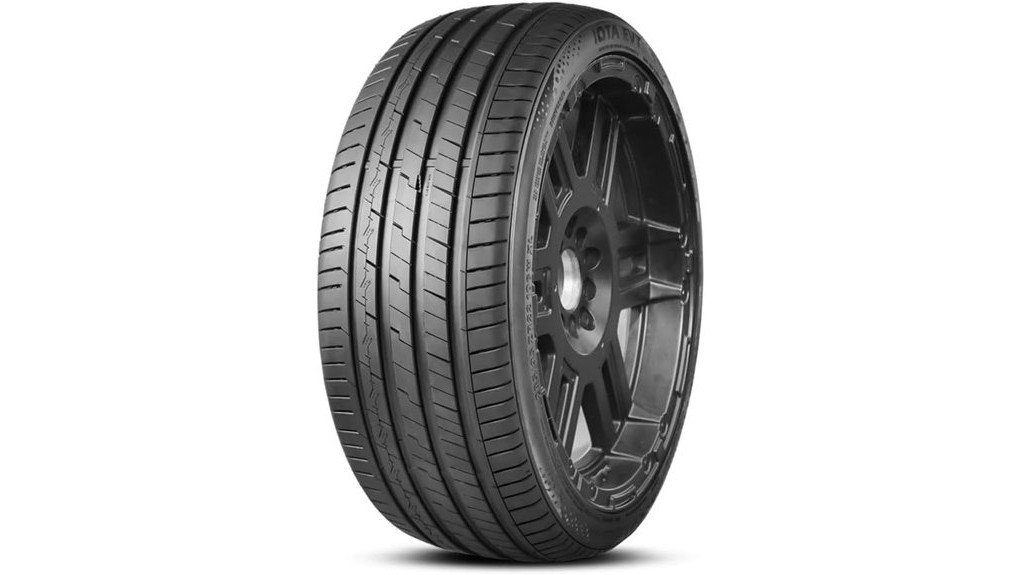
Choosing a replacement tire for an electric vehicle means balancing load capacity, road grip, noise, efficiency, and cost. The Accelera Iota EVT in 225/55ZR17 is a value-focused all-season performance tire built around EV-friendly rolling resistance and an XL load rating. Its strongest points are wet-road channeling, responsive paved-road handling, and a 101W XL specification, but it is not a run-flat tire or a substitute for a dedicated winter tire. This review helps you decide whether its practical strengths match your vehicle and driving conditions.
Quick Verdict
Rating: 8.0/10, recommended with caveats
Best For: Budget-minded EV, passenger-car, CUV, and SUV drivers who need 225/55ZR17 101W XL fitment for paved-road use.
Bottom Line: The Accelera Iota EVT offers a useful mix of XL load capacity, wet-road drainage, and low-rolling-resistance design. Its main tradeoffs are limited long-term independent test data, no run-flat construction, and warranty mileage that should be confirmed in writing before purchase.
Key Takeaways
- The verified size is 225/55ZR17 101W XL, with a maximum load of 1,819 pounds per tire and a manufacturer-listed maximum inflation of 51 PSI.
- An asymmetrical tread pattern, three center ribs, shoulder blocks, and four circumferential grooves support stability, steering response, and water evacuation.
- The tire is designed for electric and conventional passenger vehicles, but exact fit depends on your vehicle placard, wheel width, load requirement, and speed rating.
- The 10/32-inch tread depth, 320 AA UTQG listing, and low-rolling-resistance focus make it a practical value option for everyday paved-road driving.
- It is not a run-flat tire, and all-season capability should not be confused with severe-snow certification or dedicated winter-tire performance.
[Products Worth Considering]

Monitor tire tread wear with a smart, color-coded depth gauge that shows clear condition ranges at a glance. The bar is range marked for fast, easy readings, helping you maintain safer traction and performance. Each gauge is portable with a pocket clip, and the set includes 20 units for daily use and sharing.

Keep your tires properly inflated with this analog VONDIOR tire pressure gauge, designed for fast, easy readings without batteries. The swiveling, two-axis hose and large glow dial help you measure at any tire angle with instant visibility. Built with a protective rubber shield, it supports durable, low-maintenance use for cars and trucks.

ETENWOLF’s tire pressure gauge helps you quickly and accurately check tire PSI across cars, trucks, motorcycles, bikes, and more. It’s manually calibrated to ANSI B40.1 Grade A for reliable readings, includes a large glow dial for easy nighttime viewing, and features a 360-degree swivel chuck for use at any valve angle. The gauge also works consistently in extreme hot or cold weather.
Key Specifications
| Specification | Detail |
|---|---|
| Brand | Accelera |
| Model | Iota EVT |
| Product type | EV-ready all-season performance radial tire |
| Verified size | 225/55ZR17 |
| Load and speed rating | 101W XL |
| Maximum load | 1,819 pounds per tire |
| Maximum inflation | 51 PSI, not the vehicle’s recommended operating pressure |
| Manufacturer measuring rim | 7.0 inches |
| Section width | 9.5 inches |
| Overall diameter | 26.5 inches |
| Tread depth | 10/32 inch, about 7.94 mm |
| Tread design | Asymmetrical pattern with three center ribs, multi-sipes, shoulder blocks, and four circumferential grooves |
| UTQG | 320 AA |
| Run-flat | No |
| Available family variants | Standard and E Silent, subject to seller selection |
| Best use | Daily paved-road driving in dry, wet, and mild seasonal conditions |
Before You Buy: Match the complete size, load index, speed rating, and XL requirement to the tire-information placard or owner’s manual. A tire that physically fits a 17-inch wheel may still be unsuitable for your vehicle.
What Is the Accelera Iota EVT?
The Accelera Iota EVT is an all-season performance tire developed for electric vehicles while remaining usable on compatible gasoline-powered passenger cars, CUVs, and SUVs. In this 225/55ZR17 version, it carries a 101 load index, W speed rating, and XL designation, which makes load and speed matching more specific than simply buying any tire marked 225/55R17.
Its main selling point is a tread package aimed at EV concerns: reduced rolling resistance, controlled noise, stable contact under load, and traction that can cope with strong low-speed torque. The manufacturer uses an asymmetrical layout with a tuned pitch sequence, three solid center ribs with sipes, reinforced shoulder blocks, and four wide grooves.
Who Should Buy It?
Best For
- Drivers whose vehicle specifically accepts 225/55ZR17 101W XL tires.
- EV owners who want a value-focused tire with low-rolling-resistance and load-capacity priorities.
- Passenger-car, CUV, and SUV drivers who spend most of their time on paved roads in dry, wet, or mild weather.
Skip If
- You need run-flat mobility after a puncture.
- You regularly drive in severe snow or ice and need a dedicated winter tire or 3PMSF-rated all-weather tire.
- You want extensive independent comparison testing and a fully clear mileage-warranty statement before ordering.
Fit, Load Capacity, and EV Compatibility
The 101 load index corresponds to a maximum rated load of 1,819 pounds per tire when the tire is used under the conditions specified by its manufacturer. The XL marking means extra-load construction, which can be useful for heavier vehicles, but it does not automatically make the tire correct for every EV. Your vehicle placard remains the primary fitment reference.
The W speed symbol is also part of the specification. Replacement tires should meet the vehicle maker’s required load and speed ratings unless a qualified tire professional confirms an approved alternative. Mixing materially different tire types, sizes, or wear levels can affect handling, stability-control operation, and all-wheel-drive systems.
Pro Tip: Before ordering, photograph the driver’s-door placard and the full sidewall markings on your current tire. Compare every character, including 225/55R17, load index, speed symbol, XL marking, and any vehicle-specific approval.
Tread Design and Road Performance
Dry-Road Steering and Stability
Three solid center ribs are intended to maintain a stable contact path as you steer, accelerate, and brake. Multi-sipes add biting edges, while the shoulder blocks support cornering and lane changes. The result should suit commuting and normal highway driving better than aggressive track use, especially because the tire’s 320 treadwear focus balances grip with usable service life.
Wet-Road Drainage
Four wide circumferential grooves give water a direct route away from the contact patch. This design supports hydroplaning resistance, but no tread pattern can remove the need to slow down in standing water. Wet grip also declines as tread depth falls, so regular depth checks matter even when the tire still looks serviceable from the side.
Light Seasonal Use
The all-season compound and siping are intended for a broad temperature range and mild winter conditions. That does not establish severe-snow performance. Drivers who face frequent snow, packed ice, steep winter roads, or legal winter-tire requirements should choose a tire specifically rated for those conditions.
Ride Comfort, Noise, and Range
The asymmetrical pattern uses an optimized pitch sequence to reduce repetitive tread noise. The Iota EVT family is also offered in Standard and E Silent versions, so you should confirm which variant the Amazon listing supplies rather than assuming an acoustic-foam version is included.
Low rolling resistance can reduce the energy needed to keep a vehicle moving, which may support EV range or fuel economy. Actual results depend on tire pressure, temperature, wheel alignment, vehicle weight, speed, road surface, and driving style. The XL casing may also feel firmer than a lower-load tire, especially if pressure is set incorrectly.
How It Performs in Real Use
[Products Worth Considering]

Accurately measure tire tread depth with a calibrated gauge marked from 0 to 1 inch in 1/32 inch increments. The color-coded bar helps you quickly identify tread condition ranges, supporting safe driving for trucks, motorcycles, automobiles, and passenger vehicles.

Measure tire tread depth quickly and accurately with this LUMITECO dial gauge that reads in 1/32" increments up to 14/32". The color-coded green/yellow/red zones make it easy to judge tire wear and know when replacement is needed. A rugged, compact design with a protective pouch helps keep the gauge ready for use on cars, trucks, motorcycles, and more.

This manual duck head tire changer kit makes tire installation and removal simpler by letting you embed the duck head into the tire with applied pressure. The integrated design and durable steel construction help reduce friction and improve efficiency and safety during use. Suitable for 16–21 inch wheels, it’s convenient for cars, trucks, SUVs, and ATV tires, with 24-hour after-sales support.
Daily Commuting
For stop-and-go driving, the load rating and center-rib design are useful because EV torque arrives quickly and repeated acceleration can increase wear. Smooth inputs and correct inflation will help the tread wear more evenly.
Highway Driving
The W speed rating and continuous center structure support stable highway behavior within legal speeds. Long trips still require a cold-pressure check, visual inspection, and attention to vibration, pulling, or unusual noise.
Rainy Conditions
The four main grooves are the key wet-weather feature. They help move water and slush, but you should increase following distance and reduce speed when rainfall is heavy or water collects in wheel tracks.
EV and Heavier-Vehicle Use
The 101 XL specification can suit compatible heavier passenger vehicles, including some EVs. Because EV weight and torque can accelerate shoulder or center wear, rotation, alignment, and pressure checks may need closer attention than they did with a lighter vehicle.
Installation, Pressure, and Maintenance Tips
- Have the tire mounted and balanced by a qualified tire shop using the correct rotation orientation and inside/outside sidewall markings.
- Use the cold inflation pressure on your vehicle placard, not the tire’s 51 PSI maximum, unless the vehicle maker specifies otherwise.
- Recheck lug-nut torque according to the vehicle or installer guidance after installation.
- Inspect pressure monthly and before long trips. Temperature changes can alter pressure even when there is no leak.
- Follow the vehicle maker’s rotation interval and pattern. The manufacturer states that this asymmetrical design allows cross-rotation when vehicle fitment permits it.
- Check alignment if you see feathering, one-sided wear, rapid wear, or a steering pull.
- Replace damaged tires and have punctures assessed professionally. This model is not run-flat.
Safety and Warranty Notes
The 51 PSI figure is a maximum inflation specification, not a universal setting. Overinflation can reduce the contact patch and ride comfort, while underinflation can increase heat and energy use. Use the vehicle placard and consult a qualified tire professional when changing size, load rating, or wheel width.
The manufacturer’s product page describes free replacement for up to 12 months or 2/32-inch tread depth, a mileage warranty, and a five-year protection period. However, the exact mileage figure is not stated clearly there, while retailer listings show inconsistent mileage language. Read the written warranty that applies to the exact seller, country, variant, and purchase date before relying on a mileage claim.
Pros and Cons
Pros
- Verified 101W XL specification supports compatible heavier passenger vehicles.
- Four circumferential grooves provide a clear wet-road drainage design.
- Three center ribs and shoulder blocks target steering response and cornering stability.
- Low-rolling-resistance focus is relevant to EV range and fuel economy.
- Standard and E Silent variants give buyers a noise-focused option where offered.
Cons
- Not a run-flat tire and not confirmed as a severe-snow tire.
- Independent long-term testing for this newer model is limited.
- Warranty mileage language is inconsistent, so written terms need confirmation.
Is It Worth the Price?
The Accelera Iota EVT sits in the value-focused part of the all-season performance market. It offers the most value when you need its exact 225/55ZR17 101W XL specification and care more about practical paved-road performance than premium-brand testing depth.
Its feature set is competitive on paper: an EV-focused rolling-resistance design, 10/32-inch tread depth, wet-weather grooves, and an XL load rating. It is less compelling for buyers who need proven severe-winter traction, run-flat capability, or warranty terms that are completely clear before checkout.
How It Compares to Alternatives
The Michelin CrossClimate2 is available in 225/55R17 XL fitment and is a stronger comparison for drivers who prioritize severe-weather capability and a 3PMSF marking. A premium touring tire such as the Continental PureContact LS may be more appealing when quietness, refinement, and a longer established testing record matter most.
The Accelera Iota EVT makes the most sense when you want a lower-cost, EV-ready performance design with a W speed rating and XL capacity. Compare the exact load and speed specification, installed cost, warranty document, and seasonal rating rather than choosing by size alone.
Frequently Asked Questions
What vehicles fit the Accelera Iota EVT 225/55ZR17?
It fits only vehicles approved for its complete 225/55ZR17 101W XL specification and wheel range. Check the driver’s-door placard, owner’s manual, and a professional fitment database because size alone does not confirm compatibility.
Can you use this tire on a gasoline vehicle?
Yes, the Iota EVT can be used on compatible conventional passenger vehicles as well as EVs. The vehicle still needs to accept the size, load index, speed rating, and XL construction.
Is the Accelera Iota EVT a run-flat tire?
No. Retailer specifications identify this version as non-run-flat, so you should have a roadside plan that matches your vehicle, such as a spare, sealant system, or towing coverage approved by the vehicle maker.
Is it suitable for snow and ice?
It is an all-season tire intended for mild seasonal conditions, but the verified specifications do not establish severe-snow certification. Choose dedicated winter tires or a verified 3PMSF all-weather option for frequent snow, ice, mountain travel, or local winter-tire laws.
Should you inflate it to 51 PSI?
Not automatically. The 51 PSI marking is the tire’s maximum inflation figure, while your vehicle placard provides the normal cold operating pressure for the approved tire setup.
Can the asymmetrical tread be cross-rotated?
The manufacturer says the pattern allows cross-rotation, but your vehicle layout and tire setup still control the correct pattern. Directional sizing, staggered wheels, or vehicle-specific restrictions may require a different rotation plan.
Does it include E Silent noise-reduction technology?
The Iota EVT family is offered in Standard and E Silent variants. Confirm the exact listing, model number, sidewall, and seller description because the product family offering does not prove that every ASIN includes the E Silent version.
What warranty comes with the tire?
Accelera describes free replacement for up to 12 months or 2/32-inch tread depth, mileage coverage, and a five-year protection period. Because mileage statements differ among retailer pages, get the exact written warranty for your seller and region before purchase.
The Bottom Line
The Accelera Iota EVT is worth considering when you need 225/55ZR17 101W XL fitment and want an EV-ready, value-focused tire for everyday paved roads. Its best features are load capacity, wet-road groove design, and low-rolling-resistance intent, while its main limits are non-run-flat construction, modest independent test history, and warranty mileage that needs confirmation. Skip it for severe winter use or any vehicle that requires a different load, speed, size, or approval specification.
Ready to Buy?
Check the exact variant, fitment, seller warranty, and latest product details before you decide.
[Products Worth Considering]

The SAFELIFE dial tire tread depth gauge measures tread depth in 1/32 inch increments with clear, easy-to-read 2-inch dial face. Color zones using a traffic light system help you quickly judge whether tread is low, marginal, or ample for safer driving. Built with a durable zinc cast body and a metal detect probe for precise, comfortable use across cars, motorcycles, trucks, and buses.

TIRESHIELD PRO RV tire covers in a set of four deliver year-round protection against UV rays, cracking, fading, water, and snow. The StormLock-System helps keep the covers securely fastened through high wind, while heavy-duty, double-stitched construction supports long-lasting performance. Designed for universal fit, they’re intended for RV, camper, truck, car, and trailer tires within the 26–28.75 inch diameter range, with easy wipe-clean care and storage in the included bag.

This tire inflator with pressure gauge delivers long-lasting performance with a durable rubber-protected gauge and sturdy build. The longer hose and 360 swivel air chuck help you seal the valve securely and keep your hands free while measuring, inflating, or deflating. It’s battery-free for reliable use and provides ±2 PSI accuracy in the mid-range for most typical tires, with universal compatibility for 1/4 NPT compressor outputs.

Related Articles
Green Max GTL202 Tire Review: Performance Insights
I review the Green Max GTL202’s load, wet grip, and highway manners to reveal whether this trailer tire truly earns fleet trust.
Read More
Landspider Citytraxx H/T Tire Review
Curious if the Landspider Citytraxx H/T delivers on a budget? Discover the grip, comfort, and trade-offs before you decide.
Read More
GT Radial Savero HT2 Tire Review
Never settle for guesswork—discover what the GT Radial Savero HT2 really delivers in wet, dry, and everyday driving before you buy.
Read More