
Chemical Guys Gerbil Wheel Brush Review
Disclosure: As an Amazon Associate, we earn from qualifying purchases. If you click a link on this page and make a purchase, we may receive a small commission at no extra cost to you.
Brake dust can settle deep between spokes, around wheel lips, and inside recessed areas that a wash mitt cannot reach safely. The Chemical Guys Gerbil Wheel and Rim Cleaning Brush uses a compact, cone-shaped sheepskin head to loosen that contamination while reducing the need for stiff scrubbing. It is especially useful on painted, polished, chrome, and powder-coated wheels, but its short, thick profile may not fit through every narrow spoke opening. This review explains where the Gerbil Brush works well, how to use it without trapping abrasive grit, and when a different wheel brush may serve you better.
Quick Verdict
Rating: 8.3/10
Best For: Detailers cleaning delicate wheel faces, open spokes, exhaust tips, and other compact automotive areas.
Bottom Line: The soft 100% sheepskin head holds plenty of cleaning solution and treats sensitive finishes more gently than a stiff-bristle brush. Its main tradeoff is the short, thick shape, which may not reach the deepest barrels or pass through very narrow spoke gaps.
| Specification | Detail |
|---|---|
| Brand | Chemical Guys |
| Model | ACC_B01 |
| Product type | Wheel and automotive detailing brush |
| Cleaning material | 100% natural sheepskin |
| Head design | Compact cone-shaped head with a short, thick profile |
| Package quantity | One brush |
| Supported wheel finishes | Painted, polished, chrome, and powder-coated finishes |
| Other stated uses | Exhaust tips, tire sidewalls, and suitable engine-bay components |
| Liquid capacity | Manufacturer states the sheepskin can hold more than 8 ounces of soapy water or degreaser |
| Best use | Gentle cleaning around open spokes, wheel faces, lips, and compact recesses |
| Important limitation | The thick head and shaft may not pass through extremely narrow spoke openings or reach every deep wheel barrel |
What Is the Chemical Guys Gerbil Wheel Brush?
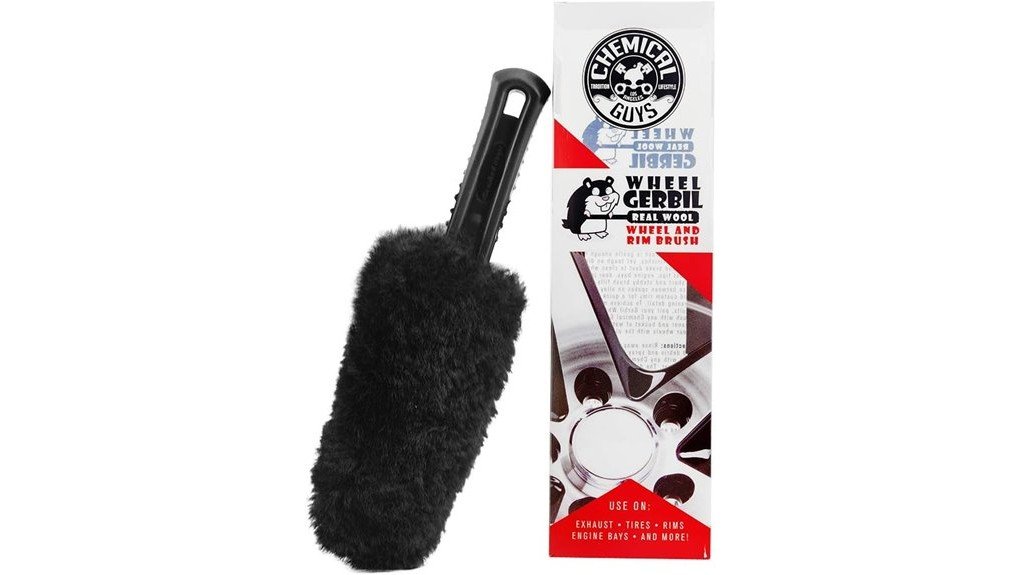
The Chemical Guys Gerbil Wheel and Rim Cleaning Brush, model ACC_B01, is a compact detailing tool made with a soft, 100% sheepskin cleaning head. Unlike a traditional wheel brush with rows of synthetic bristles, the Gerbil uses plush natural fibers that absorb cleaning solution and surround loose dirt as you move the brush across a surface.
The head has a short, broad cone shape intended for wheel faces, open spoke patterns, lips, and other compact areas. Chemical Guys also lists exhaust tips, tire sidewalls, and engine-bay components among its possible uses. The brush is not a complete replacement for every detailing tool, since deep barrels, narrow lug recesses, and heavily contaminated tires may require brushes with different shapes or stiffness levels.
[Products Worth Considering]

Adam’s Pro Tire Hex Grip applicators are molded foam sponges designed for precise, even tire dressing application. The ergonomic grip helps you spread product without overapplying, reducing sling that can splash onto paint and helping keep your hands clean during wheel and trim detailing. They’re durable, washable, and reusable for repeated detailing sessions.

This oesee 8-piece wheel care kit helps you clean, scrub, and dry wheels safely with purpose-built brushes and towels. The scratch-free microfiber wheel brush lifts brake dust and grime, while the stiff pro-grip tire brush removes tire browning and embedded dirt. A twist loop microfiber drying towel and an applicator help achieve a streak-free finish and cleaner, more even product application.

This wheel brush kit delivers pro-level cleaning at home, lifting dirt, grime, and brake dust to help restore wheel appearance. It includes multiple brush styles and applicator pads for tackling different wheel surfaces, with gentle, metal-free bristles designed to reduce scratching risk. The flat and double-ended brushes are built for comfort and reach, making wheel care easier for cars, trucks, and RVs.
Key Takeaways
- The ACC_B01 Gerbil Brush uses a 100% sheepskin head rather than stiff synthetic bristles.
- Its compact cone-shaped profile is best suited to wheel faces, open spokes, lips, and accessible crevices.
- The soft fibers can hold more than 8 ounces of soapy water or degreaser, according to Chemical Guys.
- It is intended for painted, polished, chrome, and powder-coated wheel finishes.
- The thick profile can be too large for extremely narrow spokes and may not reach the back of every deep barrel.
- Safe technique still matters because trapped brake dust or grit can mar a finish, even when the cleaning material itself is soft.
Who Should Buy It?
Best For
- You have painted, polished, chrome, or powder-coated wheels that need gentle agitation.
- Your wheel design has open spokes and accessible areas where a compact cone-shaped head can move freely.
- You want one soft detailing tool for wheel faces, exhaust tips, and selected engine-bay surfaces.
Skip If
- Your wheels have extremely narrow spoke gaps that cannot accommodate a thick brush head.
- You mainly need to scrub hardened tire dressing, heavy mud, or baked-on contamination that calls for firmer bristles.
- You want a long, bendable brush specifically for reaching behind brake calipers and across deep wheel barrels.
Before You Buy: Check the space between your spokes before ordering. The Gerbil has a short, thick profile rather than a slim bottle-brush shape, so it may not fit wheels with very narrow openings.
Sheepskin Head and Cone-Shaped Design
The defining feature is the soft natural sheepskin head. Its fibers hold water and cleaner, helping keep the surface lubricated as you loosen dust and road film. The plush material also conforms around curved spokes and wheel lips better than a flat sponge.
Chemical Guys describes the Gerbil as one of its softest wheel-cleaning tools. That makes it a better match for regular maintenance cleaning than for aggressive restoration work. A soft head can lift ordinary brake dust and grime, but it may take several passes when contamination has been left to bake onto the wheel.
The compact cone shape also creates a clear fit tradeoff. It can cover a spoke or wheel lip in one pass and push into accessible crevices, but it does not offer the long, thin reach of a barrel brush. You may still need a second tool for the inner barrel, tight lug holes, or the area behind a large brake caliper.
How It Protects Delicate Wheel Finishes
Soft sheepskin reduces direct abrasion compared with a stiff tire brush, which makes the Gerbil suitable for finishes that can show fine marks easily. The fibers also retain cleaning solution and help lift particles away from the wheel instead of pressing them against the surface with a hard edge.
No wheel brush is completely scratch-proof. Brake dust can contain hard particles, and those particles may cause marks if they become trapped in a dirty brush. The safest process is to rinse away loose debris first, use plenty of compatible cleaner, work with light pressure, and rinse the brush repeatedly as you move around the wheel.
Clean one wheel at a time and avoid allowing the wheel cleaner to dry. You should also work on a wheel that is cool to the touch and follow the cleaner manufacturer’s directions for the specific finish.
Pro Tip: Keep the Gerbil in a dedicated clean-water rinse bucket while you work. Releasing trapped brake dust between sections lowers the chance of dragging abrasive particles across the finish.
Best Uses for Wheels, Exhaust Tips, and Engine Bays
Wheel Faces and Open Spokes
The brush works best when its sheepskin head can move around an open spoke without being forced. Its broad profile provides useful surface contact on wheel faces and lips, while the cone shape helps it enter moderately sized recesses.
Use short strokes with light pressure rather than pressing the head firmly against the wheel. Let the cleaner soften the contamination first, then allow the fibers to lift it.
Exhaust Tips
The Gerbil can clean soot from accessible exhaust-tip surfaces and seams. A dedicated brush is useful here because exhaust residue can be oily and abrasive. Do not move the same unwashed brush directly from an exhaust tip to a polished wheel.
Allow the exhaust to cool fully before cleaning it. Use a product that is compatible with the tip’s material and rinse the brush thoroughly afterward.
Engine-Bay Components
The soft head can help agitate cleaner around covers, brackets, painted areas, and other accessible engine-bay surfaces. It should not be pushed into electrical connectors, belts, fans, air intakes, or other sensitive openings.
Work only on a cool engine, use minimal liquid around electrical parts, and follow the vehicle manufacturer’s cleaning precautions. A smaller detailing brush may provide better control around wiring and narrow gaps.
Tire Sidewalls
The Amazon listing includes tire sidewalls among the brush’s uses, but soft sheepskin is not the most efficient choice for every tire. It can remove light dust and fresh residue, while a firmer dedicated tire brush is usually better for old dressing, embedded grime, and raised lettering.
How It Performs in Real Use
[Products Worth Considering]

Blackline Blackout is a water-based trim and tire dressing that restores rubber, vinyl, and plastic with a rich satin, blackout look. Its no-sling formula dries quickly and helps prevent messy transfer onto paint. The coating repels water and offers UV protection to help prevent fading, cracking, and discoloration for a clean, long-lasting finish.

Cristal Products Untouchable Tire Shine Spray delivers a deep, wet-look gloss that enhances your vehicle’s tires. It’s quick-drying and spreads smoothly for consistent, streak-free coverage, while forming a protective coating against UV rays, road grime, and weather. Suitable for all tire types, it helps restore dull, faded tires to a showroom-quality finish.
For Routine Maintenance Washes
During a regular wash, the Gerbil’s absorbent head keeps cleaner against the wheel and provides enough agitation for light to moderate brake dust. This is where the brush makes the most sense. You can clean delicate surfaces without reaching immediately for a stiff tool.
For Intricate Custom Wheels
Performance depends on the spoke layout. The cone-shaped head can work around curved, split, and recessed spokes when the opening is wide enough. On tightly packed designs, the shaft and thick head may stop before reaching the full recess.
For Heavy Brake Dust
Heavily bonded contamination may require a longer dwell time, repeated passes, and a wheel cleaner designed for the finish. The Gerbil provides gentle agitation, but its soft fibers are not intended to replace chemical decontamination or a firmer brush when stubborn buildup remains.
For Multi-Surface Detailing
The brush is useful beyond wheel faces, but cross-contamination becomes more important. Exhaust soot, tire grime, and engine-bay grease should not be carried onto a polished wheel. Rinse the brush fully between tasks or keep separate brushes for dirtier areas.
How to Use the Gerbil Brush Correctly
- Let the wheel cool: Do not apply cleaner to a hot wheel or brake assembly.
- Rinse loose contamination: Flush away sand, grit, and loose brake dust before touching the surface.
- Apply a compatible cleaner: Follow the cleaner label and confirm that it is appropriate for your wheel finish.
- Load the brush with solution: Wet the sheepskin thoroughly so you are not rubbing a dry surface.
- Use light, controlled passes: Work across the face, lips, and accessible spoke openings without forcing the head.
- Rinse the brush frequently: Remove captured particles before moving to another section.
- Rinse the wheel completely: Do not allow loosened contamination or cleaning chemicals to dry on the finish.
- Wash and air-dry the brush: Clean the fibers after use and let the brush dry naturally away from direct heat.
Material Safety and Care
The cleaning head is made from natural sheepskin, so it needs more careful storage than a basic plastic-bristle brush. Leaving dirt, cleaner, or degreaser inside the fibers can cause matting, odor, stiffness, or early wear.
Rinse the head thoroughly with clean water after each use. Mild soap can help remove residue, but strong solvents and high heat may damage the natural fibers or their attachment. Shake out excess water, reshape the head gently, and leave it to air-dry in a ventilated place.
Inspect the brush before each wash. Stop using it on delicate surfaces if the sheepskin has separated, the underlying structure is exposed, the fibers have become hard, or embedded grit cannot be removed.
Pros and Cons
Pros
- Uses soft 100% sheepskin for gentle agitation on sensitive wheel finishes.
- Holds a substantial amount of cleaning solution to keep the working area lubricated.
- Cone-shaped head conforms around open spokes, faces, and wheel lips.
- Works on painted, polished, chrome, and powder-coated wheels.
- Can also handle accessible exhaust, tire, and engine-bay detailing tasks.
Cons
- The short, thick profile may not fit through narrow spoke openings.
- Soft sheepskin is less effective than firm bristles on hardened tire grime or baked-on deposits.
- Natural fibers require careful rinsing, drying, and inspection to prevent premature wear.
Is It Worth the Price?
The Chemical Guys Gerbil Brush sits above the most basic plastic wheel brushes because it uses a natural sheepskin head designed for gentler cleaning. It offers the most value when you maintain painted, polished, chrome, or powder-coated wheels regularly and want to reduce reliance on stiff bristles.
It is less compelling as your only wheel-cleaning tool. Deep barrels, narrow lug recesses, and heavily soiled tire sidewalls can still require different brush shapes. The Gerbil is better viewed as a specialized soft-detailing brush than a universal wheel-cleaning solution.
For buyers who prioritize finish care and have enough clearance around their spokes, it offers strong value for routine detailing. Buyers who need maximum reach or aggressive scrubbing should put that money toward a long barrel brush or a dedicated tire brush instead.
How It Compares to Alternatives
A Chemical Guys Easy Reach Show Car Brush is a better match when you need a bendable tool for deep barrels, behind spokes, and around brake calipers. A Microfiber Wheel Wedge is useful for flat, narrow areas and lug details, while the Big Blue Stiffy is designed for firmer tire scrubbing.
The Gerbil makes the most sense when softness is your main priority and your wheel has enough clearance for its thicker head. Many detailing setups will benefit from pairing it with a separate long-reach barrel brush rather than choosing only one tool.
Frequently Asked Questions
Is the Gerbil Brush safe for delicate wheel finishes?
Chemical Guys lists it for painted, polished, chrome, and powder-coated wheels. Its soft sheepskin head reduces direct abrasion, but you should still rinse away grit, use plenty of cleaner, and avoid pressing trapped brake dust against the finish.
Will it fit through very narrow wheel spokes?
Not always. The Gerbil has a short, thick cone-shaped head, so you should compare the visible opening between your spokes with the brush’s broad profile before ordering.
How do I clean and dry the Gerbil Brush after use?
Rinse the sheepskin thoroughly until the water runs clear, then use a small amount of mild soap if residue remains. Shake out excess water, gently restore the head’s shape, and air-dry it away from heaters or direct high heat.
Can I use it with wheel cleaners and degreasers?
The manufacturer states that the sheepskin can hold soapy water or degreaser. You should still follow the chemical label, confirm compatibility with your wheel finish, avoid letting the product dry, and rinse the brush thoroughly afterward.
Can I use the brush on motorcycle wheels?
Yes, provided the head fits around the spokes and the cleaner is compatible with the wheel finish. Keep the brush away from hot exhaust parts, chains, brake rotors, and other components that should not be coated with wheel cleaner.
Is it suitable for cleaning tire sidewalls?
It can handle light dirt and fresh residue on a tire sidewall. For old dressing, embedded road film, or raised lettering, a firmer dedicated tire brush will usually clean faster and more thoroughly.
How often should I replace the Gerbil Brush?
There is no fixed replacement schedule because wear depends on frequency, chemicals, storage, and cleaning habits. Replace it when the fibers become hard or heavily matted, the sheepskin separates, the inner structure becomes exposed, or embedded grit cannot be removed.
Can one brush be used on wheels, exhaust tips, and engine bays?
It can be used for all three, but using separate brushes is safer for delicate finishes. Exhaust soot, tire residue, and engine grease can remain in the fibers and scratch or stain a wheel if the brush is not cleaned completely.
The Bottom Line
The Chemical Guys Gerbil Wheel and Rim Cleaning Brush is a good choice when you want a soft, absorbent tool for maintaining delicate wheel faces, open spokes, exhaust tips, and other accessible automotive surfaces. Its 100% sheepskin head is the main strength, while its thick, short profile and limited deep-barrel reach are the main reasons some buyers should choose or add a different brush.
Buy it for gentle maintenance cleaning on compatible wheel designs. Skip it as your only tool if your wheels have very narrow gaps, deep barrels, or heavy contamination that requires firm scrubbing.
Ready to Buy?
Check the latest price, seller, and product details before you decide.

Related Articles
Tire Screw Plug Repair Kit Review
Compact tire screw plug repair kit review reveals fast roadside fixes, but which punctures are truly safe enough to trust?
Read More
Wall Mount Spare Tire Carrier Mount Review
I review the wall mount spare tire carrier’s fit, strength, and stability—see what could make or break your trailer setup.
Read More
Socpuro Tire Repair Patch Tool Kit Review
Great for quick DIY puncture fixes, the Socpuro Tire Repair Patch Tool Kit has limits and surprises you’ll want to know before buying.
Read More